The University of Rochester Press launched the Eastman Studies in Music series in May 1994 with the publication of its first title - a revised edition in hardback and paperback of <i>The Poetic Debussy: A Collection of His Song Texts and Selected Letters</i>, by Margaret G. Cobb. With over one hundred fifty titles in print and more new titles scheduled for publication in the coming year, Eastman Studies in Music is a well-established endeavor committed to publishing quality titles in music scholarship.
To save content items to your account,
please confirm that you agree to abide by our usage policies.
If this is the first time you use this feature, you will be asked to authorise Cambridge Core to connect with your account.
Find out more about saving content to .
To save content items to your Kindle, first ensure no-reply@cambridge.org
is added to your Approved Personal Document E-mail List under your Personal Document Settings
on the Manage Your Content and Devices page of your Amazon account. Then enter the ‘name’ part
of your Kindle email address below.
Find out more about saving to your Kindle.
Note you can select to save to either the @free.kindle.com or @kindle.com variations.
‘@free.kindle.com’ emails are free but can only be saved to your device when it is connected to wi-fi.
‘@kindle.com’ emails can be delivered even when you are not connected to wi-fi, but note that service fees apply.
Long recognized as one of the most important medieval treatises on music, the Musica of Hermannus Contractus is here presented in a newly revised translation, with commentary reflecting the best current scholarship.
A polymath and monk, Hermannus Contractus (1013-54) contributed to the important advancements made in European arts and sciences in the first half of the eleventh century, writing on history, astronomy, and time-keeping devices, among other topics, and composing several chants. His music theory, founded on a systematic treatment of traditional concepts and terminology dating back to the ancient Greeks, is concerned largely with the organization of pitch in Gregorian chant. Hermann's approach stems from Germanic species-based thought, and is marked by a distinction between aspects of form and aspects of position, privileging the latter. He expresses this in terms imported from then-new developments in Italian music theory, thus acting as a nexus for the two traditions. Numerology and number symbolism play significant roles in Hermann's theories, and his critiques of other theorists offer insights into medieval intellectual life. Hermann also uses chant citations and exercises to help his readers apply theory to practice.
John L. Snyder's revised edition of Ellinwood's long-standard 1952 text and translation offers a new introduction, including codicological descriptions of the sources; a critical edition of the Latin text with an annotated English translation on facing pages; appendices detailing the documents pertaining to Hermann's life, his citations of plainsong, and his original diastematic notation system; and greatly expanded indexes. Snyder's Musica will serve as the standard version of this major historical document for years to come.
Leonard Ellinwood (1905-94) served in the Library of Congress cataloging divisions in music and in the humanities for thirty-five years. He published scholarly works and editions of both medieval music and church music. John L. Snyder is Professor of Music Theory and Musicology at the University of Houston's Moores School of Music.
Published for the first time: a rich epistolary dialogue revealing one master teacher's power to shape the cultural canon and one great composer's desire to embed himself within historical narratives.
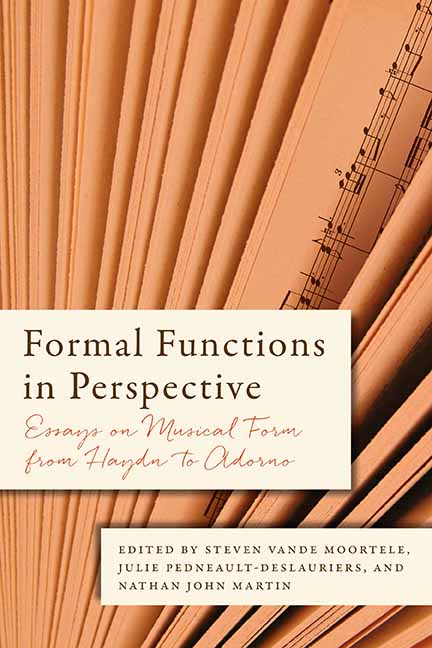
Among the more striking developments in contemporary North American music theory is the centrality that questions of musical form (Formenlehre) have enjoyed in recent decades. Formal Functions in Perspective presents thirteen studies that engage with musical form in a variety of ways. The essays, written by established and emerging scholars from the United States, the United Kingdom, Canada, and the European continent, run the chronological gamut from Haydn and Clementi to Leibowitz and Adorno; they discuss Lieder, arias, and choral music as well as symphonies, concerti, and chamber works; they treat Haydn's humor and Saint-Saëns's politics, while discussions of particular pieces range from Mozart's arias to Schoenberg's Verklärte Nacht. Running through all of these essays and connecting them thematically is the central notion of formal function.
CONTRIBUTORS: Brian Black, L. Poundie Burstein, Andrew Deruchie, Julian Horton, Steven Huebner, Harald Krebs, Henry Klumpenhouwer, Nathan John Martin, François de Médicis, Christoph Neidhöfer, Julie Pedneault-Deslauriers, Giorgio Sanguinetti, Janet Schmalfeldt, Peter Schubert, Steven Vande Moortele
Steven Vande Moortele is assistant professor of music at the University of Toronto. Julie Pedneault-Deslauriers is assistant professor of music at the University of Ottawa. Nathan John Martin is assistant professor of music at the University of Michigan.
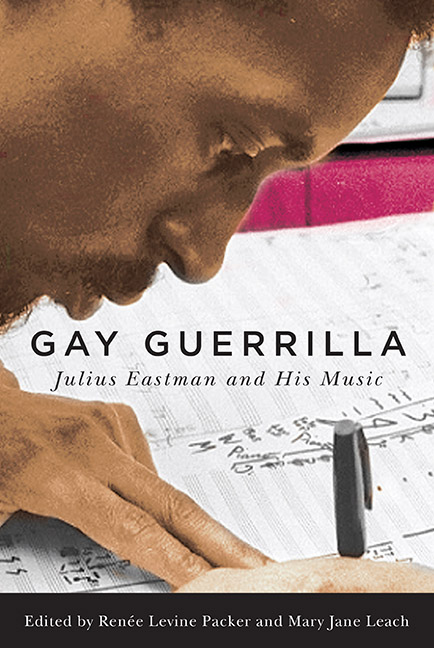
Composer-performer Julius Eastman (1940-90) was an enigma, both comfortable and uncomfortable in the many worlds he inhabited: black, white, gay, straight, classical music, disco, academia, and downtown New York. His music, insistent and straightforward, resists labels and seethes with a tension that resonates with musicians, scholars, and audiences today. Eastman's provocative titles, including Gay Guerrilla, Evil Nigger, Crazy Nigger, and others assault us with his obsessions. Eastman tested limits with his political aggressiveness, as recounted in legendary scandals he unleashed like his June 1975 performance of John Cage's Song Books, which featured homoerotic interjections, or the uproar over his titles at Northwestern University. These episodes areexamples of Eastman's persistence in pushing the limits of the acceptable in the highly charged arenas of sexual and civil rights.
In addition to analyses of Eastman's music, the essays in Gay Guerrilla provide background on his remarkable life history and the era's social landscape. The book presents an authentic portrait of a notable American artist that is compelling reading for the general reader as well as scholars interested in twentieth-century American music, American studies, gay rights, and civil rights.
Contributors: David Borden, Luciano Chessa, Ryan Dohoney, Kyle Gann, Andrew Hanson-Dvoracek, R. Nemo Hill, Mary Jane Leach, Renée Levine Packer, George E. Lewis, Matthew Mendez, John Patrick Thomas
Renée Levine Packer's book This Life of Sounds: Evenings for New Music in Buffalo received an ASCAP Deems Taylor Award for excellence. Mary Jane Leach is a composer and freelance writer, currently writing music and theatre criticism for the Albany Times-Union.
All-new interviews with 33 of the world's leading composers--from Adams and Crumb to Gubaïdulina and Rihm--give unique insights into the creative process.
Combines fresh approaches to the life and music of the beloved nineteenth-century composer with the latest and most significant ways of thinking about rhythm, meter, and musical time.
Based on private diaries, correspondence, and unpublished writings, George Rochberg, American Composer reveals the impact of personal trauma on the creative and intellectual work of a leading postmodern composer.
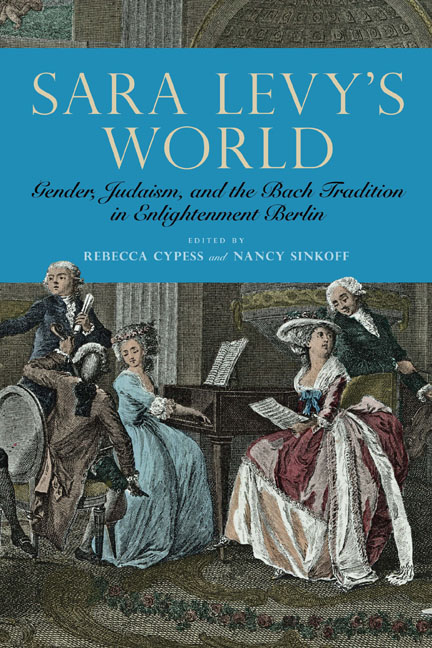
A rich interdisciplinary exploration of the world of Sara Levy, a Jewish salonniŠre and skilled performing musician in late eighteenth-century Berlin, and her impact on the Bach revival, German-Jewish life, and Enlightenment culture.
A bold, restorative vision of Mozart's works, and Western art music generally, as manifestations of an idealism rooted in the sociable nature of humans.
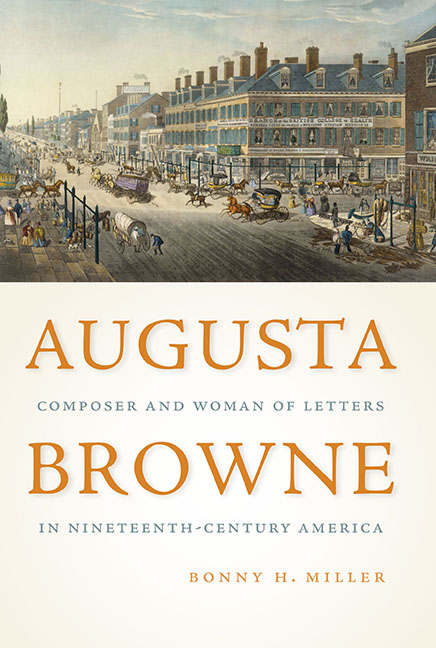
The first comprehensive biography of any American woman musician born before the Civil War brings to life a composer whose story is both old-fashioned and strikingly modern.
Examines in detail the contexts of Brahms's masterpiece and demonstrates that-contrary to recent consensus-it was performed and received as an inherently Christian work during the composer's life.
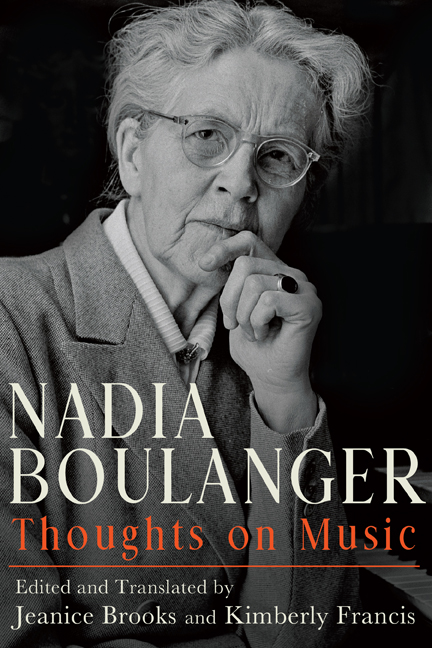
The first collection ever of essays and reviews by the renowned pedagogue, composer, and conductor, providing fresh perspectives on her musical influence and impact.
The first detailed study of Schenker's pathbreaking 1906 treatise, showing how it reflected 2500 years of thinking about harmony and presented a vigorous reaction to Austro-Germanic music theory ca. 1900.
The first thorough theoretical study of Janácek's compositions, focusing on motivic and rhythmic structure and identifying elements that give the music coherence, character, and interest.
Examines the history of musical self-quotation, and reveals and explores a previously unidentified case of Schubert quoting one of his own songs in a major instrumental work.
A new and wide-ranging collection of essays by leading international scholars, exploring the concept and practices of virtuosity in Franz Liszt and his contemporaries.
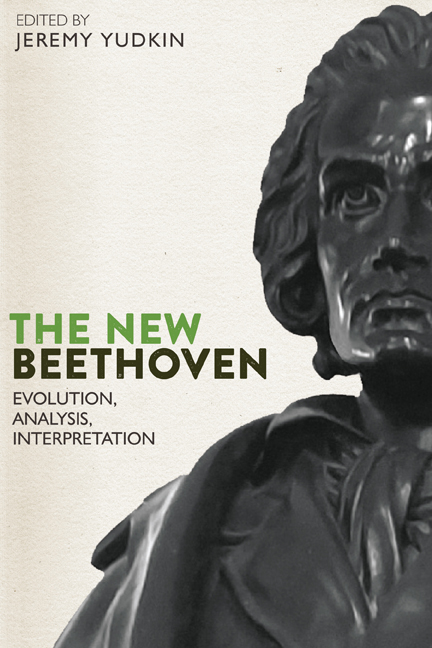
Marking the 250th anniversary of the composer's birth, this volume presents twenty-one completely new essays on aspects of Beethoven's personal life, his composing process, his manuscripts, and his greatest works.
A long-needed overview of, and guide to, the principles behind the treatises on music theory written in ancient Greece and Rome and continuing through the Middle Ages.
Stravinsky's ‘Great Passacaglia’ marks the first full-length analytic study devoted to the Concerto for Piano and Wind Instruments, an important neoclassic piece composed by one of the most influential composers of the twentieth century. Donald Traut examines the complex significance of this piece for Stravinsky and his contemporaries. For the composer, the Concerto was both a major artistic accomplishment in his burgeoning neoclassic style and a vehicle for financial gain as a touring soloist, an endeavor that took him throughout Europe and was instrumental in bringing him to America for the first time. For many of Stravinsky's critics it came to represent all that was wrong with his new style, while for others it pointed the way forward through the past, taking on an important role in the Bach revival of the 1920s. By combining sketch studies, musicological context, and straightforward analyses of all three movements, the book paints a comprehensive picture of the piece's creation, impact, and structure that will be of interest not only to musicologists and music theorists, but to pianists, conductors, and concert-goers as well.Donald Traut is associate professor of music theory at the University of Arizona.