The University of Rochester Press launched the Eastman Studies in Music series in May 1994 with the publication of its first title - a revised edition in hardback and paperback of <i>The Poetic Debussy: A Collection of His Song Texts and Selected Letters</i>, by Margaret G. Cobb. With over one hundred fifty titles in print and more new titles scheduled for publication in the coming year, Eastman Studies in Music is a well-established endeavor committed to publishing quality titles in music scholarship.
To save content items to your account,
please confirm that you agree to abide by our usage policies.
If this is the first time you use this feature, you will be asked to authorise Cambridge Core to connect with your account.
Find out more about saving content to .
To save content items to your Kindle, first ensure no-reply@cambridge.org
is added to your Approved Personal Document E-mail List under your Personal Document Settings
on the Manage Your Content and Devices page of your Amazon account. Then enter the ‘name’ part
of your Kindle email address below.
Find out more about saving to your Kindle.
Note you can select to save to either the @free.kindle.com or @kindle.com variations.
‘@free.kindle.com’ emails are free but can only be saved to your device when it is connected to wi-fi.
‘@kindle.com’ emails can be delivered even when you are not connected to wi-fi, but note that service fees apply.
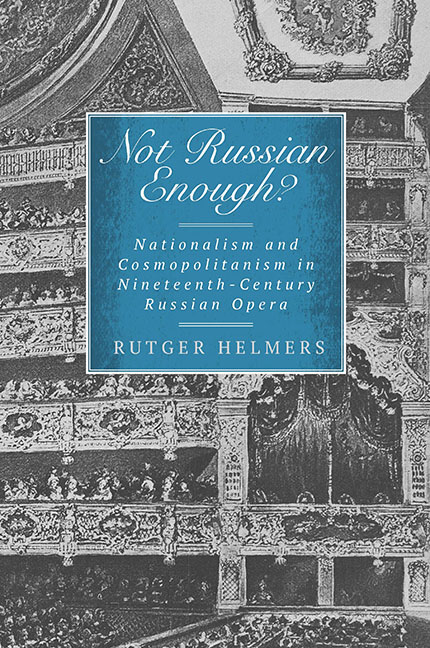
It is often believed that the "Russianness" of Russian music is what makes it special. This conviction has its origins in the nineteenth century, when Russian composers and critics were encouraged to cultivate a recognizable national style and distinguish their music from the dominant Italian, French, and German traditions. A focus on nationalism, however, fails to capture the complex realities of nineteenth-century musical life, in which the desire to develop a national style always had to compete with other interests, principles, and tastes. This book explores the many tensions, contradictions, and misunderstandings that arose when the aspiration for a national tradition was applied to the cosmopolitan world of opera. It discusses such issues as the influence of Italian and French opera, the use of foreign subjects, the application of local color, and the adherence to the classics, and considers their implications for the perception of "Russianness." Helmers analyzes the cultural context, music, and reception of four operas: Glinka's A Life for the Tsar (1836), Serov's Judith (1863), Tchaikovsky's The Maid of Orléans (1881), and Rimsky-Korsakov's The Tsar's Bride (1899). Besides yielding new insights for each of these works, this study offers a fresh perspective on the function of nationalist thought in the nineteenth-century Russian opera world. Rutger Helmers is Assistant Professor in Historical Musicology at the University of Amsterdam and lectures in Literary and Cultural Studies at Radboud University Nijmegen.
Toward the end of his life Franz Liszt maintained extensive correspondence with two women who were at the time his closest confidantes, Carolyne von Sayn-Wittgenstein and Olga von Meyendorff. Liszt wrote regularly to these women, expressing his intimate feelings about personal and career events and his conflicted self-image as a celebrated performer but underappreciated composer. Absent a diary, the letters offer the most direct avenue into Liszt's psychein his final years. Liszt's Final Decade explores through these letters the mind and music of one of the nineteenth century's most popular musicians, providing insight into Liszt's melancholia in his last years and hisstruggle to gain recognition for his music yet avoid negative criticism. The exchange indicates that Liszt ultimately resolved his self-image through a personally constructed Christian moral philosophy that embraced positive resignation to suffering, compassionate love, and trust in a just reward to come. The book also examines how Liszt's late sacred compositions unfold a paradigm of suffering that yields to joy and hope. Significantly, Liszt viewed these works, commonly overlooked today, as a major part of his compositional legacy. This volume thus challenges the idea of a single "late" Lisztian style and the notion that despair overwhelmed the composer in his final years. Dolores Pesce, Avis Blewett Professor of Music at Washington University in St. Louis, has published books and articles on medieval and Renaissance music theory, the medieval motet, Franz Liszt, and Edward MacDowell.
Bach to Brahms presents current analytic views by established scholars of the traditional tonal repertoire, with essays on works by Bach, Handel, Haydn, Mozart, Beethoven, Schubert, Chopin, and Brahms. The fifteen essays are divided into three groups, two of which focus primarily on the interaction of elements of musical design (formal, metric, and tonal organization) and voice leading at multiple levels of structure. The third group of essays focusses on the 'motive' from different perspectives. The result is a volume of integrated studies on the music of the common-practice period, a body of music that remains at the core of modern concert and classroom repertoire. Contributors: Eytan Agmon, David Beach, Charles Burkhart, L. Poundie Burstein, Yosef Goldenberg, Timothy Jackson, William Kinderman, Joel Lester, Boyd Pomeroy, John Rink, Frank Samarotto, Lauri Suurpää, Naphtali Wagner, Eric Wen, Channan Willner. David Beach is professor emeritus and former dean of the Faculty of Music, University of Toronto. Recent publications include Advanced Schenkerian Analysis, and Analysis of 18th- and 19th-Century Musical Works in the Classical Tradition (co-authored with Ryan McClelland). Yosef Goldenberg teaches at the Hebrew University of Jerusalem and at the Jerusalem Academy of Music and Dance, where he also serves as head librarian. He is the author of Prolongation of Seventh Chords in Tonal Music (Edwin Mellen Press, 2008) and published in leading journals on music theory and on Israeli music.
Widor: A Life beyond the Toccata brings to light the life and work of one of France's most distinguished musicians in the most complete biography in any language of Charles-Marie Widor. He is considered one of the greatest organists of his time, a prolific composer in nearly every genre, professor of organ and composition at the Paris Conservatory, academician and administrator at the Institute of France, journalist, conductor, music editor, scholar, correspondent, inspired visionary, and man of deep culture. An appendix constitutes the most complete listing ever compiled of Widor's oeuvre. Each work is dated as accurately as possible and includes the publisher, plate number, dedicatee, and relevant commentary. Another appendix lists Widor's complete published writings, otherthan the scores of press reviews he penned over several decades. Widor: A Life beyond the Toccata illuminates the life and work of one of France's most distinguished yet neglected musicians of the belle epoque.
John Near is William Martin and Mina Merrill Prindle Professor of Fine Arts and college organist at Principia College.
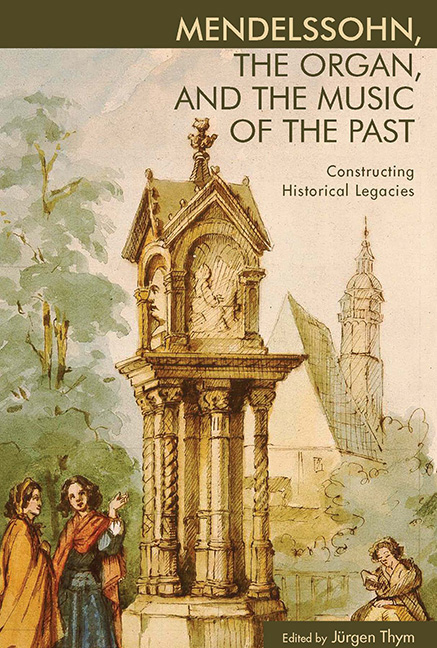
By upbringing, family connections, and education, Felix Mendelssohn was ideally positioned to contribute to the historical legacies of the German people, who in the aftermath of the Napoleonic Wars discovered that they were a nation with a distinct culture. The number of cultural icons of German nationalism that Mendelssohn "discovered," promoted, or was asked to promote (by way of commissions) in his compositions is striking: Gutenberg and the invention of the printing press, Dürer and Nuremberg, Luther and the Augsburg Confession as the manifesto of Protestantism, Bach and the St. Matthew Passion, Beethoven and his claims to universal brotherhood. The essays in this volume investigate Mendelssohn's relationship to the music of the past from a variety of perspectives, including the pervasive presence of Bach's music within the larger Mendelssohn family, the influence of Beethoven in the Reformation Symphony, and Mendelssohn's compositions for organ and his relationship to English organs in particular. Together, they shed light on the construction of legacies that, in some cases, served to assert German cultural supremacy only two decades after the composer's death. Contributors: Celia Applegate, John Michael Cooper, Hans Davidsson, Wm. A. Little, Peter Mercer-Taylor, Siegwart Reichwald, Glenn Stanley, Russell Stinson, Benedict Taylor, Nicholas Thistlewaite, Jürgen Thym, R. Larry Todd, Christoph Wolff. Jürgen Thym is Professor Emeritus of Musicology at the Eastman School of Music and editor of Of Poetry and Song: Approaches to the Nineteenth-Century Lied (University of Rochester Press, 2010).
Marching to the Canon examines the history of Schubert's Marche militaire no.1 from its beginnings as a modest piano duet published for domestic consumption in 1826 to its ubiquitous presence over a century later. Myriad performances by professionals and amateurs made it Schubert's most recognizable and beloved instrumental work. Its success was due to its chameleon-like ability to cross the still porous borders between canonic and popular repertories. This study of both its reception and impact offers a unique narrative that illuminates the world that enshrined its otherwise humble dimensions. After detailing the composition, publication, and reception of the original march, the book examines the impact of transcriptions and arrangements for solo piano, orchestra, band, and other settings. Contemporary to these versions was its symbolic manipulation during three conflicts involving France and Germany: the Franco-Prussian War and the two world wars. Multiple iterations created a performance life that made deep inroads into dance, literature, and film, and inspired quotations or allusions in other music. The work's creative uses are remarkably diverse, ranging from now obscure individuals to significant figures as varied as Willa Cather, Isadora Duncan, Walt Disney, and Igor Stravinsky. Scott Messing is Charles A. Dana Professor of Music at Alma College, and the author of Neoclassicism in Music and the two volume Schubert in the European Imagination.
Anton Heiller is one of the twentieth century's most renowned and influential organists. Born in 1923, Heiller was trained in Vienna and rose to prominence quickly, giving his first solo recital at the age of twenty-two. Before concentrating on the organ exclusively, he was a successful conductor of the symphonic repertoire, and from 1945 until his untimely death in 1979, he was professor for organ at the University of Music and Performing Arts in Vienna.His interpretations of Bach, which included registration and articulation, as well as a consideration of the theological underpinnings, would change the way Bach is played. Anton Heiller: Organist, Composer, Conductorprovides an assessment of Heiller's works and teaching, while also examining his complex personality, one torn between strong religious devotion and the world of artistry. Underlying this story here is also the story of church music and organ playing in central Europe in the decades after World War II, and of the then unique crossroads of organ cultures in mid-twentieth-century Europe. Peter Planyavsky was Anton Heiller's successor as an organ professor in Vienna, and Organist of St. Stephan's Cathedral in Vienna from 1969 through 2004. He is also a prolific composer, improviser, and conductor. The book is translated from the original German by Christa Rumsey, also a former student of Heiller.
American Popular Music in Britain's Raj is the first systematic study to address the character and scope of American popular music in India during British rule. Drawing on ethnographic and archival research, it examines blackface minstrel shows, ragtime, jazz, and representations of Hollywood film music in Bombay cabarets and Hindi film songs, identifying key musical moments in the development of these styles between the middle 1800s and the middle 1900s, outlining the entertainment idioms and frameworks that supported their growth, and examining a variety of historical contexts under colonialism that influenced their meaning and commercial value. Focusing on Calcutta (modern Kolkata), Lucknow, and Bombay (modern Mumbai), Bradley Shope traces the movement of music across time and space -- including between the United States, England, and India -- and addresses a variety of groups and communities, including the US military in Calcutta during World War II, Anglo-Indians in Lucknow in the 1930s and 1940s, and British residents across North India in the nineteenth and twentieth centuries.
Bradley G. Shope is assistant professor of music at Texas A & M-Corpus Christi.
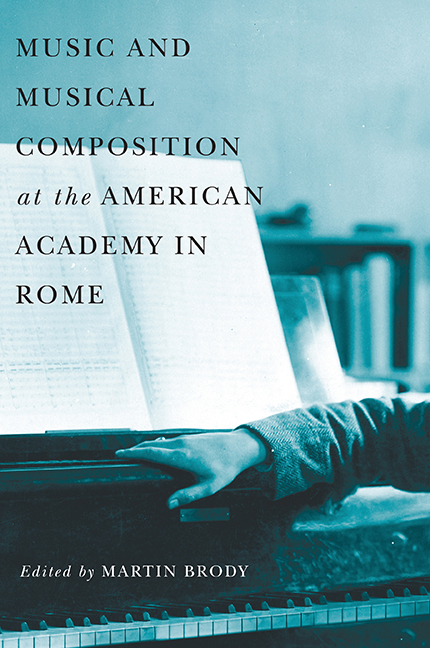
The American Academy in Rome launched its Rome Prize in Musical Composition in 1921, a time in the United States of rapidly changing ideas about national identity, musical values, and the significance of international artistic exchange. Music and Musical Composition at the American Academy in Rome tells the story of this prestigious fellowship. Combining cultural analysis with historical and personal accounts of a century of musical life at the American Academy in Rome, the book offers new perspectives on a wide range of critical topics: patronage and urban culture, institutions and professional networks, musical aesthetics, American cultural diplomacy, and the maturation ofa concert music repertory in the United States during the twentieth century. Contributors: Martin Brody, Elliott Carter, John Harbison, Christina Huemer, Carol Oja, Andrew Olmstead, Vivian Perlis, Judith Tick, Richard Trythall. Martin Brody is the Catherine Mills Davis Professor of Music at Wellesley College, and served as the Andrew Heiskell Arts Director at the American Academy in Rome from 2007 to 2010.
The unique sounds of the biwa, shamisen, and other traditional instruments from Japan are heard more and more often in works for the concert hall and opera house. Composing for Japanese Instruments is a practical orchestration/instrumentation manual with contextual and relevant historical information for composers who wish to learn how to compose for traditional Japanese instruments. Widelyregarded as the authoritative text on the subject in Japan and China, it contains hundreds of musical examples, diagrams, photographs, and fingering charts, and comes complete with two accompanying compact discs of musical examples. Its author, Minoru Miki, is a composer of international renown and is recognized in Japan as a pioneer in writing for Japanese traditional instruments. The book contains valuable appendices, one of works Miki himself has composed using Japanese traditional instruments, and one of works by other composers -- including Toru Takemitsu and Henry Cowell -- using Japanese traditional instruments.
Marty Regan is Assistant Professor of Music at Texas A&M University; Philip Flavin is a Research Fellow in the School of Languages, Cultures and Linguistics at Monash University, Australia.
In the seventeenth century, like today, the guitar was often used for chord strumming ("battuto" in Italian) in songs and popular dance genres, such as the ciaccona or sarabanda. In thegolden age of the baroque guitar, Italy gave rise to a unique solo repertoire, in which chord strumming and lute-like plucked ("pizzicato") styles were mixed. Italian Guitar Music of the Seventeenth Century: Battuto and Pizzicato explores this little-known repertoire, providing a historical background and examining particular performance issues. The book is accompanied by audio examples ona companion website.
Lex Eisenhardt is one of Europe's foremost experts on early guitar. He teaches both classical guitar and historical plucked instruments at the Conservatory of Amsterdam. He has produced a number of highly acclaimed CD recordings, and has given concerts and masterclasses in Europe, the United States, and Australia.
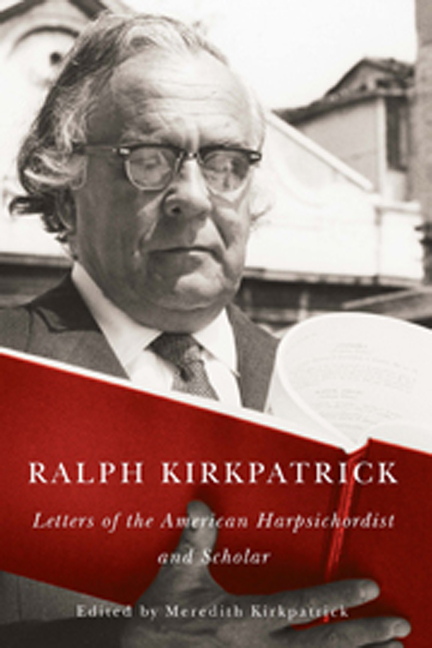
This collection of letters to and from the eminent harpsichordist, scholar, and early music pioneer Ralph Kirkpatrick provides a portrait of the musician from the beginning of his career in Paris in the 1930s to its end in the early 1980s, offering new insights into his work and scholarship. The volume contains letters to his family from Europe as well as correspondence with harpsichord makers, performers, and composers, including Nadia Boulanger, Alexander Schneider, John Kirkpatrick, Elliott Carter, Henry Cowell, John Challis, Kenneth Gilbert, Serge Koussevitsky, and Vincent Persichetti. In addition, two former students of Kirkpatrick, the guitarist Eliot Fisk and the harpsichordist Mark Kroll, write about their experiences studying with Kirkpatrick in a foreword and an afterword. The volume also includes a bibliography of publications by and about the musician, as well as a discography. Meredith Kirkpatrick is a librarian and bibliographer at Boston University and is the niece of Ralph Kirkpatrick.
During the Great Depression, Harry Partch rode the railways, following the fruit harvest across the country. From his experience among hoboes he found what he called "a fountainhead of pure musical Americana." Although he later wrote immense stage works for instruments of his own creation, he is still regularly called a hobo composer for the compositions that grew out of this period of his life. Yet few have questioned the label's impact on his musical output, compositional life, and reception. Focusing on Partch the person alongside the cultural icon he represented, this study examines Partch from historical, cultural, political, and musical perspectives. It outlines the cultural history of the hobo from the mid-1800s through the 1960s, as well as those figures associated with the hobo's image. It explores how Partch's music, which chronicled a disappearing subculture, was received, and how the composer ultimately engaged and frustrated popular conceptions of the hobo. And it follows Partch's later years to question his response to the hobo label and the ways in which others used it to define and contain him for over thirty years. S. Andrew Granade is an Associate Professor of Musicology in the Conservatory of Music and Dance, University of Missouri-Kansas City.
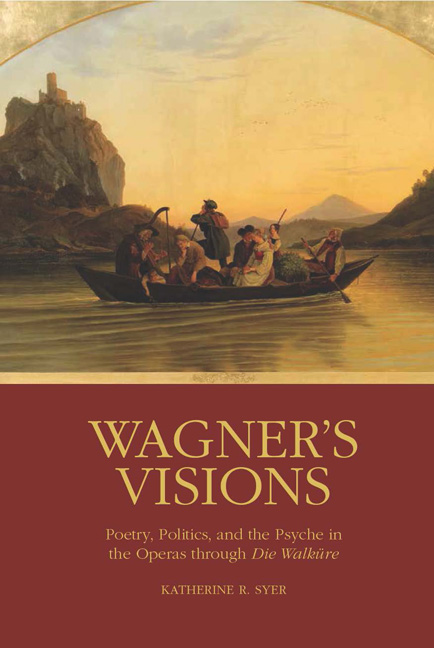
The psychological dimension of Richard Wagner's operas has long been associated with the ideas of Arthur Schopenhauer, yet Wagner had begun absorbing elements of contemporary psychological thought into his stage works as early as the 1830s, twenty years before he engaged with the philosopher's writings. As Katherine Syer demonstrates, the composer incorporated imagery and metaphors with the potential to infuse his psychologically charged dramas with latent political meaning. His operatic visions convey a sense of urgency intimately bound up with the era's crises and instabilities. In Wagner's Visions, Syer offers a detailed examination of Die Feen, Wagner's least known complete opera, as well as new analytical insights into Der fliegende Holländer, Tannhäuser, Lohengrin, and the four Ring dramas. Her study of the ways Wagner probed the inner experiences of his protagonists explores the impact of neglected yet crucial artistic influences. These include the fables of the eighteenth-century Venetian playwright Carlo Gozzi, the Iphigenia operas of Christoph Willibald Gluck, and the legacy of the martyr Theodor Körner. During the Napoleonic Wars, which raged as Wagner was born, Körner's poetry became the lingua franca of the revolutionary movement to liberate and unify Germany. A Humboldt Fellowship recipient, Syer is Assistant Professor of Musicology and Theatre Department Faculty Affiliate at the University of Illinois at Urbana-Champaign.
Of the four sons of J. S. Bach who became composers, Carl Philipp Emanuel (1714-88) was the most prolific, the most original, and the most influential both during and after his lifetime. This first full-length English-language study critically surveys his output, examining not only the famous keyboard sonatas and concertos but also the songs, chamber music, and sacred works, many of which resurfaced in 1999 and have not previously been evaluated. The bookalso outlines the composer's career from his student days at Leipzig and Frankfurt (Oder) to his nearly three decades as court musician to Prussian King Frederick "the Great" and his last twenty years as cantor at Hamburg. Focusing on the composer's choices within his social and historical context, the book shows how C. P. E. Bach deliberately avoided his father's style while adopting the manner of his Berlin colleagues, derived from Italian opera. Anew perspective on the composer emerges from the demonstration that C. P. E. Bach, best known for his virtuoso keyboard works, refashioned himself as a writer of vocal music and popular chamber compositions in response to changingcultural and aesthetic trends. Supplementary texts and musical examples are included on a companion website. David Schulenberg is professor of music at Wagner College and teaches historical performance at the JuilliardSchool. He is the author of The Music of Wilhelm Friedemann Bach (University of Rochester Press, 2010).
Exploring the crossroads between autobiographical narrative and musical composition, this book examines Berg's transformation of Frank Wedekind's Erdgeist (1895) and Die Büchse der Pandora (1904) -- the plays used inthe formation of the libretto for Lulu -- according to notions of gender identity, social customs, and the aesthetics of modernity in Vienna of the 1920s and 1930s. While Berg modernized several aspects of the plays by Wedekind and incorporated serial techniques of composition from Arnold Schoenberg, he never let go of the idealistic Wagnerian perspectives of his youth. In fact, he went as far as reconfiguring aspects of Richard Wagner's life as anideal identity to be played out in the compositional process. In the process of composing the opera, Berg also reflected on the most important cultural figures in fin-de-siècle Vienna that affected his worldview, including Karl Kraus, Emil Lucka, Otto Weininger, and others. Adopting an approach that combines a systematic analysis of Berg's numerous sketches for Lulu, correspondence, and the finished work with interpretive models drawn from cultural studies and philosophy, this book elucidates the ways in which Berg grappled with his self-image as an "incorrigible romantic" (unverbesserliche Romantiker) at the end of his life, explaining aspects of his musical language that have been considered strange or anomalous in the scholarship. Silvio J. dos Santos is assistant professor of musicology at the University of Florida.
Today the classical style in music is defined primarily through the accomplishments of a handful of acknowledged masters, with Haydn and Mozart leading the field. Such selective fascination has all but eclipsed the music of most of their contemporaries. In this book, Sterling Murray examines one of the most talented of this group: Antonio Rosetti (ca. 1750-92). Born and trained in Bohemia, Rosetti spent most of his creative life in Germany, where he served as music director to the Prince of Oettingen-Wallerstein between 1773 and 1789 and then the Duke of Mecklenburg-Schwerin until his death in 1792. The Career of an Eighteenth-Century Kapellmeister provides the first comprehensive investigation of Rosetti's life. The events of the composer's biography are unfolded against a vivid picture of musical life at the two small German courts where Rosetti was employed. The second half of the book is devoted to an examination of form and style in Rosetti's music, illustrated with full-score musical examples in the text and on a complementary website. What emerges from this investigation is a composer who, having conquered the stylistic language of his day, challenged those conventions to produce imaginative and highly creative works of great beauty. Sterling E. Murray is Professor Emeritus of the School of Music at West Chester University in West Chester, Pennsylvania. His thematic catalog of Antonio Rosetti's music was published by Harmonie Park Press in 1997.
In this first full-length study of the symphony in late nineteenth and early twentieth-century France, Andrew Deruchie provides extended critical discussion of seven of the most influential and frequently performed works of the era, by Camille Saint-Saëns, César Franck, Édouard Lalo, Vincent d'Indy, and Paul Dukas. The volume explores how French symphonists reconciled Beethoven's legacy with the musical culture, intellectual environment, and political milieu of fin-de-siècle France, pursuing issues of musical form and also moving beyond the notes to consider questions of meaning. Andrew Deruchie is a lecturer in musicology at the University of Otago (New Zealand), specializing in French music of the nineteenth and twentieth centuries.
This collection of critical essays examines the diverse ways in which music -- and ideas about it -- have been disseminated in print and other media from the sixteenth century onward. Contributors look afresh at unfamiliar facets of the sixteenth-century book trade and the circulation of manuscript and printed music in the seventeenth to nineteenth centuries. They also analyze and critique new media forms, showing how a dizzying array of changing technologies has influenced what we hear, whom we hear, and how we hear. The repertoires considered include Western art music -- from medieval to contemporary -- as well as popular music and jazz. Assembling contributions from experts in a wide range of fields, such as musicology, music theory, music history, and jazz and popular music studies, 'Music in Print and Beyond: Hildegard von Bingen to The Beatles' sets new standards for the discussion of music's place in Western cultural life. Roberta Montemorra teaches music at the University of Iowa and is the author of 'Verdi the Student-Verdi the Teacher' (Istituto Nazionale di Studi Verdiani, 2010) and editor of 'The Cambridge Verdi Encyclopedia' (Cambridge University Press, 2013). Craig A. Monson is a Professor of Musicology at Washington University (St Louis, Missouri) and is the author of 'Divas in the Convent: Nuns, Music, and Defiance in 17th-century Italy' (University of Chicago Press, 2012).
Bálint András Varga makes available here twenty-one extended interviews with some of the most notable figures in music from the past fifty years, as well as lively "snippets" from interviews Varga conducted with thirteen other equally renowned musicians. The interviewees include singers Elisabeth Schwarzkopf and Cathy Berberian; pianists Alfred Brendel and Arthur Rubinstein, violinists Isaac Stern and Yehudi Menuhin; conductors Claudio Abbado and Sir Neville Marriner; composers György Ligeti, and Karlheinz Stockhausen; and legendary pedagogue Nadia Boulanger. Of special interest is an interview with the reclusive composer György Kurtág, here published for the first time in any language. From Boulanger to Stockhausen concludes with a touching memoir by Varga of his experiences growing up in a Jewish family in Hungary during World War II and the early years of Communist rule. Varga's recollections also include details about how he managed to interview so many remarkable musicians-thanks in large part to his employment at the Hungarian state radio station and then in the music-publishing industry, which brought him to, among other places, London and Vienna, where he now lives. Bálint András Varga has spent nearly forty years working for and with composers. His previous books for the University of Rochester Press are György Kurtág: Three Interviews and Ligeti Homages and Three Questions for Sixty-Five Composers.