
Contents
Article
Cancellation of two classes of dirichlet coefficients over Beatty sequences
- Part of:
-
- Published online by Cambridge University Press:
- 20 April 2021, pp. 234-252
-
- Article
-
- You have access
- HTML
- Export citation
-
Let
 $\pi $ be an automorphic irreducible cuspidal representation of
 $\mathrm{GL}_{m}$ over
 $\mathbb {Q}$. Denoted by
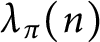 $\lambda _{\pi }(n)$ the nth coefficient in the Dirichlet series expansion of
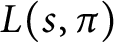 $L(s,\pi )$ associated with
 $\pi $. Let
 $\pi _{1}$ be an automorphic irreducible cuspidal representation of
 $\mathrm{SL}(2,\mathbb {Z})$. Denoted by
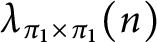 $\lambda _{\pi _{1}\times \pi _{1}}(n)$ the nth coefficient in the Dirichlet series expansion of
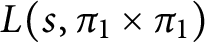 $L(s,\pi _{1}\times \pi _{1})$ associated with
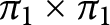 $\pi _{1}\times \pi _{1}$. In this paper, we study the cancellations of
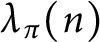 $\lambda _{\pi }(n)$ and
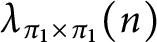 $\lambda _{\pi _{1}\times \pi _{1}}(n)$ over Beatty sequences.


Number of prime factors with a given multiplicity
- Part of:
-
- Published online by Cambridge University Press:
- 03 May 2021, pp. 253-269
-
- Article
-
- You have access
- HTML
- Export citation
-
Let
 $k\geqslant 1$ be a natural number and
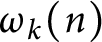 $\omega _k(n)$ denote the number of distinct prime factors of a natural number n with multiplicity k. We estimate the first and second moments of the functions
 $\omega _k$ with
 $k\geqslant 1$. Moreover, we prove that the function
 $\omega _1(n)$ has normal order
 $\log \log n$ and the function
 $(\omega _1(n)-\log \log n)/\sqrt {\log \log n}$ has a normal distribution. Finally, we prove that the functions
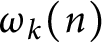 $\omega _k(n)$ with
 $k\geqslant 2$ do not have normal order
 $F(n)$ for any nondecreasing nonnegative function F.


Front Cover (OFC, IFC) and matter
BCM volume 65 issue 1 Cover and Front matter
-
- Published online by Cambridge University Press:
- 21 March 2022, pp. f1-f4
-
- Article
-
- You have access
- Export citation
Back Cover (OBC, IBC) and matter
BCM volume 65 issue 1 Cover and Back matter
-
- Published online by Cambridge University Press:
- 21 March 2022, pp. b1-b2
-
- Article
-
- You have access
- Export citation