We partner with a secure submission system to handle manuscript submissions.
Please note:
You will need an account for the submission system, which is separate to your Cambridge Core account. For login and submission support, please visit the
submission and support pages.
Please review this journal's author instructions, particularly the
preparing your materials
page, before submitting your manuscript.
Click Proceed to submission system to continue to our partner's website.
To save this undefined to your undefined account, please select one or more formats and confirm that you agree to abide by our usage policies. If this is the first time you used this feature, you will be asked to authorise Cambridge Core to connect with your undefined account.
Find out more about saving content to .
To send this article to your Kindle, first ensure no-reply@cambridge.org is added to your Approved Personal Document E-mail List under your Personal Document Settings on the Manage Your Content and Devices page of your Amazon account. Then enter the ‘name’ part of your Kindle email address below. Find out more about sending to your Kindle.
Find out more about saving to your Kindle.
Note you can select to save to either the @free.kindle.com or @kindle.com variations. ‘@free.kindle.com’ emails are free but can only be saved to your device when it is connected to wi-fi. ‘@kindle.com’ emails can be delivered even when you are not connected to wi-fi, but note that service fees apply.
Huntington’s disease (HD) is a progressive neuropsychiatric and degenerative disorder that shows an autosomal dominant inheritance pattern. The principal symptoms of HD are progressive movement disorders, cognitive deterioration, dementia, and certain psychiatric manifestations, which may occur in many different forms, such as depression, psychosis, personality changes.
Objectives
In this presentation, two female HD patients with psychotic components complicated with suicidal and homicidal thoughts will be reported to better illustrate psychiatric components of HD.
Methods
Hospitalization records of these two patients with genetically verified HD diagnosis indicated that their psychiatric health precipitously deteriorated in the last decade.
Results
While the first patient suffered from severe depression, anxiety, suicidality; persecution ideas, suspiciousness, hostility were noted more prominently in the latter. Moreover, both cases had a positive family history for psychiatric diseases which is one of the hallmarks of HD. Anti-psychotic drug olanzapine, which has minor side-effects on EPS, was found to be highly effective on our HD patients, alleviating the behavioral and psychiatric symptoms of the disease.
Conclusions
In conclusion, HD should be one of the differential diagnoses if patients with psychiatric complaints have accompanying neurological findings such as movement disorders and impaired memory, and great attention should be paid to the extrapyramidal system (EPS) sensitivity of the chosen treatment regime when treating the HD patients,
Conventional structural neuroimaging methods can identify changes in cortical thickness but cannot relate these changes to specific cortical layers due to a lack of sensitivity. However, several indirect measures sensitive to changes specifically occurring in supragranular cortical layers were developed recently (github.com/kwagstyl/schizophrenia_gyral_sulcal).
Objectives
The aim was to assess the ability of these novel measures to detect cortical layers thickness characteristics potentially associated with risk or resilience to developing schizophrenia.
Methods
43 first-episode schizophrenia (FES) male patients, 29 non-converted individuals at ultra-high risk of psychosis (ncUHR, mean follow-up period – 6.5 years), and 43 matched healthy controls (HC) underwent structural MRI at 3T Philips scanner. Images were processed via FreeSurfer and MATLAB to derive two markers specific to supragranular thickness change: gyral-sulcal thickness differences (GSTD) and gyral-sulcal intrinsic curvature differences on pial surface (GSCD).
Results
GSCD measures were increased in temporal, parietal and occipital cortices, whereas both GSTD and GSCD were increased in the right frontal cortex in FES compared to HC. No GSTD or GSCD were changed in ncUHR compared to HC, and GSCD was decreased in the frontal cortex compared to FES.
Conclusions
Our findings from the indirect measures indicate a potential predominance of supragranular thinning in FES and suggest that a supragranular thinning in the right frontal lobe might be associated with precipitating risk and/or illness effects of schizophrenia. At the same time, no clear supragranular markers directly associated with resilience or risk mechanisms were identified. The work was supported by RFBR grant 20-013-00748.
Neuropsychiatric symptoms may be the first and only manifestation of brain tumours, while classic neurological symptoms and signs may be minimal or absent at first. These patients will often receive psychiatric treatments for prolonged periods before correct diagnosis.
Objectives
To report the case of a patient with olfactory groove meningioma presenting with neuropsychiatric symptoms as a basis for discussion.
Methods
Retrospective review of clinical notes, neuroimaging results and house photos. Literature review.
Results
A 66-year-old woman was brought by police to the psychiatric emergency department Her neighbours had notified authorities of a bad smell, and police found the house was loaded with garbage. The patients reported depressive symptoms in the last 6 months, including apathy, anhedonia, social isolation, decreased appetite and insomnia; loss of basic skills such as cooking or cleaning; she also reported dizziness and two episodes of urinary and faecal incontinence in public. The patient had a history of being medicated for depression between 2000 and 2006. Currently she was taking only alprazolam 1 mg daily. During evaluation she was conscious, oriented and cooperative, with evident hypomimia, psychomotor inhibition and indifferent attitude. Cranial nerve function was preserved except for anosmia. Cranial CT and MRI showed a solid extra-axial tumour of 5.2x3.5x4.9 centimetres compatible with meningioma of the olfactory groove, and she was referred to Neurosurgery for surgical intervention.
Conclusions
This case illustrates the importance of a thorough organic evaluation, including neuroimaging, in the differential diagnosis of patients with atypical symptoms before making a psychiatric diagnosis and instituting treatment.
Schizophrenia patients with auditory verbal hallucinations (AVH) demonstrate impaired functional connectivity (FC) between brain regions, involved in executive functions and language. However, as most studies compare patients to healthy controls, the specificity of these findings either for schizophrenia in general or for AVH is unclear.
Objectives
We aimed to compare whole-brain resting-state FC of main language brain regions between schizophrenia patients with and without history of AVH and healthy controls.
Methods
Schizophrenia male patients with (n=31; mean age 29,8±11,6) or without history of AVH (n=16; 29±12,4) and 39 healthy male controls (30±8,9) underwent resting-state fMRI on 3T Philips scanner. No between-group differences in age, illness duration, and severity of clinical symptoms except AVH were revealed. Regions of interest (ROIs) were taken from the independent fMRI study with conventional language localizer and included left inferior frontal gyrus (l_IFG) and superior temporal gyri (STG) bilaterally. Whole-brain FC of each ROI was compared between groups (ANCOVA; p<.005 voxelwise; p(FDR)<.017 clusterwise, corrected for number of ROIs) with post hoc tests.
Results
Decreased FC between each STG (left and right) and anterior cingulate cortex (ACC) was revealed in all patients, compared to healthy controls. Patients with history of AVH, compared to other groups, showed decreased FC between l_IFG and ACC.
Conclusions
Disrupted fronto-temporal FC is non-specific for AVH and characterizes all schizophrenia patients. Patients with history of AVH have impaired FC between the l_IFG, underlying language production, and ACC, involved in differentiation between language production and comprehension. The study was supported by RFBR grant 18-013-01214.
Machine learning has increasingly been applied to classification of psychosis spectrum in neuroimaging research. However, a number of multimodal studies using MRI and electroencephalography (EEG) is quite limited.
Objectives
To assess the power of multimodal structural MRI (sMRI) and EEG data to provide pairwise discrimination between first-episode schizophrenia (FES) patients, individuals at ultra-high-risk of psychosis (UHR), and healthy controls (HC) using machine learning algorithms.
Methods
46 FES male patients, 39 UHR individuals, and 54 matched HC underwent sMRI (3T Philips scanner) and electroencephalography. T1-weighted images were processed via FreeSurfer to obtain cortical and subcortical measures. L2 regularized logistic regression was used to evaluate the efficacy of diagnostic prediction.
Results
The accuracies of pairwise discriminations were: 87% for FES vs HC (specificity 83%, sensitivity 91%); 77% for FES vs UHR (specificity 76%, sensitivity 79%); 75% for UHR vs HC (specificity 77%, sensitivity 73%).
Conclusions
Current findings suggest that the patterns of anatomical and functional variability have potential as biomarkers for discrimination between schizophrenia, UHR, and healthy subjects. Furthermore, results show that the selection and multimodality of feature types are important. Specifically, adding EEG data to morphometric measures improved accuracy rates in FES vs HC and FES vs UHR contrasts, whereas standalone EEG data provided higher accuracy compared with morphometric or multimodal data in UHR vs HC discrimination. Expectedly, predictive power for the UHR was smaller than for the FES due to its intermediate anatomical features, located between those observed in healthy controls and those found in patients. The work was supported by RFBR grant 20-013-00748
Epilepsy is one of the most common neurological disorders worldwide characterized by unpredictable and recurrent seizures, resulting from abnormal brain activity, accompanied by loss of consciousness and control of bowel or bladder function.
Objectives
A higher risk of comorbid disorders in epilepsy has been reported for psychiatric affective conditions (i.e., depression and schizophrenia), sleep alterations, as well as some gastrointestinal disorders (inflammatory bowel disease and constipation), and lately there is an interest to determine and explain a putative association between functional gastrointestinal disorders (FGID) such as Irritable bowel syndrome (IBS) and epilepsy.
Methods
In this way, we decided to review the current aspects of the gastrointestinal functional impairments and epilepsy by searching in the literature possible connection mechanisms.
Results
A handful of studies have only recently reported an increased prevalence of IBS in epilepsy in children, in adults, and conversely a higher incidence of epilepsy in IBS patients at the populational level. Paroxysmal abdominal complaints resulting from seizure activity are present in the abdominal epilepsy syndrome and the link between constipation and seizures has been demonstrated in animal models. Currently, there is no data to directly address the cellular and molecular connections between epilepsy and FGID, but these would probably involve the bidirectional dysregulation of the brain-gut axis with increased afferent processing of visceral nociceptive signals and subsequent hyperalgesia.
Conclusions
Thus, intestinal dysbiosis may play a role in triggering inflammatory and immune-related mechanisms reported in IBS manifestations and epilepsy, while vagal neuroimunomodulation issues are likely to be involved in both pathologies as well.
Conflict of interest
The authors are currently supported by a Young Research Teams supporting research grant PN-III-P1-1.1-TE2016-1210, named ”Complex study on oxidative stress status, inflammatory processes and neurological manifestations correlations in irritable bowel synd
The most common psychiatric conditions in epilepsy are depression, anxiety, behavioral, psychotic disorders and cognitive disorders as well as those which can be caused by convulsive seizures.
Objectives
The aims of the research were to define cognitive and affective impairments in patients with epilepsy and their quality of life. Since the presents of cognitive impairments and affective disorders have a considerable impact on the functioning of patients, their socialization and the level of their disability.
Methods
We studied the features of clinical and psychopathological manifestations in patients suffering from epilepsy. The study covered 100 patients (47 men and 53 women) who were in inpatient care. The following psychodiagnostic techniques were used: the test of 10 words of Luria, the MOCA test, the Münsterberg test, Mini-Mult test, the quality of life scale, the Hamilton scale of depression and anxiety.
Results
The following data of the study were observed: 88 % patients had decreased memory, 38% had symptoms of depression, 28% had mild situational or neurotic depression, 8% had moderate depression, 2% had severe depression, 20% had a state of severe anxiety, 16% had symptoms of anxiety. The average rate of quality of life among all examined people was 67.5 out of 100.
Conclusions
The results of the conducted research indicate the need for further study of the features of the comorbid pathology in epilepsy and development and implementation pharmacological and nonpharmacological methods for treatments of epilepsy.
Charles Bonnet syndrome (CBS) is characterized by the presence of visual hallucinations, generally complex, which occurs in patients with alterations in the visual pathway. The majority of affected patients are elderly. It appears in 15% of people with visual loss, predominantly in the 80-year-old female gender.
Objectives
To present a clinical case of a patient with visual hallucinations and a possible diagnosis of Charles Bonnet syndrome. Highlight the importance of an adequate differential diagnosis.
Methods
Bibliographic review of the treatment and diagnosis of CBS, from articles published in the last 5 years in Pubmed.
Results
Woman, 80 years old. No ophthalmological history except those associated with advanced age. She goes to the emergency room due to the presence of visual hallucinosis, in the form of “television presenters” of whom she makes partial criticism, being aware most of the time of their unreality. Hallucinations are not accompanied by anxiety or significant affective repercussions. Discarded delirium, intoxication by substances or drugs that cause the condition. Currently under follow-up to rule out other causes.
Conclusions
The diagnosis of SCB requires a multidisciplinary approach between neurologists, psychiatrists and ophthalmologists in order to avoid erroneous diagnoses. The differential diagnosis should be made with pathologies such as Lewy body dementia, Parkinson’s disease, delirium, substance intoxication, migraine aura, and metabolic encephalopathy, among others. It is important to involve the family in the treatment of the syndrome to reinforce the recognition of the unreality of these hallucinations in the patients. Antipsychotic treatment can be effective only if the condition is extremely distressing.
Catatonia has been reported with almost all types of dementia but it remains under-diagnosed.
Objectives
Describe the characteristics of catatonia in patients with dementia and the efficiency of early management.
Methods
We review a case of a young patient admitted in our psychiatric department for catatonia and after efficient treatment, assessment revealed a dementia.
Results
A 49-year-old male treated with classic antipsychotic drug for an acute psychotic episode at age of 35 years. Three years later, the patient was admitted for behavioral disorders with delirium and confusion. The patient was treated with high-doses of antipsychotic drugs with vasodilator treatment. Currently, ten years later, he was hospitalized in a stuporous state with food refusal, sustained posture and worsening of his overall situation. At the mental assessment, the patient was motionless, mute and rigid with frozen facial expression and gaze stare. Negativity and opposition were obvious against any solicitation. Moreover, the physical examination has shown a worsening of the overall state of health, weight loss and walking difficulties. After symptomatic treatment of catatonia with benzodiazepine, the assessment revealed an aphaso-apraxo-agnotic syndrome with memory dysfunctions such as amnesia with false recognition and executive dysfunction as well as limitations in intellectual abilities. A brain scan revealed cortical and subcortical atrophy predominant in the bilateral fronto-temporo-parietal region associated with ventricular system expansion. The diagnosis of Alzheimer’s disease was made. Following atypical antipsychotic treatment combined with benzodiazepine, there was release of inhibition.
Conclusions
Catatonia is a severe neuropsychiatric syndrome with an excellent prognosis if recognized and treated without delay.
The pedophilic disorder is characterized by a sexual preference for children and leads to child sexual abuse (CSA) in half of the patients. Studies showed that pedophiles with a history of CSA (CSA+) are inferior, in inhibitory control, to those without (CSA-).
Objectives
Inhibitory control may be influenced by negative affectivity, which was shown to be a state factor facilitating sexual abuse. Nevertheless, it is not known if distress influence CSA+ and CSA- equally.
Methods
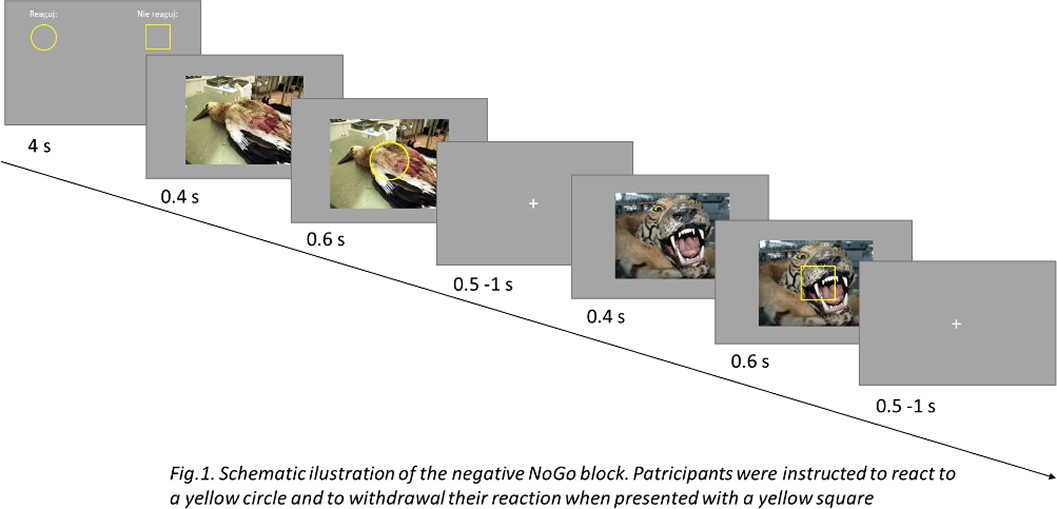
We recruited three groups of participants: healthy controls (HC) CSA+ and CSA- who performed an emotional Go-NoGo block task. The task was design specifically to correspond to a situation in which an indivisual is opposed by a negative life event. In each trial, participants were presented with photographs, either of neutral or negative valence, which did not require reaction. After the photographs, a circle (Go stimuli) or a square (NoGo stimuli) was presented.
Results
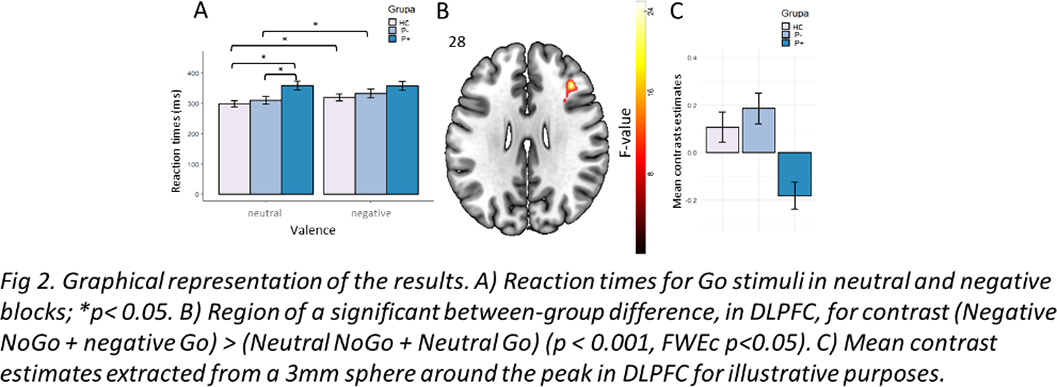
We found that HC and CSA- had slower reaction time in negative compared to neutral condition (regardless of the block type), while CSA+ did not. Consequently, HC and CSA- showed increased activation in the right dorsolateral prefrontal cortex (DLPFC) in negative compared to the neutral condition, what was not observed in CSA+.
Conclusions
DLPFC is crucial for cognitive control, however, the activity of this region is modulated by emotional valence. Reduced engagement of dlPFC in CSA+ in negative condition (irrespectively of the task instructions), suggest that negative emotions in CSA+ disrupt also other aspects of cognitive control, rather than inhibition specifically.
Research has demonstrated that greater cognitive flexibility and perspective taking skills are associated with positive outcomes throughout the lifespan. Cognitive flexibility is a core component of executive function allowing us to control goal-directed behaviour and to face new and unexpected conditions in the environment. Perspective-taking or Theory of Mind (ToM) refers to the capacity to make inferences about and represent others’ point of view, mental states and intentions.
Objectives
The aim of this study was to assess age-related effects on executive functions and the role of cognitive flexibility in perspective-taking skills.
Methods
Two age groups (34-44 years and 45-55 years) were compared on a task-switching paradigm the MATeM neuropsychological software (Maria Grazia Inzaghi, 2019) and all participants completed the Edinburgh Handedness Inventory (Oldfield, 1971), the IRI Interpersonal Reactivity Index (Davis, 1980), the RMET Reading the Mind in the Eyes (Baron-Cohen, 2001) and the BIDR-6 Balanced Inventory of Desirable Responding (Paulhus, 1991).
Results
suggested that increased age was associated with decreased set-shifting, perspective-taking, mindreading abilities and increased tendency to give overly positive answers (socially desirable responding). Furthermore, participants with reduced cognitive flexibility (higher switch cost) were less able to attribute mental states to others and to appreciate another person’s point of view.
Conclusions
It can be argued that readiness to appropriately adjust one’s behaviour according to a changing environment is related to flexibly shift between conflicting psychological perspectives. Future research include training studies which would further our understanding of these relationships and allow more effective cognitive and social interventions.
Studies of the pathophysiology of mental disorders indicate the involvement of neurobiological processes, including the release of neurospecific proteins in biological substances.
Objectives
The purpose of this study was to research the level of neuron-specific enolase in patients with alcohol use disorder and mood disorders during the therapy.
Methods
The studied groups included patients with alcohol use disorder (AUD, F10.2, ICD-10; n=41), patients with mood disorders (MD, F32, F33, ICD-10; n=39), patients with co-morbidity of AUD and MD (n=31) and 20 healthy controls. Severity of depressive symptoms was assessed with HDRS-17 and CGI-S scales. The concentration of NSE were measured in serum by enzyme immunoassay. Рarticipants of the study were examined with clinical scales and laboratory analysis at baseline and on the 28th day of treatment. For statistical analysis we used the SPSS software.
Results
The results of the study showed that all patients are characterized by an increased level of NSE (p>0.005 compared with control). Patients with AUD characterized by changes in the concentration of NSE during therapy (p>0.005 compared with patients after therapy). In patients with MD revealed correlation between the level of NSE on the 28th day of antidepressive therapy and the HDRS-17 score before treatment (r=0,421; p=0,018). In patients with co-morbidity correlation between the level of NSE and the CGI-S score before therapy was found (r=-0,537; p=0,001).
Conclusions
The revealed correlations indicate the relationship between the severity of depressive symptoms and the level of NSE. Disclosure statement: This study was supported by the Russian Science Foundation, grant No. 19-15-00023.
Conflict of interest
Disclosure statement: This study was supported by the Russian Science Foundation, grant No. 19-15-00023.
A stroke represents a major cause of the disability of an adult with various biological, physiological and social implications. Excluding the characteristic neurological pathology, a series of complications may follow and if they are neglected they might compromise the success of medical rehab and the reintegration of the patient back into society.Recent studies have demonstrated that there is a higher rate of incidence of cancer among the survivors of a stroke in comparison with the general population.
Objectives
The correlation between strokes and oncological disease.
Methods
We have effectuated a prospective study of 6 months at the Neurology Section of Emergency Hospital “Saint Andrei”, Galati, in which we’ve included a total number of 50 patients who were over 60 years old. In this timeline we’ve analyzed the correlation between strokes and the comorbidities of the patient and the influence of these over the plan of medical rehab and the period of recovery after the stroke.
Results
Over these 6 months, of all 468 patients having suffered strokes, 50 of these had been secondarily diagnosed with neurocognitive disorders. 56% of them were male and 44% were female, 37% from rural areas and 63% from the urban areas.
Conclusions
The category of neurocognitive disorders includes the group of disorders in which the principal clinical deficit is located at the cognitive functions level and is usually acquired, not representing a disorder of development.
Lewy Bodie Dementia (LBD) is the second more common progressive dementia caused by the deposition of proteins at the neocortical level, producing motor and psychotic symptoms (parkinsonism and visual hallucinations) which typically get worse with antipsychotics.
Objectives
Find the best antipsychotic treatment in a real patient with LBD balancing control of motor and psychotic symptoms.
Methods
A clinical trial about a real case based on an updated bibliographical review. Received a 70 years old man with more than ten years LBD diagnosis, treated with clozapine (25mg / 12h). According to his wife (principal keeper), it stills a paranoid speech with fluctuant delusional ideas conditioned by visual hallucinations, predominantly in the evening, with no amelioration in four years clozapine treatment, adding a progressive parkinsonism impairment despite neurological drugs (carbidopa:levodopa). Doing a bibliographical review, we found a 2019 article (with 3 Systematic review/Metanalysis and 3 Clinical Practice Guidance, including in NICE), where point olanzapine 5mg well effective but worse tolerated and light up quetiapine as choice that should be considered (no doses specified).
Results
One month later of therapeutic trial following the review in our clinical case, changing clozapine for quetiapine (50mg / 12h), we found an improvement of motor control and a reduction of psychotic manifestation that allows a less disruptive behavior in our patient, also objectified by his principal keeper.
Conclusions
While bibliography doesn’t point a specific dose drug guide for antipsychotic treatment in LBD, in our clinical trial we detected a better control of symptoms using low dose quetiapine, nevertheless more studies are needed.
The quality of life of patients with epilepsy, their social activity and functioning depends not only on the presence of epileptic seizures, but also on the level of cognitive decline.
Objectives
The object of our study is impact of non-pharmacological methods on cognitive functions, decreasing of which deteriorates social activity in patients with epilepsy.
Methods
We have studied the features of clinical and psychopathological manifestations in patients suffering from epilepsy. The study covered 27 patients who were in inpatient care. The following psychodiagnostic techniques were used: the Toronto Cognitive Assessment TorCA, the MOCA and the MiniMult tests, Patient Social Functioning Questionnaire. Currently, a group of patients with cognitive decline cause by epilepsy is undergoing remote cognitive training on one of an online platforms, under our observation. Correction occurs throughout regular daily performance, assessment of cognitive functions is carried out on three indicators: attention, memory and thinking
Results
The following results of the study were observed: initially decreased memory in 88,8 % patients and the level of cognitive decline were directly proportional to the duration of the illness, this category of patients has reduced activity and limited social contacts.The result of the use of cognitive training is an increase in all three indicators.
Conclusions
The results of the study indicate the need for further study of the features of cognitive disorders in epilepsy and the use of methods of psychotherapeutic correction.
The first stage of interdisciplinary studying (EEG, IQ, immunology, psychology, neuropsychology) of cognitive development of children with IVF, conducting at the Mental Health Research Center (Moscow, Russia) is presenting. A small number of studies analyzing the cognitive development of children in a wide age range, determined the design of this study.
Objectives
Assessment of the capabilities of the neuropsychological approach in qualifying the cognitive development of children with IVF.
Methods
20 children aged 7 to 15 years old, born with IVF, studying in school. Neuropsychological diagnosis according to A.R. Luria-L.S.Tsvetkova. All participants signed voluntary consent to participate in the study.
Results
1. Neuropsychological approach and methods of neuropsychological diagnostics are effective in qualifying the neurocognitive development of children with IVF 2. The overwhelming majority of the examined children (90%) had energy factor dysfunction (at the level of brain stem structures in 65%, at the level of diencephalic structures in 82%, combined disorders at both levels in 52%) 3. Regulatory inhibitory control (impulse control - suppression of the dominant reaction) was impaired (functionally unformed) in 58% of the subjects 4. A gross violation of the kinetic factor was found in 46% of the examined children and adolescents IVF 5. The development of speech and visual memory is variable.
Conclusions
The conclusions are preliminary and require testing on a wider sample of children born because of IVF and other assisted reproductive technologies. It is necessary to study the functional state of other neuropsychological factors, to expand the number of participants.
According to CDC’s Autism and Developmental Disabilities Monitoring Network surveillance in 2016, autism spectrum disorder (ASD) was prevalent in 1 in 54 children in 11 states of the US.
Objectives
This systematic review provides an overview of Umbilical Cord Blood Infusion (UCB) to decrease symptoms severity in children with (ASD).
Methods
Systematic literature search was conducted using “Autism” OR “Autism spectrum disorder” AND “Autologous Umbilical Cord Blood Infusion (AUCBI)” OR “umbilical cord blood” OR “Allogeneic Cord Blood” in PubMed, Embase, and PsycINFO. Three studies were qualified on AUCBI.
Results
We found 3 studies on UCBI The UCB Infusion phase-I/ open-label trial showed significant improvement in cognitive and behavior scales, especially in the social domain in the first six months, and was more significant in children with higher baseline nonverbal intelligence quotients. Other study/phase II trial failed to show any effects of UCBI on social communication, vocabulary, and other autism symptoms. On subgroup analysis, the improvement in Clinical Global Impression - Improvement (CGI-I) in children without intellectual disability (ID) with the allogenic (not autologous) UCBI was observed. Another randomized, blinded crossover trial failed to show any difference between improvements in CGI baseline severity scores in placebo vs. cord blood infusion groups.
Conclusions
The data provides evidence to support the efficacy and safety of autologous UCBI in symptom severity reductions and improved clinical outcomes without intellectual disability. However, the evidence is inadequate and future large scale clinical are required.
Schizophrenia patients with auditory verbal hallucinations (AVH) demonstrate impaired functional connectivity (FC) between brain regions, involved in executive functions and language. However, as most studies compare patients to healthy controls, the specificity of these findings either for schizophrenia in general or for AVH is unclear.
Objectives
We aimed to compare whole-brain resting-state FC of main language brain regions between schizophrenia patients with and without history of AVH and healthy controls.
Methods
Schizophrenia male patients with (n=31; mean age 29,8±11,6) or without history of AVH (n=16; 29±12,4) and 39 healthy male controls (30±8,9) underwent resting-state fMRI on 3T Philips scanner. No between-group differences in age, illness duration, and severity of clinical symptoms except AVH were revealed. Regions of interest (ROIs) were taken from the independent fMRI study with conventional language localizer and included left inferior frontal gyrus (l_IFG) and superior temporal gyri (STG) bilaterally. Whole-brain FC of each ROI was compared between groups (ANCOVA; p<.005 voxelwise; p(FDR)<.017 clusterwise, corrected for number of ROIs) with post hoc tests.
Results
Decreased FC between each STG (left and right) and anterior cingulate cortex (ACC) was revealed in all patients, compared to healthy controls. Patients with history of AVH, compared to other groups, showed decreased FC between l_IFG and ACC.
Conclusions
Disrupted fronto-temporal FC is non-specific for AVH and characterizes all schizophrenia patients. Patients with history of AVH have impaired FC between the l_IFG, underlying language production, and ACC, involved in differentiation between language production and comprehension. The study was supported by RFBR grant 18-013-01214.
Conflict of interest
The study was supported by RFBR grant 18-013-01214.
Empathy is a social emotive skill that let to experience the same feelings of another person without being in the same situation. It changes during the growth becoming more over sophisticated with the involving of cognitive functions such as perspective taking (Hoffmann, 2000). Several researches observed a correlation between empathy and psychopathologies that involve cognitive functions such as attention and executive functions (Abdel-Hamid et al., 2019; Blair, 2018; Pijper et al., 2018) or decision-making (Francis et al., 2019).
Objectives
To investigate the impact of cognitive impairment on different empathy dimensions.
Methods
80 subjects with severe neurocognitive deficit were examined. WAIS-R, neuropsychological battery and IRI test were performed.
Results
The impairment of perspective-taking dimension was significantly noticeable (=or<17/30). In addition, impairments of self-regulation process and inner-state monitoring mechanisms were also observed (=or<18/40).
Conclusions
According to previous researches, this study confirms that empathy can be reduced when cognitive functions are compromised by psychopathologies or other medical conditions. Personal distress and perspective taking are empathy dimensions more affected in these cases.
Autism Spectrum Disorder and Social Anxiety Disorder are mental illnesses characterized by a dysfunction in social behavior (SB); a phenomenon largely mediated by the medial prefrontal cortex (mPFC). Clinical studies have demonstrated that lysergic acid diethylamide (LSD), a partial agonist of the 5-HT2A receptor, can promote SB. However, its mechanism of action on SB is unknown.
Objectives
To assess the effects of repeated LSD administration on social behavior in mice and to identify which mPFC receptors mediate LSD’s behavioral effects.
Methods
Eight-week-old C57BL/6J male mice received vehicle or repeated LSD (30 μg/kg/day i.p. for 7 days) as well the selective 5-HT2A receptor antagonist MDL, or the AMPA receptor antagonist NBQX. Twenty-four hours following the last injection, mice underwent the Direct Social Interaction Test and the Three-Chamber Test (TCT) to assess sociability and preference for social novelty. in vivo electrophysiological recordings were performed in mice treated with vehicle or LSD using multi-barrelled electrodes for microiontophoretic ejections of the selective 5-HT2A receptor agonist DOI or the selective AMPA receptor agonist quisqualate on mPFC pyramidal neurons.
Results
Repeated treatment with low doses of LSD increased the interaction time in the DSI as well as sociability and social novelty indices in the TCT. These pro-social effects were blocked by the intra-PFC administration of both 5-HT2A and AMPA antagonists. LSD also potentiated, in a current-dependent manner, the excitatory response of mPFC neurons to 5-HT2Aand AMPA agonists.
Conclusions
Repeated, low doses of LSD increases social behavior via a mechanism of action that is mediated by 5-HT2A and AMPA in the mPFC.