We partner with a secure submission system to handle manuscript submissions.
Please note:
You will need an account for the submission system, which is separate to your Cambridge Core account. For login and submission support, please visit the
submission and support pages.
Please review this journal's author instructions, particularly the
preparing your materials
page, before submitting your manuscript.
Click Proceed to submission system to continue to our partner's website.
To save this undefined to your undefined account, please select one or more formats and confirm that you agree to abide by our usage policies. If this is the first time you used this feature, you will be asked to authorise Cambridge Core to connect with your undefined account.
Find out more about saving content to .
To send this article to your Kindle, first ensure no-reply@cambridge.org is added to your Approved Personal Document E-mail List under your Personal Document Settings on the Manage Your Content and Devices page of your Amazon account. Then enter the ‘name’ part of your Kindle email address below. Find out more about sending to your Kindle.
Find out more about saving to your Kindle.
Note you can select to save to either the @free.kindle.com or @kindle.com variations. ‘@free.kindle.com’ emails are free but can only be saved to your device when it is connected to wi-fi. ‘@kindle.com’ emails can be delivered even when you are not connected to wi-fi, but note that service fees apply.
Autism spectrum disorder (ASD) is a neurodevelopmental disorder with a biological basis overlapped with obsessive compulsive disorders and body dysmorphic disorder (BDD). The combination of pharmacological treatment and psychological interventions have been considered the gold-standard
Objectives
Our main objective was to present the case of a patient with ASD and comorbid BDD. As a second objective, we reviewed recent works on the common neurobiological substrate and therapeutic options for both conditions.
Methods
(1)Clinical case: Patient with ASD and BDD, treated with fluoxetine 60 mg/day and aripiprazole 30 mg/day. (2)Non-systematic narrative review focused on neurobiological substrate and treatment of ASD and BDD. The electronic search was performed by the PubMed database (1990-2020) using the following key terms: “autism spectrum disorder”, “body dysmorphic disorder”, “dysmorphophobia”, “neurobiology”, “pharmacological treatment”, “psychological treatment” and “treatment”.
Results
Our patient is a 31-year-old single male fulfilling DSM-5 criteria for ASD, diagnosed in childhood, and BDD. He received pharmacological treatment and CBT. He also verbalized having been concerned with his lips and mouth for the last 10 years. This discomfort leads to passive ideas of death. Review: All articles (n=4) supported the use of selective serotonin reuptake inhibitors (SSRIs) and CBT in this comorbidity. None of them reported the use of antipsychotics. Oone article described the use of Repetitive transcranial magnetic stimulation (rTMS) and oxytocin.
Conclusions
ASD and BDD share the basis of corticostriatal circuits. ISRS and CBT may be effective in treatment. Other options (oxytocin or rTMS) should be further investigated. Examining this comorbidity could be useful for discovering possible endophenotypes.
Psilocybin is a naturally occurring plant alkaloid in mushrooms and a prodrug of psilocin. It is a serotonin receptor (5-HT2A) agonist and known psychedelic, with similar hallucinatory properties to lysergic acid diethylamide (LSD). It has been identified as a safe and effective option in treatment-resistant depression. Literature focus mainly on its use on depressive but its interest in other psychiatric disorders such as obsessive-compulsive disorder (OCD) has grown.
Objectives
To review the clinical evidence for the use of hallucinogens such as psilocybin in OCD.
Methods
Non-systematic review of literature found on PubMed/MEDLINE, Web of Science and Google Scholar, using the keywords “obsessive-compulsive disorder”, “psilocybin” and “hallucinogens”. Articles may include clinical trials, case report or case series. Articles found were admitted according to their relevance for the topic in review; only articles in English were included. Ongoing research trials on this topic were checked on ClinicalTrials.gov.
Results
So far, only one open-label non-randomized study directly assessed the effects of psilocybin on OCD patients that found acute reductions of obsessive-compulsive symptoms. Case reports of patients improving with off-label use of psilocybin are reported. There are two ongoing phase I research trials, aiming to explore the effect of the substance on symptomatology, hypothesizing that psilocybin will normalize cerebral connectivity and thus correlate with clinical improvement.
Conclusions
More research to establish the usefulness of psilocybin in OCD patients is needed; the collected data is encouraging are there may be a role for its use on this disorder.
Co-occurrence of obsessive-compulsive disorder (OCD) and autism spectrum disorder (ASD) features is well stablished. Diagnosis of OCD increases the risk of a later diagnosis of ASD, and vice versa. Moreover, a recent combined genome-wide association study identified a shared polygenic risk between the two disorders. Our preliminary results also indicate that OCD patients have higher levels of autistic traits than individuals from the community.
Objectives
To determine which autistic dimensions (social skill, communication, attention switching, attention to detail imagination) are predictors of OC symptoms.
Methods
39 OCD patients (52,5% female; 19 to 64 years old) answered the Portuguese versions of the Autism-Spectrum Quotient for Adults and Obsessive Compulsive Inventory – Revised (OCI-R). Spearman correlation and linear multiple regression tests were performed using SPSS.
Results
The OCI-R global score showed positive correlations with some AQ dimensions (attention switching, attention to detail and communication). The regression model showed that attention to detail (β = .43, p = .01) and attention switching (β = .33, p = .038) explained 36% of obsessive-compulsive symptoms variance.
Conclusions
Our results are in line with a dimensional perspective of psychopathological continua and indicate that the overlap between OCD and ASD occurs through shared neurocognitive processes. We suggest that, besides being a predisposing factor for social difficulties (e.g.: facial/emotion recognition) in ASD, attention to detail and deficits in attention switching may also lead to difficulties to dismiss repetitive thoughts or extinguish behaviours in OCD. Future studies should investigate the distinctive features and underlying processes between OCD/ASD.
Trichotillomania is a disorder characterized by the compulsive pulling out of one’s own hair. It usually starts just before or after puberty, and about 1 to 2% of people have this disorder. But its incidence is variable over the years and socio-demographic data.
Objectives
Describe the profile of children and adolescents consulting for trichotillomania.
Methods
An incidence survey was carried out among children and adolescents followed for trichotillomania at the out-patient unit of child psychiatry (Monastir - Tunisia) from January 2003 to September 2020.
Results
Among the 11000 patients who were followed during the study period, 47 patients presented trichotillomania, corresponding to a rate of 0.42%. Three of them presented with associated trichophagia and two were operated on in pediatric surgery for trichobezoar. A female predominance was noted with a sex-ratio of 0.37. The average age was 9.3 years with extremes ranging from 2 to 15 years. Almost all of the patients were in school. Most of the patients were referred by dermatologists. We retained in these patients: 17% presented an attachment disorder, 14.8% had a depressive disorder, 6.3% had anxiety elements, 6.3% had an intellectual disability, 4.2% had an associated enuresis and one case had a GAD. The treatment was to undergo behavioral measurements or CBT in 91.4%. Pharmacological management was carried out in 46.8% of patients and was mainly based on antidepressants.
Conclusions
Trichotillomania is a disorder that can be stressful for patients as well as their families. Better knowledge of the profile of these patients is necessary in order to better therapeutic efficacy.
Obsessive-compulsive disorder (OCD) is characterized by the presence of obsessive thoughts and recurring compulsive acts. The prevalence is 1-3% in the general population. The treatment consists of Cognitive Behavioral Therapy (CBT) alone, or in combination with antidepressants.
Objectives
Provide an overview of the elements of CBT in this disease and the techniques used.
Methods
The authors did a non-systematic review in Pubmed with the words: “Obsessive-Compulsive Disorder” and “Cognitive Behavioral Therapy”.
Results
According to the cognitive-behavioral model model, in this disease intrusive thoughts arise spontaneously, normally and universally, interrupting the normal flow of thought. They are usually neutral and form the basis for vulnerable people to develop obsessive problems. CBT uses techniques that aim to correct dysfunctional thoughts and beliefs, as well as behavioral techniques that aim to change compulsive behaviors. It aims to help people to come to the conclusion that the problem is not in the intrusive thoughts, but in the meaning they attribute to them, and in the various strategies they adopt to try to control them. It basically follows the following steps - patient assessment, through one or more semi-structured interviews; initial phase that includes the assessment of motivation for treatment and psychoeducation; intermediate phase, with the continuation of monitored exercises and reinforcement of cognitive and behavioral techniques; discharge, with discharge preparation working on relapse prevention and maintenance therapy.
Conclusions
Currently, CBT is considered the first-line therapy for the treatment of this disorder, however some patients are still refractory, and very little is known about its predictors of response.
Obsessive-compulsive disorder (OCD) patients with poor response to serotonin reuptake inhibitors (SRIs) may have dysfunction involving other neurotransmitters, including glutamate. Mismatch negativity (MMN), an event-related potential dependent on glutamatergic functioning, has not been studied in the adult OCD population and SRI non-responders.
Objectives
To compare the amplitude of MMN between OCD subjects who have responded(R) and not responded(NR) to SRIs, with healthy volunteers(HV).
Methods
MMN was measured in 15 OCD subjects fulfilling DSM-IV criteria (8 non-responders and 7 responders) and 22 healthy volunteers. Auditory MMN was measured using a multi-feature paradigm consisting of two variants each in frequency, duration, and intensity domains. EEG was recorded using 64 channel electrodes at 1000Hz. Epochs of 700 ms were extracted for each stimulus. MMN was evaluated as peak difference between the deviant and standard stimulus. MMN amplitudes at Fz were used for comparison between the groups using Kruskal-Wallis test followed by posthoc analysis, with significance set at p<0.05.
Results
There was no significant difference in age/gender distribution between the three groups and duration of illness between the two OCD groups. There was a significant difference in MMN amplitude of a frequency deviant between the three groups (H=7.312,P=0.026). Post-hoc pairwise analyses revealed a significant reduction in MMN amplitude in NRs as compared to the HV group (H=10.9,P=0.04).
Conclusions
The results are suggestive of glutamatergic dysfunction in OCD subjects with poor response to SRIs. The findings have to be replicated in larger samples employing other paradigms to evaluate glutamatergic functioning and have future potential in understanding treatment response to SRIs.
There is suggestive evidence linking hoarding with several problems in emotional regulation, and though this is shared with OCD patients, it may not correlate to the presence of obsessive symptoms.
Objectives
The present study aimed to examine self-reported deficits in emotion regulation (ER) and obsessiveness among individuals with hoarding disorder (HD) in comparison with others with obsessive compulsive disorder (OCD) and healthy controls
Methods
Twenty-two adult outpatients with HD, twenty-two with OCD and twenty-two age and gender matched healthy control (HC) participants completed the Emotion Regulation Questionnaire (ERQ) which measures respondents tendency to regulate their emotions in two ways: Cognitive Reappraisal and Expressive Suppression. They fulfilled as well the OCI-R which evaluates six groups of OCD symptoms: Washing, Checking, Ordering, Obsessing, Hoarding, and Neutralizing.
Results
The HD and OCD groups scored higher, (p 0.04), on Cognitive Reappraisal than did the HC group. There was no significant difference between groups in Expressive Suppression. HD and HC groups scored significantly lower, (p < 0.001), in OCI-R than OCD patients.
Conclusions
Results suggest that OCD and HD are characterized by self-reported deficits in ER, but this relationship in HD patients is not solely attributable to obsessive symptoms.
The relationship between alcohol use and dementia is complex. There is a J-shaped relationship between alcohol use and cognitive impairment and evidence shows that one-quarter of the dementia population have alcohol related problems. It is estimated that alcohol-related dementia (ARD) contributes for about 10% of all cases of dementia, especially early-onset dementia, but is largely overlooked or seen as a comorbid factor.
Objectives
To clarify the relationship between alcohol use, alcohol-related brain damage and dementia; to review the clinical features, neuropathology, nosology and neuropsychology of ARD and alcohol-induced persisting amnestic syndrome (Wernicke-Korsakoff syndrome- WKS).
Methods
We performed a review of systematic reviews from the last 10 years. A total of 28 systematic reviews were identified.
Results
Heavy alcohol use has been shown to be a contributory factor and necessary factor in the development of multiple brain diseases. It may cause brain damage in multiple ways: direct neurotoxic effect of acetaldehyde; thiamine deficiency. It is also a risk factor for other conditions, such as hepatic encephalopathy, epilepsy and head injury.
Conclusions
Clinical observation favors the diagnosis of ADR as a distinct entity, but broader evidence reflects significant commonality between ARD and WKS, tough neuropsychological studies have largely attempted to differentiate these syndromes. Repeated episodes of WKS may cause cognitive deterioration. In contrast to other common causes of dementia, the decline in cognitive functioning in ARD is relatively non-progressive if abstinence is maintained, or even partially reversible, as supported by neuroimaging evidence. Given the increase in per capita consumption, it is expected a disproportionate increase in ARD.
The growth in the number of aged people in the population is considered a worldwide phenomenon, with direct consequences in health systems. The literature indicates an increase in the diagnosis of mental disorders and the use of psychotropic drugs for that population, as well as frequent complaints regarding to cognition.
Objectives
To analyze the possible relationship between cognitive decline and use of psychiatric drugs in elderly with mental disorders, assisted by psychiatric outpatient clinics, city of Campo Grande, state of Mato Grosso do Sul, Brazil.
Methods
Quantitative, exploratory, descriptive and cross-sectional research, with 59 participants.Sociodemographic and clinical variables were collected through semi-structured clinical interviews and medical records. To screen for cognitive decline, the Mini Mental State Examination was used.
Results
Majority of females, with a mean age of 66.75 ± 0.63 years, married, up to 8 years of completed studies and living with family members. The prevalence of depressive disorders was higher (52.54%), with selective serotonin reuptake inhibitor antidepressant use in 67.8%. Most were using 2 or more psychotropics the most prevalent combination being benzodiazepines and antidepressants. 52.5% of the elderly reported cognitive complaints and 45.8% presented Mini Mental scores, suggesting cognitive decline. It was associated with depressive disorders and the consumption of 2 or more psychotropics.
Conclusions
Although there is evidence that psychotropic drugs represent effective strategies for the treatment of mental disorders, the use for this group of elderly should be carefully analyzed, due to the predisposition or worsening of cognitive decline, with impairment to the quality of life of this population.
Psychosocial interventions for Alzheimer’s dementia (AD) may increase patients quality of life and overall functioning, while it decreases caregivers burden. Therefore psychotherapies represent an important component of the case management, beside pharmacological approaches.
Objectives
To review the current psychotherapeutic options available for patients diagnosed with AD, that may be added to their ongoing pharmacological treatment.
Methods
A literature review was conducted through main electronic databases, and papers published between January 2000 and August 2020 were included in the analysis.
Results
Cognitive stimulation therapy is based on general cognitive abilities training, with an accent over the social interaction, and it has been associated with significant improvement when compared to wait list or standard care. Reminiscence therapy, usually administered in a group format, focuses on past experinces, triggered by photos, newspaper fragments, music tunes etc., and according to a meta-analysis it may increase communicational, cognitive, and affective abilities. Validation therapy is based on a very empathic communication and tries to acknowledge patients perspective over the world, but the data to support its efficacy is limited for AD. Multisensorial stimulation is based on the assumption that stimuli deprivation is involved in the onset of anxiety, restlessness, insomnia etc, and may lead to short-term non-cognitive symptoms. Music therapy, art therapy, and animal-assisted therapy are also indicated, but more trials are needed to confirm their efficacy.
Conclusions
A large number of psychotherapeutic interventions are explored for AD patients, but most of them have low levels of evidence.
Frontotemporal dementia (FTD) is a group of neurodegenerative disorders characterized by behavioral or language changes with progressive executive dysfunction. It´s subdivided into two variants, the behavioral and language variants. The phenocopy syndrome of frontotemporal dementia (phFTD) mimics the behavioral variant, but doesn´t show frontotemporal atrophy in neuroimaging and doesn´t progress to frank dementia over the years.
Objectives
Presenting a review of phenocopy syndrome of frontotemporal dementia.
Methods
Search on Pubmed® and Medscape® databases with the following keywords: “frontotemporal dementia and phenocopy” or “FTD phenocopy”. We focused on data from systematic reviews and meta-analyzes published in the last five years. The articles were selected by the authors according to their relevance.
Results
Mutations in GRN and MAPT gens and genetic expansion of C9orf72 have been identified. The discovery of the C9orf72 expansion in psychiatric disorders (psychosis, bipolar disorder or depressive disorder), for some authors, represents that phFTD is a psychiatric pathology. In fact, there’s a higher frequency of psychiatric and psychological symptoms in phFTD compared to the variants of FTD. Usually are male patients who don´t have significant cognitive deficits, with preservation of executive functions and episodic memory. Until now, there are no definitive biomarkers of the disease. The prognosis is more benigne, unlike FTD, which has an average survival of 3 years since diagnosis.
Conclusions
phFTD is a clinical and scientific challenge. The neurobiological bases remain unknown, requiring further studies in this field. The identification of markers that can differentiate patients with typical FTD and phFTD can facilitate prognosis orientation and pharmacological an non-pharmacological treatment.
Older adults who engage in sexual activities may benefit from increasing psychological and physical well-being, which may contribute to reduce a number of physical and mental health problems.
Objectives
To analyze sexual well-being (SWB) in older adults’ perspective and to examine the potential explanatory mechanisms of a SWB overall model, in an older cross-national sample.
Methods
Measures were completed, using a variety of appropriate methods, including demographics and interviews. Complete data were available for 326 older adults aged between 65-102 years. Data were subjected to content analysis. Representation of the associations and latent constructs were analyzed by a Multiple Correspondence Analysis (MCA).
Results
The most prevalent response of the interviewed participants for SWB was “touching and caring” (18.0%). A three-dimension model formed by “care and well-being”, “attractiveness, intimacy and touching”, and “sexual intercourse and pleasure” was presented as a best-fit solution for English older adults. SWB for Portuguese older adults were explained by a three-factor model: “health and desire”, “care, eroticism and affection” and “penetration sex”.
Conclusions
The outcomes presented in this paper emphasized the need to explore the diversity of indicators of SWB among older adults and the cultural differences of a SWB model for older adults.
The psychoses in patients with dependence of alcohol are in many cases polyethiologic, this is especially common in the elderly due to accumulation of various somato-neurological pathologies.
Objectives
88 men, with alcohol withdrawal syndrome accompanied by delirium; the average age - 70,4 ± 3,9 years, duration of alcohol abuse - 27,4 ± 6,5 years.
Methods
clinical, psychopathological and statistical
Results
The psychoses in patients with dependence of alcohol are in many cases polyethiologic, this is especially common in elderly due to accumulation of various somato-neurological pathologies. One of such factors is alcohol dependence syndrome and alcohol withdrawal. ICD-10 allows sharing out delirium with mixed etiology F05.8; this category can include patients when there is a severe alcohol withdrawal condition and somato-neurological pathology that can be an independent factor in the delirious syndrome. 88 elderly patients with were examined in state of alcohol withdrawal. All patients had delirious syndrome. Patients were divided into 2 groups: 1st – patients with a condition of alcohol withdrawal with delirium; 2nd - patients with a delirium of mixed etiology (the factor of the presence of dyscirculatory encephalopathy, was considered a competing factor in the onset of delirium). Some differential-diagnostic signs of the studied disorders were established. In the case of prolongation of psychosis, the clinical picture was similar in both groups, which was explained by exacerbation of the existing somatic pathology.
Conclusions
Estimation of the leading factor in the emergency of acute psychosis in patients with alcohol withdrawal syndrome is of great practical importance for selection of therapeutic tactics.
Vitamin B12 deficiency may cause neurological and psychiatric symptoms, especially among elderly patients. Two clinical cases are presented of patients admitted to an Acute Inpatient Psychiatry Unit due to psychotic symptoms, being reported a B12 deficiency.
Objectives
Review clinical information about vitamin B12 deficiency as a factor involved in the development of psychiatric disorders, specifically psychotic symptoms, pointing out the peculiarities regarding clinical presentation, diagnosis, prognosis, and treatment management.
Methods
Search in the medical database PUBMED, MEDSCAPE and UPTODATE.
Results
Vitamin B12 deficiency is associated with hematological, neuropsychiatric, and digestive disorders, is estimated that around 5-40% of the elderly population may present it. Neuropsychiatric syndromes may be the first, and sometimes sole, manifestation, related to a different etiological mechanism. Vitamine B12 deficiency implies enzymatic defects that cause an accumulation of methylmalonic acid and homocysteine, which is proportionally related to the severity of the neuropsychiatric symptoms. The range of clinical features includes psychotic and affective episodes, behavioral disorders, cognitive impairment, along with other neurological manifestations such as polyneuropathy and encephalopathy. The diagnosis delay is crucially important, as early detection could lead to reverse the neuropsychiatric symptoms and some of the neuroradiological alterations. Parenteral and oral vitamin B12 supplementation should be initiated, monitoring levels in plasma, together with psychiatric drugs until the symptoms are controlled.
Conclusions
Vitamin B12 deficiency is a factor that may be involved in the etiopathogenesis of psychiatric disorders. Thus, screening must be considered among the vulnerable population when presenting neuropsychiatric disorders as early diagnosis and treatment are key to clinical prognosis.
Anticholinergic medications block cholinergic transmission. The central effects of anticholinergic drugs can be particularly marked in patients with dementia. Furthermore, anticholinergics antagonise the effects of cholinesterase inhibitors, the main dementia treatment.
Objectives
This study aimed to assess anticholinergic drug prescribing among dementia patients before and after admission to UK acute hospitals.
Methods
352 patients with dementia were included from 17 hospitals in the UK. All were admitted to surgical, medical or Care of the Elderly wards in 2019. Information about patients’ prescriptions were recorded on a standardised form. An evidence-based online calculator was used to calculate the anticholinergic drug burden of each patient. The correlation between two subgroups upon admission and discharge was tested with Spearman’s Rank Correlation.
Results
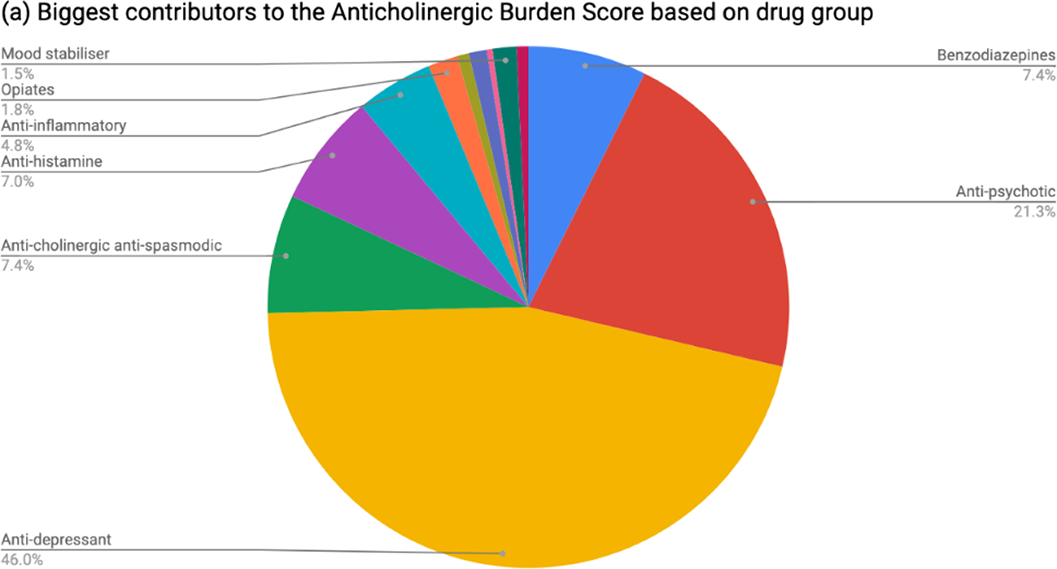
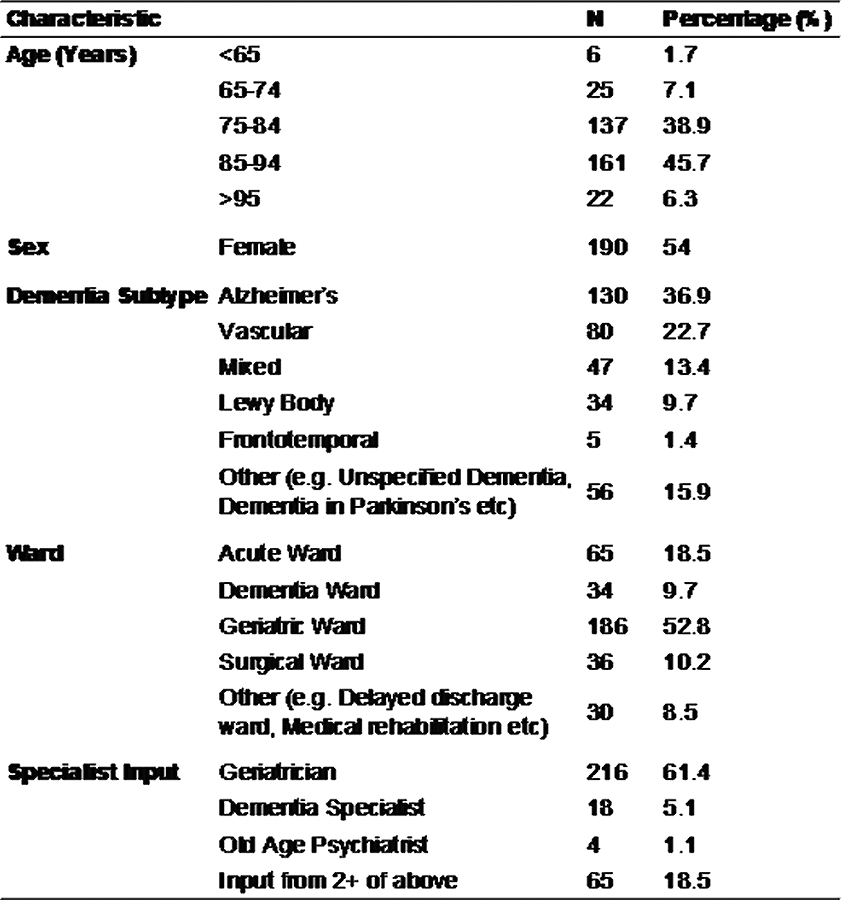
Table 1 shows patient demographics. On admission, 37.8% of patients had an anticholinergic burden score ≥1 and 5.68% ≥3. At discharge, 43.2% of patients had an anticholinergic burden score ≥1 and 9.1% ≥3. The increase was statistically significant (rho 0.688; p=2.2x10⁻¹⁶). The most common group of anticholinergic medications prescribed at discharge were psychotropics (see Figure 1). Among patients prescribed cholinesterase inhibitors, 44.9% were also taking anticholinergic medications.
Conclusions
This multicentre cross-sectional study found that people with dementia are frequently prescribed anticholinergic drugs, even if also taking cholinesterase inhibitors, and are significantly more likely to be discharged with a higher anticholinergic drug burden than on admission to hospital.
Conflict of interest
This project was planned and executed by the authors on behalf of SPARC (Student Psychiatry Audit and Research Collaborative). We thank the National Student Association of Medical Research for allowing us use of the Enketo platform. Judith Harrison was su
Benzodiazepines (BZDs) and related drugs (BZRDs) are widely used to reduce agitation, anxiety and sleep disturbances in the elderly, despite concerns raised about their modest efficacy for such indications and risk of severe adverse effects, including acute consequences on cognition. Recently, some studies have also raised concerns about the long-term effect of BZDs, suggesting their association with an increased risk of cognitive decline and dementia.
Objectives
To review published synthesis studies on the risk of dementia development due to BZDs/BZRDs use.
Methods
An electronic search was conducted in PubMed. Meta-analysis, systematic and non-systematic reviews examining the association between BZDs/BZRDs and subsequent dementia were included. No language nor publication date restrictions were applied. Search results other than synthesis studies were excluded. Studies were screened for relevance based on predefined inclusion and exclusion criteria.
Results
Overall, 246 results were obtained. After initial screening, nine studies were included. From these, three were systematic reviews with meta-analysis of observational studies (cohort and/or case-control), one was a systematic review from observational studies and five were non-systematic reviews. Most studies found an association between BZDs/BZRDs and subsequent dementia, with meta-analysis studies reporting an increased risk (OR) between 1,38 and 1,78, even after controlling for protopathic bias. However, difficulties in establishing a causal relationship are reported due to the considerable clinical and methodological heterogeneity of the primary studies.
Conclusions
Most studies suggest an association between the use of BZDs/BZRDs and dementia risk, highlighting that their prescription should be cautious, prevented or reduced to attenuate this risk.
Exercise has been repeatedly reported as an effective means of preventing and treating mood disorders. Therefore, there is a significant research interest for the way exercise is connected with depression and the effectiveness of different exercise parameters as intensity, duration and modality. There is significant research evidence supporting the hypothesis that exercise can alleviate the symptoms of clinical depression. Nevertheless, there has not enough evidence to compare the effectiveness of deferent types of exercise as complementary therapy in depression.
Objectives
The purpose of the present study was to review the available research concerning the effect of exercise modality in depression and attempt to code and analyze the programs used in elderly (>65).
Methods
A systematic review was contacted of randomized control trials published in electronic journals. The electronic data bases PubMed, EBSCOhost and Trip Medical Database were used.
Results
Combined programs are predominate used for improving mood in elderly and the combinations used more frequently was short-term, light to moderate sub maximal aerobic exercise combined with dynamic resistance exercise following by Short-term, light to moderate sub maximal aerobic exercise combined with static exercise. Other psychosocial factors that commonly included in the combined exercise programs are group interaction, mindfulness and music.
Conclusions
Combined exercise programs are as effective as simple programs in alleviated the symptoms of depression in elderly. Their advantages over simple programs are that they can promote other health benefits; they are less time consuming and more pleasurable to participants. Therefore, they are good exercise choice for elderly.
Given the marked population aging in the world, the incidence of dementia has significantly increased, becoming a growing health care problem. Suicide is a considerable health issue throughout the life span, being prevalent in older adults, and in many countries the highest suicide rates are found in the elderly. Thus far, the relationship between dementia and suicide remains poorly understood and inconsistent.
Objectives
The aim of this study is to do a non-systematic review of the current literature regarding the association between suicide risk and dementia.
Methods
We conducted a research using the Medline database, through the Pubmed search engine, using the following key-words: “dementia”, “suicide” and “risk factors”.
Results
Overall, the risk of suicide in people with dementia appears to be the same as that of age-matched general population. However, studies point to the existence of a number of factors that can increase this risk, such as: early age of dementia diagnosis, recent diagnosis, disease awareness and depression, hopelessness, male gender, failure to respond to anti-dementia medication, history of inpatient psychiatric hospitalizations, concurrent medical comorbidities.
Conclusions
Studies have reported mixed results as to whether dementia itself is an independent risk factor for suicide. Despite these findings, understanding the risk factors for suicide among people with dementia is crucial and suicide prevention efforts should be carried out in this population.
Mild cognitive impairment (MCI) becomes increasingly common. It has been demonstrated high risk of progression to dementia. There are no approved medications for treatment of MCI while cognitive intervention might improve cognitive deficits. However, there have been insufficient evidence supporting the effect of the cognitive intervention.
Objectives
To evaluate the effects of a cognitive rehabilitation training in patients with Mild cognitive impairment
Methods
A randomized controlled single-blind trial was conducted. Participants aged ≥ 60 years diagnosed with MCI were recruited and randomly assigned to intervention group (n=32) or waiting list control group (n=32). The intervention was 3-day weekly sessions of multi-component cognitive rehabilitation training for 3 months. Outcomes were assessed by the Cambridge Neuropsychological Test Automated Battery (CANTAB) to measure the effects of intervention at baseline, 3-month and 6-month follow up within the intervention group and compare between intervention group and control group.
Results
The intervention showed significant improvements on the visual episodic memory (p<0.05) and on the executive function (p<0.05) at 3-month follow up. There was a trend towards improvement of cognition between the intervention group and control group, but this effect was not significant. At 6-month follow up, the OTS significantly changed from 3-month follow up, which reflect the maintaining effects of the cognitive training.
Conclusions
The cognitive rehabilitation training has demonstrated improvement of the visual episodic memory and the executive function for the elderly with MCI.
Behavioral and psychological symptoms of dementia (BPSD) are a heterogeneous group of clinical manifestations related to dementia, including apathy, depression, anxiety, delusions, hallucinations, disinhibition, sleep-wake cycle disturbances, aggression and agitation. BPSD have a negative impact on cognitive decline and increase complications.
Objectives
Review treatment management of BPSD including non-pharmacological and pharmacological options, but mainly interventional approaches, such as electroconvulsive therapy (ECT).
Methods
We conducted a search in PubMed and ClinicalKey with the terms: “Behavioral and psychological symptoms of dementia”; “Electroconvulsive therapy”.
Results
The vast majority of patients with dementia will develop one or more BPSD. The etiopathogenesis of BPSD is complex and multifactorial, with multiple direct and indirect factors, namely biological, psychological and social aspects and related to changes in cholinergic, dopaminergic, noradrenergic and serotoninergic circuits. Current guidelines recommend non-pharmacological interventions as the first-line approach for BPSD. Pharmacotherapy is often applied, but it carries out the risk of serious side-effects and pharmacologic interactions. There is now growing evidence that interventional approaches, such as ECT, could be safe and efficient when previous treatment options have been exhausted or ineffective, with few contraindications and transient/limited adverse effects.
Conclusions
BPSD represent a heterogeneous group of non-cognitive symptoms and behavior that affects most of dementia patients. Combination of non-pharmacological and pharmacological interventions is the recommended therapeutic for BPSD. However, there is usually limited clinical improvement and issues related to tolerability and effectiveness. Currently, ECT is considered a safe and effective option.