



“ While I love you loving me, I find myself in you thinking about me” Marsilio Ficino, “On Love” (De Amore), 1474.
In a Gist
This paper outlines a novel theory of romantic love based on the premise that love serves the fundamental human need for significance and mattering (Kruglanski et al., Reference Kruglanski, Molinario, Jasko, Webber, Leander and Pierro2022; Kruglanski, Prilleltensky, & Raviv, Reference Kruglanski, Prilleltensky and Ravivin press; Kruglanski & Raviv, Reference Kruglanski and Ravivin press; Prilleltensky & Prilleltensky, Reference Prilleltensky and Prilleltensky2021). We assume that people fall in love with a partner if this is likely to enhance their own felt significance and mattering. Loving a partner means appreciating their unique qualities, hence lending them significance. Love actually is a “two-way street:” one loves a partner who accords them significance; inversely, one’s love together with one’s merits bestows significance on the partner.
Love for a partner depends on the actor’s perceptions that (1) the partner possesses meritorious characteristics and (2) that they appreciate the actor and view them as significant. We assume that these two factors multiplicatively combine with the magnitude of the actor’s quest for significance to determine the likelihood of the actor becoming enamored with the partner. The multiplicative model has two implications: 1. If any one of the partner’s merit, appreciation, or actor’s significance quest factors falls below its respective threshold of acceptability (such that it is subjectively non-existent), the likelihood of falling in love will be negligible. 2. Above their acceptability thresholds, levels of (partner’s) merit, appreciation, and (actor’s) significance quest factors compensate for one another. A partner’s lower standing on merit or appreciation is compensated in its impact on falling in love by the partner’s higher standing on the remaining dimension. Furthermore, lower levels of either or both of these factors are compensated for by the actor’s higher level of significance quest.
In the same way that a very hungry person is likely to be less discriminating about foods they are willing to consume, an actor who experiences a higher degree of significance quest, all else being equal, is likely to be less discriminating concerning the merit and appreciation aspects of a potential partner, hence is more likely to fall in love with a candidate lower in merit and/or appreciation values. In what follows, we unpack our “love as the (significance) quest” model, outline the hypotheses it suggests, and examine prior and novel data that address them.
Introduction
Love is one of the most celebrated aspects of the human experience. How it exerts its power and how it makes “the world go round”Footnote 1 have been the subject of literature, plays, movies, and all manner of cultural discussions for centuries (e.g., see Ficino, Reference Ficino1484; Michelet, Reference Michelet1858). Part of the subject’s allure is the alleged mystery of love – suggested by love’s frequent portrayal as an irrational force, fueled by passion and refractory to reason. In popular lore, love is often depicted as magic, arising from an intricate chemistry between people, resembling an instantaneous fire lit by a “stroke of lightning” (as in the French “coup de foudre” metaphor).
Reluctant to concede love to unfathomable mystery, however, scientists have invested major efforts in deciphering its enigma. Over the years, researchers have sought to illuminate diverse aspects of the love phenomenon, from its macro-level functionality to the survival of the human species (Buss, Reference Buss1999) and the rise of civilizations (Freud, Reference Freud2015/1929; Michelet, Reference Michelet1858), to the microcosm of the human brain and its neurochemistry (e.g., Esch & Stefano, Reference Esch and Stefano2005).
Beyond love’s functionality, or neurochemistry, of major interest to scholars has been love’s phenomenology (Berscheid & Hatfield-Walster, Reference Berscheid and Hatfield-Walster1969, Reference Berscheid and Hatfield-Walster1978; Aron & Aron, Reference Aron and Aron1986; Sternberg, Reference Sternberg1986; Eastwick, Finkel, & Joel, Reference Eastwick, Finkel and Joel2023; Reis & Aron, Reference Reis and Aron2008). Important work in this domain has addressed love typologies (Sternberg, Reference Sternberg1986), the choices love impels (Berscheid & Hatfield-Walster, Reference Berscheid and Hatfield-Walster1969), the emotions it elicits (Aron & Aron, Reference Aron and Aron1986), and the evaluations that drive it (Eastwick et al., Reference Eastwick, Finkel and Joel2023). In this paper, we address these issues from a motivational perspective, in particular through the lens of a theory that assigns a major role in the love phenomenon to the quest for significance, people’s fundamental desire for mattering and social worth (Kruglanski et al., Reference Kruglanski, Prilleltensky and Ravivin press).
Defining Love
Love has been the subject of extensive psychological research over the last half-century, yet there have been few attempts to ascertain its essence, and there exists to date no unique, generally agreed-upon definition of love.
Rubin (Reference Rubin1970, Reference Rubin1973) viewed love as a multifaceted attitude involving predispositions to think, feel, and act in particular ways, such as needing, helping, idealizing, absorption with, and confiding in the love object. Alternatively, love has been characterized as an emotion. Indeed, college students view love as a more prototypical emotional experience than affective states commonly discussed in research on emotions, such as fear, anger, and happiness (Shaver et al., Reference Shaver, Schwartz, Kirson and O’Connor1987). Rather than specifically defining love, other authors (Berscheid & Hatfield-Walster, Reference Berscheid, Hatfield-Walster and Huston1974; Hatfield & Walster, Reference Hatfield and Walster1978) described distinct varieties of love, including companionate love (e.g., involving affection, liking, trust, and enjoyment of shared activities) and passionate or romantic love (e.g., involving excitement, arousal, euphoria, and sexual desire; see also Aron & Westbay, Reference Aron and Westbay1996; Fehr & Russell, Reference Fehr and Russell1991). Berscheid (Reference Berscheid2010) later identified compassionate love – care for the other’s welfare – as a third type (see also Clark & Monin, Reference Clark, Monin, Sternberg and Weis2006; Sprecher & Fehr, Reference Sprecher and Fehr2005). Similarly, Sternberg’s (Reference Sternberg1986) triangular theory of love identified three components of love – intimacy (i.e., feelings of closeness and connectedness), passion (i.e., physical attraction and sexual desire), and commitment (i.e., the decision to love and commitment to maintain the love relationship), a pattern that was supported empirically (Aron & Westbay, Reference Aron and Westbay1996). Different combinations of these components are thought to produce eight kinds of love. Other love types have also been identified (e.g., Berscheid, Reference Berscheid2010; Fehr & Russell, Reference Fehr and Russell1991; Hendrick & Hendrick, Reference Hendrick and Hendrick1986).
Our theorizing is consistent with views of love as an interpersonal positive emotion (Fredrickson, Reference Fredrickson2001; Shaver et al., Reference Shaver, Schwartz, Kirson and O’Connor1987; Hazan & Shaver, Reference Hazan and Shaver1987). In particular, we suggest that love is the feeling of appreciation (admiration, adoration) toward one’s partner. Within a loving relationship, appreciation is reciprocated. Indeed, love represents a communal bond (Clark & Mills, Reference Clark, Mills, Lange, Kruglanski and Higgins2011) based on an unwritten contract about mutual appreciation. The partners matter to each other. Their feelings of love toward each other elicit an approach motivation expressed in desiring closeness, intimacy, and companionship with each other (Berscheid, Reference Berscheid2010) and caring about each other’s needs, as well as commitment to and compassion toward each other (Berscheid, Reference Berscheid2010; Rubin, Reference Rubin1970, Reference Rubin1973; Sternberg, Reference Sternberg1986).
Our love as appreciation definition is construed broadly, encompassing a momentary emotional experience of falling in love as well as an enduring attitude of love in a stable romantic relationship. This view is consistent with prior conceptions of love in the close relations literature, yet it prioritizes the emotional feeling of appreciation for the other and distinguishes it from the several consequences of appreciation, including seeking closeness and intimacy with, and commitment to, the beloved other, as well as exhibiting caring and compassion toward them.
The quest for significance
The quest for significance is a universal human motive to be recognized and respected. It is the desire to matter, to be “somebody,” and to have self-respect and that of others. The possession of significance can be assessed through measures of self-esteem, perceived acceptance, perceived status, and other measures tapping perceived personal and social value. We assume that love is an important, albeit not an exclusive, means to significance. In other words, being loved by another means that for that person at least – one matters and is special and significant. Our significance quest theory (Kruglanski et al., Reference Kruglanski, Molinario, Jasko, Webber, Leander and Pierro2022; Kruglanski et al., Reference Kruglanski, Prilleltensky and Ravivin press; Kruglanski & Raviv, Reference Kruglanski and Ravivin press) stipulates that while people stably differ in the magnitude of their significance quest (their “ambitiousness”), this motivation can be situationally activated either by significance deprivation, that is, significance loss, or by its incentivization, a seen opportunity for significance gain. Significance is attained by serving, representing, or affirming an important value to which one subscribes (Steele, Reference Steele1988; Sherman & Cohen, Reference Sherman, Cohen and Zanna2006), through any possessed attribute or enacted behavior that one considers worthy and that is seen as worthy by one’s reference group (Merton & Kitt, Reference Merton and Kitt1950); this could be a moral value like patriotism, honesty, kindness, or courage, but also an aesthetic value like good looks, an economic value like wealth, or a political value like power. Representing or realizing any of these values lends a person social worth in the eyes of their peers, fellow ingroup members, and – through the internalized anticipation of their reactions – in one’s own eyes as well (Cooley, Reference Cooley1902; Mead, Reference Mead1913). Critically, we suggest that one’s significance is conveyed by the appreciative attitude of others whose behavior demonstrates admiration, concern for, and care about oneself, granting that those others are themselves respected as possessors of worthy attributes. Being loved by someone who matters powerfully suggests one’s significance.
Love and the quest
We assume an intimate connection between love and significance, wherein the former serves as a means to the latter. The quest for significance is general and can be satisfied by means other than love (e.g., career accomplishments), yet love within a specific relationship is a direct and primordial means of significance attainment.
From infancy onward, love bestowed on the individual communicates that they matter. Receiving loving attention in the earliest months of the child’s life contributes to subsequent feelings of secure attachment (Bowlby, Reference Bowlby1969; Ainsworth et al., Reference Ainsworth, Blehar, Waters and Wall1978; Sroufe, Reference Sroufe2005; Stern & Cassidy, Reference Stern, Cassidy, Kruglanski, Prilleltensky and Ravivin press), inducing a sense of self-worth and significance. The significance-serving function plays a crucial role in romantic love as well. While actors may not recognize it explicitly, their falling in love is driven by their desire to reciprocate and sustain their meritorious partner’s appreciation of themselves, nourishing their sense of significance and matteringFootnote 2 .
A tri-factorial model of love
Assuming that love represents the actor’s attempt to reciprocate the significance bestowed on them by the partner, it is important to identify what underlies such bestowal in the first place. To that end, we present now our tri-factorial theory of love, the “love as the quest” model. Two of the three factors assumed to play a major role in love’s likelihood pertain to attributes of one’s potential partner in a romantic relationship; the third factor is an attribute of the actor, the person whose likelihood of falling in love is of present interest.
Partner factors: “Merit” and “Appreciation.” There are two intertwined ways in which a partner’s love bestows significance on an individual. We call them “merit” and “appreciation” factors.
Merit. “Merit” pertains to the perceived characteristics of the partner the actor deems desirable. As Frankfurt (Reference Frankfurt2009, pp. 38-39) aptly noted, “Love is often understood as being, most basically, a response to the perceived worth of the beloved. We are moved to love something, on this account, by what we take to be its exceptional inherent value. The appeal of that value is what captivates us and turns us into lovers.”
Perceived partner merit is subjective, though it is largely affected by social norms prevalent in the society of which one is a member and which reality one shares (Higgins, Reference Higgins2019). Among domains of merit prevalent in most societies are power, wealth, beauty, courage, patriotism, status, and so on. Nonetheless, a given actor may find desirable and meritorious some partner characteristics that are valued in smaller reference groups but not agreed upon as particularly meritorious in the actor’s larger social milieu, for instance, the partner’s musicality, multilingualism, or enological expertise.
Whereas some meritorious traits are relatively stable and consistent across contexts (e.g., physical attractiveness, social status, power, wealth), a perceived partner’s merit may also be context-dependent. An attribute that may appeal to an actor in one context (e.g., a firefighter’s courage or a bodyguard’s devotion in a dangerous situation) may lose its luster in an alternative context (e.g., at a cocktail party with smooth-talking, upper-crusty, and well-tailored friends). The fit between a partner’s features and prescriptive norms (i.e., consensually desired qualities) relative to specific situations may impact attraction to the partner because it shapes one’s felt or anticipated significance. For instance, when their romantic partners use humor that deviates from social norms, people feel embarrassed (Hall, Reference Hall2011), and concerns about one’s social image are exacerbated with increasing psychological or physical closeness to partners who engage in socially undesirable behavior (Fortune & Newbyh-Clark, Reference Fortune and Newby-Clark2008).Footnote 3
Appreciation. In the present conception, partner “merit” pertains to their perceived characteristics as they exist in general and apart from the partner’s specific relationship with the actor (Kenny, Reference Kenny2020). They refer to what the partner is as a person, rather than to shared experiences occurring between actor and partner. The latter are relationship-specific and embodied in the factor of partner appreciation, pertaining to the direct significance-boosting care, concern, and positive regard that a warm, loving partner provides. Partner’s appreciation (for the actor) is reflected in a variety of behaviors attesting that the actor matters and is significant to the partner. These include positive regard and affection (Murray et al., Reference Murray, Holmes and Griffin2000), adoration (Schindler, de Oliveira, & Dufresne, Reference Schindler, de Oliveira and Dufresne2015), responsiveness (Reis, Clark, & Holmes, Reference Reis, Clark, Holmes, Mashek and Aron2004), understanding (Gordon & Chen, Reference Gordon and Chen2016), attentiveness (Ohtsubo et al., Reference Ohtsubo, Matsumura, Noda, Sawa, Yagi and Yamaguchi2014), communal motivation (Clark & Mills, Reference Clark, Mills, Lange, Kruglanski and Higgins2011), and so on.
Of course, the most desirable love partner is someone high on both “merit” and “appreciation” – an admired and valued partner who reciprocates the appreciation. In fact, some theorists (Eastwick et al., Reference Eastwick, Finkel and Joel2023; Eastwick & Hunt, Reference Eastwick and Hunt2014) combine what we call “merit” and “appreciation” components into a single factor they refer to as mate value. For instance, mate value is seen to include such “merit” attributes as attractive, outgoing, nice body, sexy, and intelligent, as well as such “appreciation” attributes as caring, understanding, supportive, and offering companionship.
As seen later, however, in our model, the distinction between “merit” and “appreciation” factors is critical in that the perceived absence of either may disqualify a candidate from being considered a love object.
Actor Factor: Significance-Quest Magnitude. A unique aspect of the present theory is its emphasis on the motivational substrate of love: the human quest for significance and mattering (Kruglanski et al., Reference Kruglanski, Molinario, Jasko, Webber, Leander and Pierro2022; Kruglanski et al., Reference Kruglanski, Prilleltensky and Ravivin press; Kruglanski & Raviv, Reference Kruglanski and Ravivin press; Prilleltensky & Prilleltensky, Reference Prilleltensky and Prilleltensky2021). As with any motivation, people’s need for significance may vary in magnitude across persons and situations (Kruglanski et al., Reference Kruglanski, Molinario, Jasko, Webber, Leander and Pierro2022). Not everyone is equally ambitious or desirous of significance, and one’s momentary level of significance quest may fluctuate depending on the degree of its activation, the relative magnitude of other needs, and one’s general level of energy and resources (Kruglanski et al., Reference Kruglanski, Bélanger, Chen, Köpetz, Pierro and Mannetti2012). For instance, one might not care much about significance when attempting to take care of one’s hunger, safety, or state of health. Similarly, one would not care much about significance when in a state of extreme fatigue or prolonged sleeplessness. We assume that an actor’s momentary magnitude of the quest for significance depends jointly on this person’s stable individual degree of that need and the situational conditions that facilitate or impede its expression.
Multiplicative Relation. Our model of love posits a multiplicative relation between the “merit,” “appreciation,” and “significance quest” factors in their effects on love. Specifically, we assume that an actor’s falling in and out of love with a partner is determined by a product of the partner’s perceived “merit” (MR) and “appreciation” (AP), as well as the actor’s “significance quest” (SQ) values (see equation 1)
 $$\rm{L \sim MR \times Ap \times SQ}$$
Our product model of love has two general implications derived from the multiplicative relation as such. One is that if either the candidate’s “merit” or “appreciation” attributes fall below its acceptability threshold (calibrated as zero)Footnote 4 , Footnote 5 , or if the actor’s quest for significance in a given situation was negligibly low (also at zero, as it were), there would be no love. Thus, one will not fall in love with someone perceived as lacking in minimal acceptable desirable traits (in the actor’s eyes), nor with someone who obviously doesn’t and isn’t likely (in the actor’s eyes) to show the actor at least minimal amounts of appreciation (Baumeister, Wotman, & Stillwell, Reference Baumeister, Wotman and Stillwell1993; Baumeister & Wotman, Reference Baumeister and Wotman1992). Similarly, the likelihood of falling in love with a candidate would be vanishingly low if one’s quest for significance at a given moment was negligible, for instance, if one was preoccupied with satisfying a different burning concern (like hunger or safety). Similarly, love should decline and “wither on the vine” if, in the course of the relationship, one came to the conclusion that one’s partner was largely devoid of merit or had no appreciation to offer, or if the actor was thoroughly preoccupied with alternative needs (e.g., physical survival) so that issues of mattering and significance were distant from their mind (Maslow, Reference Maslow1943).
The second implication of the product model is that beyond their acceptability thresholds the “merit,” “appreciation,” and “significance quest” factors compensate for each other, so that a high value on the “merit” dimension would compensate for a low value on the “appreciation” dimension, and a high value on the “appreciation” dimension should compensate for a low value on the “merit” dimension. Similarly, a high level of the actor’s “significance quest” should compensate for lower levels of the partner’s “merit” and “appreciation” factors; vice versa, high levels of the partner’s “merit” and “appreciation” factors would compensate for the actor’s low level of the significance quest. In other words, an actor who is high (at the time) on the quest for significance will be ready to fall in love with a partner who is lower on the “merit” and/or “appreciation” values. Simply, their thresholds for merit or appreciation will be lowered by their stronger quest for significance.
Note that people who already have some significance aren’t immune to love. Such persons needn’t be necessarily low on their quest for significance. There is in principle no upper bound on one’s possible significance, so a person who already had a given level of significance might be tempted to gain even moreFootnote 6 . As noted earlier, significance quest theory suggests that the quest for significance can be activated not only by significance deprivation but also by incentivization, the opportunity for significance gain.Footnote 7 In other words, people who already feel significant might be spurred to desire more significance if an opportunity to get it turned up. In the romantic realm, such an occasion may involve meeting someone of extraordinary merit and/or likely to offer a particularly ample appreciation, hence capable of boosting one’s significance beyond the current level. In other words, people who already feel significant are likely to be more selective about who they fall in love with, and in that sense, they should fall in love less easily.
Hypotheses and empirical support
In what follows, we outline several hypotheses implied by our “love as a quest” model and examine them in light of available evidence.
Hypothesis 1: People will tend to fall in love with partners who enhance their sense of significance via the “merit” mechanism.
According to the significance quest theory (Kruglanski et al., Reference Kruglanski, Molinario, Jasko, Webber, Leander and Pierro2022), people’s sense of self-worth and mattering derives from their representing, affirming, or serving values that the individual (and their group) holds dear. In these terms, the merit mechanism suggests that actors will seek and enter into love relationships with partners who represent values that are important to them, their ingroups, and the community. Indeed, there is evidence that wanting and entering into a love relationship is highly dependent on the potential partner’s “merit” attributes. Along these lines, Regan et al. (Reference Regan, Levin, Sprecher, Christopher and Gate2000) found that in mate selection both men and women emphasized the partner’s socially desirable attributes related to sexual attractiveness, health, athleticism, and status.
The ideal standards model posits that actor ideals – hoped for and desired qualities in a romantic partner – guide people’s interpersonal judgments and decisions (Fletcher & Simpson, Reference Fletcher and Simpson2000). Partner ideals are based on three evaluative dimensions – (a) warmth, commitment, and intimacy; (b) health, passion, and attractiveness; and (c) status and resources. As can be seen, these attributes readily fit into the “merit” (health, attractiveness, status, and resources) and “appreciation” (warmth, commitment, intimacy, and passion) categories.
Consistent with our and the ideal standards models, participants spontaneously mention many attributes that fall into the “merit” categories of health-passion-attractiveness and status-resources, and they rate those attributes as desirable for their partners to possess. Moreover, ratings of the importance of health-passion-attractiveness and status-resources load on a single factor (Fletcher et al., Reference Fletcher, Simpson, Thomas and Giles1999). From our perspective, this factor reflects the desire for a “meritorious” partner. People experience their relationships as higher in quality to the extent that they perceive their partners as living up to their desires for these “merit” attributes (Fletcher et al., Reference Fletcher, Simpson, Thomas and Giles1999).
Several additional findings offer converging support for the importance of “merit” characteristics in romantic partner selection. In the classic “computer dance” study by Walster and colleagues (Reference Walster, Aronson, Abrahams and Rottman1966), participants were randomly paired with a date who was ostensibly chosen via a computer matching algorithm but was actually randomly assigned. Both during the session and four to six months later, participants liked more the attractive (vs. less attractive) dates, wanted to see them again, and actually pursued a subsequent meeting with the date. Physical attractiveness predicted these outcomes more strongly than indicators of the date’s intellectual abilities and personality traits. In online forums, people seek out attractive partners and are more receptive to their initiation attempts (Fiore et al., Reference Fiore, Taylor, Mendelsohn and Hearst2008; Lee et al., Reference Lee, Loewenstein, Ariely, Hong and Young2008; Taylor et al., Reference Taylor, Fiore, Mendelsohn and Cheshire2011). In speed dating events, people attempt to initiate relationships with attractive potential partners and potential partners with good earning potential (Eastwick & Finkel, Reference Eastwick and Finkel2008). People also tend to feel more attracted to partners with high social standing, such as those with prestigious occupations or strong earning potential, compared to partners with lower status (Townsend, Reference Townsend1993), and rate social status as a somewhat important quality for their romantic partners to possess (Sprecher & Regan, Reference Sprecher and Regan2002). Using peer reports of targets’ dating desirability and personal characteristics, Speed and Gangestad (Reference Speed and Gangestad1997) found that individuals who were good-looking and who were considered “trendsetters,” an indicator of social status, were more sought after as dates. Thus, there is ample empirical evidence for the notion that “merit” qualities garner romantic attraction.
Constraints on the Pursuit of Merit: Matching and Standards Adjustment . Although most people may ideally like a partner highest in “merit,” not everyone can obtain such a partner. As noted earlier (Footnote Footnote 5), “meritorious” actors want “meritorious” partners, whose “appreciation” is likely to effect a substantial enough boost to their significance. Their love offers the partner more significance; hence, they “demand” more “meritorious” love in return. When one lacks in “merit” qualities, insisting on a high-“merit” partner could yield unproductive pursuits of partners who are unlikely to reciprocate the actors’ romantic interest, failing to offer them sufficient appreciation. Accordingly, people may relax their requirements for a significance-enhancing “merit” partner when their own self-perceived ”merit” characteristics are deemed insufficient. They may instead pursue more realistic partners who, in light of their own qualities, could provide the greatest significance boost possible. Hence, our “love as the quest” model predicts “merit matching” within romantic couples (Kalick & Hamilton, Reference Kalick and Hamilton1986). It also predicts an association between a participant’s self-assessed “merit” characteristics and requirements for those characteristics in partners.
Consistent with this assumption, matching on “merit” characteristics is well documented. For instance, romantic partners tend to be similar in physical attractiveness, education, and occupational status (Feingold, Reference Feingold1988; McClintock, Reference McClintock2014; Schwartz, Reference Schwartz2013). On an online dating forum, people tend to contact others who have a similar level of popularity, with popularity being operationalized as the number of unique people who initiated contact with a user (Taylor et al., Reference Taylor, Fiore, Mendelsohn and Cheshire2011).
The adjustment of standards to accommodate one’s own “merit” characteristics is also well documented. The aforementioned “computer date” study revealed such effects (Walster et al., Reference Walster, Aronson, Abrahams and Rottman1966). Before they met their dates, participants rated how physically attractive, personally attractive, and considerate they expected their dates to be. Less attractive participants reported lower standards for their dates’ attractiveness. Stroebe et al. (Reference Stroebe, Insko, Thompson and Layton1971) found similar effects for self-rated attractiveness. Studies of online dating reveal that, relative to their highly attractive counterparts, less attractive people tend to place less weight on physical attractiveness when selecting dating partners (Lee et al., Reference Lee, Loewenstein, Ariely, Hong and Young2008), and less attractive people are less selective in speed dating settings (Back et al., Reference Back, Penke, Schmukle, Sachse, Borkenau and Asendorpf2011).
Merit-matching extends to other qualities beyond physical attractiveness. Regan (Reference Regan1998a) found that the higher the actors’ self-assessed social status and agreeableness, the more selective they were on these same attributes for a potential sexual and romantic partner. In addition, Regan (Reference Regan1998b) reported that the higher a woman estimated her rank to be on social status, intellect, and family orientation, the higher she preferred her ideal sexual and romantic partners to rank on these dimensions. Buston and Emlen (Reference Buston and Emlen2003) found that individuals who rated themselves highly on wealth and status placed greater importance on these qualities in a romantic partner. Thus, there is strong evidence that people’s requirements for high-merit partners are constrained by their own social capital. It suggests that a divergence between what people would ideally like (i.e., value) and what they can realistically obtain (i.e., expectancy) determines what they strive to obtain, thus setting a cap on the partner’s “merit” level that the actor realistically can hope for.
Hypothesis 2: People fall in love with partners who enhance their sense of significance via the “appreciation” mechanism
Significance quest theory (Kruglanski et al., Reference Kruglanski, Molinario, Jasko, Webber, Leander and Pierro2022) posits that people’s sense of significance and mattering derives from embodying values that they (and their group) hold dear. More precisely, people’s sense of significance should depend most critically on whether they believe that important others acknowledge and appreciate this embodiment. The “appreciation” mechanism suggests that actors will seek love relationships with partners who appreciate their qualities and make them feel significant. Partners who express positive regard, admiration, and care communicate that actors are worthwhile persons who matter. Indeed, there is evidence that entering into a love relationship is highly dependent on the potential partner’s “appreciation” potential.
Along those lines, several studies suggest that warmth, commitment, and intimacy are the most desired partner qualities, relative to the other major dimensions examined in this research (i.e., relative to health, passion, attractiveness, status, or resources) (Fletcher et al., Reference Fletcher, Simpson, Thomas and Giles1999; Reference Fletcher and Simpson2000). These qualities include being “supportive,” “considerate,” “kind,” and “understanding,” all qualities suggesting appreciation. Similarly, Buss and Barnes (Reference Buss and Barnes1986) and Sprecher and Regan (Reference Sprecher and Regan2002) found that men and women want appreciation qualities in their romantic partners, such as warmth, kindness, understanding, affection, and loyalty.
Within dating and marital relationships, people report wanting their partners to see their virtues (e.g., to be seen as warm, patient, and understanding, as well as physically attractive, athletic, socially skilled, and intelligent; Murray, Holmes, & Griffin, Reference Murray, Holmes and Griffin2000), suggesting a desire for partner appreciation. People are especially desirous of their partner’s appreciation when they are highly committed to their partners, suggesting that the pursuit of appreciation increases further when people become invested in their relationships (Lemay, Ryan, & Teneva, Reference Lemay, Ryan and Teneva2021). These desires are not merely the result of wanting partners with veridical perceptions, as even people who do not see these virtues within themselves want to be viewed positively by their partners (Murray et al., Reference Murray, Holmes and Griffin2000). People are more satisfied in their relationships and find more value in their partners when they feel appreciated by their partners on these dimensions (Murray, Holmes, & Collins, Reference Murray, Holmes and Collins2006). Moreover, manipulations that lower perceptions of a romantic partner’s self-regard also diminish their sense of closeness and positive regard toward their partner (Murray et al., Reference Murray, Rose, Bellavia, Holmes and Kusche2002). Thus, people want appreciation qualities in their partners, and the extent to which they perceive that their partners possess these qualities determines how much people seem to love them.
Research on perceived partner responsiveness and perceived social support also suggests the importance of partners’ appreciation for maintaining love. People are more satisfied in their relationships and report more intimacy and other positive feelings within relationships when they perceive their partners as attentive and considerate, demonstrating qualities such as empathy, validation, and genuine care (Crasta et al., Reference Crasta, Rogge, Maniaci and Reis2021; Laurenceau, Barrett, & Pietromonaco, Reference Laurenceau, Barrett and Pietromonaco1998). Likewise, people feel more satisfied in their relationships when they perceive that their partners provide social support (Collins & Feeney, Reference Collins and Feeney2000) and when they believe that their partners care for their welfare (Lemay, Clark, & Feeney, Reference Lemay, Clark and Feeney2007). These theoretical perspectives and findings suggest that love is sustained, in part, by a partner’s “appreciation” for oneself.
Findings on reciprocity of attraction point to a similar conclusion. People’s narratives about falling in love suggest that it was frequently preceded by believing that the other person liked the self (Aron et al., Reference Aron, Dutton, Aron and Iverson1989). Similarly, people report that reciprocal liking was a strong determinant of their romantic attraction (Sprecher, Reference Sprecher1998). Evidence of dyadic reciprocity in romantic attraction also emerged using a speed dating paradigm and a series of 4-minute speed dates between undergraduates (Eastwick et al., Reference Eastwick, Finkel, Mochon and Ariely2007). That is, people were more likely to uniquely appreciate their dates when they uniquely appreciated them in return, independently of each person’s general tendencies to like others and be liked by others. Such findings suggest that a partner’s “appreciation” qualities can ignite romantic love.
Hypothesis 3: People derive a sense of significance from their partner’s “merit” and “appreciation” characteristics
Beyond the distinction between merit and appreciation, a unique aspect of the present theory is its focus on love’s motivational substrate, believed to be the human need for significance and mattering. It follows, therefore, that partners’ desirable qualities of both “merit” and “appreciation” types should lend actors feelings of significance. Consistent with this assumption, Sedikides, Oliver, & Campbell (Reference Sedikides, Oliver and Campbell1994) found that participants reported a positive change in their self-esteem as part of the benefits of being in a romantic relationship. Other studies highlight more specifically that a partner’s “merit” and “appreciation” qualities contribute to people’s sense of significance.
Several findings support our contention that obtaining a “meritorious” partner, or having the appearance that one did, enhances a person’s significance. In two studies, Rodeheffer, Proffitt Leyva, & Hill (Reference Rodeheffer, Proffitt Leyva and Hill2016) found that women perceive men as preferable (hence, worthy of consideration as romantic partners) when they are paired with attractive, but not with unattractive, romantic partners (see also Meiners & Sheposh, Reference Meiners and Sheposh1977; Bar-Tal & Saxe, Reference Bar-Tal and Saxe1976). The same pattern of results was observed in men as well, while keeping women’s attractiveness constant (Moran & Wade, Reference Moran and Wade2022). Thus, people’s social worth or significance seems to be determined, in part, by the attractiveness of their partners.
These effects extend beyond desirability for short-term encounters. Indeed, when selecting long-term romantic partners, both men and women are considered more attractive when they are partnered with someone attractive (Little et al., Reference Little, Burriss, Jones, DeBruine and Caldwell2008). Men are also perceived to have better leadership qualities, a proxy for significance, when their partners are attractive (Kocoglu & Mithani, Reference Kocoglu and Mithani2020). In a similar vein, women are regarded as more attractive, outgoing, and enjoyable when they are partnered with someone who is physically appealing, as opposed to being with someone perceived to be unattractive (Strane & Watts, Reference Strane and Watts1977). Furthermore, both men and women are judged to occupy a high social standing when their partner is viewed as attractive (Winegard et al., Reference Winegard, Winegard, Reynolds, Geary and Baumeister2017).
Other “merit” qualities have similar effects. Women prefer men who are the targets of other women’s smiling expressions, relative to men who receive neutral expressions, implying that women’s attentions enhance men’s desirability with other women (Jones et al., Reference Jones, DeBruine, Little, Burriss and Feinberg2007). Aligned with this, Simon, Aikins, & Prinstein (Reference Simon, Aikins and Prinstein2008) verified that unpopular adolescents gained popularity over 11 months when they were involved with popular romantic partners. Having popular romantic partners also increases one’s perceived attractiveness (Little et al., Reference Little, Caldwell, Jones and DeBruine2015). In a classic study (Sigall & Landy, Reference Sigall and Landy1973), participants waited for their experimental session with a male confederate who seemed to be in a romantic relationship (affiliated condition) or seemed to be unacquainted with (unaffiliated condition) a female confederate who was made to appear physically attractive or unattractive. During the experimental session, participants were asked to rate the male confederate. Participants evaluated the male confederate more positively and perceived him as more likable when he was associated with the attractive confederate. Thus, having an attractive partner seemed to boost the male participants’ significance. Other studies suggest that people’s private self-evaluations become more positive when they are affiliated with a “meritorious” partner. Psychological closeness (i.e., perceived similarity or shared birthdays) with attractive people appears to enhance self-perceptions of attractiveness, and this is especially true when people have low self-esteem and thus are particularly bent on pursuing significance (Brown et al., Reference Brown, Novick, Lord and Richards1992).
Additional findings suggest that partners who offer “appreciation” to actors also enhance their significance. In a longitudinal study of dating relationships, perceived regard from dating partners predicted greater self-esteem 4 months and 12 months later. That is, people who felt positively evaluated by their partners later reported higher self-esteem, in contrast to those who felt negatively perceived (Murray et al., Reference Murray, Holmes and Griffin2000). Similar effects occur at the relationship initiation stage. Narratives of unrequited love suggest that being rejected by a desired romantic partner is followed by reductions in self-esteem (Baumeister et al., Reference Baumeister, Wotman and Stillwell1993).
Research that directly manipulates how people interpret their partners’ expressions of appreciation suggests that these can enhance actors’ significance when these expressions are interpreted as meaningful. Marigold and colleagues (Reference Marigold, Holmes and Ross2007) manipulated how concretely versus abstractly participants viewed their partner’s compliments, based on the notion that abstract framing would help participants make meaningful generalizations about how much they were valued. Participants were asked to think of a time when their partner complimented them (e.g., about a personal quality, ability, or accomplishment). In the concrete condition, they were asked to describe exactly what their partner said and provide details about the event. In the abstract condition, they were asked to explain why their partner admired them and describe the meaning of the compliment and its significance for the relationship. By focusing on states (“admired”) rather than specific actions (“said”), and by emphasizing the meaning and importance of the compliment, the abstract manipulation was expected to encourage participants to perceive the compliment as having broad and global implications for their value. Following this manipulation, participants reported their state self-esteem (i.e., feelings about themselves in the moment). As expected, those in the abstract condition reported greater state self-esteem than participants in the concrete condition. This was especially true for participants who were low in trait self-esteem, who typically doubted their partner’s positive regard. Encouraging participants to focus on the meaning behind their partner’s compliments likely increased the significance-enhancing effects of appreciative partners, particularly for participants who chronically struggled with their sense of significance.
Contu et al. (Reference Contu, Kruglanski, Ellenberg, Yu, Lemay and Pierro2025, Study 2) carried out a two-wave longitudinal study over one month with 195 Italian adults who had an ongoing relationship of at least one month’s duration. Participants rated their partner’s merit qualities (e.g., “My partner is a popular person;” “…has an important role within our community”) and appreciation qualities (e.g., “My partner is supportive;” “makes me feel loved”) and indicated the extent to which they gained significance from their relationship (e.g., “My relationship makes me proud,” “gives meaning to my life,” “makes me feel a valued person”). Consistent with our Hypothesis 3, appreciation and merit ratings independently predicted the significance participants gained through their relationship at time 2, a month later. These findings were cross-sectionally replicated in Contu et al.’s (Reference Contu, Kruglanski, Ellenberg, Yu, Lemay and Pierro2025) study 4, carried out with 408 Italian adults.Footnote 8
Hypothesis 4: Actors’ pursuit of significance-enhancing partners and derivation of significance from those partners is related to their quest for significance
We posit that the pursuit of significance should heighten actors’ tendency to seek significance-enhancing partners. Research on self-monitoring provides indirect support for this contention. High self-monitors strive to fit any situation they enter and are especially sensitive to cues about situational appropriateness; in contrast, low self-monitors are less responsive to behavioral norms and instead act based on their attitudes (Gangestad & Snyder, Reference Gangestad and Snyder2000). As high self-monitoring reflects a concern with others’ evaluations, it may tap, to some degree, the quest for significance. Consistent with Hypothesis 4, prior research suggests that, relative to low self-monitors, high self-monitors pay more attention to potential romantic partners’ physical attractiveness, list appearance-related reasons for choosing dating partners, and choose more attractive partners (Snyder, Berscheid, & Glick, Reference Snyder, Berscheid and Glick1985).
Research on the romantic preferences of narcissists also suggests that the pursuit of significance promotes the seeking of significance-enhancing partners. Narcissists chronically pursue status (Zeigler-Hill et al., Reference Zeigler-Hill, Vrabel, McCabe, Cosby, Traeder, Hobbs and Southard2019), an important aspect of significance. Hence, if merit and appreciation partners are means to significance, narcissists should more strongly desire such partners. Consistent with this line of reasoning, prior research suggests that narcissists are particularly likely to seek partners who are popular, good-looking, accomplished, and admiring, and their interest in these partners is explained by narcissists’ expectations that these partners will enhance their status and esteem (Campbell, Reference Campbell1999).
Situationally activated needs for significance also increase the weight given the “appreciation” factor. For instance, women expressed greater liking for a male confederate who asked them on a date (a clear sign of their positive regard) when they received a threat to their self-esteem (i.e., negative feedback about their personality; Walster, Reference Walster1965).
Research by Contu et al. (Reference Contu, Kruglanski, Ellenberg, Yu, Lemay and Pierro2025, Study 4) also measured participants’ sense of lost significance, assumed to strengthen their significance quest. It was indeed found that this variable moderated the degree to which the partner’s “merit” and “appreciation” characteristics were related to their sense of significance. As implied by Hypothesis 4, the greater the significance loss, the greater was the sense of significance that actors derived from their partner characteristics (p < .05 for interactions between significance loss and partner’s “merit,” as well as “appreciation” attributes; see Figures 1 and 2).
Significance Derived from Partner’s “Merit” Characteristics by Significance Loss (from Contu et al. (Reference Contu, Kruglanski, Ellenberg, Yu, Lemay and Pierro2025, Study 4)).

Women’s Significance Derived from Partner’s “Appreciation” Characteristics by Significance Loss (from Contu et al. (Reference Contu, Kruglanski, Ellenberg, Yu, Lemay and Pierro2025, Study 4)).

In Contu et al. (Reference Contu, Kruglanski, Ellenberg, Yu, Lemay and Pierro2025, Study 4), there was a positive and significant effect of interaction between “appreciation” characteristics and significance loss levels on gained significance among women (p < .001), and not among men (p = .83). In other words, women with a high level of significance loss gained greater significance from their partner’s “appreciation” characteristics than did women with a low level of significance loss (Figure 2). This study also found a strong positive and significant effect of a partner’s “merit” characteristics on gained significance among individuals, both men and women, with high significance loss levels (p < .001), but not among those with low significance loss levels.
Consistent with these findings, Ellenberg et al. (Reference Ellenberg, Kruglanski, Szumowska, Lemay and Molinario2022, Study 1) found significant correlations between the importance participants attached to their social worth assessed by items like “It is important to me to feel appreciated,” “I do not care if other people respect me” (reversed), “I would like to feel more significant,” and (1) the romantic value of the “merit” targetFootnote 9 (r = .34, p < .001), (2) expectancy of falling in love with the “merit” target (r = .31, p < .001), (3) the romantic value of the “appreciation “targetFootnote 10 (r = .33, p < .001), and (4) expectancy of falling in love with the “appreciation” partner (r = .31, p < .001). These results were replicated in Study 2 by Ellenberg et al. (Reference Ellenberg, Kruglanski, Szumowska, Lemay and Molinario2022), where the importance of significance was measured via the same items as in Study 1. It was found that the importance of significance was correlated with participants’ reported attraction to the “merit” partner (r = .16, p < .05), wanting the “merit” candidate as a romantic partner (r = .16, p < .05), and their perceived likelihood of falling in love with the high-merit partner (r = .15, p < .05). Additionally, the importance of significance was correlated with participants’ attraction to the “appreciation” partner (r = .35, p <.001), wanting the “appreciation” partner as a romantic mate (r =.34, p <.001), and their perceived likelihood of falling in love with the “appreciation” partner (r = .31, p <.001). The importance of significance was also correlated with the participant’s attraction to the control partnerFootnote 11 , r = .16, p <.05), the participant wanting the control partner as a romantic mate (r = .20, p <.01), and their perceived likelihood of falling in love with the control partner (r = .18, p <.05).
In another study (Lemay, Kruglanski, & Yu, Reference Lemay, Kruglanski and Yu.2023), participants (n = 157) were asked to list five qualities that they desired in a romantic partner and then rated these qualities on the extent to which each quality suggests the partner appreciates the respondent and holds the respondent in high esteem (significance-enhancing appreciation qualities) and the extent to which each quality would make other people respect the respondent and hold the respondent in high esteem (significance-enhancing merit qualities).
Desire for significance was measured using items similar to those described above (e.g., “I want to be respected by others” and “I want people to think I am significant”). In addition, participants’ current sense of significance (i.e., attained significance) was measured using similar items (e.g., “I am highly respected by others” and “People think I am significant”). In multiple regression models examining the unique effects of attained and desired significance on romantic partner preferences, desire for significance did not predict either significance-enhancing merit qualities or significance-enhancing appreciation qualities, p > .09.
Nonetheless, it was also found, consistent with the present theory, that for individuals with a low current sense of significance (i.e., those presumed to have a higher significance quest), the higher a trait’s appreciation value (controlling for its merit value), the happier they reported being if they had a partner with such a trait (b = .20, p < .001), and also the higher the trait’s merit value, the happier they reported being if they had a partner with such a trait (b = .21, p < .01; see Figure 3). Overall, then, there is evidence that people with a higher magnitude of the quest for significance are more interested in partners with significance-enhancing qualities of the “merit” and “appreciation” types.
Partner satisfaction derived from partner merit value by current significance level (from Lemay et al., Reference Lemay, Kruglanski and Yu. 2023 ).

Hypothesis 5: At below acceptability thresholds of partner’s merit and appreciation dimensions, or below the activation threshold of actor’s Significance Quest, the likelihood of falling in love with partner will be nil
A major theoretical reason for distinguishing between the “merit” and “appreciation” factors, rather than treating them as parts of the unitary construct of mate value (Eastwick & Hunt, Reference Eastwick and Hunt2014), is that we consider each to be a necessary yet insufficient condition for falling in love. Accordingly, we expect that a partner’s “appreciation” or “merit” qualities will have little effect on love if unacceptably low. A study by Greitemeyer (Reference Greitemeyer2010) supports this point. In this research, participants were presented with photos of attractive, moderately attractive, and unattractive potential partners and, in one condition, imagined that they had an unequivocal desire for the participant. Relative to conditions wherein the partner’s desire was uncertain, assuming the partner’s unequivocal desire increased the participant’s own desire (the “appreciation” effect), but only if the partner was attractive. This effect was not observed if the partner was unattractive. In other words, the partner’s lack of “merit” qualities rendered the partner’s appreciation qualities ineffectual to incite a love response.
This pattern also applies to actual feelings of love toward known people, as suggested by a re-analysis of data on romantic love within mixed-gender friendships (Lemay & Wolf, Reference Lemay and Wolf2016). Both members of 102 friend dyads completed weekly assessments over 5 weeks assessing perceptions of their friend’s physical attractiveness (“merit” quality), the frequency with which their friend praised the participant (“appreciation” quality), and passionate love toward their friend. As shown in Figure 4, receiving frequent praise from their friend predicted participants’ greater passionate love toward their friend when their friend was perceived as highly attractive, but not when their friend was perceived as unattractive. Likewise, perceived friend attractiveness predicted greater passionate love except when perceived praise from their friend was very infrequent. Thus, the qualities of “merit” and “appreciation” predicted greater feelings of love only when the other quality was acceptably high.
Passionate love in mixed-sex friendships as a function of perceived friend “merit” and “appreciation” qualities (from Lemay & Wolf, Reference Lemay and Wolf 2016 ).

Our model predicts also that where the Significance Quest motivation is dormant, suppressed by other concerns, or below its threshold of activation (Kruglanski et al., Reference Kruglanski, Chernikova, Rosenzweig and Kopetz2014), the likelihood of falling in love would be nil. There is at present no known evidence for this specific implication of our model, and its examination remains to be carried out in future research.
Hypothesis 6: Above their thresholds of acceptability, the contributions of the “merit,” “appreciation,” and “significance quest” factors are additive, their respective contributions compensating for one another
Relations between the “merit” and “appreciation” factors were recently tested in a vignette study in which they were varied orthogonally in a 3 x 3 within-participant design (Yu et al., Reference Yu, Kruglanski, Lemay and Ellenberg2023)Footnote 12 . Participants read nine vignettes (in a randomized order) depicting situations where a potential partner’s “merit” and “appreciation” values varied. After each vignette, participants rated their felt attraction and perceived likelihood of falling in love with the person depicted in the vignette.
Participants (n = 192) were asked to imagine meeting a person at a party and subsequently finding out from a friend (the informant) acquainted with that person about their “merit” and “appreciation” qualities. In the low “appreciation” condition, that informant reputedly said that “you are not their type; they would not want to date you.” In the medium “appreciation” condition, the informant shared that the person “thought you were nice and was interested in going on a date with you.” And in the high “appreciation” condition, the informant shared that the person “thought you were amazing and that they would love to be in a romantic relationship with you.”
In the low “merit” condition, participants were told “that nobody at their company respects the candidate, and that it would be embarrassing to be known as this person’s romantic partner.” In the medium “merit” condition, participants were told that “people at their company see that person as a decent employee and that they would be an okay person to introduce to your friends and family.” And in the high “merit” condition, participants learned that “the [candidate] is the most respected person at their company, and that anyone would be proud to be known as this person’s romantic partner.”
The main dependent variable in this study was participants’ response to the question, “In this situation, how likely would you fall to be in love with this person?” The response alternatives were recorded on a 7-point scale ranging from -3 (very unlikely) to 3 (very likely), with 0 labeled as undecided.
The results are shown in Figure 5, in which the likelihood of falling in love with the candidate is represented on the Y axis. As shown in this figure, if either the “appreciation” or the “merit” factor is at its lowest, the likelihood of falling in love is significantly below the neutral zero point (p < .01), supporting the prediction from the multiplicative model that the likelihood of falling in love with a given partner depends on the “appreciation” and the “merit” value exceeding their respective thresholds of acceptability.
Estimated love likelihood as a function of partner “appreciation” and “merit” levels (from Yu et al., Reference Yu, Kruglanski, Lemay and Ellenberg 2023 ). Note: The scale of love likelihood is coded as follows: “much likely,” 3; “somewhat likely,” 2; “a little likely,” 1; “not decided,” 0; “a little unlikely,” -1; somewhat unlikely,” -2; “much unlikely,” -3.

Data represented in Figure 5 also speak to Hypothesis 6 concerning the compensatory effects of the “appreciation” and the “merit” factors on the likelihood of falling in love. This hypothesis is supported by the presence of significant simple effects of the “appreciation” factor at each level of the “merit” factor and vice versa (p < .001 for all comparisons). In other words, at a lower level of the “appreciation” dimension, increasing the “merit” level increases the likelihood of falling in love in (roughly) the same way that increasing the level of the “appreciation” dimension would. This means that a higher level of the “merit” dimension compensates for a lower level of the “appreciation” dimension. Vice versa, at a lower level of the “merit” dimension, increasing the level of the “appreciation” dimension has the same (roughly) effect as would increasing the level of the “merit” dimension, again attesting that the two dimensions are mutually compensatory.
Hypothesis 7: All else being equal, the likelihood of falling in love will be positively related to the magnitude of one’s quest for significance
We assume that the higher the degree of one’s quest for significance, the greater the urgency of attaining significance and seeking ways of accomplishing that end. Granting that falling in love with a sufficiently meritorious and appreciative partner is significance-affording, it follows that individuals who are (generally or situationally) high on the quest for significance would tend to fall in love more easily. Thus, in a study by Yu et al. (Reference Yu, Kruglanski, Lemay and Ellenberg2023), there was a positive correlation between a measure of the quest for significance (Molinario et al., Reference Molinario, Elster, Kruglanski, Jasko, Webber, Sensales, Agostini, Leander and Szumowska2022) and the likelihood of falling in love (p < .01).
Furthermore, people who see themselves as “unworthy” due to physical attributes that they believe render them unattractive or due to personal failure in a non-relational (e.g., professional, academic, or athletic) domain should fall in love more easily and with a broader range of the potential mates: Their elevated need for significance may increase the urgency/ease of falling in love, whereas the reduced sense of self-worth may expand the set of candidates whose merit would suffice to beget their significance (see Footnote Footnote 5). Consistent with this possibility, Hassouneh-Phillips and McNeff (Reference Hassouneh-Phillips and McNeff2005) find that women with physical disabilities experience a sense of societal devaluation and low sexual and body esteem, and both turn out to be related to their desire to be partnered (i.e., their readiness for love), especially with physically abled men whose “merit” is likely to elevate their sense of significance.
And in the early study by Walster (Reference Walster1965) mentioned earlier, women who received negative feedback about their personality (presumably activating their quest for significance) expressed greater liking for a male confederate who asked them on a date.
Hypothesis 8: When a partner’s merit or appreciation declines, the actor’s love for the partner would correspondingly dwindle
Life circumstances that reduce partner “merit” or “appreciation” attributes predict divorce, suggesting that love wanes with waning mate value based on these attributes.
1. Incarceration. Incarceration, for instance, can reduce partner “merit” by placing the incarcerated person into a stigmatized category (Feingold, Reference Feingold2021), and it can reduce the incarcerated person’s “appreciation” value due to their separation from their spouse; to the degree they are not able to communicate with the spouse on a consistent and meaningful basis, they cannot offer support in difficult situations, cannot compliment the actor, and cannot express their admiration. Research utilizing interviews with spouses of incarcerated individuals revealed the shame and humiliation they experience, leading them to occasionally hide the fact of the incarceration from acquaintances and coworkers (Braman, Reference Braman2007). The decline in partner “merit” and “appreciation” values due to incarceration should, according to our model, lead to the dissolution of love. Indeed, incarceration is a significant predictor of divorce (Apel et al., Reference Apel, Blokland, Nieuwbeerta and van Schellen2010; Massoglia, Remster, & King, Reference Massoglia, Remster and King2011; Siennick, Stewart, & Staff, Reference Siennick, Stewart and Staff2014). A longitudinal study that traced the mechanisms behind this correlation found that incarcerations that occurred during the marriage predicted divorce, with reduced “marital love” as a significant mediating factor (Siennick et al., Reference Siennick, Stewart and Staff2014). The same study found no impact on divorce when the incarceration took place before the marriage, suggesting that it is the relative reduction in merit, rather than its absolute value, that predicts falling out of love.
Some research on the impact of incarceration appears to bear to a greater extent on either the “merit” or the “appreciation” components of mate value. Thus, Apel et al. (Reference Apel, Blokland, Nieuwbeerta and van Schellen2010) found a significant correlation between divorce and the severity of the crime, with individuals imprisoned for more severe crimes experiencing divorce at higher rates than those imprisoned for lesser crimes, matched for the duration of incarceration. This suggests that partner “merit” plays a unique role in the dissolution of marriage as a result of incarceration, with individuals convicted of more reprehensible crimes – who therefore have a lower partner value in society’s eyes – more likely to get divorced.
Research has also found that spouses of incarcerated individuals were more likely to consider leaving a romantic relationship when they received less appreciation from their incarcerated partner – as measured by partner withdrawal, emotional distance, and lack of partner validation (Joel, MacDonald, & Page-Gould, Reference Joel, MacDonald and Page-Gould2018). The reduced appreciation of the incarcerated partner toward their spouse is not their choice but a consequence of their incarceration; nonetheless, it still negatively affects marital love and, as a result, increases the likelihood of divorce.
2. Unemployment. Another known risk factor for divorce is unemployment (Hansen, Reference Hansen2005). The connection between job loss and divorce is not a matter of simple economics. A study of 10,891 couples in Israel found that partner unemployment predicted divorce even when controlling for the economic resources of the family (Kaplan & Herbst-Debby, Reference Kaplan and Herbst-Debby2018). This suggests that the increased divorce rate is due to the social and relationship implications of unemployment, among which are documented effects of social stigma associated with unemployment (Krug et al., Reference Krug, Drasch and Jungbauer-Gans2019). In other words, individuals whose partner’s “merit” is reduced because of their unemployment risk losing their partners’ affection as a result.
3. Disability. Another case in which a partner’s “merit” is reduced is the onset of a physical disability, which can be stigmatized and discriminated against, causing embarrassment and humiliation to the disabled person as well as to their partner (Green et al., Reference Green, Davis, Karshmer, Marsh and Straight2005). Research finds that developing a physical disability during the marriage – which results in a reduced partner “merit” – is a significant predictor of divorce (Singleton, Reference Singleton2012). Admittedly, this and other similar research does not control for the “appreciation” factor, also possibly affected by the disability. Further work is needed to disentangle the separate impacts of these two different components of mate value.
4. Physical appearance. Partners’ “merit” can also decline through changes to their physical appearance. For example, obesity is commonly stigmatized, and obese individuals are rated as having lower social status than individuals with normal-range BMI (Vartanian & Silverstein, Reference Vartanian and Silverstein2013). Correspondingly, our theory would predict that a partner becoming obese should have a detrimental effect on romantic love. Indeed, a longitudinal study by Chen et al. (Reference Chen, Kawachi, Berkman, Trudel-Fitzgerald and Kubzansky2018) found that when a partner gained weight beyond BMI = 30 (BMI > 30 falls within the obesity range; CDC, 2022), marital satisfaction declined correspondingly, supporting the hypothesis that a partner’s merit, as instantiated by outward appearance, impacts love.
The effects of declining partner appearance are gendered, however. Evolutionary psychologists have adduced cross-cultural evidence for gender-specific mate preferences, such that men tend to place more value on a potential female partner’s youth and physical attractiveness than do women, whereas women tend to value high social status and intelligence in potential male partners more than do men (Buss, Reference Buss1989).
This suggests that the content of partner “merit” may differ between men and women, with corresponding predicted differences in sensitivity to declines in partner merit characteristics. In this vein, ample data demonstrate men’s preference for young women who are about 20 years old, regardless of men’s age; by contrast, women’s preferences for mates’ age tend to track with their own age (Antfolk, Reference Antfolk2017).
As a consequence of this preference differential, our model would predict that, to the degree that women’s partner “merit” on the dimension of age and beauty is diminishing with time, the likelihood of men feeling less love for their long-term partners would increase over time. Empirical data support this hypothesis. For example, a study of 241 married couples assessing their behaviors toward each other found that men, but not women, tended to “mate-guard” – behave in a loving way – more toward younger and more attractive partners than toward older, less attractive ones (Buss & Shackelford, Reference Buss and Shackelford1997).
Another study looking at 178 married couples found that women’s attractiveness and age predicted men’s use of loving “mate-guarding tactics,” such as complimenting the partner and emotionally supporting them; on the other hand, declining women’s attractiveness predicted the use of negative, unloving behaviors, such as becoming angry at the partner (Salkicevic, Stanic, & Grabovac, Reference Salkicevic, Stanic and Grabovac2014). In other words, married men tend to exhibit more behaviors likely to retain wives and make them feel loved when the wives are younger and more attractive, and they tend to exhibit fewer partner-retaining tactics and use more negative behaviors toward older, less attractive wives.
It would stand to reason that, all things being equal, the likelihood of love diminishing and marriage dissolving would be greater in heterosexual couples where the wife is older, and that men would be likely to fall in love with and remarry younger women. Consistent with this, the proverbial “younger woman” cause of marriage dissolution and “trophy wife” at remarriage are reflected in marriage statistics: with each successive remarriage, even as the men themselves get older, their wives get younger. Thus, American men marry women who are, on average, 3 years younger at their first marriage, 5 years younger at their second marriage, and 8 years younger at their third marriage (Buckle, Gallup, & Rodd, Reference Buckle, Gallup and Rodd1996). To the degree that marriage is a reflection of love, these data suggest that men tend to fall in love with women whose partner “merit,” rooted to some degree in their youth, is consistent with the men’s age preferences.
5. Abuse. Imagine that in the course of a loving relationship, one partner withdrew their appreciation from the other. What would this do to the latter’s love toward their mate? Our model’s prediction is clear: with the partner’s appreciation declining, the actor’s love too should dwindle, even though their need for love may rise due to significance deprivation caused by the partner’s neglectful treatment. Lin-Roark, Church, and McCubbin (Reference Lin-Roark, Church and McCubbin2015) carried out a study comparing abused and not abused women on their feelings toward their partners and found, consistent with the present model, that the abused women’s evaluations (i.e., appreciations) of their abusive partners were significantly lower than those of non-abused women. These researchers also found a significantly negative association between the degree of psychological abuse and the women’s evaluations of their intimate partners.
If not for love, one might wonder, why do these battered women remain in their abusive relationships? An answer furnished by interdependence theorists (Rusbult, Reference Rusbult1980; Thibaut & Kelley, Reference Thibaut and Kelley1959) is that there is a difference between being satisfied in the relationship (in the present terms, loving one’s partner) and staying in the relationship. Satisfaction in the relationship depends on the individual’s acceptable level of outcomes obtained in the relationship assessed in reference to the comparison level, CL, of outcomes for that person. In present terms, those “outcomes” pertain to the acceptable level of significance the relationship affords. In contrast, staying in the relationship is a function of CLALT, the comparison level for alternatives, which determines the individual’s dependence on the relationship. Thus, an individual might be dependent on the relationship, even an unsatisfactory one, if the alternatives were even less attractive and more costlyFootnote 13 than staying in the loveless relationship. Consistent with this analysis, variables that heighten dependence on a relationship, such as poorer quality of economic alternatives, marriage, and having children with the partner, predict women’s commitment to an abusive partner (Rusbult & Martz, Reference Rusbult and Martz1995).
Hypothesis 9: Falling out of love precipitates a decline in felt significance
If, as our theory suggests, love is a provider of significance, then love’s termination should be experienced as a significance loss. The existing research on the topic is sparse, but the few studies that exist seem consistent with this prediction. Thus, research by Sailor (Reference Sailor2013, p. 1) based on interviews with individuals who reported having fallen out of love with their spouses finds that falling out of love is precipitated by “loss of intimacy… [and of the] feeling of being loved,” and that it is accompanied by a “negative sense of self” (ibid). Similarly, Lopez-Cantero and Archer’s (Reference Lopez-Cantero and Archer2020, p. 515) review of philosophical treatments of love concludes that the “process of falling out of love with someone is disorienting: when one is falling out of love, one loses an important point of reference for self-understanding,” and that this disorientation constitutes an affectively negative experience, which we would suggest is tinged with a loss of significance. Finally, Shah’s (Reference Shah2009, p. 1) theoretical analysis suggests that falling out of love occurs where one unconsciously comes to feel that their “self-needs of love were not being met appropriately.” Despite scholars’ apparent agreement that falling out of love precipitates a significance loss, rigorous empirical research on this phenomenon is badly needed.
In summary, a large body of research on close relationships is consistent with the several hypotheses derived from our “love as a quest” model. Admittedly, numerous studies of those reviewed addressed phenomena related to, or serving as indirect proxies for, feelings of love as such (including mate selection, attraction, desire for, and initiation of contact, relationship satisfaction, and divorce). Future research could profitably examine the present hypotheses with designs more clearly and explicitly focused on love rather than on its proxies and/or presumed consequences.
General discussion
The theory of romantic love outlined here addresses the motivational substrate of this phenomenon. We postulate that falling in and out of love is motivated by the fundamental human need for significance and mattering (Kruglanski et al., Reference Kruglanski, Molinario, Jasko, Webber, Leander and Pierro2022; Kruglanski et al., Reference Kruglanski, Ellenberg, Szumowska, Molinario, Speckhard, Leander, Pierro, Di Cicco and Bushman2023; Kruglanski, Reference Kruglanski and Ravivin press; Prilleltensky & Prilleltensky, Reference Prilleltensky and Prilleltensky2021). Our theory suggests that falling in love is prompted by the sense that this enhances one’s sense of significance. It is, indeed, a means to feeling significant: falling in love with a meritorious and appreciative partner confers reciprocal significance on the partner and thus creates a double, significance-affording bond, a dyadic “mutual admiration society,” satisfying both parties’ quest for social worth.
Moreover, our theory identifies the three factors that jointly contribute to the likelihood of falling in love: the “merit” factor of begetting significance by association with a valued partner, the “appreciation” factor of receiving admiration from the partner, and the actor’s magnitude of significance quest: the degree of their craving for significance and mattering. We posited a multiplicative relation between these factors, such that if either fell below its respective threshold (of acceptability), the likelihood of falling in love would be nil. Our theory yields nine specific hypotheses largely supported by prior and new data. It also identifies further issues in the psychology of love to be explored in future research.
Thus, there is ample evidence in the literature that the partner’s socially desirable characteristics representing the “merit” factor, as well as their apparent affection for the actor representing the “appreciation” factor, play an important role in the partner’s lovability, that is, their likelihood of becoming a love object. Moreover, novel evidence presented here attests that the quest for significance motivates actors to seek love and elevates their likelihood of falling in love.
Consistent with our tri-factorial model of love, the data reviewed above suggest that where either the “merit” or the “appreciation” factor is at very low levels (beneath the thresholds of acceptability), the likelihood of love is essentially nil. We assume that such likelihood is also very low when the person’s magnitude of the quest for significance is below its threshold of activation (Kruglanski et al., Reference Kruglanski, Chernikova, Rosenzweig and Kopetz2014), for instance, when meeting a potential partner while engrossed in significance-unrelated pursuits.
There also is evidence that above their respective thresholds, the model’s three components, that is, the “merit,” “appreciation,” and “significance quest” factors, contribute additively to love’s likelihood, so that their impact on that likelihood is compensatory, with a high magnitude of each of the factors substituting for lower magnitudes of the remaining factors.
Generativity
A theoretical paradigm can be useful not only for explaining data but also in generating new predictions and identifying new areas for inquiry under the paradigm’s parameters (Kuhn, Reference Kuhn1962). Indeed, the present “love as the quest” model identifies several potentially fruitful domains for further research.
Asymmetries between Partner Factors. In the tri-factor “love as the quest” model, a partner’s “merit” and “appreciation” attributes are treated as functionally equivalent in their impact on love’s likelihood. Yet, there are ways in which each of these factors is unique, potentially affording novel insights into the dynamics of love.
So, where reciprocation is assured, for instance, where the “merit” partner is already in a committed relation to the actor – their “merit” value is seen to contribute to the actor’s sense of significance. These effects are illustrated in Figures 1 and 2. Findings by Greitemeyr (Reference Greitemeyer2010) also demonstrated an increased desire for highly attractive partners after being assured of their reciprocation. But before reciprocation is assured, high “merit” attributes of a potential partner may arouse in the actor suspicion of the “too good to be true” variety, reducing their likelihood of falling in love with the partner.Footnote 14 Indeed, it is this “too good to be true” realization that leads many people who doubt their own “merit” qualities to relax their requirements for a “merit” partner, as discussed above.
There are other ways in which individuals may react differently to the “appreciation” and “merit” factors. A variable of potential relevance here could be the individual’s current level of significance: persons high (vs. low) on significance might pay less attention to the appreciation dimension and more to the merit dimension because presumably they are getting abundant appreciation from others already. Such persons may feel a lesser need for further appreciation, unless provided by an especially meritorious partner. Ample research indeed suggests that people high in significance (because of their status, power, wealth, etc.) are less concerned about, attuned to, and sensitive to the needs of other people (Milyavsky et al. Reference Milyavsky, Kruglanski, Gelfand, Chernikova, Ellenberg and Pierro2022) – possibly because of their being less anxious and insecure about others’ appreciation. Further research is needed to explore these possibilities. Thus, we predict that:
1. All else being equal, the higher the person’s sense of significance, the greater their interest in their partner’s merit characteristics and the lesser their interest in their partner’s appreciation characteristics.
Alternative Need Dominance. Though the quest for significance constitutes a fundamental human need, it is not the only basic need, and at times it could be overridden by other such needs – for instance, needs for shelter, security, certainty, or nutrition. This premise suggests that:
2. In circumstances where an alternative (to significance) need is dominant individuals likelihood of falling in love would decline.
Imagine an individual is subjected to long hours of food or water deprivation (activating the need for nutrition or hydration) or is requested to engage in arduous physical activity (activating the need for rest). As compared with control individuals, those in these “alternative need” conditions should be less likely to have an interest in potential romantic partners.
Alternative Routes to Significance. Charles Bukowski, the celebrated American poet and novelist, declared, “People do not need love. They need success in one form or another. It can be [through] love, but it needn’t be.”Footnote 15 Along these lines, we propose that while love is an important path to significance, it is not the sole such path. One may attain significance through any number of means depending on the societal value one is able to serve, affirm, or represent; for instance, one might feel significant if one had managed to acquire political power, wealth, or attainments in any socially valued domain of endeavor (e.g., business, sports, art, or science). It is plausible to assume that the quest for significance motivates one to choose the best perceived means to that end, one with the greatest expectancy to deliver the greatest value in the coin of significance. This implies, for instance, that failure in a valued domain of endeavor, or perceived low likelihood of attaining significance through a culturally cherished achievement, may motivate individuals to seek significance through romance if this appears more feasible or attainable (Milyavsky et al., Reference Milyavsky, Kruglanski, Gelfand, Chernikova, Ellenberg and Pierro2022).
Conversely, too, a romantic rejection (or a history of rejections) may motivate individuals to seek significance through alternative pursuits that promise to deliver significance through accomplishments valued by one’s group, “throwing oneself into one’s work,” or engaging in violence against some alleged enemy, or even against oneself. As a case in point, when the suicide of a rejected lover was glamorized in Goethe’s widely acclaimed 1774 book on young Werther – this caused a contagion of suicides of young men all over Europe, the so-called “Werther fever.”Footnote 16 In 2014, 22-year-old Elliot Rodger posted online a manifesto about his lifelong history of rejection by women and proceeded to murder six people in Isla Vista, California, to avenge his humiliation. And in a recent study (Kruglanski et al., Reference Kruglanski, Ellenberg, Szumowska, Molinario, Speckhard, Leander, Pierro, Di Cicco and Bushman2023), people posting on a website of involuntary celibates (incels) who reported a more (vs. less) extensive history of rejection (significance-loss) and who had read the Rodger manifesto were significantly more likely to state they would “engage in rape if they could get away with it.”
People may also gain significance through their possessions, and, consistent with our argument that the means to significance are substitutable, the importance placed on possessions decreases when people are reminded of supportive (i.e., “appreciation”) relationship partners (Clark et al., Reference Clark, Greenberg, Hill, Lemay, Clark-Polner and Roosth2011). Another route to significance is via professional accomplishments. Therefore, when gaining significance through a romantic relationship is impossible, one may commit to their work instead. In line with that, a recent study by Bonarska et al. (Reference Bonarska, Cacek, Szumowska, Śmieja and Kruglanski2023) showed that when people experience increased fear of being single, they report a greater willingness to focus on their professional lives compared to participants with lower levels of that fear.
In short, as a path to significance, romantic love should be mutually substitutable with other such paths and at times relinquished where such alternatives (e.g., a shot at an Olympic championship or a great scientific discovery) seem to offer a more effective and direct route to social worth. This analysis affords the following prediction.
3. An individual committed to gaining significance through alternative, non-romantic means, for instance, career accomplishments, ideological commitments, and accumulation of wealth or power, will be less likely to seek romantic relationships and fall in love.
A corresponding thought experiment could be imagined where an individual’s attention is drawn to their career accomplishments or ideological activism on behalf of a socially esteemed (hence significance-bestowing) cause. As compared to controls whose attention is drawn to significance-neutral matters, that person should exhibit lesser interest in romantic relationships and a lower likelihood of falling in love.
Time for Love. Relatedly, our “love as a quest” model could illuminate the vicissitudes of love, the times at which love would be passionate and engrossing versus calmer, companionate, and “taken for granted.” Generally, these should depend jointly on (a) the degree to which one’s quest for significance was the dominant motive and the extent of it being so, and (b) the extent to which the love relationship was seen by the individual as the best, most effective way of satisfying their significance cravings. Concerning the latter, cultural norms (see Averill, Reference Averill, Gergen and Davis1985) may dictate that for a given life phase (e.g., young adulthood), being in love is expected and admired (i.e., is significance bestowing), whereas at a different life phase, significance is derived from other activities and achievements, such as having a family, a career, or amassing fame and fortune. It seems plausible that the emotional arousal, preoccupation with, and rumination about romance would occur when significance concerns (and insecurity) are particularly high and love is generally seen as the best and most appropriate path to significance given one’s life phase.
Individual differences should also matter. People endowed with great physical beauty and/or a winning, charismatic personality may be eminently “lovable;” engagement in amorous relations may, therefore, be an easy way for them to attain significance. Some such individuals might develop a “Casanova complex” (Trachtenberg, Reference Trachtenberg1988) and keep on enhancing their significance through serial romantic “conquests.”Footnote 17
Finally, once a committed loving relationship has been established, a cap may be reached on the amount of significance it can afford. Additional significance cravings may then be sought in non-amorous domains (e.g., through professional achievements), with one’s love relationship being taken for granted. Should it fall under threat for some reason, however, love may reclaim its psychological centrality, and partners may experience emotional and physiological upheavals, coupled with anxiety about the possible loss of significance in case of a potential breakup. The foregoing analysis suggests the possible prediction that:
4. All else being equal, people who are high (vs. low) on the quest for significance would be more passionate in the early, “falling in love,” phase of the relationship and less passionate once a committed, stable relationship has been established.
Our intellectual forebears
How novel and unique is our “love as a quest model”? To answer that question, we now briefly review several influential models of the love relationship and highlight our model’s similarities and distinctiveness from these formulations.
Mate evaluation theory (MET). Mate evaluation theory (Eastwick et al., Reference Eastwick, Finkel and Joel2023; Eastwick & Hunt, Reference Eastwick and Hunt2014) is concerned with the determinants of partner value in the eyes of the actor. The MET differs in its purpose from our “love as the quest” model. Whereas the latter model is concerned with the phenomenon of falling in and out of love, the MET, as its name implies, is concerned with mate evaluation. Mate evaluation is, of course, central to our model as well, but in a different way. Specifically, whereas in the MET, mate evaluation is the phenomenon of interest, the major dependent variable under study, in the love/quest model, it is the independent variable that determines the likelihood of actors falling in love and maintaining a love relationship with the partner. Critically, too, whereas in the MET mate evaluation consists of both the partner’s perceived characteristics that transcend the specific relationship, what we called the partner’s “merit,” as well as the partner’s behavior toward the specific actor, what we called the partner’s “appreciation” – in the love/quest model these two components of mate value are considered separately and assumed to constitute two necessary conditions for the love phenomenon.
Inclusion of others in the self. Like our theory, Aron and Aron’s (Reference Aron and Aron1986) influential inclusion of other in the self model assumes that love is motivated. Yet it specifically posits that the underlying motivation is the human striving to enhance their efficacy in accomplishing goals. Close relationships like romantic love expand people’s sense of efficacy because when people enter into a close relationship, “the other’s resources, perspectives, and identities are to some extent ‘included in the self” (inclusion-of-the-other-in-the-self-principle) (Aron et al., Reference Aron, Lewandowski, Mashek, Aron, Simpson and Campbell2013, p. 90), and “facilitate achievement of any goal that might arise” (ibid, p. 91). From the present perspective, the sense of efficacy can be considered a special case of feeling significant and having a sense of social worth. Yet, significance can be attained by means other than efficacy as well, for instance, through attractive physical appearance or being born into a high-status social category (e.g., majority race, ethnicity, or religion). Furthermore, whereas efficacy is assumed to be valued because of its instrumentality to the accomplishment of other goals, we assume that the need for significance is a fundamental end in itself whose satisfaction matters as such.
Love as an Exchange Commodity. Exchange theories of close relationships treat love as a resource to be exchanged in a relationship. This places love in the category of other resources like material benefits or sex. Mitchell, Cropanzano, and Quisenberry (Reference Mitchell, Cropanzano, Quisenberry, Törnblom and Kazemi2012) list the kind of resources being exchanged in a relationship, including love, status, information, money, goods (any product or object), and services. The notion of love as a “resource” provided to the actor by the partner is akin to the “appreciation” aspect of the present model. Resources are means to the attainment of various goals. In like manner, partner appreciation is a means to the end of actor significance: partner admiration for the actor, their love, self-sacrifice for the actor, etc. make the latter feel significant and worthy.
As in the present model, in exchange models too, love (i.e., “appreciation”) can compensate for other significance-affording resources, for instance, status or wealth related to the “merit” aspect. However, whereas the exchange models view each resource as an independently desired asset tied to distinct sources of motivation, our model assumes a unitary source of motivation underlying love relations, namely the quest for significance. One implication of this theory is that a decrement in significance suffered in a romantic relationship would increase the tendency of people to exit the relationship, or “fall out of love” as discussed earlier, even if such a decrement was negatively related to (other) resources being received.
As a case in point, Munsch (Reference Munsch2015, p. 469) finds that “for both men and women, economic dependency [on one’s partner] is associated with a higher likelihood of engaging in infidelity, seemingly inconsistently with the idea that love should increase toward those who provide economic resources; of particular interest, it is also found that the positive influence of dependency on men’s infidelity is greater than the influence of dependency on women’s infidelity.” According to Munsch (ibid), “For men, dependence may be particularly threatening,” presumably because of the loss of significance it entails because of men’s traditional role as breadwinners. Hence, “Infidelity may allow economically dependent men to engage in compensatory behavior while simultaneously distancing themselves from breadwinning spouses.” In other words, economically dependent men may engage in infidelity to obtain significance-affirming love with an alternative partner and reduce their exposure to the humiliating, significance-reducing comparison within their primary relationship.
The risk regulation model. According to the risk regulation model (Murray et al., Reference Murray, Holmes and Collins2006), negotiating interdependence in relationships requires a system for resolving conflict between the goals of self-protection and relationship promotion. The model stipulates that confidence in a partner’s regard acts as an arbiter that informs people regarding whether it is safe to put self-protection aside and risk thinking and behaving in ways that promote the relationship and increase one’s dependence on the partner. When people doubt their partner’s regard, they should limit their future dependence on their partner and reduce the symbolic value attached to their partner and relationship, which can “protect a sense of their own worthiness of interpersonal connection against loss” (Murray et al., Reference Murray, Holmes and Collins2006, p. 645).
Thus, this model, like the current one, suggests that people’s sense of social worth is tied up in how positively regarded they feel within their romantic relationships and that actors psychologically invest in partners (i.e., love them) to the extent that their partners fulfill their needs to be valued. However, the current model proposes that a partner’s “merit” qualities also contribute to one’s sense of social worth and can compensate for the partner’s lower “appreciation” qualities, whereas the risk-regulation model places the partner’s positive regard as the primary arbiter of relationship motivations.
The triangular theory of love. Last but not least, Sternberg’s (Reference Sternberg1986) triangular theory of love addresses in particular the love experience, and it distinguishes between its three components that may enter into this experience in different proportions: “(a) intimacy, which encompasses the feelings of closeness, connectedness, and bondedness one experiences in loving relationships; (b) passion, which encompasses the drives that lead to romance, physical attraction, and sexual consummation; and (c) decision/commitment, which encompasses, in the short term, the decision that one loves another, and in the long term, the commitment to maintain that love” (Sternberg, Reference Sternberg1986, p. 119).
Consider how Sternberg’s love components may relate to our “love as a quest” model. Passion, arguably, is the feeling of great attraction to someone, the sense of falling in love with that person. It is, therefore, of interest that in discussing the passionate component, Sternberg implies that it is prompted by the quest for significance and mattering, as suggested by his mention of “needs for self-esteem, nurturance, affiliation, dominance, self-actualization” (ibid., 122) presumed to contribute to the experience of passion. According to the present model, this experience follows the perception that one’s potential partner is “meritorious” and potentially “appreciative” of one’s own attributes and qualities.
Whereas passion represents the affective, falling-in-love, component, the decision/commitment ingredient could be viewed as the cognitive counterpart: feeling in love prompts the decision to commit to a relationship with the object of one’s affection. Finally, intimacy in Sternberg’s framework seems closely related to our “appreciation” aspect of love. Thus, “the intimacy component refers to those feelings in a relationship that promote closeness, bondedness, and connectedness” (p. 120) reflected in things such as (a) desire to promote the welfare of the loved one, (b) high regard for the loved one, (c) giving of emotional support to the loved one, and (d) valuing the loved one in one’s life. In other words, intimacy in this framework includes the provision of support, respect, and value to one’s partner, much like the kinds of things that define the “appreciation” effect in ours.
Beyond extant love research
As the foregoing review attests, our “love as a quest model” builds upon prior conceptualizations, yet it reaches beyond them in an attempt to distill the essential determinants of the love experience. First and foremost, it identifies the need for significance and mattering as the fundamental motivational substrate of romantic love. In distinction from models that view love as the result of obtaining resources or efficacy in goal attainment generally, we posit that the specific end here is the sense of significance that the loving partners bestow upon each other. One doesn’t typically fall in love with individuals who contribute to the attainment of other goals (the grocer who contributes to the goal of nutrition, the landlord who affords one shelter, or the teacher who advances one’s goal of education). One falls in love with someone who makes one feel special and significant by dint of their merit and their appreciation of one’s own.
Furthermore, our model critically distinguishes between the two components of what has been previously referred to as mate value, namely the separate “merit” and “appreciation” components. Status, power, beauty, and popularity are important but insufficient in and of themselves to ignite love; rather, one needs to see, sense, or anticipate that the potential mate will reciprocate their love, or else romance will wither.
Other “Loves”?
How comprehensive is our “love as the quest” model? How much of the love domain does it cover? Does it apply to the love of a baby? Of God? The love of nature? Of ice cream? In considering these questions, let us clarify first that the intended scope of our model is the realm of individual relations with social agents, whether real or imagined. This excludes the love of nature, ice cream, and other non-social objects and entities an individual may profess to “love.”
As such, the term “love” denotes a highly positive attitude, a high degree of liking for some object, person, or experience. Yet the underlying motivational underpinnings of liking for different things vary widely. One loves ice cream because it tastes good, nature or art for their aesthetic splendor, and another person, our model asserts, because of the significance they bestow upon oneself.
From this perspective, our model arguably applies also to a love for one’s infant or for God. Babies have merit for most people; they are cute, adorable, and make their parents proud. They are also very needy and dependent on their adult caretakers; their cuddly and clingy behavior expresses that dependency and the appreciation of the complete power caretakers have over them. As for God, their merit (as an all-powerful being) is beyond question. And at least in the three Abrahamic religions, God also loves the faithful and rewards the righteous – thus expressing appreciation for their devotion and bestowing significance upon them.
The love experience
Note, finally, that the present, functionalist portrayal of love that treats it as a means to an end (of significance) may not always correspond to love as a lived experience. Whereas the former depiction is self-focused, specifically on one’s significance, the phenomenology of love can also be self-transcendent, with the lover feeling the awe of their beloved and the spell of their magnetic presence (Keltner & Haidt, Reference Keltner and Haidt2003; Moskalenko & Kruglanski, Reference Moskalenko, Kruglanski, Fujita, Fishbach and Liberman2025). The shifting preoccupation with self versus other that epitomizes the love relationship hasn’t yet received the research attention it deserves and could serve as a fascinating topic for future inquiry.
Coda
In the present paper, we have addressed love’s motivational underpinnings. Specifically, we proposed that love is motivated by the desire to feel that one matters, is worthy, and is deserving of another’s admiration and concern. One does not fall in love for money, shelter, food, or other material resources; one does so for the sense of significance and meaning that a union with a worthy as well as a loving partner affords.
Though love may constitute a primordial and ubiquitous means to significance obtainment, it is not the exclusive means. The significance quest can be served by affirming, representing, or serving any value that is cherished in one’s society, including ones, like patriotism or nationalism, that inspire the readiness to fight and die in defense of one’s nation and its ideals (Kruglanski, Belanger, & Gunaratna, Reference Kruglanski, Belanger and Gunaratna2019a; Kruglanski, Webber, & Koehler, Reference Kruglanski, Webber and Koehler2019b; Kruglanski et al. Reference Kruglanski, Ellenberg, Szumowska, Molinario, Speckhard, Leander, Pierro, Di Cicco and Bushman2023). In its role as a means to significance, love may sometimes be replaced by alternative means; it may be sacrificed on the altar of one’s career or perceived duty, where these acquire special salience, or where the love route to significance was thwarted for some reason.
Our theory’s main focus, however, has been on love’s functioning as a significance purveyor, namely through a partner’s “merit” and “appreciation” attributes that jointly meet the actor’s quest for significance via the “spread” of value from a worthy and admiring partner to the actor. The actor falls in love to be loved, but only by a partner whose reciprocal love is deemed to be worth it.
Financial support
This research received no specific grant from any funding agency, commercial or not-for-profit sectors.
Competing interests
None.
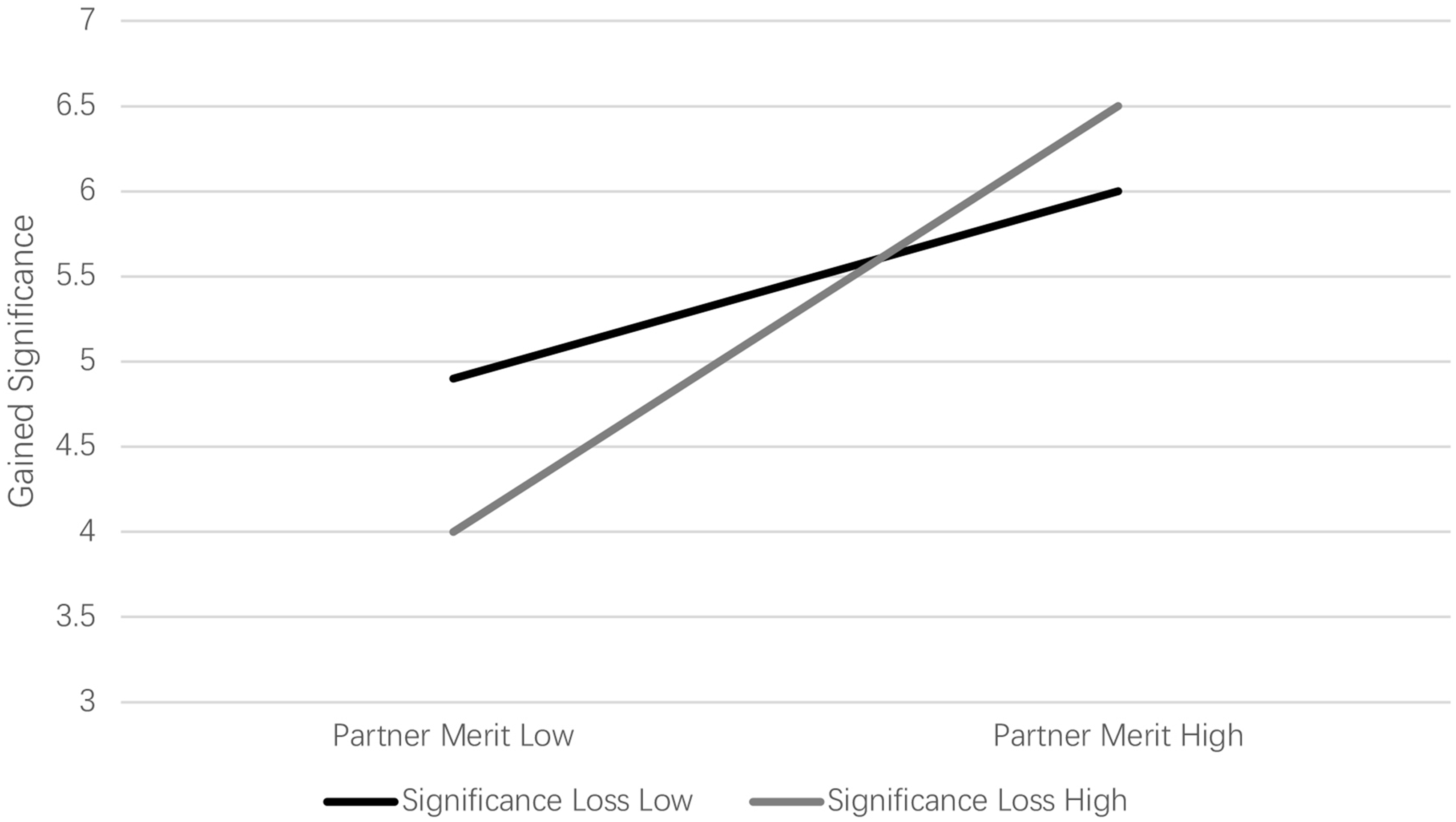
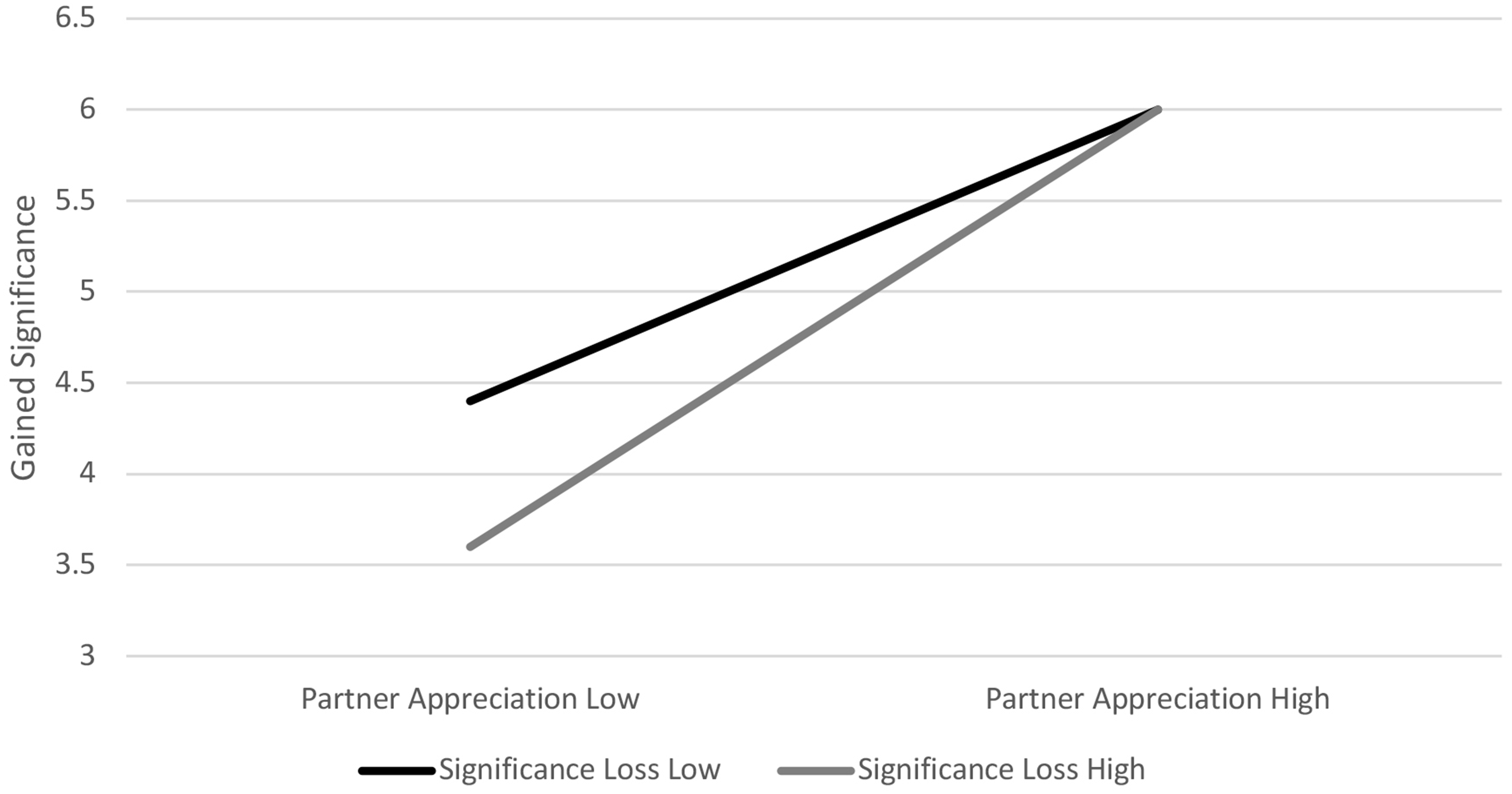
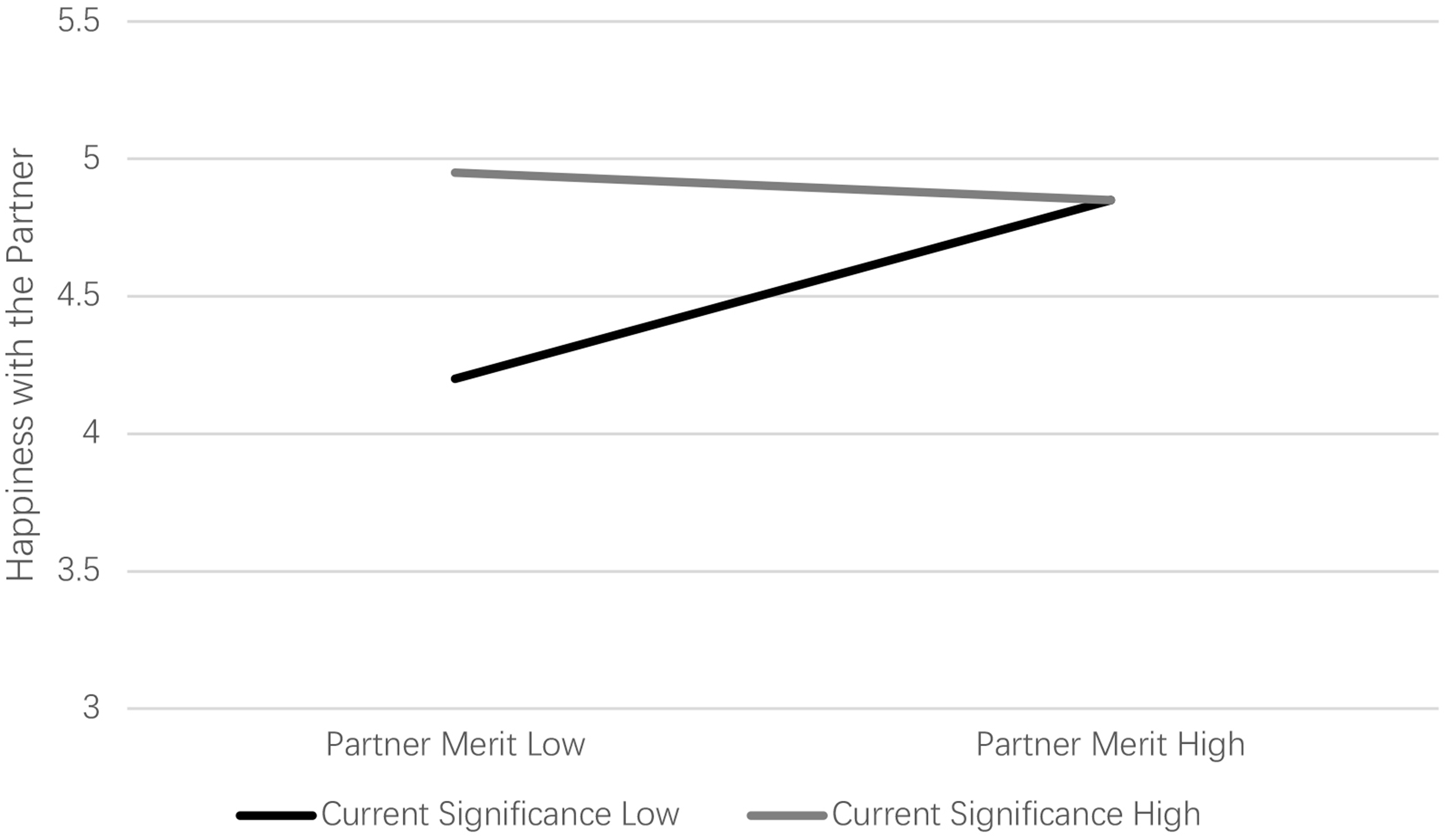
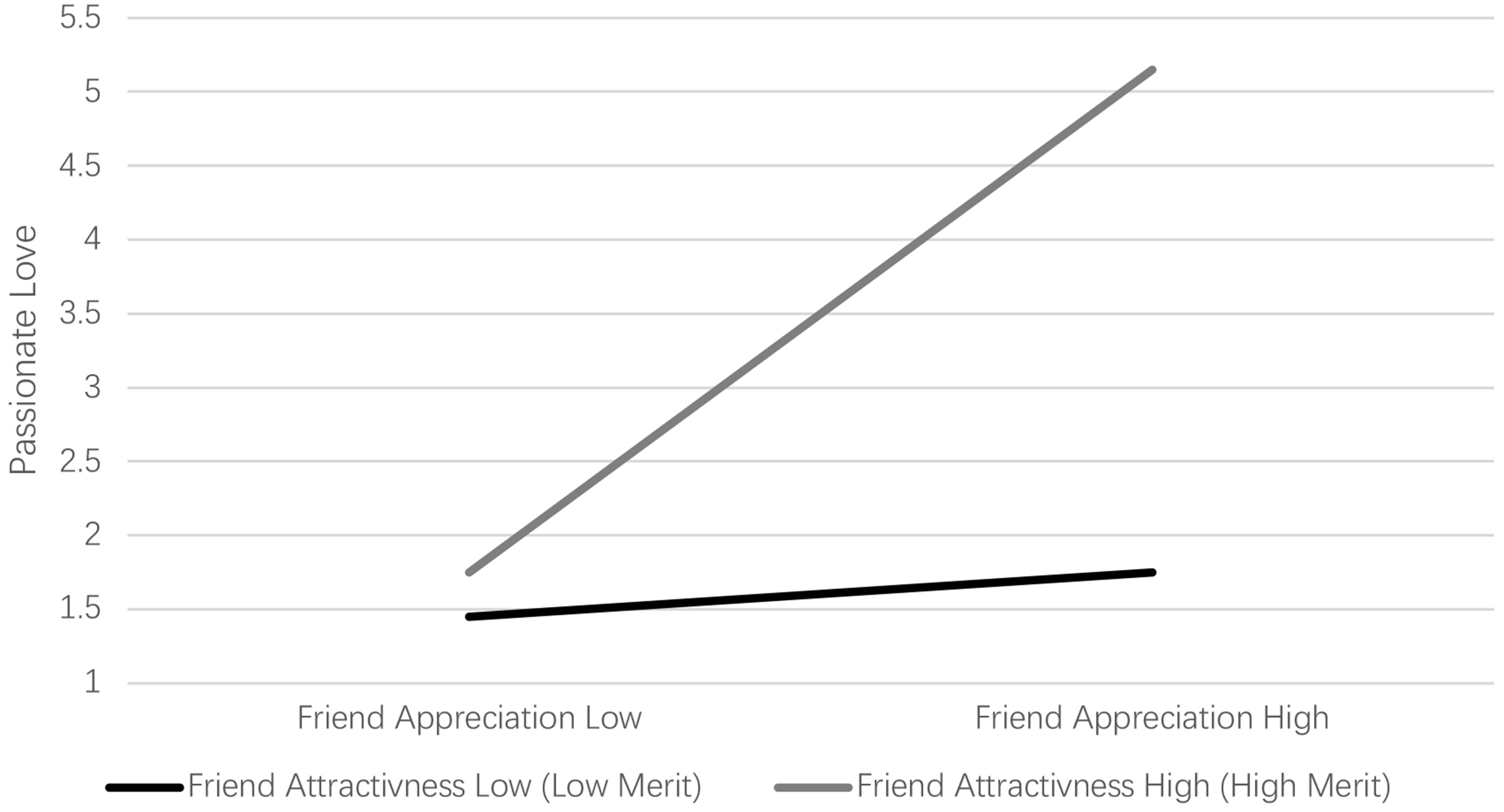




Target article
A formula for love: partner merit and appreciation beget actor significance
Related commentaries (22)
An ethnography of relationships in societies high in relational mobility
Are merit and appreciation instrumental aims?
Beyond significance: Toward a more dynamic, relational, and culturally inclusive framework on love
Beyond the equation: An evolutionary reassessment of the love formula
Distinguishing between romantic love and romantic relationships
Expressions of appreciation facilitate love and cooperation
Extending the motivational model of love: A Goal-Directed Predictive Processing perspective
Extending the quest for significance: A dynamic and intersubjective perspective on romantic love
Falling in love: An evolutionary perspective on the role of psychological needs
Goal support as a central force in human connection
Going beyond significance quest in interpersonal relationships
Love in motion: Bringing temporal and interpersonal dynamics into the formula of love
Searching for love as a search for meaning
Seeking significance from significant others: Rethinking romantic love
Significance is not enough: The biopsychological foundations of romantic love
The dynamic interplay of merit and appreciation in love: Variations by gender, age, and relationship duration
The essential roots of love
The Significance of romance: From human evolution to individual needs
The significance quest model of love does not make evolutionary sense
Truer of relationship initiation than maintenance?
Variability in how people seek significance and fall in love
What’s love got to do with it? The formula for love needs psychological and motivational neurobiological components
Author response
Love as a lived experience