Refine search
Actions for selected content:
45 results
ON SPARSE HOLES AND A FINITE-FOLD PROBLEM OF NATHANSON CONCERNING MINIMAL ADDITIVE COMPLEMENTS
- Part of
-
- Journal:
- Bulletin of the Australian Mathematical Society , First View
- Published online by Cambridge University Press:
- 25 September 2026, pp. 1-12
-
- Article
-
- You have access
- HTML
- Export citation
-
Let $W\subseteq \mathbb Z$
 be bounded below and normalised by $\inf W=1$
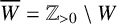
 , and put $\overline W=\mathbb Z_{>0}\setminus W$
 . Nathanson asked whether infinite sets of integers admit minimal additive complements. Chen and Yang [‘On a problem of Nathanson related to minimal additive complements’, SIAM J. Discrete Math. 26 (2012), 1532–1536] proved that the two-sided case is positive and that sufficiently large consecutive gaps in $\overline W$
 force nonexistence in the one-sided case. Chen and Ding [‘On a problem of Nathanson on nonminimal additive complements’, Bull. Aust. Math. Soc. 114, 6–13] isolated a sparse-hole condition under which no ordinary minimal complement exists. We prove a finite-fold version of this sparse-hole obstruction. For an integer $h\geq 1$
 , write $hC=C+\cdots +C$
 . We show that if $\overline W$
 contains a sequence $a_1<a_2<\cdots $
 such that $a_{t+1}-a_t\to \infty $
 and the four-neighbourhoods $(a_{t-2},a_{t+2})$
 contain at most K elements of $\overline W$
 for all sufficiently large t, then there is no set $C\subseteq \mathbb Z$
 which is minimal subject to $hC+W=\mathbb Z$
 . This result recovers and broadens the Chen–Ding nonexistence theorem as the special case $h=1$
 .


$B_h[g]$
 -vectors and finite families of linear forms
- Part of
-
- Journal:
- Canadian Mathematical Bulletin , First View
- Published online by Cambridge University Press:
- 13 July 2026, pp. 1-6
-
- Article
-
- You have access
- HTML
- Export citation
-
In a recent work, Nathanson proved that, for $K=\mathbb {R}$
 or $\mathbb {C}$
 , the set of $B_h$
 -vectors in $K^n$
 is open and dense. Leonetti later extended this to $B_h[g]$
 -vectors. In this note, we isolate a finite linear functional principle behind these results. Namely, if $\mathcal F$
 is a finite family of pairwise distinct linear functionals on $K^n$
 , then the set of points at which no value is assumed by more than g members of $\mathcal F$
 is open and dense in $K^n$
 . As consequences, we recover the theorems of Nathanson and Leonetti for $B_h[g]$
 -vectors and obtain the following variant: for every linear form $L(x_1,\ldots ,x_h)=c_1x_1+\cdots +c_hx_h$
 , with nonzero integer coefficients, the corresponding set of $L[g]$
 -vectors, evaluated on distinct variables, is open and dense in $K^n$
 .


The smallest denominator not contained in a unit fraction decomposition of 1 with fixed length
- Part of
-
- Journal:
- Mathematical Proceedings of the Cambridge Philosophical Society / Volume 181 / Issue 3 / November 2026
- Published online by Cambridge University Press:
- 08 July 2026, pp. 1221-1229
- Print publication:
- November 2026
-
- Article
-
- You have access
- HTML
- Export citation
-
Let v(k) be the smallest integer larger than 1 that does not occur among the denominators in any identity of the form
where \begin{align*}1=\frac1{n_1}+\cdots+\frac1{n_k},\end{align*}
 $1 \leq n_1\lt\cdots\lt n_k$ are pairwise distinct integers. In their 1980 monograph, Erdős and Graham asked for quantitative estimates on the growth of v(k) and suggested the lower bound
 $v(k)\gg k!$. In this paper we give the first known improvement and show that there exists an absolute constant
 $c\gt0$ such that the inequality holds for all positive integers k.
 \begin{align*}v(k)\ge e^{c k^2}\end{align*}


New constructions and bounds for nonabelian Sidon sets with applications to Turán-type problems
- Part of
-
- Journal:
- Canadian Journal of Mathematics , First View
- Published online by Cambridge University Press:
- 01 June 2026, pp. 1-26
-
- Article
-
- You have access
- Open access
- HTML
- Export citation
-
An $S_k$
 -set in a group $\Gamma $
 is a set $A\subseteq \Gamma $
 such that $\alpha _1\dots \alpha _k=\beta _1\dots \beta _k$
 with $\alpha _i,\beta _i\in A$
 implies $(\alpha _1,\ldots ,\alpha _k)=(\beta _1,\ldots ,\beta _k)$
 . An $S_k'$
 -set is a set such that $\alpha _1\beta _1^{-1}\dots \alpha _k\beta _k^{-1}=1$
 implies that there exists i such that $\alpha _i=\beta _i\text { or }\beta _i=\alpha _{i+1}$
 . We give explicit constructions of large $S_k$
 -sets in the groups $\mathrm {Sym}(n)$
 and $\mathrm {Alt}(n)$
 and $S_2$
 -sets in $\mathrm {Sym}(n)\times \mathrm {Sym}(n)$
 and $\mathrm {Alt}(n)\times \mathrm {Alt}(n)$
 . We give probabilistic constructions which yield large $S_2'$
 -sets in $\mathrm {Sym}(n)$
 . We also give upper bounds on the size of $S_k$
 -sets in certain groups, improving the trivial bound by a constant multiplicative factor. We describe some connections between $S_k$
 -sets and extremal graph theory. In particular, we determine up to a constant factor the minimum outdegree of a digraph which guarantees even cycles with certain orientations. As applications, we improve the upper bound on Hamilton paths which pairwise create a two-part cycle of given length, and we show that a directed version of the Erdős–Simonovits compactness conjecture is false.


INTERSECTIONS OF SUMSETS IN ADDITIVE NUMBER THEORY
- Part of
-
- Journal:
- Bulletin of the Australian Mathematical Society / Volume 114 / Issue 2 / October 2026
- Published online by Cambridge University Press:
- 14 May 2026, pp. 228-236
- Print publication:
- October 2026
-
- Article
-
- You have access
- HTML
- Export citation
-
Let A be a subset of an additive abelian semigroup S and let $hA$
 be the h-fold sumset of A. The following question is considered. Let $(A_q)_{q=1}^{\infty }$
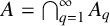
 be a strictly decreasing sequence of sets in S and let $A = \bigcap _{q=1}^{\infty } A_q$
 . When does one have $$ \begin{align*} hA = \bigcap_{q=1}^{\infty} hA_q \end{align*} $$

for some or all $h \geq 2$
 ?


Explicit sumset sizes in additive number theory
- Part of
-
- Journal:
- Canadian Mathematical Bulletin / Volume 69 / Issue 3 / September 2026
- Published online by Cambridge University Press:
- 04 December 2025, pp. 865-876
- Print publication:
- September 2026
-
- Article
-
- You have access
- HTML
- Export citation
-
It is an open problem in additive number theory to compute and understand the full range of sumset sizes of finite sets of integers, that is, the set $ \mathcal R_{\mathbf Z}(h,k) = \{|hA|:A \subseteq \mathbf Z \text { and } |A|=k\}$
 for all integers $h \geq 3$
 and $k \geq 3$
 . This article constructs certain infinite families of finite sets of size k, computes their h-fold sumset sizes, and obtains explicit finite arithmetic progressions of sumset sizes in $ \mathcal R_{\mathbf Z}(h,k)$
 .


ON ADDITIVE COMPLEMENTS IN THE COMPLEMENT OF A SET OF NATURAL NUMBERS
- Part of
-
- Journal:
- Bulletin of the Australian Mathematical Society / Volume 113 / Issue 2 / April 2026
- Published online by Cambridge University Press:
- 07 November 2025, pp. 203-215
- Print publication:
- April 2026
-
- Article
-
- You have access
- HTML
- Export citation
-
Let A be a set of natural numbers. A set B of natural numbers is an additive complement of the set A if all sufficiently large natural numbers can be represented in the form
 $x+y$, where
 $x\in A$ and
 $y\in B$. We establish that if
 $A=\{a_i: i\in \mathbb {N}\}$ is a set of natural numbers such that
 $a_i<a_{i+1} $ for
 $i \in \mathbb {N}$ and
 $\liminf _{n\rightarrow \infty } (a_{n+1}/a_{n})>1$, then there exists a set
 $B\subset \mathbb {N}$ such that
 $B\cap A = \varnothing $ and B is a sparse additive complement of the set A.


 $B_h$-sets of real and complex numbers
- Part of
-
- Journal:
- Canadian Mathematical Bulletin / Volume 69 / Issue 1 / March 2026
- Published online by Cambridge University Press:
- 11 June 2025, pp. 137-141
- Print publication:
- March 2026
-
- Article
-
- You have access
- HTML
- Export citation
-
Let
 $K = \mathbf {R}$ or
 $\mathbf {C}$. An n-element subset A of K is a
 $B_h$-set if every element of K has at most one representation as the sum of h not necessarily distinct elements of A. Associated with the
 $B_h$-set
 $A = \{a_1,\ldots , a_n\}$ are the
 $B_h$-vectors
 $\mathbf {a} = (a_1,\ldots , a_n)$ in
 $K^n$. This article proves that “almost all” n-element subsets of K are
 $B_h$-sets in the sense that the set of all
 $B_h$-vectors is a dense open subset of
 $K^n$.


MONOTONIC COLLATZ SUBSEQUENCES WITH TERMS CONGRUENT MODULO A FIXED POWER OF TWO
- Part of
-
- Journal:
- Bulletin of the Australian Mathematical Society / Volume 112 / Issue 3 / December 2025
- Published online by Cambridge University Press:
- 16 May 2025, pp. 418-429
- Print publication:
- December 2025
-
- Article
-
- You have access
- HTML
- Export citation
-
A class of sequences called L-sequences is introduced, each one being a subsequence of a Collatz sequence. Every ordered pair
 $(v,w)$ of positive integers determines an odd positive integer P such that there exists an L-sequence of length n for every positive integer n, each term of which is congruent to P modulo
 $2^{v+w+1}$. The smallest possible initial term of such a sequence is described. If
 $3^v>2^{v+w}$ the L-sequence is increasing. Otherwise, it is decreasing, except if it is the constant sequence P. A central role is played by Bezout’s identity.


Semisimple random walks on the torus
- Part of
-
- Journal:
- Ergodic Theory and Dynamical Systems / Volume 45 / Issue 10 / October 2025
- Published online by Cambridge University Press:
- 03 March 2025, pp. 3090-3147
- Print publication:
- October 2025
-
- Article
-
- You have access
- HTML
- Export citation
The sum-product problem for integers with few prime factors
- Part of
-
- Journal:
- Compositio Mathematica / Volume 161 / Issue 3 / March 2025
- Published online by Cambridge University Press:
- 26 June 2025, pp. 427-446
- Print publication:
- March 2025
-
- Article
-
- You have access
- Open access
- HTML
- Export citation
-
It was asked by E. Szemerédi if, for a finite set
 $A\subset {\mathbb {Z}}$, one can improve estimates for
 $\max \{|A+A|,|A\cdot A|\}$, under the constraint that all integers involved have a bounded number of prime factors, that is, each
 $a\in A$ satisfies
 $\omega (a)\leq k$. In this paper we show that this maximum is at least of order
 $|A|^{\frac {5}{3}-o_\epsilon (1)}$ provided
 $k\leq (\log |A|)^{1-\varepsilon }$ for any
 $\varepsilon \gt 0$. In fact, this will follow from an estimate for additive energy which is best possible up to factors of size
 $|A|^{o(1)}$.


Is it true that most sets of naturals are Sidon?
- Part of
-
- Journal:
- Canadian Mathematical Bulletin , First View
- Published online by Cambridge University Press:
- 12 February 2025, pp. 1-6
-
- Article
-
- You have access
- Open access
- HTML
- Export citation
An efficient asymmetric removal lemma and its limitations
- Part of
-
- Journal:
- Forum of Mathematics, Sigma / Volume 13 / 2025
- Published online by Cambridge University Press:
- 10 February 2025, e38
-
- Article
-
- You have access
- Open access
- HTML
- Export citation
-
The triangle removal states that if G contains
 $\varepsilon n^2$ edge-disjoint triangles, then G contains
 $\delta (\varepsilon )n^3$ triangles. Unfortunately, there are no sensible bounds on the order of growth of
 $\delta (\varepsilon )$, and at any rate, it is known that
 $\delta (\varepsilon )$ is not polynomial in
 $\varepsilon $. Csaba recently obtained an asymmetric variant of the triangle removal, stating that if G contains
 $\varepsilon n^2$ edge-disjoint triangles, then G contains
 $2^{-\operatorname {\mathrm {poly}}(1/\varepsilon )}\cdot n^5$ copies of
 $C_5$. To this end, he devised a new variant of Szemerédi’s regularity lemma. We obtain the following results:
• We first give a regularity-free proof of Csaba’s theorem, which improves the number of copies of
 $C_5$ to the optimal number
 $\operatorname {\mathrm {poly}}(\varepsilon )\cdot n^5$.
• We say that H is
 $K_3$-abundant if every graph containing
 $\varepsilon n^2$ edge-disjoint triangles has
 $\operatorname {\mathrm {poly}}(\varepsilon )\cdot n^{\lvert V(H)\rvert }$ copies of H. It is easy to see that a
 $K_3$-abundant graph must be triangle-free and tripartite. Given our first result, it is natural to ask if all triangle-free tripartite graphs are
 $K_3$-abundant. Our second result is that assuming a well-known conjecture of Ruzsa in additive number theory, the answer to this question is negative.
Our proofs use a mix of combinatorial, number-theoretic, probabilistic and Ramsey-type arguments.


Product of polynomial values being large power
- Part of
-
- Journal:
- Proceedings of the Edinburgh Mathematical Society / Volume 68 / Issue 1 / February 2025
- Published online by Cambridge University Press:
- 18 November 2024, pp. 51-62
-
- Article
-
- You have access
- Open access
- HTML
- Export citation
A generalisation of Varnavides’s theorem
- Part of
-
- Journal:
- Combinatorics, Probability and Computing / Volume 33 / Issue 6 / November 2024
- Published online by Cambridge University Press:
- 29 May 2024, pp. 724-728
-
- Article
-
- You have access
- HTML
- Export citation
-
A linear equation
 $E$ is said to be sparse if there is
 $c\gt 0$ so that every subset of
 $[n]$ of size
 $n^{1-c}$ contains a solution of
 $E$ in distinct integers. The problem of characterising the sparse equations, first raised by Ruzsa in the 90s, is one of the most important open problems in additive combinatorics. We say that
 $E$ in
 $k$ variables is abundant if every subset of
 $[n]$ of size
 $\varepsilon n$ contains at least
 $\text{poly}(\varepsilon )\cdot n^{k-1}$ solutions of
 $E$. It is clear that every abundant
 $E$ is sparse, and Girão, Hurley, Illingworth, and Michel asked if the converse implication also holds. In this note, we show that this is the case for every
 $E$ in four variables. We further discuss a generalisation of this problem which applies to all linear equations.


Small subsets with large sumset: Beyond the Cauchy–Davenport bound
- Part of
-
- Journal:
- Combinatorics, Probability and Computing / Volume 33 / Issue 4 / July 2024
- Published online by Cambridge University Press:
- 21 February 2024, pp. 411-431
-
- Article
-
- You have access
- HTML
- Export citation
-
For a subset
 $A$ of an abelian group
 $G$, given its size
 $|A|$, its doubling
 $\kappa =|A+A|/|A|$, and a parameter
 $s$ which is small compared to
 $|A|$, we study the size of the largest sumset
 $A+A'$ that can be guaranteed for a subset
 $A'$ of
 $A$ of size at most
 $s$. We show that a subset
 $A'\subseteq A$ of size at most
 $s$ can be found so that
 $|A+A'| = \Omega (\!\min\! (\kappa ^{1/3},s)|A|)$. Thus, a sumset significantly larger than the Cauchy–Davenport bound can be guaranteed by a bounded size subset assuming that the doubling
 $\kappa$ is large. Building up on the same ideas, we resolve a conjecture of Bollobás, Leader and Tiba that for subsets
 $A,B$ of
 $\mathbb{F}_p$ of size at most
 $\alpha p$ for an appropriate constant
 $\alpha \gt 0$, one only needs three elements
 $b_1,b_2,b_3\in B$ to guarantee
 $|A+\{b_1,b_2,b_3\}|\ge |A|+|B|-1$. Allowing the use of larger subsets
 $A'$, we show that for sets
 $A$ of bounded doubling, one only needs a subset
 $A'$ with
 $o(|A|)$ elements to guarantee that
 $A+A'=A+A$. We also address another conjecture and a question raised by Bollobás, Leader and Tiba on high-dimensional analogues and sets whose sumset cannot be saturated by a bounded size subset.


On some multiplicative properties of large difference sets
- Part of
-
- Journal:
- Canadian Journal of Mathematics / Volume 76 / Issue 5 / October 2024
- Published online by Cambridge University Press:
- 08 September 2023, pp. 1538-1555
- Print publication:
- October 2024
-
- Article
-
- You have access
- HTML
- Export citation
-
In our paper, we study multiplicative properties of difference sets
 $A-A$ for large sets
 $A \subseteq {\mathbb {Z}}/q{\mathbb {Z}}$ in the case of composite q. We obtain a quantitative version of a result of A. Fish about the structure of the product sets
 $(A-A)(A-A)$. Also, we show that the multiplicative covering number of any difference set is always small.


On the density of bounded bases
- Part of
-
- Journal:
- Proceedings of the Edinburgh Mathematical Society / Volume 66 / Issue 3 / August 2023
- Published online by Cambridge University Press:
- 07 August 2023, pp. 832-844
-
- Article
-
- You have access
- HTML
- Export citation
-
For a nonempty set A of integers and an integer n, let
 $r_{A}(n)$ be the number of representations of n in the form
 $n=a+a'$, where
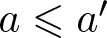 $a\leqslant a'$ and
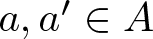 $a, a'\in A$, and
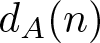 $d_{A}(n)$ be the number of representations of n in the form
 $n=a-a'$, where
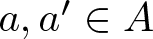 $a, a'\in A$. The binary support of a positive integer n is defined as the subset S(n) of nonnegative integers consisting of the exponents in the binary expansion of n, i.e.,
 $n=\sum_{i\in S(n)} 2^i$,
 $S(-n)=-S(n)$ and
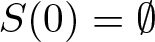 $S(0)=\emptyset$. For real number x, let
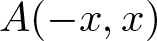 $A(-x,x)$ be the number of elements
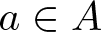 $a\in A$ with
 $-x\leqslant a\leqslant x$. The famous Erdős-Turán Conjecture states that if A is a set of positive integers such that
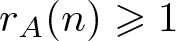 $r_A(n)\geqslant 1$ for all sufficiently large n, then
 $\limsup_{n\rightarrow\infty}r_A(n)=\infty$. In 2004, Nešetřil and Serra initially introduced the notation of “bounded” property and confirmed the Erdős-Turán conjecture for a class of bounded bases. They also proved that, there exists a set A of integers satisfying
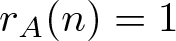 $r_A(n)=1$ for all integers n and
 $|S(x)\bigcup S(y)|\leqslant 4|S(x+y)|$ for
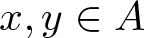 $x,y\in A$. On the other hand, Nathanson proved that there exists a set A of integers such that
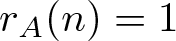 $r_A(n)=1$ for all integers n and
 $2\log x/\log 5+c_1\leqslant A(-x,x)\leqslant 2\log x/\log 3+c_2$ for all
 $x\geqslant 1$, where
 $c_1,c_2$ are absolute constants. In this paper, following these results, we prove that, there exists a set A of integers such that:
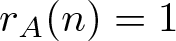 $r_A(n)=1$ for all integers n and
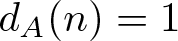 $d_A(n)=1$ for all positive integers n,
 $|S(x)\bigcup S(y)|\leqslant 4|S(x+y)|$ for
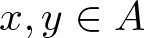 $x,y\in A$ and
 $A(-x,x) \gt (4/\log 5)\log\log x+c$ for all
 $x\geqslant 1$, where c is an absolute constant. Furthermore, we also construct a family of arbitrarily spare such sets A.


THE AKIYAMA MEAN-MEDIAN MAP HAS UNBOUNDED TRANSIT TIME AND DISCONTINUOUS LIMIT
- Part of
-
- Journal:
- Bulletin of the Australian Mathematical Society / Volume 108 / Issue 2 / October 2023
- Published online by Cambridge University Press:
- 23 November 2022, pp. 298-307
- Print publication:
- October 2023
-
- Article
-
- You have access
- HTML
- Export citation
-
Open conjectures state that, for every
 $x\in [0,1]$, the orbit
 $(x_n)_{n=1}^\infty $ of the mean-median recursion
 $$ \begin{align*}x_{n+1}=(n+1)\cdot\operatorname{\mathrm{median}}(x_1,\ldots,x_{n})-(x_1+\cdots+x_n),\quad n\geqslant 3,\end{align*} $$
with initial data
 $(x_1,x_2,x_3)=(0,x,1)$, is eventually constant, and that its transit time and limit functions (of x) are unbounded and continuous, respectively. In this paper, we prove that for the slightly modified recursion
 $$ \begin{align*}x_{n+1}=n\cdot\operatorname{\mathrm{median}}(x_1,\ldots,x_{n})-(x_1+\cdots+x_n),\quad n\geqslant 3,\end{align*} $$
first suggested by Akiyama, the transit time function is unbounded but the limit function is discontinuous.


Combinatorial and harmonic-analytic methods for integer tilings
- Part of
-
- Journal:
- Forum of Mathematics, Pi / Volume 10 / 2022
- Published online by Cambridge University Press:
- 09 March 2022, e8
-
- Article
-
- You have access
- Open access
- HTML
- Export citation
-
A finite set of integers A tiles the integers by translations if
 $\mathbb {Z}$ can be covered by pairwise disjoint translated copies of A. Restricting attention to one tiling period, we have
 $A\oplus B=\mathbb {Z}_M$ for some
 $M\in \mathbb {N}$ and
 $B\subset \mathbb {Z}$. This can also be stated in terms of cyclotomic divisibility of the mask polynomials
 $A(X)$ and
 $B(X)$ associated with A and B.
In this article, we introduce a new approach to a systematic study of such tilings. Our main new tools are the box product, multiscale cuboids and saturating sets, developed through a combination of harmonic-analytic and combinatorial methods. We provide new criteria for tiling and cyclotomic divisibility in terms of these concepts. As an application, we can determine whether a set A containing certain configurations can tile a cyclic group
 $\mathbb {Z}_M$, or recover a tiling set based on partial information about it. We also develop tiling reductions where a given tiling can be replaced by one or more tilings with a simpler structure. The tools introduced here are crucial in our proof in [24] that all tilings of period
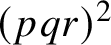 $(pqr)^2$, where
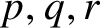 $p,q,r$ are distinct odd primes, satisfy a tiling condition proposed by Coven and Meyerowitz [2].


