Refine search
Actions for selected content:
37 results
AFFINE REFLECTION SUBGROUPS OF COXETER GROUPS
- Part of
-
- Journal:
- Journal of the Australian Mathematical Society , First View
- Published online by Cambridge University Press:
- 30 October 2026, pp. 1-32
-
- Article
-
- You have access
- HTML
- Export citation
Groups with fast-growing conjugator length functions
- Part of
-
- Journal:
- Canadian Mathematical Bulletin , First View
- Published online by Cambridge University Press:
- 25 September 2026, pp. 1-23
-
- Article
-
- You have access
- Open access
- HTML
- Export citation
-
We construct the first examples of finitely presented groups whose conjugator length function is exponential; these are central extensions of groups of the form $F_m\rtimes F_2$
 . Further, we use a fiber product construction to exhibit a family of finitely presented groups $\Gamma _k$
 , where for each k, the conjugator length function of $\Gamma _k$
 grows like functions lying in the k-th level of the Grzegorczyk hierarchy of primitive recursive functions.


Conjugacy problem in T-RAAGs
- Part of
-
- Journal:
- Glasgow Mathematical Journal , First View
- Published online by Cambridge University Press:
- 24 June 2026, pp. 1-15
-
- Article
-
- You have access
- Open access
- HTML
- Export citation
Two-sided homological properties of special and one-relator monoids
- Part of
-
- Journal:
- Forum of Mathematics, Sigma / Volume 14 / 2026
- Published online by Cambridge University Press:
- 14 April 2026, e58
-
- Article
-
- You have access
- Open access
- HTML
- Export citation
-
A monoid presentation is called special if the right-hand side of each defining relation is equal to 1. We prove results which relate the two-sided homological finiteness properties of a monoid defined by a special presentation with those of its group of units. Specifically we show that the monoid enjoys the homological finiteness property bi-
 if its group of units is of type
 . We also obtain results which relate the Hochschild cohomological dimension of the monoid to the cohomological dimension of its group of units. In particular we show that the Hochschild cohomological dimension of the monoid is bounded above by the maximum of
 $2$ and the cohomological dimension of its group of units. We apply these results to prove a Lyndon’s Identity type theorem for the two-sided homology of one-relator monoids of the form
 $\langle A \mid r=1 \rangle $. In particular, we show that all such monoids are of type bi-
 . Moreover, we show that if r is not a proper power then the one-relator monoid has Hochschild cohomological dimension at most
 $2$, while if r is a proper power then it has infinite Hochschild cohomological dimension. For any nonspecial one-relator monoid M with defining relation
 $u=v$ we show that if there is no nonempty word w such that
 $u,v \in A^*w \cap w A^*$ then M is of type bi-
 $\mathrm {FP}_\infty $ and has Hochschild cohomological dimension at most
 $2$.
 if its group of units is of type
 . We also obtain results which relate the Hochschild cohomological dimension of the monoid to the cohomological dimension of its group of units. In particular we show that the Hochschild cohomological dimension of the monoid is bounded above by the maximum of


 . Moreover, we show that if r is not a proper power then the one-relator monoid has Hochschild cohomological dimension at most


The group of reversible turing machines: subgroups, generators, and computability
- Part of
-
- Journal:
- Forum of Mathematics, Sigma / Volume 13 / 2025
- Published online by Cambridge University Press:
- 20 October 2025, e176
-
- Article
-
- You have access
- Open access
- HTML
- Export citation
-
We study an abstract group of reversible Turing machines. In our model, each machine is interpreted as a homeomorphism over a space which represents a tape filled with symbols and a head carrying a state. These homeomorphisms can only modify the tape at a bounded distance around the head, change the state, and move the head in a bounded way. We study three natural subgroups arising in this model: the group of finite-state automata, which generalizes the topological full groups studied in topological dynamics and the theory of orbit-equivalence; the group of oblivious Turing machines whose movement is independent of tape contents, which generalizes lamplighter groups and has connections to the study of universal reversible logical gates, and the group of elementary Turing machines, which are the machines which are obtained by composing finite-state automata and oblivious Turing machines.
We show that both the group of oblivious Turing machines and that of elementary Turing machines are finitely generated, while the group of finite-state automata and the group of reversible Turing machines are not. We show that the group of elementary Turing machines has undecidable torsion problem. From this, we also obtain that the group of cellular automata (more generally, the automorphism group of any uncountable one-dimensional sofic subshift) contains a finitely generated subgroup with undecidable torsion problem. We also show that the torsion problem is undecidable for the topological full group of a full
 $\mathbb {Z}^d$-shift on a nontrivial alphabet if and only if
 $d \geq 2$.


ON THE DYNAMICS OF ENDOMORPHISMS OF THE DIRECT PRODUCT OF TWO FREE GROUPS
- Part of
-
- Journal:
- Journal of the Australian Mathematical Society / Volume 120 / Issue 1 / February 2026
- Published online by Cambridge University Press:
- 17 October 2025, pp. 34-56
-
- Article
-
- You have access
- HTML
- Export citation
-
We prove that Brinkmann’s problems are decidable for endomorphisms of
 $F_n\times F_m$: given
 $(x,y),(z,w)\in F_n\times F_m$ and
 $\Phi \in \mathrm {End}(F_n\times F_m)$, it is decidable whether there is some
 $k\in \mathbb {N}$ such that
 $(x,y)\Phi ^k=(z,w)$ (or
 $(x,y)\Phi ^k\sim (z,w)$). We also prove decidability of a two-sided version of Brinkmann’s conjugacy problem for injective endomorphisms which, from the work of Logan, yields a solution to the conjugacy problem in ascending HNN-extensions of
 $F_n\times F_m$. Finally, we study the dynamics of automorphisms of
 $F_n\times F_m$ at the infinity, proving that that their dynamics at the infinity is asymptotically periodic, as occurs in the free and free-abelian times free cases.


The complexity of intersecting subproducts with subgroups in Cartesian powers
- Part of
-
- Journal:
- Glasgow Mathematical Journal / Volume 68 / Issue 3 / September 2026
- Published online by Cambridge University Press:
- 07 October 2025, pp. 433-439
-
- Article
-
- You have access
- Open access
- HTML
- Export citation
-
Given a finite abelian group
 $G$ and
 $t\in \mathbb{N}$, there are two natural types of subsets of the Cartesian power
 $G^t$; namely, Cartesian powers
 $S^t$ where
 $S$ is a subset of
 $G$ and (cosets of) subgroups
 $H$ of
 $G^t$. A basic question is whether two such sets intersect. In this paper, we show that this decision problem is NP-complete. Furthermore, for fixed
 $G$ and
 $S$, we give a complete classification: we determine conditions for when the problem is NP-complete and show that in all other cases the problem is solvable in polynomial time. These theorems play a key role in the classification of algebraic decision problems in finitely generated rings developed in later work of the author.


ALGORITHMICALLY FINITE, UNIVERSAL, AND
 $*$-UNIVERSAL GROUPS
- Part of
-
- Journal:
- The Journal of Symbolic Logic , First View
- Published online by Cambridge University Press:
- 03 September 2025, pp. 1-19
-
- Article
-
- You have access
- Open access
- HTML
- Export citation
-
The study of the word problems of groups dates back to Dehn in 1911, and has been a central topic of study in both group theory and computability theory. As most naturally occurring presentations of groups are recursive, their word problems can be thought of as a computably enumerable equivalence relation (ceer). In this article, we study the word problem of groups in the framework of ceer degrees, introducing a new metric with which to study word problems. This metric is more refined than the classical context of Turing degrees.
Classically, every Turing degree is realized as the word problem of some c.e. group, but this is not true for ceer degrees. This motivates us to look at the classical constructions and show that there is a group whose word problem is not universal, but becomes universal after taking any nontrivial free product, which we call
 $*$-universal. This shows that existing constructions of the Higman embedding theorem do not preserve ceer degrees. We also study the index set of various classes of groups defined by their properties as a ceer: groups whose word problems are dark (equivalently, algorithmically finite as defined by Miasnikov and Osin), universal, and
 $*$-universal groups.


On Thompson groups for Ważewski dendrites
- Part of
-
- Journal:
- Mathematical Proceedings of the Cambridge Philosophical Society / Volume 179 / Issue 1 / July 2025
- Published online by Cambridge University Press:
- 19 May 2025, pp. 189-231
- Print publication:
- July 2025
-
- Article
-
- You have access
- Open access
- HTML
- Export citation
-
We study a family of Thompson-like groups built as rearrangement groups of fractals introduced by Belk and Forrest in 2019, each acting on a Ważewski dendrite. Each of these is a finitely generated group that is dense in the full group of homeomorphisms of the dendrite (studied by Monod and Duchesne in 2019) and has infinite-index finitely generated simple commutator subgroup, with a single possible exception. More properties are discussed, including finite subgroups, the conjugacy problem, invariable generation and existence of free subgroups. We discuss many possible generalisations, among which we find the Airplane rearrangement group
 $T_A$. Despite close connections with Thompson’s group F, dendrite rearrangement groups seem to share many features with Thompson’s group V.

The nonabelian product modulo sum
- Part of
-
- Journal:
- Proceedings of the Edinburgh Mathematical Society / Volume 68 / Issue 4 / November 2025
- Published online by Cambridge University Press:
- 11 April 2025, pp. 1069-1109
-
- Article
-
- You have access
- HTML
- Export citation
-
It is shown that if
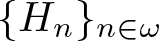 $\{H_n\}_{n \in \omega}$ is a sequence of groups without involutions, with
 $1 \lt |H_n| \leq 2^{\aleph_0}$, then the topologist’s product modulo the finite words is (up to isomorphism) independent of the choice of sequence. This contrasts with the abelian setting: if
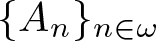 $\{A_n\}_{n \in \omega}$ is a sequence of countably infinite torsion-free abelian groups, then the isomorphism class of the product modulo sum
 $\prod_{n \in \omega} A_n/\bigoplus_{n \in \omega} A_n$ is dependent on the sequence.
The conjugacy problem for
 $\operatorname {Out}(F_3)$
- Part of
-
- Journal:
- Forum of Mathematics, Sigma / Volume 13 / 2025
- Published online by Cambridge University Press:
- 13 February 2025, e41
-
- Article
-
- You have access
- Open access
- HTML
- Export citation
-
We present a solution to the conjugacy problem in the group of outer automorphisms of
 $F_3$, a free group of rank 3. We distinguish according to several computable invariants, such as irreducibility, subgroups of polynomial growth and subgroups carrying the attracting lamination. We establish, by considerations on train tracks, that the conjugacy problem is decidable for the outer automorphisms of
 $F_3$ that preserve a given rank 2 free factor. Then we establish, by consideration on mapping tori, that it is decidable for outer automorphisms of
 $F_3$ whose maximal polynomial growth subgroups are cyclic. This covers all the cases left by the state of the art.


Membership problems for positive one-relator groups and one-relation monoids
- Part of
-
- Journal:
- Canadian Journal of Mathematics / Volume 78 / Issue 3 / June 2026
- Published online by Cambridge University Press:
- 16 January 2025, pp. 802-841
- Print publication:
- June 2026
-
- Article
-
- You have access
- Open access
- HTML
- Export citation
-
Motivated by approaches to the word problem for one-relation monoids arising from work of Adian and Oganesian (1987), Guba (1997), and Ivanov, Margolis, and Meakin (2001), we study the submonoid and rational subset membership problems in one-relation monoids and in positive one-relator groups. We give the first known examples of positive one-relator groups with undecidable submonoid membership problem, and we apply this to give the first known examples of one-relation monoids with undecidable submonoid membership problem. We construct several infinite families of one-relation monoids with undecidable submonoid membership problem, including examples that are defined by relations of the form
 $w=1$ but which are not groups, and examples defined by relations of the form
 $u=v$ where both of u and v are nonempty. As a consequence, we obtain a classification of the right-angled Artin groups that can arise as subgroups of one-relation monoids. We also give examples of monoids with a single defining relation of the form
 $aUb = a$ and examples of the form
 $aUb=aVa$, with undecidable rational subset membership problem. We give a one-relator group defined by a freely reduced word of the form
 $uv^{-1}$ with
 $u, v$ positive words, in which the prefix membership problem is undecidable. Finally, we prove the existence of a special two-relator inverse monoid with undecidable word problem, and in which both the relators are positive words. As a corollary, we also find a positive two-relator group with undecidable prefix membership problem. In proving these results, we introduce new methods for proving undecidability of the rational subset membership problem in monoids and groups, including by finding suitable embeddings of certain trace monoids.


Effective dynamical systems beyond dimension zero and factors of SFTs
- Part of
-
- Journal:
- Ergodic Theory and Dynamical Systems / Volume 45 / Issue 5 / May 2025
- Published online by Cambridge University Press:
- 11 October 2024, pp. 1329-1369
- Print publication:
- May 2025
-
- Article
-
- You have access
- HTML
- Export citation
COMPUTING CENTRALISERS IN [FINITELY GENERATED FREE]-BY-CYCLIC GROUPS
- Part of
-
- Journal:
- Bulletin of the Australian Mathematical Society / Volume 111 / Issue 1 / February 2025
- Published online by Cambridge University Press:
- 04 June 2024, pp. 118-127
- Print publication:
- February 2025
-
- Article
-
- You have access
- HTML
- Export citation
Finite skew braces of square-free order and supersolubility
- Part of
-
- Journal:
- Forum of Mathematics, Sigma / Volume 12 / 2024
- Published online by Cambridge University Press:
- 18 March 2024, e39
-
- Article
-
- You have access
- Open access
- HTML
- Export citation
-
The aim of this paper is to study supersoluble skew braces, a class of skew braces that encompasses all finite skew braces of square-free order. It turns out that finite supersoluble skew braces have Sylow towers and that in an arbitrary supersoluble skew brace B many relevant skew brace-theoretical properties are easier to identify: For example, a centrally nilpotent ideal of B is B-centrally nilpotent, a fact that simplifies the computational search for the Fitting ideal; also, B has finite multipermutational level if and only if
 $(B,+)$ is nilpotent.
Given a finite presentation of the structure skew brace
 $G(X,r)$ associated with a finite nondegenerate solution of the Yang–Baxter equation (YBE), there is an algorithm that decides if
 $G(X,r)$ is supersoluble or not. Moreover, supersoluble skew braces are examples of almost polycyclic skew braces, so they give rise to solutions of the YBE on which one can algorithmically work on.


THE PRO-
 $\boldsymbol {k}$-SOLVABLE TOPOLOGY ON A FREE GROUP
- Part of
-
- Journal:
- Journal of the Australian Mathematical Society / Volume 116 / Issue 3 / June 2024
- Published online by Cambridge University Press:
- 22 December 2023, pp. 363-383
-
- Article
-
- You have access
- HTML
- Export citation
-
We prove that, given a finitely generated subgroup H of a free group F, the following questions are decidable: is H closed (dense) in F for the pro-(met)abelian topology? Is the closure of H in F for the pro-(met)abelian topology finitely generated? We show also that if the latter question has a positive answer, then we can effectively construct a basis for the closure, and the closure has decidable membership problem in any case. Moreover, it is decidable whether H is closed for the pro-
 $\mathbf {V}$ topology when
 $\mathbf {V}$ is an equational pseudovariety of finite groups, such as the pseudovariety
 $\mathbf {S}_k$ of all finite solvable groups with derived length
 $\leq k$. We also connect the pro-abelian topology with the topologies defined by abelian groups of bounded exponent.


Intersection configurations in free and free times free-abelian groups
- Part of
-
- Journal:
- Proceedings of the Royal Society of Edinburgh. Section A: Mathematics / Volume 154 / Issue 5 / October 2024
- Published online by Cambridge University Press:
- 11 September 2023, pp. 1552-1582
- Print publication:
- October 2024
-
- Article
-
- You have access
- HTML
- Export citation
-
In this paper, we study intersection configurations – which describe the behaviour of multiple (finite) intersections of subgroups with respect to finite generability – in the realm of free and free times free-abelian (FTFA) groups. We say that a configuration is realizable in a group $G$
 if there exist subgroups $H_1,\ldots, H_k \leqslant G$
 realizing it. It is well known that free groups ${\mathbb {F}_{n}}$
 satisfy the Howson property: the intersection of any two finitely generated subgroups is again finitely generated. We show that the Howson property is indeed the only obstruction for multiple intersection configurations to be realizable within nonabelian free groups. On the contrary, FTFA groups ${\mathbb {F}_{n}} \times \mathbb {Z}^m$
 are well known to be non-Howson. We also study multiple intersections within FTFA groups, providing an algorithm to decide, given $k\geq 2$
 finitely generated subgroups, whether their intersection is again finitely generated and, in the affirmative case, compute a ‘basis’ for it. We finally prove that any intersection configuration is realizable in an FTFA group ${\mathbb {F}_{n}} \times \mathbb {Z}^m$
 , for $n\geq 2$
 and large enough $m$
 . As a consequence, we exhibit finitely presented groups where every intersection configuration is realizable.


Decidability problem for exponential equations in finitely presented groups
- Part of
-
- Journal:
- Canadian Mathematical Bulletin / Volume 66 / Issue 3 / September 2023
- Published online by Cambridge University Press:
- 22 November 2022, pp. 731-748
- Print publication:
- September 2023
-
- Article
-
- You have access
- HTML
- Export citation
-
We study the following decision problem: given an exponential equation
 $a_1g_1^{x_1}a_2g_2^{x_2}\dots a_ng_n^{x_n}=1$ over a recursively presented group G, decide if it has a solution with all
 $x_i$ in
 $\mathbb {Z}$. We construct a finitely presented group G where this problem is decidable for equations with one variable and is undecidable for equations with two variables. We also study functions estimating possible solutions of such an equation through the lengths of its coefficients with respect to a given generating set of G. Another result concerns Turing degrees of some natural fragments of the above problem.


Generalized small cancellation conditions, non-positive curvature and diagrammatic reducibility
- Part of
-
- Journal:
- Proceedings of the Royal Society of Edinburgh. Section A: Mathematics / Volume 152 / Issue 3 / June 2022
- Published online by Cambridge University Press:
- 02 March 2021, pp. 545-566
- Print publication:
- June 2022
-
- Article
-
- You have access
- Export citation
-
We present a metric condition
 $\TTMetric$ which describes the geometry of classical small cancellation groups and applies also to other known classes of groups such as two-dimensional Artin groups. We prove that presentations satisfying condition
 $\TTMetric$ are diagrammatically reducible in the sense of Sieradski and Gersten. In particular, we deduce that the standard presentation of an Artin group is aspherical if and only if it is diagrammatically reducible. We show that, under some extra hypotheses,
 $\TTMetric$-groups have quadratic Dehn functions and solvable conjugacy problem. In the spirit of Greendlinger's lemma, we prove that if a presentation P = 〈X| R〉 of group G satisfies conditions
 $\TTMetric -C'(\frac {1}{2})$, the length of any nontrivial word in the free group generated by X representing the trivial element in G is at least that of the shortest relator. We also introduce a strict metric condition
 $\TTMetricStrict$, which implies hyperbolicity.


COMPUTABILITY, ORDERS, AND SOLVABLE GROUPS
- Part of
-
- Journal:
- The Journal of Symbolic Logic / Volume 85 / Issue 4 / December 2020
- Published online by Cambridge University Press:
- 22 October 2020, pp. 1588-1598
- Print publication:
- December 2020
-
- Article
-
- You have access
- Export citation
-
The main objective of this paper is the following two results. (1) There exists a computable bi-orderable group that does not have a computable bi-ordering; (2) there exists a bi-orderable, two-generated computably presented solvable group with undecidable word problem. Both of the groups can be found among two-generated solvable groups of derived length
 $3$.
(1) [a]nswers a question posed by Downey and Kurtz; (2) answers a question posed by Bludov and Glass in Kourovka Notebook.
One of the technical tools used to obtain the main results is a computational extension of an embedding theorem of B. Neumann that was studied by the author earlier. In this paper we also compliment that result and derive new corollaries that might be of independent interest.

