Refine search
Actions for selected content:
165 results
AFFINE REFLECTION SUBGROUPS OF COXETER GROUPS
- Part of
-
- Journal:
- Journal of the Australian Mathematical Society , First View
- Published online by Cambridge University Press:
- 30 October 2026, pp. 1-32
-
- Article
-
- You have access
- HTML
- Export citation
$7$
 -LOCATED LOCALLY $5$
 -LARGE COMPLEXES ARE ASPHERICAL
- Part of
-
- Journal:
- Journal of the Institute of Mathematics of Jussieu , First View
- Published online by Cambridge University Press:
- 29 October 2026, pp. 1-11
-
- Article
-
- You have access
- Open access
- HTML
- Export citation
-
We prove that $7$
 -located locally $5$
 -large simplicial complexes are aspherical.


Epimorphism classes and relatively maximal metrics in large-scale geometry
- Part of
-
- Journal:
- Canadian Mathematical Bulletin , First View
- Published online by Cambridge University Press:
- 26 October 2026, pp. 1-23
-
- Article
-
- You have access
- HTML
- Export citation
Groups with fast-growing conjugator length functions
- Part of
-
- Journal:
- Canadian Mathematical Bulletin , First View
- Published online by Cambridge University Press:
- 25 September 2026, pp. 1-23
-
- Article
-
- You have access
- Open access
- HTML
- Export citation
-
We construct the first examples of finitely presented groups whose conjugator length function is exponential; these are central extensions of groups of the form $F_m\rtimes F_2$
 . Further, we use a fiber product construction to exhibit a family of finitely presented groups $\Gamma _k$
 , where for each k, the conjugator length function of $\Gamma _k$
 grows like functions lying in the k-th level of the Grzegorczyk hierarchy of primitive recursive functions.


Connectivity for square percolation and coarse cubical rigidity in random right-angled Coxeter groups
- Part of
-
- Journal:
- Journal of Applied Probability , First View
- Published online by Cambridge University Press:
- 09 September 2026, pp. 1-25
-
- Article
-
- You have access
- Open access
- HTML
- Export citation
-
We consider a random right-angled Coxeter group (RACG),
 $W_{\Gamma}$, whose presentation graph
 $\Gamma$ is taken to be an Erdős–Rényi random graph, i.e.
 $\Gamma\sim\mathcal{G}_{n,p}$. We use techniques from probabilistic combinatorics to establish several new results about the geometry of this random group model. Resolving a conjecture of Susse, we determine the connectivity threshold for square percolation on the random graph
 $\Gamma\sim\mathcal{G}_{n,p}$. We use this result to determine a large range of p for which the random RACG
 $W_{\Gamma}$ has a unique cubical coarse median structure. Until Fioravanti et al. (2026), there were no non-hyperbolic examples of groups with cubical coarse rigidity. Perhaps surprisingly, we show that the property of coarse cubical rigidity is in fact typically satisfied by a random RACG for a wide range of the parameter p, including
 $p=\frac12$, for which the random RACG is also typically non-hyperbolic.


Bounded cohomology and scl of verbal wreath products
- Part of
-
- Journal:
- Mathematical Proceedings of the Cambridge Philosophical Society / Volume 181 / Issue 3 / November 2026
- Published online by Cambridge University Press:
- 26 June 2026, pp. 1197-1219
- Print publication:
- November 2026
-
- Article
-
- You have access
- HTML
- Export citation
-
Given a countable group A with trivial bounded cohomology for all semi-separable coefficients and any group
 $\Gamma$, we prove that the bounded cohomology of certain restricted verbal wreath products
 $\Gamma \wr^{_W} A$ vanishes in positive degrees, for all semi-separable coefficients. Examples of such verbal wreath products include the standard restricted wreath product (extending a recent result by Monod for lamplighters groups) as well as verbal wreath products arising from n-solvable, n-nilpotent and k-Burnside (
 $k = 2,3,4,6$) verbal products. Moreover, we prove that the stable commutator length of any verbal wreath product
 $\Gamma \wr^{_W} A$ vanishes. As an application, we show that every group of type
 $F_p$ isometrically embeds into a group of type
 $F_p$ with vanishing bounded cohomology in degree
 $n\geq 1$ for all semi-separable coefficients.


On maximal subgroups of ample groups
- Part of
-
- Journal:
- Ergodic Theory and Dynamical Systems / Volume 46 / Issue 11 / November 2026
- Published online by Cambridge University Press:
- 18 June 2026, pp. 2726-2774
- Print publication:
- November 2026
-
- Article
-
- You have access
- Open access
- HTML
- Export citation
ALTERNATING AND SYMMETRIC SEPARABILITY OF FREE PRODUCTS
- Part of
-
- Journal:
- Bulletin of the Australian Mathematical Society / Volume 114 / Issue 3 / December 2026
- Published online by Cambridge University Press:
- 16 June 2026, pp. 501-515
- Print publication:
- December 2026
-
- Article
-
- You have access
- HTML
- Export citation
-
Let $F \ast G$
 be a free product of a free group F and a LERF group G. We provide sufficient conditions for a subgroup H of $F \ast G$
 to be $\mathcal A\cup \mathcal S$
 -separable, that is, for any finite set $\{\gamma _1, \ldots , \gamma _n\} \subset (F \ast G) \setminus H$
 , there is a surjection f from $F \ast G$
 to an alternating or symmetric group such that $f(\gamma _i) \notin f(H)$
 for all i. As a corollary, any finitely generated infinite-index subgroup of a free group is $\mathcal A\cup \mathcal S$
 -separable in the free product of the free group and an arbitrary LERF group, generalising a result of Wilton [‘Alternating quotients of free groups’, Enseign. Math. 58 (2012), 49–60].


Local indicability in the presence of diagrammatic reducibility
- Part of
-
- Journal:
- Canadian Mathematical Bulletin , First View
- Published online by Cambridge University Press:
- 26 May 2026, pp. 1-11
-
- Article
-
- You have access
- Open access
- HTML
- Export citation
Subgroup mixing and random walks in groups acting on hyperbolic spaces
- Part of
-
- Journal:
- Ergodic Theory and Dynamical Systems / Volume 46 / Issue 10 / October 2026
- Published online by Cambridge University Press:
- 22 May 2026, pp. 2505-2541
- Print publication:
- October 2026
-
- Article
-
- You have access
- Open access
- HTML
- Export citation
-
We study the topological dynamics of the action of an acylindrically hyperbolic group on the space of its infinite index convex cocompact subgroups by conjugation. We show that, for any suitable probability measure $\mu $
 , random walks with respect to $\mu $
 will produce elements with strong mixing properties for this action asymptotically almost surely. In particular, when the group has no finite normal subgroups, this implies that the action is highly topologically transitive. Along the way, we prove technical results about convex cocompact subgroups that allow us to extend some results on random walks of Abbott and the first author.


JSJ decompositions and polytopes for two-generator one-relator groups
- Part of
-
- Journal:
- Mathematical Proceedings of the Cambridge Philosophical Society / Volume 181 / Issue 2 / September 2026
- Published online by Cambridge University Press:
- 11 May 2026, pp. 1117-1147
- Print publication:
- September 2026
-
- Article
-
- You have access
- Open access
- HTML
- Export citation
-
We provide a direct connection between the
 $\mathcal{Z}_{\max}$ (or essential) JSJ decomposition and the Friedl–Tillmann polytope of a hyperbolic two-generator one-relator group with abelianisation of rank 2.
We deduce various structural and algorithmic properties, like the existence of a quadratic-time algorithm computing the
 $\mathcal{Z}_{\max}$-JSJ decomposition of such groups.


Grid diagrams for higher-dimensional Thompson’s groups
- Part of
-
- Journal:
- Mathematical Proceedings of the Cambridge Philosophical Society / Volume 181 / Issue 2 / September 2026
- Published online by Cambridge University Press:
- 23 April 2026, pp. 1079-1094
- Print publication:
- September 2026
-
- Article
-
- You have access
- Open access
- HTML
- Export citation
Two-sided homological properties of special and one-relator monoids
- Part of
-
- Journal:
- Forum of Mathematics, Sigma / Volume 14 / 2026
- Published online by Cambridge University Press:
- 14 April 2026, e58
-
- Article
-
- You have access
- Open access
- HTML
- Export citation
-
A monoid presentation is called special if the right-hand side of each defining relation is equal to 1. We prove results which relate the two-sided homological finiteness properties of a monoid defined by a special presentation with those of its group of units. Specifically we show that the monoid enjoys the homological finiteness property bi-
 if its group of units is of type
 . We also obtain results which relate the Hochschild cohomological dimension of the monoid to the cohomological dimension of its group of units. In particular we show that the Hochschild cohomological dimension of the monoid is bounded above by the maximum of
 $2$ and the cohomological dimension of its group of units. We apply these results to prove a Lyndon’s Identity type theorem for the two-sided homology of one-relator monoids of the form
 $\langle A \mid r=1 \rangle $. In particular, we show that all such monoids are of type bi-
 . Moreover, we show that if r is not a proper power then the one-relator monoid has Hochschild cohomological dimension at most
 $2$, while if r is a proper power then it has infinite Hochschild cohomological dimension. For any nonspecial one-relator monoid M with defining relation
 $u=v$ we show that if there is no nonempty word w such that
 $u,v \in A^*w \cap w A^*$ then M is of type bi-
 $\mathrm {FP}_\infty $ and has Hochschild cohomological dimension at most
 $2$.
 if its group of units is of type
 . We also obtain results which relate the Hochschild cohomological dimension of the monoid to the cohomological dimension of its group of units. In particular we show that the Hochschild cohomological dimension of the monoid is bounded above by the maximum of


 . Moreover, we show that if r is not a proper power then the one-relator monoid has Hochschild cohomological dimension at most


Classification of stable surfaces with respect to automatic continuity
- Part of
-
- Journal:
- Compositio Mathematica / Volume 162 / Issue 3 / March 2026
- Published online by Cambridge University Press:
- 23 June 2026, pp. 669-702
- Print publication:
- March 2026
-
- Article
-
- You have access
- Open access
- HTML
- Export citation
-
We provide a complete classification of when the homeomorphism group of a stable surface,
 $\Sigma$, has the automatic continuity property: Any homomorphism from
 $\mathrm{Homeo}({\Sigma})$ to a separable group is necessarily continuous. This result descends to a classification of when the mapping class group of
 $\Sigma$ has the automatic continuity property. Towards this classification, we provide a general framework for proving automatic continuity for groups of homeomorphisms. Applying this framework, we also show that the homeomorphism group of any stable, second-countable Stone space has the automatic continuity property. Under the presence of stability, this answers two questions of Mann.


Dense and empty BNSR-invariants of the McCool groups
- Part of
-
- Journal:
- Canadian Journal of Mathematics , First View
- Published online by Cambridge University Press:
- 13 February 2026, pp. 1-27
-
- Article
-
- You have access
- Open access
- HTML
- Export citation
-
An automorphism of the free group
 $F_n$ is called pure symmetric if it sends each generator to a conjugate of itself. The group
 $\mathrm {PSAut}_n$ of all pure symmetric automorphisms and its quotient
 $\mathrm {PSOut}_n$ by the group of inner automorphisms are called the McCool groups. In this article, we prove that every BNSR-invariant
 $\Sigma ^m$ of a McCool group is either dense or empty in the character sphere, and we characterize precisely when each situation occurs. Our techniques involve understanding higher generation properties of abelian subgroups of McCool groups, coming from the McCullough–Miller space. We also investigate further properties of the second invariant
 $\Sigma ^2$ for McCool groups using a general criterion due to Meinert for a character to lie in
 $\Sigma ^2$.


A note on morphisms to wreath products
- Part of
-
- Journal:
- Mathematical Proceedings of the Cambridge Philosophical Society / Volume 180 / Issue 2 / March 2026
- Published online by Cambridge University Press:
- 08 October 2025, pp. 247-274
- Print publication:
- March 2026
-
- Article
-
- You have access
- HTML
- Export citation
-
Given a morphism
 $\varphi \;:\; G \to A \wr B$ from a finitely presented group G to a wreath product
 $A \wr B$, we show that, if the image of
 $\varphi$ is a sufficiently large subgroup, then
 $\mathrm{ker}(\varphi)$ contains a non-abelian free subgroup and
 $\varphi$ factors through an acylindrically hyperbolic quotient of G. As direct applications, we classify the finitely presented subgroups in
 $A \wr B$ up to isomorphism and we deduce that a finitely presented group having a wreath product
 $(\text{non-trivial}) \wr (\text{infinite})$ as a quotient must be SQ-universal (extending theorems of Baumslag and Cornulier–Kar). Finally, we exploit our theorem in order to describe the structure of the automorphism groups of several families of wreath products, highlighting an interesting connection with the Kaplansky conjecture on units in group rings.


Rigidity phenomena and the statistical properties of group actions on
 $\text {CAT}(0)$ cube complexes
- Part of
-
- Journal:
- Forum of Mathematics, Sigma / Volume 13 / 2025
- Published online by Cambridge University Press:
- 19 September 2025, e150
-
- Article
-
- You have access
- Open access
- HTML
- Export citation
-
We compare the marked length spectra of some pairs of proper and cocompact cubical actions of a nonvirtually cyclic group on
 $\mathrm {CAT}(0)$ cube complexes. The cubulations are required to be virtually co-special, have the same sets of convex-cocompact subgroups, and admit a contracting element. There are many groups for which these conditions are always fulfilled for any pair of cubulations, including nonelementary cubulable hyperbolic groups, many cubulable relatively hyperbolic groups, and many right-angled Artin and Coxeter groups.
For these pairs of cubulations, we study the Manhattan curve associated to their combinatorial metrics. We prove that this curve is analytic and convex, and a straight line if and only if the marked length spectra are homothetic. The same result holds if we consider invariant combinatorial metrics in which the lengths of the edges are not necessarily one. In addition, for their standard combinatorial metrics, we prove a large deviations theorem with shrinking intervals for their marked length spectra. We deduce the same result for pairs of word metrics on hyperbolic groups.
The main tool is the construction of a finite-state automaton that simultaneously encodes the marked length spectra of both cubulations in a coherent way, in analogy with results about (bi)combable functions on hyperbolic groups by Calegari-Fujiwara [14]. The existence of this automaton allows us to apply the machinery of thermodynamic formalism for suspension flows over subshifts of finite type, from which we deduce our results.


The conjugacy ratio of abelian-by-cyclic groups
- Part of
-
- Journal:
- Proceedings of the Edinburgh Mathematical Society / Volume 69 / Issue 1 / February 2026
- Published online by Cambridge University Press:
- 17 September 2025, pp. 339-362
-
- Article
-
- You have access
- Open access
- HTML
- Export citation
-
Let
 $G = K \rtimes \langle t \rangle $ be a finitely generated group where K is abelian and
 $\langle t\rangle$ is the infinite cyclic group. Let R be a finite symmetric subset of K such that
 $S = \{ (r,1),(0,t^{\pm 1}) \mid r \in R \}$ is a generating set of G. We prove that the spherical conjugacy ratio, and hence the conjugacy ratio, of G with respect to S is 0 unless G is virtually abelian, confirming a conjecture of Ciobanu, Cox and Martino in this case. We also show that the Baumslag–Solitar group
 $\mathrm{BS}(1,k)$,
 $k\geq 2$, has a one-sided Følner sequence F such that the conjugacy ratio with respect to F is non-zero, even though
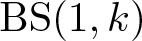 $\mathrm{BS}(1,k)$ is not virtually abelian. This is in contrast to two-sided Følner sequences, where Tointon showed that the conjugacy ratio with respect to a two-sided Følner sequence is positive if and only if the group is virtually abelian.


Quantitative ergodic theorems for actions of groups of polynomial growth
- Part of
-
- Journal:
- Ergodic Theory and Dynamical Systems / Volume 46 / Issue 1 / January 2026
- Published online by Cambridge University Press:
- 04 September 2025, pp. 128-181
- Print publication:
- January 2026
-
- Article
-
- You have access
- HTML
- Export citation
Higher incoherence of the automorphism groups of a free group
- Part of
-
- Journal:
- Proceedings of the Royal Society of Edinburgh. Section A: Mathematics , First View
- Published online by Cambridge University Press:
- 01 September 2025, pp. 1-28
-
- Article
-
- You have access
- Open access
- HTML
- Export citation
-
Let Fn be the free group on
 $n \geq 2$ generators. We show that for all
 $1 \leq m \leq 2n-3$ (respectively, for all
 $1 \leq m \leq 2n-4$), there exists a subgroup of
 ${\operatorname{Aut}(F_n)}$ (respectively,
 ${\operatorname{Out}(F_n)}$), which has finiteness of type Fm but not of type
 $FP_{m+1}(\mathbb{Q})$; hence, it is not m-coherent. In both cases, the new result is the upper bound
 $m= 2n-3$ (respectively,
 $m = 2n-4$), as it cannot be obtained by embedding direct products of free noncyclic groups, and certifies higher incoherence up to the virtual cohomological dimension and is therefore sharp. As a tool of the proof, we discuss the existence and nature of multiple inequivalent extensions of a suitable finite-index subgroup K4 of
 ${\operatorname{Aut}(F_2)}$ (isomorphic to the quotient of the pure braid group on four strands by its centre): the fibre of four of these extensions arise from the strand-forgetting maps on the braid groups, while a fifth is related with the Cardano–Ferrari epimorphism.


