Refine search
Actions for selected content:
30 results
WHEN IS $A + x A =\mathbb {R}$

- Part of
-
- Journal:
- The Journal of Symbolic Logic , First View
- Published online by Cambridge University Press:
- 07 July 2026, pp. 1-17
-
- Article
-
- You have access
- HTML
- Export citation
-
For a subgroup A of $(\mathbb {R},+)$
 and a real x, define $A+xA=\{ a + x b : a, b \in A \}$
 and $X_A=\{x\in \mathbb {R}:A + x A=\mathbb {R}\}$
 . We show that there is an $F_\sigma $
 subgroup A of $(\mathbb {R},+)$
 such that $\mathrm {dim_H} (A) \le \frac {1}{2}$
 and $X_A \neq \emptyset $
 . However, if $A \subseteq \mathbb {R}$
 is a subring of $\mathbb {R}$
 and $X_A \neq \emptyset $
 , then $A =\mathbb {R}$
 . Moreover, assuming the continuum hypothesis, there is a subgroup A of $(\mathbb {R},+)$
 with $\mathrm {dim_H} (A) = 0$
 such that $X_A =\mathbb {R}\backslash \mathbb {Q}$
 . The proof of this theorem combines several techniques in recursion theory and algorithmic dimension. Several other theorems on analytic subgroups and subfields of the reals are presented. We also discuss some of these results in the p-adics.


Complexity of finite Borel asymptotic dimension
- Part of
-
- Journal:
- Forum of Mathematics, Sigma / Volume 14 / 2026
- Published online by Cambridge University Press:
- 27 February 2026, e31
-
- Article
-
- You have access
- Open access
- HTML
- Export citation
-
We show that the set of locally finite Borel graphs with finite Borel asymptotic dimension is
 $\boldsymbol {\Sigma }^1_2$-complete. The result is based on a combinatorial characterization of finite Borel asymptotic dimension for graphs generated by a single Borel function. As an application of this characterization, we classify the complexities of digraph homomorphism problems for this class of graphs.

Almost Erdős sets
- Part of
-
- Journal:
- Proceedings of the Edinburgh Mathematical Society / Volume 69 / Issue 3 / August 2026
- Published online by Cambridge University Press:
- 12 February 2026, pp. 932-940
-
- Article
-
- You have access
- HTML
- Export citation
-
A set
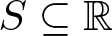 $S \subseteq \mathbb{R}$ is almost Erdős if, for every
 $\varepsilon \gt 0$, there exists a set
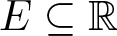 $E \subseteq \mathbb{R}$ of positive Lebesgue measure such that
 $\{x \in S : ax+b \notin E\}$ is nonempty for all
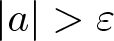 $|a| \gt \varepsilon$ and
 $b \in \mathbb{R}$. In this note, we show that any decreasing null sequence
 $(x_n)$ with decay rate greater than
 $1/2$ is an almost Erdős set.


BOREL COMPLEXITY OF SETS OF IDEAL LIMIT POINTS
- Part of
-
- Journal:
- The Journal of Symbolic Logic , First View
- Published online by Cambridge University Press:
- 20 January 2026, pp. 1-46
-
- Article
-
- You have access
- Open access
- HTML
- Export citation
-
Let X be an uncountable Polish space and let
 $\mathcal {I}$ be an ideal on
 $\omega $. A point
 $\eta \in X$ is an
 $\mathcal {I}$-limit point of a sequence
 $(x_n)$ taking values in X if there exists a subsequence
 $(x_{k_n})$ convergent to
 $\eta $ such that the set of indexes
 $\{k_n: n \in \omega \}\notin \mathcal {I}$. Denote by
 $\mathscr {L}(\mathcal {I})$ the family of subsets
 $S\subseteq X$ such that S is the set of
 $\mathcal {I}$-limit points of some sequence taking values in X or S is empty. In this article, we study the relationships between the topological complexity of ideals
 $\mathcal {I}$, their combinatorial properties, and the families of sets
 $\mathscr {L}(\mathcal {I})$ which can be attained. On the positive side, we provide several purely combinatorial (not depending on the space X) characterizations of ideals
 $\mathcal {I}$ for the inclusions and the equalities between
 $\mathscr {L}(\mathcal {I})$ and the Borel classes
 $\Pi ^0_1$,
 $\Sigma ^0_2$, and
 $\Pi ^0_3$. As a consequence, we prove that if
 $\mathcal {I}$ is a
 $\Pi ^0_4$ ideal then exactly one of the following cases holds:
 $\mathscr {L}(\mathcal {I})=\Pi ^0_1$ or
 $\mathscr {L}(\mathcal {I})=\Sigma ^0_2$ or
 $\mathscr {L}(\mathcal {I})=\Sigma ^1_1$ (however we do not have an example of a
 $\Pi ^0_4$ ideal with
 $\mathscr {L}(\mathcal {I})=\Sigma ^1_1$). In addition, we provide an explicit example of a coanalytic ideal
 $\mathcal {I}$ for which
 $\mathscr {L}(\mathcal {I})=\Sigma ^1_1$. On the negative side, since
 $\mathscr {L}(\mathcal {I})$ contains all singletons, it is immediate that there are no ideals
 $\mathcal {I}$ such that
 $\mathscr {L}(\mathcal {I})=\Sigma ^0_1$. On the same direction, we show that there are no ideals
 $\mathcal {I}$ such that
 $\mathscr {L}(\mathcal {I})=\Pi ^0_2$ or
 $\mathscr {L}(\mathcal {I})=\Sigma ^0_3$. In fact, for instance, if
 $\mathcal {I}$ is a Borel ideal and
 $\mathscr {L}(\mathcal {I})$ contains a non
 $\Sigma ^0_2$ set, then it contains all
 $\Pi ^0_3$ sets. We conclude with several open questions.


BOREL LINE GRAPHS
- Part of
-
- Journal:
- The Journal of Symbolic Logic / Volume 91 / Issue 3 / September 2026
- Published online by Cambridge University Press:
- 11 November 2024, pp. 891-912
- Print publication:
- September 2026
-
- Article
-
- You have access
- Open access
- HTML
- Export citation
-
We characterize Borel line graphs in terms of 10 forbidden induced subgraphs, namely the nine finite graphs from the classical result of Beineke together with a 10th infinite graph associated with the equivalence relation $\mathbb {E}_0$
 on the Cantor space. As a corollary, we prove a partial converse to the Feldman–Moore theorem, which allows us to characterize all locally countable Borel line graphs in terms of their Borel chromatic numbers.

ON HOMOMORPHISM GRAPHS
- Part of
-
- Journal:
- Forum of Mathematics, Pi / Volume 12 / 2024
- Published online by Cambridge University Press:
- 13 May 2024, e10
-
- Article
-
- You have access
- Open access
- HTML
- Export citation
-
We introduce new types of examples of bounded degree acyclic Borel graphs and study their combinatorial properties in the context of descriptive combinatorics, using a generalization of the determinacy method of Marks [Mar16]. The motivation for the construction comes from the adaptation of this method to the
 $\mathsf {LOCAL}$ model of distributed computing [BCG+21]. Our approach unifies the previous results in the area, as well as produces new ones. In particular, strengthening the main result of [TV21], we show that for
 $\Delta>2$, it is impossible to give a simple characterization of acyclic
 $\Delta $-regular Borel graphs with Borel chromatic number at most
 $\Delta $: such graphs form a
 $\mathbf {\Sigma }^1_2$-complete set. This implies a strong failure of Brooks-like theorems in the Borel context.


LEBESGUE MEASURE ZERO MODULO IDEALS ON THE NATURAL NUMBERS
- Part of
-
- Journal:
- The Journal of Symbolic Logic / Volume 90 / Issue 3 / September 2025
- Published online by Cambridge University Press:
- 29 December 2023, pp. 1098-1128
- Print publication:
- September 2025
-
- Article
-
- You have access
- HTML
- Export citation
-
We propose a reformulation of the ideal
 $\mathcal {N}$ of Lebesgue measure zero sets of reals modulo an ideal J on
 $\omega $, which we denote by
 $\mathcal {N}_J$. In the same way, we reformulate the ideal
 $\mathcal {E}$ generated by
 $F_\sigma $ measure zero sets of reals modulo J, which we denote by
 $\mathcal {N}^*_J$. We show that these are
 $\sigma $-ideals and that
 $\mathcal {N}_J=\mathcal {N}$ iff J has the Baire property, which in turn is equivalent to
 $\mathcal {N}^*_J=\mathcal {E}$. Moreover, we prove that
 $\mathcal {N}_J$ does not contain co-meager sets and
 $\mathcal {N}^*_J$ contains non-meager sets when J does not have the Baire property. We also prove a deep connection between these ideals modulo J and the notion of nearly coherence of filters (or ideals).
We also study the cardinal characteristics associated with
 $\mathcal {N}_J$ and
 $\mathcal {N}^*_J$. We show their position with respect to Cichoń’s diagram and prove consistency results in connection with other very classical cardinal characteristics of the continuum, leaving just very few open questions. To achieve this, we discovered a new characterization of
 $\mathrm {add}(\mathcal {N})$ and
 $\mathrm {cof}(\mathcal {N})$. We also show that, in Cohen model, we can obtain many different values to the cardinal characteristics associated with our new ideals.


DENSITY-LIKE AND GENERALIZED DENSITY IDEALS
- Part of
-
- Journal:
- The Journal of Symbolic Logic / Volume 87 / Issue 1 / March 2022
- Published online by Cambridge University Press:
- 23 November 2021, pp. 228-251
- Print publication:
- March 2022
-
- Article
-
- You have access
- Open access
- HTML
- Export citation
-
We show that there exist uncountably many (tall and nontall) pairwise nonisomorphic density-like ideals on
 $\omega $ which are not generalized density ideals. In addition, they are nonpathological. This answers a question posed by Borodulin-Nadzieja et al. in [this Journal, vol. 80 (2015), pp. 1268–1289]. Lastly, we provide sufficient conditions for a density-like ideal to be necessarily a generalized density ideal.

RECURRENCE AND THE EXISTENCE OF INVARIANT MEASURES
- Part of
-
- Journal:
- The Journal of Symbolic Logic / Volume 86 / Issue 1 / March 2021
- Published online by Cambridge University Press:
- 15 February 2021, pp. 60-76
- Print publication:
- March 2021
-
- Article
-
- You have access
- Export citation
Minimal definable graphs of definable chromatic number at least three
- Part of
-
- Journal:
- Forum of Mathematics, Sigma / Volume 9 / 2021
- Published online by Cambridge University Press:
- 28 January 2021, e7
-
- Article
-
- You have access
- Open access
- Export citation
SHORTENING CLOPEN GAMES
- Part of
-
- Journal:
- The Journal of Symbolic Logic / Volume 86 / Issue 4 / December 2021
- Published online by Cambridge University Press:
- 08 January 2021, pp. 1541-1554
- Print publication:
- December 2021
-
- Article
-
- You have access
- HTML
- Export citation
-
For every countable wellordering
 $\alpha $ greater than
 $\omega $, it is shown that clopen determinacy for games of length
 $\alpha $ with moves in
 $\mathbb {N}$ is equivalent to determinacy for a class of shorter games, but with more complicated payoff. In particular, it is shown that clopen determinacy for games of length
 $\omega ^2$ is equivalent to
 $\sigma $-projective determinacy for games of length
 $\omega $ and that clopen determinacy for games of length
 $\omega ^3$ is equivalent to determinacy for games of length
 $\omega ^2$ in the smallest
 $\sigma $-algebra on
 $\mathbb {R}$ containing all open sets and closed under the real game quantifier.


A dichotomy of sets via typical differentiability
- Part of
-
- Journal:
- Forum of Mathematics, Sigma / Volume 8 / 2020
- Published online by Cambridge University Press:
- 04 November 2020, e41
-
- Article
-
- You have access
- Open access
- Export citation
-
We obtain a criterion for an analytic subset of a Euclidean space to contain points of differentiability of a typical Lipschitz function: namely, that it cannot be covered by countably many sets, each of which is closed and purely unrectifiable (has a zero-length intersection with every
 $C^1$ curve). Surprisingly, we establish that any set failing this criterion witnesses the opposite extreme of typical behaviour: in any such coverable set, a typical Lipschitz function is everywhere severely non-differentiable.

BASES FOR FUNCTIONS BEYOND THE FIRST BAIRE CLASS
- Part of
-
- Journal:
- The Journal of Symbolic Logic / Volume 85 / Issue 3 / September 2020
- Published online by Cambridge University Press:
- 27 October 2020, pp. 1289-1303
- Print publication:
- September 2020
-
- Article
-
- You have access
- Export citation
-
We provide a finite basis for the class of Borel functions that are not in the first Baire class, as well as the class of Borel functions that are not
 $\sigma $-continuous with closed witnesses.

AN APPLICATION OF RECURSION THEORY TO ANALYSIS
- Part of
-
- Journal:
- Bulletin of Symbolic Logic / Volume 26 / Issue 1 / March 2020
- Published online by Cambridge University Press:
- 11 June 2020, pp. 15-25
- Print publication:
- March 2020
-
- Article
-
- You have access
- Export citation
-
Mauldin [15] proved that there is an analytic set, which cannot be represented by
 $B\cup X$ for some Borel set B and a subset X of a
 $\boldsymbol{\Sigma }^0_2$-null set, answering a question by Johnson [10]. We reprove Mauldin’s answer by a recursion-theoretical method. We also give a characterization of the Borel generated
 $\sigma $-ideals having approximation property under the assumption that every real is constructible, answering Mauldin’s question raised in [15].


ON THE EXISTENCE OF LARGE ANTICHAINS FOR DEFINABLE QUASI-ORDERS
-
- Journal:
- The Journal of Symbolic Logic / Volume 85 / Issue 1 / March 2020
- Published online by Cambridge University Press:
- 10 December 2019, pp. 103-108
- Print publication:
- March 2020
-
- Article
-
- You have access
- Export citation
THE GAME OPERATOR ACTING ON WADGE CLASSES OF BOREL SETS
-
- Journal:
- The Journal of Symbolic Logic / Volume 84 / Issue 3 / September 2019
- Published online by Cambridge University Press:
- 13 June 2019, pp. 1224-1239
- Print publication:
- September 2019
-
- Article
-
- You have access
- Export citation
-
We study the behavior of the game operator
 $$ on Wadge classes of Borel sets. In particular we prove that the classical Moschovakis results still hold in this setting. We also characterize Wadge classes
 ${\bf{\Gamma }}$ for which the class
 has the substitution property. An effective variation of these results shows that for all
 $1 \le \eta < \omega _1^{{\rm{CK}}}$ and
 $2 \le \xi < \omega _1^{{\rm{CK}}}$,
 is a Spector class while
 is not.


On the existence of cocycle-invariant Borel probability measures
- Part of
-
- Journal:
- Ergodic Theory and Dynamical Systems / Volume 40 / Issue 11 / November 2020
- Published online by Cambridge University Press:
- 12 April 2019, pp. 3150-3168
- Print publication:
- November 2020
-
- Article
-
- You have access
- Export citation
Gδ Sets IN σ-IDEALS GENERATED BY COMPACT SETS
-
- Journal:
- The Journal of Symbolic Logic / Volume 84 / Issue 2 / June 2019
- Published online by Cambridge University Press:
- 04 March 2019, pp. 781-797
- Print publication:
- June 2019
-
- Article
-
- You have access
- Export citation
-
Given a compact Polish space E and the hyperspace of its compact subsets
 ${\cal K}\left( E \right)$, we consider Gδσ-ideals of compact subsets of E. Solecki has shown that any σ-ideal in a broad natural class of Gδ ideals can be represented via a compact subset of
 ${\cal K}\left( E \right)$; in this article we examine the behaviour of Gδ subsets of E with respect to the representing set. Given an ideal I in this class, we construct a representing set that recognises a compact subset of E as being “small” precisely when it is in I, and recognises a Gδ subset of E as being “small” precisely when it is covered by countably many compact sets from I.


MEASURABLE PERFECT MATCHINGS FOR ACYCLIC LOCALLY COUNTABLE BOREL GRAPHS
-
- Journal:
- The Journal of Symbolic Logic / Volume 82 / Issue 1 / March 2017
- Published online by Cambridge University Press:
- 21 March 2017, pp. 258-271
- Print publication:
- March 2017
-
- Article
-
- You have access
- Export citation
NORMAL NUMBERS AND COMPLETENESS RESULTS FOR DIFFERENCE SETS
-
- Journal:
- The Journal of Symbolic Logic / Volume 82 / Issue 1 / March 2017
- Published online by Cambridge University Press:
- 21 March 2017, pp. 247-257
- Print publication:
- March 2017
-
- Article
-
- You have access
- Export citation
-
We consider some natural sets of real numbers arising in ergodic theory and show that they are, respectively, complete in the classes
 ${\cal D}_2 \left( {{\bf{\Pi }}_3^0 } \right)$ and
 ${\cal D}_\omega\left( {{\bf{\Pi }}_3^0 } \right)$ , that is, the class of sets which are 2-differences (respectively, ω-differences) of
 ${\bf{\Pi }}_3^0 $ sets.


