Refine search
Actions for selected content:
47 results
Selberg, Ihara and Berkovich
- Part of
-
- Journal:
- Forum of Mathematics, Sigma / Volume 14 / 2026
- Published online by Cambridge University Press:
- 03 November 2026, e146
-
- Article
-
- You have access
- Open access
- HTML
- Export citation
Role of dimension and geometry: non-uniqueness in the pseudo-one-dimensional limit for Turing patterns on parallelograms
- Part of
-
- Journal:
- European Journal of Applied Mathematics , First View
- Published online by Cambridge University Press:
- 29 September 2026, pp. 1-20
-
- Article
-
- You have access
- Open access
- HTML
- Export citation
Minimal spacing of eigenvalues on fractals
- Part of
-
- Journal:
- Canadian Mathematical Bulletin , First View
- Published online by Cambridge University Press:
- 22 September 2026, pp. 1-9
-
- Article
-
- You have access
- Open access
- HTML
- Export citation
-
On the unit interval (I) and the Sierpinski gasket ($SG$
 ), the spectral decimation function of the Laplacian has similar properties that result in a positive minimum spacing of eigenvalues. Other fractals, for example, the level-3 $SG$
 , $SG_3$
 , may not enjoy these properties. Our goal is to obtain a simple sufficient criterion for positive infimum spacing between eigenvalues in the spectrum, based on the properties of the corresponding spectral decimation function of the fractal. We also give a sufficient condition for zero infimum spacing between eigenvalues.


A FREE BOUNDARY MODEL IN RIVER NETWORKS
- Part of
-
- Journal:
- Bulletin of the Australian Mathematical Society / Volume 114 / Issue 3 / December 2026
- Published online by Cambridge University Press:
- 14 May 2026, pp. 536-549
- Print publication:
- December 2026
-
- Article
-
- You have access
- HTML
- Export citation
-
We study the long-time behaviour of solutions to a free boundary model in river networks with small water flow speeds. First, we establish the well-posedness of our model. Under suitable assumptions, we then establish a spreading–vanishing dichotomy result for solutions to our model. By introducing a parameter $\sigma $
 in the initial data, we derive sharp threshold behaviours.

Linear damping estimates for periodic roll wave solutions of the inviscid Saint-Venant equations and related systems of hyperbolic balance laws
- Part of
-
- Journal:
- Journal of Nonlinear Waves / Volume 1 / 2025
- Published online by Cambridge University Press:
- 05 December 2025, e21
-
- Article
-
- You have access
- Open access
- HTML
- Export citation
-
Substantially extending previous results of the authors for smooth solutions in the viscous case, we develop linear damping estimates for periodic roll-wave solutions of the inviscid Saint-Venant equations and related systems of hyperbolic balance laws. Such damping estimates, consisting of
 $H^s$ energy estimates yielding exponential slaving of high-derivative to low-derivative norms, have served as crucial ingredients in nonlinear stability analyses of traveling waves in hyperbolic or partially parabolic systems, both in obtaining high-frequency resolvent estimates and in closing a nonlinear iteration for which available linearized stability estimates apparently lose regularity. Here, we establish for systems of size
 $n\leq 6$ a Lyapunov-type theorem stating that such energy estimates are available whenever strict high-frequency spectral stability holds; for dimensions
 $7$ and higher, there may be in general a gap between high-frequency spectral stability and existence of the type of energy estimate that we develop here. A key ingredient is a dimension-dependent linear algebraic lemma reminiscent of Lyapunov’s Lemma for ODE that is to our knowledge new.


Sharp bounds for higher Steklov–Dirichlet eigenvalues on domains with spherical holes
- Part of
-
- Journal:
- Canadian Mathematical Bulletin / Volume 69 / Issue 3 / September 2026
- Published online by Cambridge University Press:
- 01 December 2025, pp. 877-896
- Print publication:
- September 2026
-
- Article
-
- You have access
- HTML
- Export citation
-
We consider a mixed Steklov–Dirichlet eigenvalue problem on a smooth bounded domain having a spherical hole. In this article, we take Dirichlet condition on the boundary of the spherical hole and Steklov condition on the other boundary component/s. Under certain symmetry assumptions on multiconnected domains in $\mathbb {R}^{n}$
 having a spherical hole, we obtain isoperimetric inequalities for the k-th Steklov–Dirichlet eigenvalues for each $k \in \{2, 3, \dots , n+1\}$
 . We provide examples to emphasise the fact that the symmetry assumptions, on the family of domains considered, are crucial. We also extend Theorem 3.1 of “Gavitone et al. (2023), An isoperimetric inequality for the first Steklov–Dirichlet Laplacian eigenvalue of convex sets with a spherical hole, Pacific Journal of Mathematics, 320(2): 241–259” not only from Euclidean domains to domains in space forms but also from convex domains to star-shaped domains. In particular, we obtain sharp lower and upper bounds for the first Steklov–Dirichlet eigenvalue on the family of all bounded star-shaped domains on the hemisphere as well as on the hyperbolic space.

Constructing surfaces with first Steklov eigenvalue of arbitrarily large multiplicity
- Part of
-
- Journal:
- Canadian Mathematical Bulletin / Volume 69 / Issue 2 / June 2026
- Published online by Cambridge University Press:
- 06 October 2025, pp. 572-586
- Print publication:
- June 2026
-
- Article
-
- You have access
- Open access
- HTML
- Export citation
-
We construct surfaces with arbitrarily large multiplicity for their first nonzero Steklov eigenvalue. The proof is based on a technique by Burger and Colbois originally used to prove a similar result for the Laplacian spectrum. We start by constructing surfaces
 $S_p$ with a specific subgroup of isometry
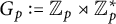 $G_p:= \mathbb {Z}_p \rtimes \mathbb {Z}_p^*$ for each prime p. We do so by gluing surfaces with boundary following the structure of the Cayley graph of
 $G_p$. We then exploit the properties of
 $G_p$ and
 $S_p$ in order to show that an irreducible representation of high degree (depending on p) acts on the eigenspace of functions associated with
 $\sigma _1(S_p)$, leading to the desired result.


Sharp Hardy and spectral gap inequalities on special irreversible Finsler manifolds
- Part of
-
- Journal:
- Proceedings of the Royal Society of Edinburgh. Section A: Mathematics , First View
- Published online by Cambridge University Press:
- 09 September 2025, pp. 1-36
-
- Article
-
- You have access
- Open access
- HTML
- Export citation
Characters and transfer maps via categorified traces
- Part of
-
- Journal:
- Forum of Mathematics, Sigma / Volume 13 / 2025
- Published online by Cambridge University Press:
- 03 June 2025, e93
-
- Article
-
- You have access
- Open access
- HTML
- Export citation
-
We develop a theory of generalized characters of local systems in
 $\infty $-categories, which extends classical character theory for group representations and, in particular, the induced character formula. A key aspect of our approach is that we utilize the interaction between traces and their categorifications. We apply this theory to reprove and refine various results on the composability of Becker-Gottlieb transfers, the Hochschild homology of Thom spectra, and the additivity of traces in stable
 $\infty $-categories.


Spectral ratios and gaps for Steklov eigenvalues of balls with revolution-type metrics
- Part of
-
- Journal:
- Canadian Mathematical Bulletin / Volume 68 / Issue 2 / June 2025
- Published online by Cambridge University Press:
- 14 January 2025, pp. 492-511
- Print publication:
- June 2025
-
- Article
-
- You have access
- Open access
- HTML
- Export citation
Generalized second order vectorial ∞-eigenvalue problems
- Part of
-
- Journal:
- Proceedings of the Royal Society of Edinburgh. Section A: Mathematics / Volume 155 / Issue 6 / December 2025
- Published online by Cambridge University Press:
- 27 March 2024, pp. 2150-2170
- Print publication:
- December 2025
-
- Article
-
- You have access
- Open access
- HTML
- Export citation
-
We consider the problem of minimizing the $L^\infty$
 norm of a function of the hessian over a class of maps, subject to a mass constraint involving the $L^\infty$
 norm of a function of the gradient and the map itself. We assume zeroth and first order Dirichlet boundary data, corresponding to the “hinged” and the “clamped” cases. By employing the method of $L^p$
 approximations, we establish the existence of a special $L^\infty$
 minimizer, which solves a divergence PDE system with measure coefficients as parameters. This is a counterpart of the Aronsson-Euler system corresponding to this constrained variational problem. Furthermore, we establish upper and lower bounds for the eigenvalue.


A universal inequality for Neumann eigenvalues of the Laplacian on a convex domain in Euclidean space
- Part of
-
- Journal:
- Canadian Mathematical Bulletin / Volume 67 / Issue 1 / March 2024
- Published online by Cambridge University Press:
- 19 September 2023, pp. 222-226
- Print publication:
- March 2024
-
- Article
-
- You have access
- HTML
- Export citation
General kernel estimates of Schrödinger-type operators with unbounded diffusion terms
- Part of
-
- Journal:
- Proceedings of the Royal Society of Edinburgh. Section A: Mathematics / Volume 154 / Issue 3 / June 2024
- Published online by Cambridge University Press:
- 19 May 2023, pp. 929-960
- Print publication:
- June 2024
-
- Article
-
- You have access
- Open access
- HTML
- Export citation
-
We first prove that the realization $A_{\mathrm {min}}$
 of $A:={\operatorname {\mathrm {div}}}(Q\nabla )-V$
 in $L^2({\mathbb {R}}^d)$
 with unbounded coefficients generates a symmetric sub-Markovian and ultracontractive semigroup on $L^2({\mathbb {R}}^d)$
 which coincides on $L^2({\mathbb {R}}^d)\cap C_b({\mathbb {R}}^d)$
 with the minimal semigroup generated by a realization of $A$
 on $C_b({\mathbb {R}}^d)$
 . Moreover, using time-dependent Lyapunov functions, we prove pointwise upper bounds for the heat kernel of $A$
 and deduce some spectral properties of $A_{\min }$
 in the case of polynomially and exponentially growing diffusion and potential coefficients.


REILLY-TYPE UPPER BOUNDS FOR THE p-STEKLOV PROBLEM ON SUBMANIFOLDS
- Part of
-
- Journal:
- Bulletin of the Australian Mathematical Society / Volume 108 / Issue 3 / December 2023
- Published online by Cambridge University Press:
- 28 February 2023, pp. 492-503
- Print publication:
- December 2023
-
- Article
-
- You have access
- HTML
- Export citation
On Duclos–Exner’s conjecture about waveguides in strong uniform magnetic fields
- Part of
-
- Journal:
- Forum of Mathematics, Sigma / Volume 11 / 2023
- Published online by Cambridge University Press:
- 23 February 2023, e11
-
- Article
-
- You have access
- Open access
- HTML
- Export citation
Shape sensitivity of the Hardy constant involving the distance from a boundary submanifold
- Part of
-
- Journal:
- Proceedings of the Royal Society of Edinburgh. Section A: Mathematics / Volume 154 / Issue 2 / April 2024
- Published online by Cambridge University Press:
- 22 February 2023, pp. 408-423
- Print publication:
- April 2024
-
- Article
-
- You have access
- Open access
- HTML
- Export citation
Optimization of the anisotropic Cheeger constant with respect to the anisotropy
- Part of
-
- Journal:
- Canadian Mathematical Bulletin / Volume 66 / Issue 3 / September 2023
- Published online by Cambridge University Press:
- 17 February 2023, pp. 1030-1043
- Print publication:
- September 2023
-
- Article
-
- You have access
- Open access
- HTML
- Export citation
-
Given an open, bounded set
 $\Omega $ in
 $\mathbb {R}^N$, we consider the minimization of the anisotropic Cheeger constant
 $h_K(\Omega )$ with respect to the anisotropy K, under a volume constraint on the associated unit ball. In the planar case, under the assumption that K is a convex, centrally symmetric body, we prove the existence of a minimizer. Moreover, if
 $\Omega $ is a ball, we show that the optimal anisotropy K is not a ball and that, among all regular polygons, the square provides the minimal value.


ON THE LOWEST EIGENVALUE OF THE FRACTIONAL LAPLACIAN FOR THE INTERSECTION OF TWO DOMAINS
- Part of
-
- Journal:
- Bulletin of the Australian Mathematical Society / Volume 108 / Issue 2 / October 2023
- Published online by Cambridge University Press:
- 02 December 2022, pp. 290-297
- Print publication:
- October 2023
-
- Article
-
- You have access
- HTML
- Export citation
-
We extend a result of Lieb [‘On the lowest eigenvalue of the Laplacian for the intersection of two domains’, Invent. Math. 74(3) (1983), 441–448] to the fractional setting. We prove that if A and B are two bounded domains in
 $\mathbb R^N$ and
 $\lambda _s(A)$,
 $\lambda _s(B)$ are the lowest eigenvalues of
 $(-\Delta )^s$,
 $0<s<1$, with Dirichlet boundary conditions, there exists some translation
 $B_x$ of B such that
 $\lambda _s(A\cap B_x)< \lambda _s(A)+\lambda _s(B)$. Moreover, without the boundedness assumption on A and B, we show that for any
 $\varepsilon>0$, there exists some translation
 $B_x$ of B such that
 $\lambda _s(A\cap B_x)< \lambda _s(A)+\lambda _s(B)+\varepsilon .$


The Torelli theorem for
 $ALH^*$ gravitational instantons
- Part of
-
- Journal:
- Forum of Mathematics, Sigma / Volume 10 / 2022
- Published online by Cambridge University Press:
- 15 September 2022, e79
-
- Article
-
- You have access
- Open access
- HTML
- Export citation
-
We give a short proof of the Torelli theorem for
 $ALH^*$ gravitational instantons using the authors’ previous construction of mirror special Lagrangian fibrations in del Pezzo surfaces and rational elliptic surfaces together with recent work of Sun-Zhang. In particular, this includes an identification of 10 diffeomorphism types of
 $ALH^*_b$ gravitational instantons.


On the optimization of the first weighted eigenvalue
- Part of
-
- Journal:
- Proceedings of the Royal Society of Edinburgh. Section A: Mathematics / Volume 153 / Issue 6 / December 2023
- Published online by Cambridge University Press:
- 12 September 2022, pp. 1777-1804
- Print publication:
- December 2023
-
- Article
-
- You have access
- HTML
- Export citation
-
For $N\geq 2$
 , a bounded smooth domain $\Omega$
 in $\mathbb {R}^{N}$
 , and $g_0,\, V_0 \in L^{1}_{loc}(\Omega )$
 , we study the optimization of the first eigenvalue for the following weighted eigenvalue problem:\[ -\Delta_p \phi + V |\phi|^{p-2}\phi = \lambda g |\phi|^{p-2}\phi \text{ in } \Omega, \quad \phi=0 \text{ on } \partial \Omega, \]where $g$

 and $V$
 vary over the rearrangement classes of $g_0$
 and $V_0$
 , respectively. We prove the existence of a minimizing pair $(\underline {g},\,\underline {V})$
 and a maximizing pair $(\overline {g},\,\overline {V})$
 for $g_0$
 and $V_0$
 lying in certain Lebesgue spaces. We obtain various qualitative properties such as polarization invariance, Steiner symmetry of the minimizers as well as the associated eigenfunctions for the case $p=2$
 . For annular domains, we prove that the minimizers and the corresponding eigenfunctions possess the foliated Schwarz symmetry.