Refine search
Actions for selected content:
36 results
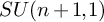
POISSON TRANSFORMS, THE BGG COMPLEX AND DISCRETE SERIES REPRESENTATIONS OF $SU(n+1,1)$
- Part of
-
- Journal:
- Journal of the Institute of Mathematics of Jussieu , First View
- Published online by Cambridge University Press:
- 06 November 2026, pp. 1-40
-
- Article
-
- You have access
- Open access
- HTML
- Export citation
-
The aim of this article is to construct specific Poisson transforms mapping differential forms on the sphere $S^{2n+1}$
 endowed with its natural CR structure to forms on complex hyperbolic space. These transforms have coclosed harmonic values, descend to the BGG (Rumin) complex, and intertwine the differential operators in that complex with the exterior derivative.
Passing to the Poincaré ball model, we analyze boundary asymptotics, proving that the values of our transforms admit a continuous extension to the boundary in degrees $\leq n$
 . Finally, we show that, composing the exterior derivative with the transform in degree n, one obtains an isomorphism between the kernel of the Rumin operator in degree n and a dense subspace of the $L^2$
 -harmonic forms on complex hyperbolic space. This provides a realization of the discrete series representations of $SU(n+1,1)$
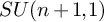 with trivial infinitesimal character in spaces of differential forms on the compact manifold $S^{2n+1}$
 .
These developments are motivated by a programme of the third author to prove some instances of the Baum-Connes conjecture. The first part of the article is valid in a much more general setting; in particular, it is relevant for cases in which the conjecture is still open.


Iterated convolution inequalities on $\mathbb {R}^d$
 and Riemannian symmetric spaces of non-compact type
- Part of
-
- Journal:
- Canadian Journal of Mathematics , First View
- Published online by Cambridge University Press:
- 21 September 2026, pp. 1-23
-
- Article
-
- You have access
- HTML
- Export citation
-
Let $\mathbb {X}$
 bea Riemannian symmetric space of non-compact type. For a real-valued $f \in L^1(\mathbb {X})$
 with $\int _{\mathbb {X}} f \ge 0$
 , we prove that if f satisfies the iterated convolution inequality: $$ \begin{align*} f \ge \sum_{n=2}^N a_n \left(*^n f\right),\:\:\text{ a.e. on } \mathbb{X}, \end{align*} $$where $N \ge 2$
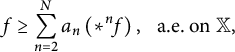
 is an integer and for $2 \le n \le N$
 , $a_n$
 are nonnegative integers with at least one of them positive, then f must be nonnegative a.e. and satisfy the nontrivial bound $\int _{\mathbb {X}} f \le t_{\mathcal {Q}}\:$
 , where $\mathcal {Q}(t):=t-\sum _{n=2}^N a_n\:t^n$
 and $t_{\mathcal {Q}}$
 is the unique zero of $\mathcal {Q}'$
 in $(0,\infty )$
 . This result is new even for $\mathbb {R}^d$
 and generalizes recent results of Carlen et al. (2021, Int. Math. Res. Not., 24, 18604–18612) and Nakamura and Sawano (2025, J. Geom. Anal., 35, 68) for two-fold and m-fold convolutions, respectively, to genuine polynomials. We then apply our result to obtain an a priori estimate for solutions of an integro-differential equation on symmetric spaces, which generalizes the equation on $\mathbb R^d$
 , related to the physical problem of the ground state energy of the Bose gas, studied by Carlen et al. (2020, Pure Appl. Anal., 2, 659–684). We also obtain a surprising result on the nature of the extremizers of the convolution inequalities.


Equivalent Riesz products on the unit sphere
- Part of
-
- Journal:
- Glasgow Mathematical Journal , First View
- Published online by Cambridge University Press:
- 11 September 2026, pp. 1-8
-
- Article
-
- You have access
- HTML
- Export citation
Cartan motion groups: regularity of K-finite matrix coefficients
- Part of
-
- Journal:
- Canadian Mathematical Bulletin , First View
- Published online by Cambridge University Press:
- 24 March 2026, pp. 1-21
-
- Article
-
- You have access
- HTML
- Export citation
-
If G is a connected semisimple Lie group with finite center and K is a maximal compact subgroup of G, then the Lie algebra of G admits a Cartan decomposition
 $\mathfrak {g}=\mathfrak {k}\oplus \mathfrak {p}$. This allows us to define the Cartan motion group
 $H=\mathfrak {p}\rtimes K$. In this article, we study the regularity of K-finite matrix coefficients of unitary representations of H. We prove that the optimal exponent
 $\kappa (G)$ for which all such coefficients are
 $\kappa (G)$-Hölder continuous coincides with the optimal regularity of all K-finite coefficients of the group G itself. Our approach relies on stationary phase techniques that were previously employed by the author to study regularity in the setting of
 $(G,K)$. Furthermore, we provide a general framework to reduce the question of regularity from K-finite coefficients to K-bi-invariant coefficients.


TWISTED RUELLE ZETA FUNCTION ON HYPERBOLIC MANIFOLDS AND COMPLEX-VALUED ANALYTIC TORSION
- Part of
-
- Journal:
- Journal of the Institute of Mathematics of Jussieu / Volume 24 / Issue 3 / May 2025
- Published online by Cambridge University Press:
- 22 January 2025, pp. 813-845
- Print publication:
- May 2025
-
- Article
-
- You have access
- Open access
- HTML
- Export citation
-
In this paper, we study the twisted Ruelle zeta function associated with the geodesic flow of a compact, hyperbolic, odd-dimensional manifold X. The twisted Ruelle zeta function is associated with an acyclic representation
 $\chi \colon \pi _{1}(X) \rightarrow \operatorname {\mathrm {GL}}_{n}(\mathbb {C})$, which is close enough to an acyclic, unitary representation. In this case, the twisted Ruelle zeta function is regular at zero and equals the square of the refined analytic torsion, as it is introduced by Braverman and Kappeler in [6], multiplied by an exponential, which involves the eta invariant of the even part of the odd-signature operator, associated with
 $\chi $.

Bounds on multiplicities of symmetric pairs of finite groups
- Part of
-
- Journal:
- Forum of Mathematics, Sigma / Volume 12 / 2024
- Published online by Cambridge University Press:
- 09 September 2024, e73
-
- Article
-
- You have access
- Open access
- HTML
- Export citation
-
Let
 $\Gamma $ be a finite group, let
 $\theta $ be an involution of
 $\Gamma $ and let
 $\rho $ be an irreducible complex representation of
 $\Gamma $. We bound
 ${\operatorname {dim}} \rho ^{\Gamma ^{\theta }}$ in terms of the smallest dimension of a faithful
 $\mathbb {F}_p$-representation of
 $\Gamma /\operatorname {\mathrm {Rad}}_p(\Gamma )$, where p is any odd prime and
 $\operatorname {\mathrm {Rad}}_p(\Gamma )$ is the maximal normal p-subgroup of
 $\Gamma $.
This implies, in particular, that if
 $\mathbf {G}$ is a group scheme over
 $\mathbb {Z}$ and
 $\theta $ is an involution of
 $\mathbf {G}$, then the multiplicity of any irreducible representation in
 $C^\infty \left( \mathbf {G}(\mathbb {Z}_p)/ \mathbf {G} ^{\theta }(\mathbb {Z}_p) \right)$ is bounded, uniformly in p.


WIENER TAUBERIAN THEOREMS FOR CERTAIN BANACH ALGEBRAS ON REAL RANK ONE SEMISIMPLE LIE GROUPS
- Part of
-
- Journal:
- Journal of the Australian Mathematical Society / Volume 116 / Issue 1 / February 2024
- Published online by Cambridge University Press:
- 18 July 2023, pp. 68-95
-
- Article
-
- You have access
- Open access
- HTML
- Export citation
A revisit to “On BMO and Carleson measures on Riemannian manifolds”
- Part of
-
- Journal:
- Proceedings of the Royal Society of Edinburgh. Section A: Mathematics / Volume 154 / Issue 4 / August 2024
- Published online by Cambridge University Press:
- 18 July 2023, pp. 1281-1307
- Print publication:
- August 2024
-
- Article
-
- You have access
- HTML
- Export citation
-
Let $\mathcal {M}$
 be an Ahlfors $n$
 -regular Riemannian manifold such that either the Ricci curvature is non-negative or the Ricci curvature is bounded from below together with a bound on the gradient of the heat kernel. In the paper [IMRN, 2022, no. 2, 1245-1269] of Brazke–Schikorra–Sire, the authors characterised the BMO function $u : \mathcal {M} \to \mathbb {R}$
 by a Carleson measure condition of its $\sigma$
 -harmonic extension $U:\mathcal {M}\times \mathbb {R}_+ \to \mathbb {R}$
 . This paper is concerned with the similar problem under a more general Dirichlet metric measure space setting, and the limiting behaviours of BMO & Carleson measure, where the heat kernel admits only the so-called diagonal upper estimate. More significantly, without the Ricci curvature condition, we relax the Ahlfors regularity to a doubling property, and remove the pointwise bound on the gradient of the heat kernel. Some similar results for the Lipschitz function are also given, and two open problems related to our main result are considered.


GENERALIZED ZETA INTEGRALS ON CERTAIN REAL PREHOMOGENEOUS VECTOR SPACES
- Part of
-
- Journal:
- Nagoya Mathematical Journal / Volume 249 / March 2023
- Published online by Cambridge University Press:
- 05 September 2022, pp. 50-87
-
- Article
-
- You have access
- HTML
- Export citation
-
Let X be a real prehomogeneous vector space under a reductive group G, such that X is an absolutely spherical G-variety with affine open orbit. We define local zeta integrals that involve the integration of Schwartz–Bruhat functions on X against generalized matrix coefficients of admissible representations of
 $G(\mathbb {R})$, twisted by complex powers of relative invariants. We establish the convergence of these integrals in some range, the meromorphic continuation, as well as a functional equation in terms of abstract
 $\gamma $-factors. This subsumes the archimedean zeta integrals of Godement–Jacquet, those of Sato–Shintani (in the spherical case), and the previous works of Bopp–Rubenthaler. The proof of functional equations is based on Knop’s results on Capelli operators.


TEMPERED HOMOGENEOUS SPACES IV
- Part of
-
- Journal:
- Journal of the Institute of Mathematics of Jussieu / Volume 22 / Issue 6 / November 2023
- Published online by Cambridge University Press:
- 07 June 2022, pp. 2879-2906
- Print publication:
- November 2023
-
- Article
-
- You have access
- HTML
- Export citation
-
Let G be a complex semisimple Lie group and H a complex closed connected subgroup. Let
 and
 be their Lie algebras. We prove that the regular representation of G in
 $L^2(G/H)$ is tempered if and only if the orthogonal of
 in
 contains regular elements by showing simultaneously the equivalence to other striking conditions, such as
 has a solvable limit algebra.


Oscillating multipliers on symmetric and locally symmetric spaces
- Part of
-
- Journal:
- Canadian Journal of Mathematics / Volume 74 / Issue 3 / June 2022
- Published online by Cambridge University Press:
- 14 May 2021, pp. 887-905
- Print publication:
- June 2022
-
- Article
-
- You have access
- Open access
- HTML
- Export citation
-
We prove
 $L^{p}$-boundedness of oscillating multipliers on symmetric spaces of noncompact type of arbitrary rank, as well as on a wide class of locally symmetric spaces.

THE SMOOTHNESS OF ORBITAL MEASURES ON NONCOMPACT SYMMETRIC SPACES
- Part of
-
- Journal:
- Journal of the Australian Mathematical Society / Volume 113 / Issue 2 / October 2022
- Published online by Cambridge University Press:
- 26 April 2021, pp. 188-207
-
- Article
-
- You have access
- Export citation
-
Let
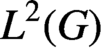
 $G/K$ be an irreducible symmetric space, where G is a noncompact, connected Lie group and K is a compact, connected subgroup. We use decay properties of the spherical functions to show that the convolution product of any
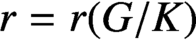 $r=r(G/K)$ continuous orbital measures has its density function in
 $L^{2}(G)$ and hence is an absolutely continuous measure with respect to the Haar measure. The number r is approximately the rank of
 $G/K$. For the special case of the orbital measures,
 $\nu _{a_{i}}$, supported on the double cosets
 $Ka_{i}K$, where
 $a_{i}$ belongs to the dense set of regular elements, we prove the sharp result that
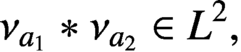 $\nu _{a_{1}}\ast \nu _{a_{2}}\in L^{2},$ except for the symmetric space of Cartan class
 $AI$ when the convolution of three orbital measures is needed (even though
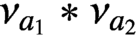 $\nu _{a_{1}}\ast \nu _{a_{2}}$ is absolutely continuous).


SOME HOMOLOGICAL PROPERTIES OF FOURIER ALGEBRAS ON HOMOGENEOUS SPACES
- Part of
-
- Journal:
- Bulletin of the Australian Mathematical Society / Volume 104 / Issue 1 / August 2021
- Published online by Cambridge University Press:
- 09 November 2020, pp. 132-140
- Print publication:
- August 2021
-
- Article
-
- You have access
- Export citation
-
Let
 $ H $ be a compact subgroup of a locally compact group
 $ G $. We first investigate some (operator) (co)homological properties of the Fourier algebra
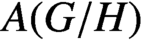 $A(G/H)$ of the homogeneous space
 $G/H$ such as (operator) approximate biprojectivity and pseudo-contractibility. In particular, we show that
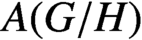 $ A(G/H) $ is operator approximately biprojective if and only if
 $ G/H $ is discrete. We also show that
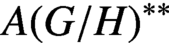 $A(G/H)^{**}$ is boundedly approximately amenable if and only if G is compact and H is open. Finally, we consider the question of existence of weakly compact multipliers on
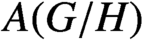 $A(G/H)$.


Positive Definiteness on Products of Compact Two-point Homogeneous Spaces and Locally Compact Abelian Groups
- Part of
-
- Journal:
- Canadian Mathematical Bulletin / Volume 63 / Issue 4 / December 2020
- Published online by Cambridge University Press:
- 29 October 2019, pp. 705-715
- Print publication:
- December 2020
-
- Article
-
- You have access
- Export citation
-
In this paper, we consider the problem of characterizing positive definite functions on compact two-point homogeneous spaces cross locally compact abelian groups. For a locally compact abelian group
 $G$ with dual group
 $\widehat{G}$, a compact two-point homogeneous space
 $\mathbb{H}$ with normalized geodesic distance
 $\unicode[STIX]{x1D6FF}$ and a profile function
 $\unicode[STIX]{x1D719}:[-1,1]\times G\rightarrow \mathbb{C}$satisfying certain continuity and integrability assumptions, we show that the positive definiteness of the kernel
 $((x,u),(y,v))\in (\mathbb{H}\times G)^{2}\mapsto \unicode[STIX]{x1D719}(\cos \unicode[STIX]{x1D6FF}(x,y),uv^{-1})$ is equivalent to the positive definiteness of the Fourier transformed kernels
 $(x,y)\in \mathbb{H}^{2}\mapsto \widehat{\unicode[STIX]{x1D719}}_{\cos \unicode[STIX]{x1D6FF}(x,y)}(\unicode[STIX]{x1D6FE})$,
 $\unicode[STIX]{x1D6FE}\in \widehat{G}$, where
 $\unicode[STIX]{x1D719}_{t}(u)=\unicode[STIX]{x1D719}(t,u)$,
 $u\in G$. We also provide some results on the strict positive definiteness of the kernel.


A RESULT OF PALEY AND WIENER ON DAMEK–RICCI SPACES
- Part of
-
- Journal:
- Journal of the Australian Mathematical Society / Volume 109 / Issue 1 / August 2020
- Published online by Cambridge University Press:
- 03 May 2019, pp. 1-16
-
- Article
-
- You have access
- Export citation
-
A classical result due to Paley and Wiener characterizes the existence of a nonzero function in
 $L^{2}(\mathbb{R})$, supported on a half-line, in terms of the decay of its Fourier transform. In this paper, we prove an analogue of this result for Damek–Ricci spaces.

Sobolev Algebras Through a ‘Carré Du Champ’ Identity
- Part of
-
- Journal:
- Proceedings of the Edinburgh Mathematical Society / Volume 61 / Issue 4 / November 2018
- Published online by Cambridge University Press:
- 24 July 2018, pp. 1041-1054
-
- Article
-
- You have access
- Export citation
A Class of Abstract Linear Representations for Convolution Function Algebras overHomogeneous Spaces of Compact Groups
-
- Journal:
- Canadian Journal of Mathematics / Volume 70 / Issue 1 / 01 February 2018
- Published online by Cambridge University Press:
- 20 November 2018, pp. 97-116
- Print publication:
- 01 February 2018
-
- Article
-
- You have access
- Export citation
-
This paper introduces a class of abstract linear representations on Banach convolution function algebras over homogeneous spaces of compact groups. Let
 $G$ be a compact group and
 $H$ a closed subgroup of $G$ . Let
 $\mu $ be the normalized $G$ -invariant measure over the compact homogeneous space
 $G/H$ associated with Weil's formula and
 $1\,\le \,p\,<\,\infty $ . We then present a structured class of abstract linear representations of the Banach convolution function algebras
 ${{L}^{p}}\left( G/H,\,\mu\right)$ .


Abstract Plancherel (Trace) Formulas over Homogeneous Spaces of Compact Groups
-
- Journal:
- Canadian Mathematical Bulletin / Volume 60 / Issue 1 / 01 March 2017
- Published online by Cambridge University Press:
- 20 November 2018, pp. 111-121
- Print publication:
- 01 March 2017
-
- Article
-
- You have access
- Export citation
-
This paper introduces a unified operator theory approach to the abstract Plancherel (trace) formulas over homogeneous spaces of compact groups. Let
 $G$ be a compact group and let
 $H$ be a closed subgroup of $G$ . Let
 ${G}/{H}\;$ be the left coset space of $H$ in $G$ and let
 $\mu$ be the normalized $G$ -invariant measure on ${G}/{H}\;$ associated with Weil’s formula. Then we present a generalized abstract notion of Plancherel (trace) formula for the Hilbert space
 ${{L}^{2}}\left( {G}/{H,\,\mu }\; \right)$ .


Quantum Unique Ergodicity on Locally Symmetric Spaces: the Degenerate Lift
-
- Journal:
- Canadian Mathematical Bulletin / Volume 58 / Issue 3 / 01 September 2015
- Published online by Cambridge University Press:
- 20 November 2018, pp. 632-650
- Print publication:
- 01 September 2015
-
- Article
-
- You have access
- Export citation
-
Given a measure
 ${{\bar{\mu }}_{\infty }}$ on a locally symmetric space
 $Y=\Gamma \backslash G/K$ obtained as a weak-
 $*$ limit of probability measures associated with eigenfunctions of the ring of invariant differential operators, we construct a measure ${{\bar{\mu }}_{\infty }}$ on the homogeneous space
 $X=\Gamma \backslash G$ that lifts ${{\bar{\mu }}_{\infty }}$ and is invariant by a connected subgroup
 ${{A}_{1}}\subset A$ of positive dimension, where
 $G=NAK$ is an Iwasawa decomposition. If the functions are, in addition, eigenfunctions of the Hecke operators, then ${{\bar{\mu }}_{\infty }}$ is also the limit of measures associated with Hecke eigenfunctions on
 $X$ . This generalizes results of the author with A. Venkatesh in the case where the spectral parameters stay away from the walls of the Weyl chamber.


Inversion of the Radon Transform on the Free Nilpotent Lie Group of Step Two
-
- Journal:
- Canadian Journal of Mathematics / Volume 66 / Issue 3 / 01 June 2014
- Published online by Cambridge University Press:
- 20 November 2018, pp. 700-720
- Print publication:
- 01 June 2014
-
- Article
-
- You have access
- Export citation
-
Let
 ${{F}_{2n,2}}$ be the free nilpotent Lie group of step two on
 $2n$ generators, and let
 $\mathbf{P}$ denote the affine automorphism group of ${{F}_{2n,2}}$ . In this article the theory of continuous wavelet transform on ${{F}_{2n,2}}$ associated with $\mathbf{P}$ is developed, and then a type of radial wavelet is constructed. Secondly, the Radon transform on ${{F}_{2n,2}}$ is studied, and two equivalent characterizations of the range for Radon transform are given. Several kinds of inversion Radon transform formulae are established. One is obtained from the Euclidean Fourier transform; the others are from the group Fourier transform. By using wavelet transforms we deduce an inversion formula of the Radon transform, which does not require the smoothness of functions if the wavelet satisfies the differentiability property. In particular, if
 $n\,=\,1$ ,
 ${{F}_{2,2}}$ is the 3-dimensional Heisenberg group
 ${{H}^{1}}$ , the inversion formula of the Radon transform is valid, which is associated with the sub-Laplacian on ${{F}_{2,2}}$ . This result cannot be extended to the case
 $n\,\ge \,2$ .


