Refine search
Actions for selected content:
171 results
Fractional Bessel process with constant drift: Spectral analysis and queueing applications
- Part of
-
- Journal:
- Journal of Applied Probability , First View
- Published online by Cambridge University Press:
- 27 July 2026, pp. 1-29
-
- Article
-
- You have access
- HTML
- Export citation
Optimal stopping of a Brownian excursion and an
 $\alpha$-dimensional Bessel bridge
- Part of
-
- Journal:
- Journal of Applied Probability , First View
- Published online by Cambridge University Press:
- 15 June 2026, pp. 1-18
-
- Article
-
- You have access
- Open access
- HTML
- Export citation
-
We study the optimal stopping of an
 $\alpha$-dimensional Bessel bridge for the payoff
 $\phi(x)=x^n$, where
 $\alpha,n \in (0,\infty)$. As a special case we consider the Brownian excursion with the identity function as the payoff (
 $\alpha=3,n=1$). For the Brownian excursion we can give an explicit solution but in the general case we provide a complete solution via a power series expansion.


On the number of crossings and bouncings of a diffusion at a sticky threshold
- Part of
-
- Journal:
- Journal of Applied Probability , First View
- Published online by Cambridge University Press:
- 28 May 2026, pp. 1-27
-
- Article
-
- You have access
- HTML
- Export citation
On McKean–Vlasov branching diffusion processes
- Part of
-
- Journal:
- Journal of Applied Probability , First View
- Published online by Cambridge University Press:
- 15 May 2026, pp. 1-25
-
- Article
-
- You have access
- Open access
- HTML
- Export citation
Quasistatic approximation to time-inhomogeneous stochastic differential equations
- Part of
-
- Journal:
- Journal of Applied Probability , First View
- Published online by Cambridge University Press:
- 22 April 2026, pp. 1-22
-
- Article
-
- You have access
- Open access
- HTML
- Export citation
-
This work studies time averages of an observable
 $h(t,X_t)$, where
 $X_t$ is the solution to a time-inhomogeneous stochastic differential equation (SDE) driven by drift, b(t, x), and diffusion,
 $\sigma(t{,}{\kern.5pt}x)$, that change sufficiently slowly in time. In this quasistatic regime we derive an approximation to the time average that is computable from properties of the time-homogeneous SDEs driven by
 $b(t,\cdot)$ and
 $\sigma(t,\cdot)$ with fixed t; specifically, we utilize
 $\log$-Sobolev inequalities for the instantaneous invariant distribution and generator for each t. We obtain explicit non-asymptotic error bounds on this quasistatic approximation, both in the form of concentration inequalities and bounds on the expected value. The error bounds demonstrate a competition between the speed of convergence to the instantaneous invariant distributions and their rate of change, matching the intuition that underlies the quasistatic approximation.


Competition of small targets in planar domains: from Dirichlet to Robin and Steklov boundary condition
- Part of
-
- Journal:
- European Journal of Applied Mathematics / Volume 37 / Issue 5 / October 2026
- Published online by Cambridge University Press:
- 12 January 2026, pp. 1244-1291
-
- Article
-
- You have access
- Open access
- HTML
- Export citation
Intrinsic stochastic differential equations and the extended Itô formula on manifolds
- Part of
-
- Journal:
- Proceedings of the Royal Society of Edinburgh. Section A: Mathematics , First View
- Published online by Cambridge University Press:
- 12 December 2025, pp. 1-33
-
- Article
-
- You have access
- Open access
- HTML
- Export citation
-
A general way to represent stochastic differential equations (SDEs) on smooth manifolds is based on the Schwartz morphism. In this manuscript, we are interested in SDEs on a smooth manifold
 $M$ that are driven by p-dimensional Wiener process
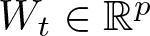 $W_t \in \mathbb{R}^p$ and time
 $t$. In terms of the Schwartz morphism, such an SDE is represented by a Schwartz morphism that morphs the semimartingale
 $(t,W_t)\in\mathbb{R}^{p+1}$ into a semimartingale on the manifold
 $M$. We show that it is possible to construct such Schwartz morphisms using special maps that we call diffusion generators. We show that one of the ways to construct a diffusion generator is by considering the flow of differential equations. One particular case is the construction of diffusion generators using Lagrangian vector fields. Using the diffusion generator approach, we also give the extended Itô formula (also known as generalized Itô formula or Itô–Wentzell formula) for SDEs on manifolds.


A sequential stopping problem with costly reversibility
- Part of
-
- Journal:
- Journal of Applied Probability / Volume 63 / Issue 1 / March 2026
- Published online by Cambridge University Press:
- 03 November 2025, pp. 225-257
- Print publication:
- March 2026
-
- Article
-
- You have access
- Open access
- HTML
- Export citation
Explicit pathwise expansion for multivariate diffusions with applications
- Part of
-
- Journal:
- Advances in Applied Probability / Volume 58 / Issue 2 / June 2026
- Published online by Cambridge University Press:
- 29 September 2025, pp. 592-625
- Print publication:
- June 2026
-
- Article
-
- You have access
- HTML
- Export citation
Optimal stopping with variable attention
- Part of
-
- Journal:
- Advances in Applied Probability / Volume 58 / Issue 1 / March 2026
- Published online by Cambridge University Press:
- 09 September 2025, pp. 235-268
- Print publication:
- March 2026
-
- Article
-
- You have access
- Open access
- HTML
- Export citation
Optimal stopping zero-sum games in continuous hidden Markov models
- Part of
-
- Journal:
- Advances in Applied Probability / Volume 58 / Issue 1 / March 2026
- Published online by Cambridge University Press:
- 28 July 2025, pp. 170-213
- Print publication:
- March 2026
-
- Article
-
- You have access
- Open access
- HTML
- Export citation
Pricing and hedging for a sticky diffusion
- Part of
-
- Journal:
- Journal of Applied Probability / Volume 62 / Issue 4 / December 2025
- Published online by Cambridge University Press:
- 28 April 2025, pp. 1235-1259
- Print publication:
- December 2025
-
- Article
-
- You have access
- HTML
- Export citation
-
We introduce a financial market model featuring a risky asset whose price follows a sticky geometric Brownian motion and a riskless asset that grows with a constant interest rate
 $r\in \mathbb R$. We prove that this model satisfies no arbitrage and no free lunch with vanishing risk only when
 $r=0$. Under this condition, we derive the corresponding arbitrage-free pricing equation, assess the replicability, and give a representation of the replication strategy. We then show that all locally bounded replicable payoffs for the standard Black–Scholes model are also replicable for the sticky model. Last, we evaluate via numerical experiments the impact of hedging in discrete time and of misrepresenting price stickiness.


Optimal stopping of Gauss–Markov bridges
- Part of
-
- Journal:
- Advances in Applied Probability / Volume 57 / Issue 1 / March 2025
- Published online by Cambridge University Press:
- 04 December 2024, pp. 1-34
- Print publication:
- March 2025
-
- Article
-
- You have access
- HTML
- Export citation
Discounted optimal stopping zero-sum games in diffusion type models with maxima and minima
- Part of
-
- Journal:
- Advances in Applied Probability / Volume 57 / Issue 1 / March 2025
- Published online by Cambridge University Press:
- 03 December 2024, pp. 241-270
- Print publication:
- March 2025
-
- Article
-
- You have access
- Open access
- HTML
- Export citation
Topological structures of large-scale interacting systems via uniform functions and forms
- Part of
-
- Journal:
- Forum of Mathematics, Sigma / Volume 12 / 2024
- Published online by Cambridge University Press:
- 26 November 2024, e107
-
- Article
-
- You have access
- Open access
- HTML
- Export citation
-
In this article, we investigate the topological structure of large-scale interacting systems on infinite graphs, by constructing a suitable cohomology which we call the uniform cohomology. The central idea for the construction is the introduction of a class of functions called uniform functions. Uniform cohomology provides a new perspective for the identification of macroscopic observables from the microscopic system. As a straightforward application of our theory when the underlying graph has a free action of a group, we prove a certain decomposition theorem for shift-invariant closed uniform forms. This result is a uniform version in a very general setting of the decomposition result for shift-invariant closed
 $L^2$-forms originally proposed by Varadhan, which has repeatedly played a key role in the proof of the hydrodynamic limits of nongradient large-scale interacting systems. In a subsequent article, we use this result as a key to prove Varadhan’s decomposition theorem for a general class of large-scale interacting systems.

Boundary crossing problems and functional transformations for Ornstein–Uhlenbeck processes
- Part of
-
- Journal:
- Journal of Applied Probability / Volume 62 / Issue 1 / March 2025
- Published online by Cambridge University Press:
- 07 October 2024, pp. 395-421
- Print publication:
- March 2025
-
- Article
-
- You have access
- HTML
- Export citation
Error bounds for one-dimensional constrained Langevin approximations for nearly density-dependent Markov chains
- Part of
-
- Journal:
- Advances in Applied Probability / Volume 56 / Issue 3 / September 2024
- Published online by Cambridge University Press:
- 26 July 2024, pp. 825-867
- Print publication:
- September 2024
-
- Article
-
- You have access
- HTML
- Export citation
Macroscopic limit of a Fokker-Planck model of swarming rigid bodies
- Part of
-
- Journal:
- European Journal of Applied Mathematics / Volume 36 / Issue 2 / April 2025
- Published online by Cambridge University Press:
- 19 April 2024, pp. 349-397
-
- Article
-
- You have access
- Open access
- HTML
- Export citation
-
We consider self-propelled rigid bodies interacting through local body-attitude alignment modelled by stochastic differential equations. We derive a hydrodynamic model of this system at large spatio-temporal scales and particle numbers in any dimension
 $n \geq 3$. This goal was already achieved in dimension
 $n=3$ or in any dimension
 $n \geq 3$ for a different system involving jump processes. However, the present work corresponds to huge conceptual and technical gaps compared with earlier ones. The key difficulty is to determine an auxiliary but essential object, the generalised collision invariant. We achieve this aim by using the geometrical structure of the rotation group, namely its maximal torus, Cartan subalgebra and Weyl group as well as other concepts of representation theory and Weyl’s integration formula. The resulting hydrodynamic model appears as a hyperbolic system whose coefficients depend on the generalised collision invariant.


Skew Ornstein–Uhlenbeck processes with sticky reflection and their applications to bond pricing
- Part of
-
- Journal:
- Journal of Applied Probability / Volume 61 / Issue 4 / December 2024
- Published online by Cambridge University Press:
- 06 March 2024, pp. 1172-1195
- Print publication:
- December 2024
-
- Article
-
- You have access
- HTML
- Export citation
Concentration of measure for graphon particle system
- Part of
-
- Journal:
- Advances in Applied Probability / Volume 56 / Issue 4 / December 2024
- Published online by Cambridge University Press:
- 19 January 2024, pp. 1279-1306
- Print publication:
- December 2024
-
- Article
-
- You have access
- Open access
- HTML
- Export citation
