To save content items to your account,
please confirm that you agree to abide by our usage policies.
If this is the first time you use this feature, you will be asked to authorise Cambridge Core to connect with your account.
Find out more about saving content to .
To save content items to your Kindle, first ensure no-reply@cambridge.org
is added to your Approved Personal Document E-mail List under your Personal Document Settings
on the Manage Your Content and Devices page of your Amazon account. Then enter the ‘name’ part
of your Kindle email address below.
Find out more about saving to your Kindle.
Note you can select to save to either the @free.kindle.com or @kindle.com variations.
‘@free.kindle.com’ emails are free but can only be saved to your device when it is connected to wi-fi.
‘@kindle.com’ emails can be delivered even when you are not connected to wi-fi, but note that service fees apply.
Geophagy at mineral licks is common among wildlife in western Amazonia and is widely interpreted as a behavioural response to chronic sodium deficiency. We conducted the first controlled field experiment on sodium attraction, comparing wildlife visitation at paired salt-enriched and untreated control pits. Five pit pairs were monitored with camera traps over six months at Los Amigos Biological Station, southeastern Peru, alongside two natural mineral licks used as ecological references. Mixed-effects modelling revealed a strong system-wide effect of salt supplementation, corresponding to an approximate twofold increase in visitation relative to control pits. Although estimated effect sizes varied among taxa, support for strong species-specific heterogeneity was limited. Responses were nevertheless broadly consistent across terrestrial herbivores, including rodent and ungulate taxa, with the strongest effects observed in paca (Cuniculus paca), brocket deer (Mazama americana and Passalites nemorivagus), and tapir (Tapirus terrestris). Variation in response strength likely reflects both physiological demand and encounter rates, with larger-bodied species having greater sodium requirements and locally common species more likely to detect these artificial salt licks. Patterns of use at artificial salt licks closely mirrored those observed at natural mineral licks for terrestrial species. Most arboreal mammals, however, were absent from artificial salt licks, suggesting that longer time periods may be required for arboreal taxa to detect and incorporate these sites into their foraging behaviour.
The Orinoco Goose Neochen jubata is a nomadic migratory waterbird occurring at low densities along the Amazon and Orinoco river basins. Listed as Least Concern on the IUCN Red List, the species faces ongoing population declines, primarily driven by overhunting. Despite its conservation concern, knowledge of its reproduction, behavior, movement patterns, and habitat use remains limited, hindering the development of effective management strategies. In this study, we combined Local Ecological Knowledge (LEK) with GPS telemetry to investigate population trends and the movement ecology of the Orinoco Goose in the western Brazilian Amazon. LEK revealed a recovery in population abundance over the past 20 years within protected areas, providing clear evidence of the positive effect of conservation interventions. Additionally, GPS data from four tagged individuals (two males and two females) showed highly individual-specific patterns of space use, with no overlap among them, with home range size varying substantially among individuals; notably, one female maintained a home range roughly twice the size of the other tracked individuals, while tracked individuals shared a distinct dry-season preference for beach habitats across years. These findings provide novel insights into the species’ use of space and patterns of habitat selection, contributing critical information to guide evidence-based conservation actions for this vulnerable Amazonian bird.
The material and visual culture of late precolonial Andean societies-especially the Inka Empire-looked radically different from their predecessors. For millennia, the iconography of the ancient Andes was dominated by warriors, sacrificial rites, apex predators and chimerical beings whose bodies were amalgamations of multiple human and animal species. Yet by AD 1000, these images had almost entirely vanished. This study offers the first ever analysis of these dramatic transformations. Far more than simply a change of aesthetic preferences, or even a shift in ideology, it posits a series of metaphysical revolutions in which Andean sociality was fundamentally altered. The basis of personhood, the creation of value and the nature of political power itself all came to be refigured in far-reaching ways. Specifically, a once-dominant metaphysics focused on the predatory extraction of vitality from enemies disappeared, to be replaced by one grounded in reciprocal exchanges between human and nonhuman beings.
Some of the earliest ceramics in the Americas are found in Amazonia, though localised traditions become more widespread only c. 3500 cal BP with the development of Saladoid and Pocó ceramics in the Orinoco and Amazon basins, respectively. Despite stylistic affinities, these two assemblages have not been compared in detail. Here, the authors provide this missing comparative analysis, highlighting shared forms and similarities in chaîne opératoire. These findings, they argue, indicate a shared technological origin, with the spread of Pocó-Saladoid ceramics corresponding with the movement of people and the establishment of wider interactions across Amazonia and the Antilles.
An avenue for the progress of areal linguistics in South America is the investigation of the geographical distribution of specific features, such as the expression of sociative causation. Sociative causation is a particular type of causation where the causer not only makes the causee do an action but also participates in it (Shibatani & Pardeshi, 2002). Guillaume & Rose (2010) hypothesize that dedicated sociative causative markers are an areal feature of South America, in particular western South America. The aim of the present paper is to reassess the spatial distribution of these markers based on a large worldwide sample of 325 languages. The results show that dedicated sociative causative markers are significantly more frequent in South America compared to the rest of the world.
Chapter 3 discusses the key methodological and theoretical issues relevant for Balkan linguistics as a specific manifestation of complex language contact. On the one hand, other proposed linguistic areas are discussed, such as Amazonia, Araxes-Iran, the Caucasus, Ethiopia, Mainland Southeast Asia, Meso-America, the Northwest Coast of North America, and parts of Papua New Guinea and Australia. In that regard, the Balkans represent not only the most studied such case but also the most studiable, in that of all the sprachbunds that have been discussed in the literature, the Balkans offer the greatest amount of, and the longest time-depth for, information on the linguistic history of the area, the social history of the peoples in the region, and relevant reconstructible linguistic prehistory. On the other hand, mechanisms of, and relevant factors for, contact-induced change are presented, including multilingualism, interference, accommodation, simplification, pidginization and creolization, code-switching, borrowing, calquing, and language ideology. Further, other methodologies, including the Comparative Method, linguistic geography, and typological assessments offer additional sources of information for both Balkan linguistic prehistory and Balkan dialectology.
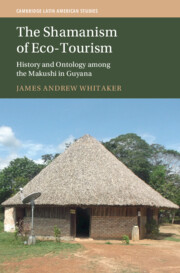
In the first book in English to focus specifically on the Makushi in Guyana, James Andrew Whitaker examines how shamanism informs Makushi interactions with outsiders in the context of historical missionization and contemporary tourism. The Makushi are an Indigeneous people who speak a Cariban language and live in Guyana, Brazil, and Venezuela. Combining ethnohistory, ethnographic fieldwork, and archival research, this book elucidates a shamanic framework that is seen in Makushi engagements with outsiders in the past and present. It shows how this framework structures interactions between Makushi groups and various visitors in Guyana. Similar to how Makushi shamans draw in spirit allies, Makushi groups seek human outsiders and form strategic partnerships with them to obtain desired resources that are used for local goals and transformative projects. The book advances recent scholarship concerning ontological relations in Amazonia and is positioned at the cusp of debates over Amazonian relations with alterity.
This article stems from the encounter of ancestral stories and archaeological knowledge for Africans in Amazonia. Against colonial fragmentation and anti-Blackness, these theoretical reflections are rooted in Black Archaeology as a praxis of redress. The continuing struggles of ancestral and contemporary Black Amazonian communities, who insist on anti-colonial modes of existence, connect with the need to indigenize the archaeological mode of knowledge through otherwise world-senses as ontoepistemological references. These questions emerged during the first steps of the ongoing collaborative archaeological project Pitit'Latè. The founding story of Mana, an Amazonian village built in 1836 by the hands, heads, spirits, and technologies of more than 400 West Africans captured in the illegal transatlantic trade, serves as the epistemological bones of this research about Black Amazonian territorialities and materialities that remain erased in dominant colonial discourses.
Real knowledge emerges from “impossible” worldviews. Or, put differently, it is possible to accept knowledge that is produced by people whose ontological presuppositions–their baseline assumptions about the nature of reality–one entirely rejects. How can this fact be accommodated, not by advancing a wishful post-dualism, dangerous post-secularism, or implausible ontological relativism, but by working within the tradition of secular political philosophy so that indigenous knowledge, too, can be a basis for public policy and collective action in secular societies? Via a reframing Amazonian multinaturalist perspectivism–which has so inspired post-dualist civilizational critiques–as a social theory of health and illness that informs contemporary Western epidemiology’s struggles to theorize the distribution of health and illness in mass society, this article advances a general approach to recognizing knowledge that has been developed on the other side of boundaries of ontological difference. It argues that the accuracy or efficacy of any particular indigenous knowledge-practice implies the generative potential as theory of the ontological presuppositions that facilitated the knowledge-practice’s evolution. Combining the ontological turn’s interest in the innovativeness of indigenous concepts with a proposal for superseding its incommensurable worlds and abandonment of the aspiration to more-than-local knowledge, the article shows that indigenous ideas and their underlying ontologies are more than generic alternatives to inspire Western civilizational renewal, and opens a path to their legitimization as actionable knowledge in the terms of secular public reason.
Este ensayo discute el arte de Brus Rubio, artista amazónico huitoto-murui, quien en sus trabajos informa cómo su cultura entiende su historia, incluidos sus momentos de explotación, tradiciones, creencias y presente. Para ilustrar las diferencias entre sus obras y el discurso de la Amazonía más común en el pasado, incluyo, también, una discusión sobre la manera en que se caracterizaba a las poblaciones indígenas en la zona a principios del siglo XX —en torno, principalmente, al debate de los crímenes del Putumayo. En Rubio se evidencia un choque entre “historias oficiales” —saberes verticales que explican una realidad sin ser parte de ella ni aceptarla como interlocutora válida— y la de la comunidad —reflejado en estas obras como un saber horizontal, en que se incluye las voces que suelen no ser escuchadas. Así, la obra de Rubio presenta un nuevo modelo para entender la historia y el presente de la Amazonía.
For many years, the existence of ancient human settlements in the Amazon was deemed impossible, particularly those as old as 12,000 BP as found in Pedra Pintada Cave in Monte Alegre, in the state of Pará, by Anna Roosevelt and colleagues in the 1990s and by Edithe Pereira's team in 2014. In this article, we present the results of the technological analyses of the bifacial tools found in the cave, focusing on raw materials, techniques, shaping and retouching methods, and technical procedures. The analyses indicate careful knapping, with no mistakes, in hundreds of flakes in the shaping and retouching phases, as well as fragmented tools with flaws. Whenever possible, we compare the results to the data published by Roosevelt and colleagues in 1996 from the same site.
Anthropologists and cognitive scientists interested in ethics and morality have much to gain from a two-way dialogue that does not shy away from constructive criticism. This chapter seeks to initiate such a conversation through an overview of three lines of recent research in cognitive science: the evolution of human morality from the standpoint of evolutionary psychology; theories that look to social institutions rather than only evolved psychological dispositions for insight into the variability of human moral dispositions; and studies of how responsibility and intentionality are ascribed in cases of wrongdoing. The final section offers some personal reflections on the methodological challenges of inter-disciplinary engagement, drawing on some of the authors’ recent research on morality and change in western Amazonia. It concludes that anthropologists can use experimental methods creatively, as a way of generating new ethnographic insights; although if genuine conversation on an equal footing is to take place, then ethnography must not only inform experimental design but also be employed to redefine concepts and generate theory.
Theobroma cacao L. (cacao) is an important tropical crop used to produce chocolate. Evolutionary relationships between cultivated and wild cacao genotypes and their genetic diversity are poorly understood. Exploring phylogenetic diversity and spatial patterns of both cultivated and crop wild relatives can improve the knowledge of the evolutionary history of a crop, giving insights into its cultivation, breeding programmes and conservation. This study identifies biodiversity priority areas in Colombia by calculating phylogenetic diversity indices using a set of 87 single nucleotide polymorphism markers. These were sourced from 279 genotypes conserved in the Corporación Colombiana de Investigación Agropecuaria (Agrosavia) germplasm collection. The Caribbean and North Andes areas exhibited the highest phylogenetic diversity and significantly high relative phylogenetic diversity. We propose that those regions where wild cacao occurs should be prioritized as conservation areas. Besides, cacao lineages that have recently diverged and are present in Arauca, Huila and Nariño areas, with significantly low relative phylogenetic diversity, should be prioritized for breeding programmes. The Amazonia genotypes were closer to the root of the phylogenetic tree, suggesting an older origin than those found in the Andes region. Our study highlights the importance of using T. cacao germplasm from the Amazonia region as a priority to recover relict diversity in breeding programmes and broaden the gene pool of modern cultivated cacao.
El presente artículo se centra en las plumas tapirage de los textiles miniatura con arte plumario hallados en el templo Huaca de la Luna del sitio Huacas de Moche (Valle de Moche, Perú), asociados a la ocupación Chimú (1000-1440 dC). El tapirage es una técnica de manipulación biológica, practicada por ciertos grupos amazónicos, que altera el color de las plumas de algunos psitácidos de los géneros Ara y Amazona. Para confirmar la existencia de plumas tapirage en estos textiles, se realizó una identificación taxonómica macroscópica y microscópica de las plumas arqueológicas. Por último, se aplicaron análisis arqueométricos de microscopía de barrido electrónico (SEM) y microscopía digital para identificar los cambios en las microestructuras de las plumas, como también las especies de las plumas mismas. Los resultados muestran que las plumas de los textiles chimúes de Huaca de la Luna presentan plumas tapirage, lo que permite discutir sobre las relaciones de intercambio entre la costa norte peruana y la Amazonia, y avanzar en la interpretación de los significados de estas plumas en los rituales de la cultura Chimú, por su valor simbólico y capacidad de acceso a estas bienes por parte de estas comunidades costeras.
Cyclopes didactylus, the smallest of all anteaters, inhabits Amazonian and Atlantic forests with an apparently disjunct distribution. Yet, phylogeography reveals historical connections through the forests of the Northeast Region of Brazil. Its populations in this region are classified by the Red List of Threatened Species as Data Deficient and with a trend towards decline. However, Northeast Brazil has a large sampling gap, and the potential distribution of this species has yet to be evaluated. We investigated the potential distribution of C. didactylus to evaluate the hypothesis of a disjunct distribution between Amazonian and Atlantic forests and estimate the amount of protected area in its predicted distribution. We generated a Maxent distribution model using occurrence records, according to the new taxonomic revision of Cyclopes, and selected current bioclimatic variables to evaluate the continuity of the predicted distribution of the species in Northeast Brazil. We also performed past projections to assess historical connections and overlapped maps of protected areas onto their current distribution. Although its distribution is probably disjunct, at least one as-yet-unknown population may be present in the forests of Northeast Brazil, an area poorly protected. The results are useful for targeting field efforts in this under-sampled region.
Fifty years of deforestation in the Arc of Deforestation have put at risk species survival, ecosystem services and the stability of biogeochemical cycles in Amazonia, with global repercussions. In response, we need to understand the diversity, distribution and abundance of flagship species groups, such as primates, which can serve as umbrella species for broad biodiversity conservation strategies and help mitigate climate change. Here we identify the range, suitable habitat areas and population size of Vieira's titi monkey Plecturocebus vieirai and use it as an emblematic example to discuss biodiversity conservation and climate change mitigation in one of the largest deforestation frontiers. Our findings show that deforestation for agriculture and cattle-ranching expansion is the major threat to P. vieirai and is responsible for present (56%) and projected (14%) reductions in habitat area and population size. We also found that human-driven climate change affects the P. vieirai niche negatively, triggering habitat degradation and further population decline even inside protected areas. Primate watching can be a profitable alternative to forest exploitation on private, public or Indigenous lands in the Arc of Deforestation and is a way to shift the traditional, predatory extraction of natural resources from Amazonia towards sustainable land use based on biodiversity conservation at local, regional and global scales, local people's welfare and climate change mitigation. New models of land use and income generation are required to protect the unique natural and human heritages of the Arc of Deforestation and the life-supporting ecosystem services and products provided by Amazonia.
The parasite biodiversity of mouse opossums in Brazil remains incompletely explored. We describe a new species of Subulura (Ascaridida: Subuluroidea) from the large intestine of the white-bellied woolly mouse opossum, Marmosa constantiae, based on the results of light and scanning electron microscopy (SEM). We also partially sequenced the mitochondrial cytochrome c oxidase I (MT-CO1) gene of the new species, using molecular phylogenetic analyses to determine its relationships within the Subuluroidea superfamily. As molecular data on subuluroid species are extremely limited, few inferences could be drawn from our phylogenies. Our SEM observations showed the detailed morphology of the cephalic extremity, precloacal pseudo-sucker, caudal papillae, phasmids and vulva. Subulura eliseae sp. n. differs from the other four Subulura parasites species of marsupials by the number of caudal papillae and the structure dimensions, and size of the spicule. Moreover, S. eliseae sp. n. has ten pairs of caudal papillae, which is unique compared to other species. We present morphometric and molecular data on this new species, contributing to future studies on subuluroids.
The ‘Critically Endangered’ Black-winged Trumpeter Psophia obscura is endemic to the Belém Centre of Endemism in extreme eastern Amazonia and has a declining population and range. Here we report on a five-year (2016–2020) systematic camera-trap (n = 61) study of the species in Gurupi Biological Reserve, one of its most important conservation areas. We used a multi-season occupancy model to identify factors affecting occupancy rates and to assess occupancy trends in the reserve. Occupancy was negatively related to elevation and site-level tree density, and was positively related to post-logging recovery times. Average annual occupancy rates remained stable throughout the study period (ranging between 0.57 and 0.67) and this stability was largely driven by high between-year survival rates. Results confirm that the Black-winged Trumpeter is an interior-forest specialist that is highly sensitive to forest disturbance, which underlines the importance of the Gurupi Biological Reserve as a core site for the conservation of the species. However, the species is long-lived, so continuous monitoring is needed to further clarify population trends. We also recommended that the status of the species in other forest remnants, most of which remain unprotected, is assessed.