Refine search
Actions for selected content:
69 results
RELATING INSPLITTINGS OF 2-GRAPHS AND OF TEXTILE SYSTEMS
- Part of
-
- Journal:
- Journal of the Australian Mathematical Society , First View
- Published online by Cambridge University Press:
- 23 September 2026, pp. 1-50
-
- Article
-
- You have access
- Open access
- HTML
- Export citation
-
The graphical operation of insplitting is key to understanding conjugacy of shifts of finite type (SFTs) in both one and two dimensions. In this paper, we consider two approaches to studying two-dimensional (2D) SFTs: textile systems and rank-2 graphs. Nasu’s textile systems describe all two-sided 2D SFTs up to conjugacy [Johnson and Madden, ‘The decomposition theorem for two-dimensional shifts of finite type’, Proc. Amer. Math. Soc. 127(5) (1999), 1533–1543; Aso, ‘Conjugacy of $Z^2$
 -subshifts and textile systems’, Publ. RIMS. Kyoto Univ 36 (2000), 1–18], whereas the 2-graphs (higher-rank graphs of rank 2) introduced by Kumjian and Pask yield associated $C^*$
 -algebras [Tang, ‘Tiling systems and 2-graphs associated to textile systems’, PhD Thesis, University of Wollongong, 2013, http://ro.uow.edu.au/theses/4003]. Both models have a naturally associated notion of insplitting (introduced for textile systems by Johnson and Madden [‘The decomposition theorem for two-dimensional shifts of finite type’, Proc. Amer. Math. Soc. 127(5) (1999), 1533–1543] and for 2-graphs by Eckhardt et al. [‘Moves on k-graphs preserving Morita equivalence’, Canad. J. Math. 74 (2022), 655–685]). We show that these notions do not coincide, raising the question of whether insplitting a 2-graph induces a conjugacy of the associated one-sided 2D SFTs. Our first main result shows how to reconstruct 2-graph insplitting using textile-system insplits and inversions, and consequently proves that 2-graph insplitting induces a conjugacy of dynamical systems. We also present several other facets of the relationship between 2-graph insplitting and textile-system insplitting. Incorporating an insplit of the ‘bottom’ graph of the textile system turns out to be key to this relationship. By articulating the connection between operator-algebraic and dynamical notions of insplitting in two dimensions, this article lays the groundwork for a $C^*$
 -algebraic framework for classifying one-sided conjugacy in higher-dimensional SFTs.


ON UNIVERSAL PROPERTY OF RECIPROCAL KIRCHBERG ALGEBRAS AND UNIQUELY ERGODIC AUTOMORPHISMS
- Part of
-
- Journal:
- Journal of the Australian Mathematical Society , First View
- Published online by Cambridge University Press:
- 18 September 2026, pp. 1-30
-
- Article
-
- You have access
- HTML
- Export citation
-
Reciprocality in Kirchberg algebras with finitely generated $\mathrm {K}$
 -groups is regarded as a $\mathrm {K}$
 -theoretic duality through $\mathrm {K}$
 -groups and strong extension groups. We prove that the reciprocal Kirchberg algebra has a universal property with respect to some generating $C^*$
 -subalgebra and a family of generating partial isometries. By using the universal property, we prove that there exists an aperiodic ergodic automorphism on an arbitrary unital Kirchberg algebra with finitely generated $\mathrm {K}$
 -groups, which has a unique invariant state. The state is pure.


GENERALISED WINDING NUMBERS WITH APPLICATIONS TO THE K-THEORY OF ADELIC AND RATIONAL GROUP C*-ALGEBRAS
- Part of
-
- Journal:
- Bulletin of the Australian Mathematical Society , First View
- Published online by Cambridge University Press:
- 11 May 2026, pp. 1-12
-
- Article
-
- You have access
- HTML
- Export citation
-
We establish a two-part framework for analysing homotopy equivalence in periodic adelic functions. First, we introduce the concept of pre-periodic functions and define their homotopy invariant through the construction of a generalised winding number. Second, we establish a fundamental correspondence between periodic adelic functions and pre-periodic functions. By extending the generalised winding number to periodic adelic functions, we demonstrate that this invariant completely characterises homotopy equivalence classes within the space of periodic adelic functions. Building on this classification, we further obtain an explicit description of the
 $K_{1}$-group of the rational group
 $C^\ast $-algebra,
 $K_{1}(C^{*}(\mathbb {Q}))$. Finally, we employ a similar strategy to derive the K-theory of
 $C^{\ast }(\mathbb {A})$.


EMBEDDABILITY OF HIGHER-RANK GRAPHS IN GROUPOIDS AND THE STRUCTURE OF THEIR
 $\mathbf {C^*}$-ALGEBRAS
- Part of
-
- Journal:
- Journal of the Australian Mathematical Society / Volume 119 / Issue 3 / December 2025
- Published online by Cambridge University Press:
- 31 October 2025, pp. 314-346
-
- Article
-
- You have access
- Open access
- HTML
- Export citation
-
We show that the
 $C^*$-algebra of a row-finite source-free k-graph is Rieffel–Morita equivalent to a crossed product of an approximately finite-dimensional (AF) algebra by the fundamental group of the k-graph. When the k-graph embeds in its fundamental groupoid, this AF algebra is a Fell algebra; and simple-connectedness of a certain sub-1-graph characterises when this Fell algebra is Rieffel–Morita equivalent to a commutative
 $C^*$-algebra. We provide a substantial suite of results for determining if a given k-graph embeds in its fundamental groupoid, and provide a large class of examples, arising via work of Cartwright et al. [‘Groups acting simply transitively on the vertices of a building of type
 $\tilde{\rm A}_2$ I’, Geom. Dedicata 47 (1993), 143–166], Cartwright et al. ‘Groups acting simply transitively on the vertices of a building of type
 $\tilde{\rm A}_2$ II’, Geom. Dedicata 47 (1993), 167–226] and Robertson and Steger [‘Affine buildings, tiling systems and higher rank Cuntz–Krieger algebras’, J. reine angew. Math. 513 (1999), 115–144] from the theory of
 $\tilde {A_2}$-groups, which do embed.


KATSURA–EXEL–PARDO SELF-SIMILAR ACTIONS, PUTNAM’S BINARY FACTORS AND THEIR LIMIT SPACES
- Part of
-
- Journal:
- Journal of the Australian Mathematical Society / Volume 119 / Issue 3 / December 2025
- Published online by Cambridge University Press:
- 31 October 2025, pp. 382-417
-
- Article
-
- You have access
- Open access
- HTML
- Export citation
-
We show that the dynamical system associated by Putnam to a pair of graph embeddings is identical to the shift map on the limit space of a self-similar groupoid action on a graph. Moreover, performing a certain out-split on said graph gives rise to a Katsura–Exel–Pardo groupoid action on the out-split graph whose associated limit space dynamical system is conjugate to the previous one. We characterise the self-similar properties of these groupoids in terms of properties of their defining data, two matrices A, B. We prove a large class of the associated limit spaces are bundles of circles and points that fibre over a totally disconnected space, and the dynamics restricted to each circle are of the form
 $z\to z^{n}$. Moreover, we find a planar embedding of these spaces, thereby answering a question Putnam posed in his paper.

Simplicity of crossed products by FC-hypercentral groups
- Part of
-
- Journal:
- Compositio Mathematica / Volume 161 / Issue 9 / September 2025
- Published online by Cambridge University Press:
- 28 October 2025, pp. 2272-2319
- Print publication:
- September 2025
-
- Article
-
- You have access
- Open access
- HTML
- Export citation
-
In this paper, we give a complete, two-way characterization, of when a noncommutative crossed product
 $A \rtimes_\lambda G$ is simple, in the case of G being an FC-hypercentral group. This is a large class of amenable groups that contains all virtually nilpotent groups, and in the finitely generated setting, coincides with the set of groups which have polynomial growth. We further completely characterize the ideal intersection property under the assumption that the group is FC, meaning that every element has a finite conjugacy class. Finally, for minimal actions of arbitrary discrete groups on unital C*-algebras, we are able to characterize when the crossed product
 $A \rtimes_\lambda G$ is prime.


X-ROKHLIN PROPERTY FOR ACTIONS OF COUNTABLE DISCRETE GROUPS
- Part of
-
- Journal:
- Bulletin of the Australian Mathematical Society / Volume 113 / Issue 2 / April 2026
- Published online by Cambridge University Press:
- 04 July 2025, pp. 342-352
- Print publication:
- April 2026
-
- Article
-
- You have access
- HTML
- Export citation
-
We extend the definition of the X-Rokhlin property to countable discrete groups and prove some permanence properties. If the action of a countable discrete group on X is free and minimal and the action of this group on the separable simple
 $C^*$-algebra has the X-Rokhlin property, then the reduced crossed product is simple.

Extending surjective maps preserving the norm of symmetric Kubo-Ando means
- Part of
-
- Journal:
- Canadian Mathematical Bulletin / Volume 68 / Issue 3 / September 2025
- Published online by Cambridge University Press:
- 30 January 2025, pp. 777-786
- Print publication:
- September 2025
-
- Article
-
- You have access
- HTML
- Export citation
-
In Dong et al. (2022, Journal of Operator Theory 88, 365–406), the authors addressed the question of whether surjective maps preserving the norm of a symmetric Kubo-Ando mean can be extended to Jordan
 $\ast $-isomorphisms. The question was affirmatively answered for surjective maps between the positive definite cones of unital
 $C^{*}$-algebras for certain specific classes of symmetric Kubo-Ando means. Here, we give a comprehensive answer to this question for surjective maps between the positive definite cones of
 $AW^{*}$-algebras preserving the norm of any symmetric Kubo-Ando mean.


 $\mathrm{C}^{*}$-algebras hereditarily containing nonzero, square-zero elements
- Part of
-
- Journal:
- Canadian Mathematical Bulletin / Volume 67 / Issue 4 / December 2024
- Published online by Cambridge University Press:
- 04 November 2024, pp. 1081-1091
- Print publication:
- December 2024
-
- Article
-
- You have access
- HTML
- Export citation
-
We introduce and study the weak Glimm property for
 $\mathrm{C}^{*}$-algebras, and also a property we shall call (HS
 $_0$). We show that the properties of being nowhere scattered and residual (HS
 $_0$) are equivalent for any
 $\mathrm{C}^{*}$-algebra. Also, for a
 $\mathrm{C}^{*}$-algebra with the weak Glimm property, the properties of being purely infinite and weakly purely infinite are equivalent. It follows that for a
 $\mathrm{C}^{*}$-algebra with the weak Glimm property such that the absolute value of every nonzero, square-zero, element is properly infinite, the properties of being (weakly, locally) purely infinite, nowhere scattered, residual (HS
 $_0$), residual (HS
 $_{\text {t}}$), and residual (HI) are all equivalent, and are equivalent to the global Glimm property. This gives a partial affirmative answer to the global Glimm problem, as well as certain open questions raised by Kirchberg and Rørdam.


Goldie dimension for C*-algebras
- Part of
-
- Journal:
- Proceedings of the Edinburgh Mathematical Society / Volume 67 / Issue 1 / February 2024
- Published online by Cambridge University Press:
- 11 January 2024, pp. 200-223
-
- Article
-
- You have access
- HTML
- Export citation
Nowhere scattered multiplier algebras
-
- Journal:
- Proceedings of the Royal Society of Edinburgh. Section A: Mathematics / Volume 155 / Issue 4 / August 2025
- Published online by Cambridge University Press:
- 05 January 2024, pp. 1113-1142
- Print publication:
- August 2025
-
- Article
-
- You have access
- HTML
- Export citation
-
We study sufficient conditions under which a nowhere scattered $\mathrm {C}^*$
 -algebra $A$
 has a nowhere scattered multiplier algebra $\mathcal {M}(A)$
 , that is, we study when $\mathcal {M}(A)$
 has no nonzero, elementary ideal-quotients. In particular, we prove that a $\sigma$
 -unital $\mathrm {C}^*$
 -algebra $A$
 of
(i) finite nuclear dimension, or
(ii) real rank zero, or
(iii) stable rank one with $k$
 -comparison,
 is.


ISOMETRIES AND HERMITIAN OPERATORS ON SPACES OF VECTOR-VALUED LIPSCHITZ MAPS
- Part of
-
- Journal:
- Journal of the Institute of Mathematics of Jussieu / Volume 23 / Issue 4 / July 2024
- Published online by Cambridge University Press:
- 14 November 2023, pp. 1857-1874
- Print publication:
- July 2024
-
- Article
-
- You have access
- Open access
- HTML
- Export citation
-
We study hermitian operators and isometries on spaces of vector-valued Lipschitz maps with the sum norm. There are two main theorems in this paper. Firstly, we prove that every hermitian operator on
 $\operatorname {Lip}(X,E)$, where E is a complex Banach space, is a generalized composition operator. Secondly, we give a complete description of unital surjective complex linear isometries on
 $\operatorname {Lip}(X,\mathcal {A})$, where
 $\mathcal {A}$ is a unital factor
 $C^{*}$-algebra. These results improve previous results stated by the author.


Every symmetric Kubo–Ando connection has the order-determining property
- Part of
-
- Journal:
- Canadian Mathematical Bulletin / Volume 67 / Issue 2 / June 2024
- Published online by Cambridge University Press:
- 11 September 2023, pp. 279-288
- Print publication:
- June 2024
-
- Article
-
- You have access
- HTML
- Export citation
-
In this article, the question of whether the Löwner partial order on the positive cone of an operator algebra is determined by the norm of any arbitrary Kubo–Ando mean is studied. The question was affirmatively answered for certain classes of Kubo–Ando means, yet the general case was left as an open problem. We here give a complete answer to this question, by showing that the norm of every symmetric Kubo–Ando mean is order-determining, i.e., if
 $A,B\in \mathcal B(H)^{++}$ satisfy
 $\Vert A\sigma X\Vert \le \Vert B\sigma X\Vert $ for every
 $X\in \mathcal {A}^{{++}}$, where
 $\mathcal A$ is the C*-subalgebra generated by
 $B-A$ and I, then
 $A\le B$.


Coupling capacity in C*-algebras
- Part of
-
- Journal:
- Proceedings of the Royal Society of Edinburgh. Section A: Mathematics / Volume 155 / Issue 1 / February 2025
- Published online by Cambridge University Press:
- 07 September 2023, pp. 81-103
- Print publication:
- February 2025
-
- Article
-
- You have access
- Open access
- HTML
- Export citation
COMPUTABLE PRESENTATIONS OF C*-ALGEBRAS
- Part of
-
- Journal:
- The Journal of Symbolic Logic / Volume 89 / Issue 3 / September 2024
- Published online by Cambridge University Press:
- 20 April 2023, pp. 1313-1338
- Print publication:
- September 2024
-
- Article
-
- You have access
- HTML
- Export citation
Binary factors of shifts of finite type
- Part of
-
- Journal:
- Ergodic Theory and Dynamical Systems / Volume 44 / Issue 3 / March 2024
- Published online by Cambridge University Press:
- 18 April 2023, pp. 888-932
- Print publication:
- March 2024
-
- Article
-
- You have access
- HTML
- Export citation
-
We construct two new classes of topological dynamical systems; one is a factor of a one-sided shift of finite type while the second is a factor of the two-sided shift. The data are a finite graph which presents the shift of finite type, a second finite directed graph and a pair of embeddings of it into the first, satisfying certain conditions. The factor is then obtained from a simple idea based on binary expansion of real numbers. In both cases, we construct natural metrics on the factors and, in the second case, this makes the system a Smale space, in the sense of Ruelle. We compute various algebraic invariants for these systems, including the homology for Smale space developed by the author and the K-theory of various
 $C^{*}$-algebras associated to them, in terms of the pair of original graphs.

A CRITERION FOR HYPERSYMMETRY ON DISCRETE GROUPOIDS
- Part of
-
- Journal:
- Bulletin of the Australian Mathematical Society / Volume 108 / Issue 2 / October 2023
- Published online by Cambridge University Press:
- 05 December 2022, pp. 320-330
- Print publication:
- October 2023
-
- Article
-
- You have access
- Open access
- HTML
- Export citation
-
Given a Fell bundle
 $\mathscr C\overset {q}{\to }\Xi $ over the discrete groupoid
 $\Xi $, we study the symmetry of the associated Hahn algebra
 $\ell ^{\infty ,1}(\Xi \!\mid \!\mathscr C)$ in terms of the isotropy subgroups of
 $\Xi $. We prove that
 $\Xi $ is symmetric (respectively hypersymmetric) if and only if all of the isotropy subgroups are symmetric (respectively hypersymmetric). We also characterise hypersymmetry using Fell bundles with constant fibres, showing that for discrete groupoids, ‘hypersymmetry’ equals ‘rigid symmetry’.


A multiplicative Kowalski–Słodkowski theorem for
 $C^\star $-algebras
- Part of
-
- Journal:
- Canadian Mathematical Bulletin / Volume 66 / Issue 3 / September 2023
- Published online by Cambridge University Press:
- 02 November 2022, pp. 951-958
- Print publication:
- September 2023
-
- Article
-
- You have access
- Open access
- HTML
- Export citation
-
We present here a multiplicative version of the classical Kowalski–Słodkowski theorem, which identifies the characters among the collection of all functionals on a complex and unital Banach algebra A. In particular, we show that, if A is a
 $C^\star $-algebra, and if
 $\phi :A\to \mathbb C $ is a continuous function satisfying
 $ \phi (x)\phi (y) \in \sigma (xy) $ for all
 $x,y\in A$ (where
 $\sigma $ denotes the spectrum), then either
 $\phi $ is a character of A or
 $-\phi $ is a character of A.


Conjugacy of local homeomorphisms via groupoids and C*-algebras
- Part of
-
- Journal:
- Ergodic Theory and Dynamical Systems / Volume 43 / Issue 8 / August 2023
- Published online by Cambridge University Press:
- 18 August 2022, pp. 2516-2537
- Print publication:
- August 2023
-
- Article
-
- You have access
- Open access
- HTML
- Export citation
Which states can be reached from a given state by unital completely positive maps?
- Part of
-
- Journal:
- Proceedings of the Edinburgh Mathematical Society / Volume 65 / Issue 3 / August 2022
- Published online by Cambridge University Press:
- 05 July 2022, pp. 632-651
-
- Article
-
- You have access
- HTML
- Export citation
-
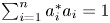
For a state $\omega$
 on a C$^{*}$
 -algebra $A$
 , we characterize all states $\rho$
 in the weak* closure of the set of all states of the form $\omega \circ \varphi$
 , where $\varphi$
 is a map on $A$
 of the form $\varphi (x)=\sum \nolimits _{i=1}^{n}a_i^{*}xa_i,$
 $\sum \nolimits _{i=1}^{n}a_i^{*}a_i=1$
 ($a_i\in A$
 , $n\in \mathbb {N}$
 ). These are precisely the states $\rho$
 that satisfy $\|\rho |J\|\leq \|\omega |J\|$
 for each ideal $J$
 of $A$
 . The corresponding question for normal states on a von Neumann algebra $\mathcal {R}$
 (with the weak* closure replaced by the norm closure) is also considered. All normal states of the form $\omega \circ \psi$
 , where $\psi$
 is a quantum channel on $\mathcal {R}$
 (that is, a map of the form $\psi (x)=\sum \nolimits _ja_j^{*}xa_j$
 , where $a_j\in \mathcal {R}$
 are such that the sum $\sum \nolimits _ja_j^{*}a_j$
 converge to $1$
 in the weak operator topology) are characterized. A variant of this topic for hermitian functionals instead of states is investigated. Maximally mixed states are shown to vanish on the strong radical of a C$^{*}$
 -algebra and for properly infinite von Neumann algebras the converse also holds.


