To save content items to your account,
please confirm that you agree to abide by our usage policies.
If this is the first time you use this feature, you will be asked to authorise Cambridge Core to connect with your account.
Find out more about saving content to .
To save content items to your Kindle, first ensure no-reply@cambridge.org
is added to your Approved Personal Document E-mail List under your Personal Document Settings
on the Manage Your Content and Devices page of your Amazon account. Then enter the ‘name’ part
of your Kindle email address below.
Find out more about saving to your Kindle.
Note you can select to save to either the @free.kindle.com or @kindle.com variations.
‘@free.kindle.com’ emails are free but can only be saved to your device when it is connected to wi-fi.
‘@kindle.com’ emails can be delivered even when you are not connected to wi-fi, but note that service fees apply.
During the El Niño phase of the El Niño–Southern Oscillation, much of Southeast Asia experiences intense droughts and surging temperatures, exacerbating wildfires and creating a blanket of hazardous haze across much of the region. These patterns are predicted to worsen with climate change, further increasing the vulnerability of the region’s primate species, 94% of which are threatened with extinction. Here, we report findings from a systematic search of the literature and synthesize the current state of knowledge regarding the impacts of El Niño-driven heat, drought, fire and smoke on non-human primates in Southeast Asia. Our review shows that habitat loss and degradation driven by El Niño-induced drought and fire cause changes to diet, activity patterns, social interactions and physical condition, and lead to population crowding, reduced group sizes, increased infant mortality, displacement of individuals and local extirpation. Furthermore, prolonged exposure to smoke alters behaviour and worsens the health of primates. Two studies presented evidence for the recovery of primate populations in habitats damaged by fire if forest is allowed to regenerate. We highlight significant gaps in our understanding of the impacts of El Niño on non-human primates, particularly the need for research that considers the interconnected effects of rainfall, temperature, fire and smoke, as well as long-term effects on reproduction and mortality. Because of the unpredictable nature of El Niño, we acknowledge the difficulties of planning research in this area and emphasize the potential of long-term research sites to add to our understanding of this key conservation issue.
This paper sets out to see an aspect of the Neolithic of south-west Asia in the context of its cultural evolutionary history: essential components of the architecture of Neolithic communities – hearth and home, and intramural burial – were present as architectural components of social life tens and hundreds of thousands of years before they were accommodated within Neolithic houses. There are two bases that underpin the paper. One is the general view of cultural evolution and cultural niche construction theory that has emerged over recent decades, emphasising human ultra-sociality and capacity for altruism and cooperation; the other is the understanding of architecture as more than built structures, encompassing objects in, on and around buildings, associated meanings and values, and behaviours. We may trace the development of the architecture of social life as it fostered the intensity of social relations, effectively the roots of Neolithic social life. The process begins at least three quarters of a million years ago with the control of fire, cooking, and eating together around the hearth. The evolution of the human cultural niche continues with the emergence around half a million years ago of the idea of the base camp. That is followed about one hundred thousand years ago by the burying of the body of a member of the group below the base camp floor, binding place and belonging into social memory. The Epipalaeolithic–Neolithic transformation represents a quickening of the pace of cultural cumulation in the specific environment of the hilly flanks of the Fertile Crescent in south-west Asia, with the extension of the group’s stay for at least a season, and the growth in size of the group. The first large, co-resident communities designed and built permanent settlements, houses with hearths, communal buildings, and ritualised intramural burials, forming a new and meaningful architecture of social life embedded in social memory.
The Mexican archaeological site of Chalcatzingo is best known as a Formative centre, famed for its extensive Olmec-style iconography (c. 900–500 BC). Yet, recent investigations at Cave 19 on the western face of Cerro Delgado provide evidence of continued ritual use into the fourth–sixth centuries AD. Here, the authors examine three painted glyphic compounds, identifiable as part of the Teotihuacan writing system, associated with a fire-blackened shelf arguably used for pyrolytic rites. Interpreted as indicators of place and warrior veneration, the authors argue that the glyphs attest to the enduring significance of the local sacred landscape.
Continuous, high-resolution sedimentary records from the Great Basin are rare. By combining physical sedimentology with charcoal analysis to document changes in lake level and biomass burning, we explore the coevolution of climate and fire ecology over the past 7000 years. Elemental data from scanning X-ray fluorescence (XRF) measurements suggest persistently low lake levels during the Middle Holocene (7000–4000 cal yr BP). Two prolonged low lake stands between 4200–3800 cal yr BP and 2600–2400 cal yr BP occurred during widely documented periods of abrupt environmental change throughout the Great Basin. Significant correlations between the first principal component of the XRF record (which explains >75% of the variance) and a bristlecone pine–derived temperature reconstruction suggest warmer temperatures were a major driver of reduced precipitation–evaporation balance. Spectral analysis shows interannual and multidecadal periodicities typical of Pacific Ocean–atmosphere systems have been influential across the region after 4000 cal yr BP. Severe fire events became more commonplace as precipitation increased, highlighting the role of fuel availability on biomass burning in this semiarid region. These results suggest that while near-term warming will likely lead to increased biomass burning, prolonged periods of warmth and aridity will catalyze returns to the fire regimes of the Middle Holocene.
This introduction articulates Los Angeles: A Literary History’s interrogation of the literary and cultural representations of Los Angeles using the image of fire that recurs powerfully throughout both the city’s history and its literature. Docherty and López-Calvo acknowledge the mythologized image of LA as a place of ephemerality and reinvention – often perpetuated by the white male authors of the mid twentieth century who have often been centered in the LA canon. Simultaneously, though, they present this book as one that challenges an overfamiliar cultural narrative of LA (and the narrowness of the literary corpus upon which it subsists). The introduction argues that Los Angeles is not merely a site of rupture and creative destruction but also one of complex spatial, temporal, social, and ecological connections. Docherty and López-Calvo frame the volume in its entirety as a call for (and attempt to demonstrate) a broader, deeper, more diverse and more nuanced literary history of Los Angeles that attends to all the city’s complexities and contradictions. The introduction then goes on to offer brief summaries of each chapter in the volume.
Theatrical performance engages with the material consequences of rising hot temperatures and severe bush fires as it continues to reflect changing beliefs about the weather. Verbatim theatre outlines some of the contradictions surrounding fire, which both regenerates and destroys as it conveys the gradual realisation that fire changes weather. Theatre points to how temperature-reducing tree preservation paradoxically becomes blamed for increasing the bush fire risk. The discussion foregrounds the clash of values in a liberal democratic society between the ongoing exploitation of environmental resources for economic gain and the longstanding efforts of activists and protestors to protect forests that store carbon and counteract rising temperatures. As characters and personae confront the life and death dilemmas posed by hot weather and fire including those from the social risk of arson, theatrical performance must grapple with ethical constraints surrounding the depiction of these events that cause fatalities.
Howard CH Khoe, National Psychiatry Residency Programme, Singapore,Cheryl WL Chang, National University Hospital, Singapore,Cyrus SH Ho, National University Hospital, Singapore
Chapter 48 covers the topic of pyromania. Through a case vignette with topical MCQs for consolidation of learning, readers are brought through the management of patients with pyromania from first presentation to subsequent complications of the conditions and its treatment. Topics covered include diagnosis, differentials, co-morbidities, management.
St. Thomas Aquinas developed his account of the instrument doctrine by carefully attending to the work of St. John Damascene, in particular Book III of his On the Orthodox Faith. The Damascene himself was drawing upon a long tradition of reflection on Christ’s humanity that reaches as far back as Origen. In this chapter, John’s account of the doctrine and its basis in Maximus the Confessor’s writings is assessed, and five synthetic propositions are brought forward to summarize the doctrine. These propositions are nearly the same as what we find in Aquinas’s mature Christology. This chapter shows that far from being unique to Aquinas’s own Christology, the instrument doctrine is a basic patristic desideratum.
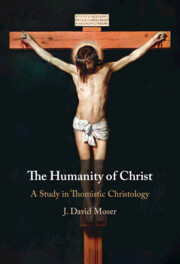
Scripture teaches that God saves humanity through God's own actions and sufferings in Christ, thereby raising a key theological question: How can God use his own human actions and sufferings to bring about those things that he causes through divine power? To answer that question, J. David Moser here explores St. Thomas Aquinas's teaching that Christ's humanity is an instrument of the divinity. Offering an informed account of how Christian salvation happens through the Incarnation of Christ, he also poses a new set of questions about the Incarnation that Aquinas himself did not consider. In response to these questions, and in conversation with a wide range of theologians, including John Duns Scotus and Matthias Joseph Scheeben, Moser argues that the instrument doctrine, an underexplored and underappreciated idea, deepens our understanding of salvation that comes through the Incarnation of Jesus Christ. He also defends the instrument doctrine as a dogmatic theological topic worthy of consideration today.
By way of an analysis of Heidegger's use of the elements of earth, water, air, and fire as a means to describe the unfolding of being, this Element offers a novel account of Heidegger's understanding of the human. By covering a variety of texts from the late-20s through the early-50s (including several of his recently published Black Notebooks), this Element demonstrates the manner in which these elements comprise, for Heidegger, the very being of the human.
This article analyzes three contemporary plays by trans and gender-non-conforming artists from the United States that engage with forest fires and queer ecology. These three plays – MJ Kaufman’s Sagittarius Ponderosa, Agnes Borinsky’s The Trees, and Kari Barclay’s How to Live in a House on Fire – tie wildfire to colonial histories of fire suppression and imagine a just climate transition as linked to queer and trans self-reinvention. The article describes this dramaturgical tactic as ‘burning hope’ – letting go of straight, settler desire and gesturing toward reciprocal obligation with the non-human world. Building on Kim TallBear’s call to attend to organic matter and Stephen Pyne’s study of fire history in the ‘Pyrocene’, the article imagines theatre as a prescribed burn that can re-orient audience relations to futurity. Burning hope does not abandon hope; it recognizes grief as mobilization for environmentalist solidarities.
The article discusses a passage in chapter 49 of the Hippocratic treatise On Regimen. It defends the transmitted text against a conjecture proposed by R. Joly, the author of the Corpus Medicorum Graecorum edition.
We live in an era of major technological developments, post-pandemic social adjustment, and dramatic climate change arising from human activity. Considering these phenomena within the long span of human history, we might ask: which innovations brought about truly significant and long-lasting transformations? Drawing on both historical sources and archaeological discoveries, Robin Derricourt explores the origins and earliest development of five major achievements in our deep history, and their impacts on multiple aspects of human lives. The topics presented are the taming and control of fire, the domestication of the horse,and its later association with the wheeled vehicle, the invention of writing in early civilisations, the creation of the printing press and the printed book, and the revolution of wireless communication with the harnessing of radio waves. Written in an engaging and accessible style, Derricourt's survey of key innovations makes us consider what we mean by long-term change, and how the modern world fits into the human story.
Gervase of Canterbury gives a detailed account of the fire that ravaged Canterbury Cathedral in the 1170s, after which an excerpt from the fire regulations published in 1212 in London after another major fire in the city is included. Building and repairs are exemplified by documents recording work done at WIndsor Castle and Westminster Abbey, as well as the accounts of payment made for repair to the clock on Westminster Palace, now replaced by Big Ben. Finally a contract is included between a builder and the authorities at St. Paul’s regarding the building of a large merchant’s house in the City of London, with details as to the plan of the house and the sourcing of the materials.
Chapter 4 examines Galen’s credentials as an ethical philosopher in the light of his recently discovered essay Avoiding Distress. It argues that his moral agenda which is expanded upon here makes him an active participant in the practical ethics of the High Roman Empire, with a more profound attentiveness to popular philosophy than is usually admitted. Galen’s dialogue with what has been termed ‘Stoic psychotherapy’ and the Platonic-Aristotelian educational model helps build up his ethical influence through an engagement with the past. On the other hand, his individual characteristics, such as the autobiographical perspective of his narrative and the intimacy established between author and addressee, render Avoiding Distress exceptional among essays (whether Greek or Latin) treating anxiety, especially when compared to the tracts on mental tranquillity written by Seneca and Plutarch. Another distinctive element of the treatise is that Galen’s self-projection as a therapist of the emotions corresponds to his role as a practising physician as regards the construction of authority and the importance of personal experience.
As self-appointed guardians of light who performed many of their activities between sunset and sunrise, medieval monks and nuns had a special relationship with fire, light, and darkness. While medieval monastic authors wrote copiously about light, however, modern scholars have shown comparatively little interest in this topic. Using the concept of lightscape, this essay recreates the unique Latin monastic culture of light of the tenth to thirteenth centuries, considering how religious communities used natural and artificial light as well as darkness to reinforce spiritual lessons, heighten the sensory experience of liturgical life, and signal distinctions between orders in a reform-minded age. Evidence from material culture as well as several textual genres demonstrates that monastic uses of candles, oil lamps, and lanterns reflected the commitment to a strictly regulated life which foregrounded bonds of community and encouraged constant spiritual and physical vigilance. Contemporary understandings of fire and light as heavenly matter also conditioned religious to see everyday light-sources as ready conduits for the miraculous, as well as technologies by which earthly spaces could be made to approximate heavenly ones.
Many soils in southern Switzerland have a black color, contain a large amount of soil organic matter (SOM) and seem to have some andic properties although they did not develop on volcanic parent material. We investigated three typical ‘black’ soils to determine the mechanisms of (clay) mineral formation and transformation. We measured total element pools as well as the dithionite-, pyrophosphate-and oxalate-extractable fractions (Fe, Al, Si). The clay fraction (<2 µm) was analyzed using X-ray diffraction and FTIR spectroscopy. Iron speciation in the solid phase was determined by Mössbauer spectroscopy. With increasing weathering conditions, the plagioclase (albite) content decreases, trioctahedral species in the clay fraction such as biotite, chlorite or trioctahedral vermiculite either decompose or transform into a dioctahedral mineral such as dioctahedral vermiculite or hydroxy interlayered smectite (HIS). Typical weathering products were hydroxy interlayered vermiculite (HIV), HIS, interstratified minerals and kaolinite. The oxidation of Fe(II) into Fe(III) was evident and contributes to the transformation of trioctahedral mineral species into dioctahedral ones. In one soil, a large part of the Fe (up to 41%) was found in the form of Fe oxides. In the surface horizon, the poorly crystalline mineral ferrihydrite was dominant, while in the subsoil goethite prevailed. Maghemite (or maghemite/hematite mixture) was, furthermore, found in distinct concentrations down to a depth of ∼50 cm. The formation of this mineral requires high temperatures which means that a forest fire can influence soil mineralogy down to a considerable depth. The specific climatic conditions with periods of strong humidity alternating with periods of winter droughts, sporadic fire events and the relatively large content of poorly crystalline fractions of Fe and Al contributed to the stabilization of SOM.
Light and temperature conditions trigger germination in specific temporal windows and microhabitats, thus determining the germination niche of plant species. Manihot species grow in fire-prone ecosystems and their seeds show heat tolerance. Successful establishment in disturbed environments might be related to seed attributes that allow seeds to cope with or avoid stressful environments. We studied some characteristics of the germination niche of Manihot grahamii, a pioneer woody species present in dry subtropical forests of central Argentina, to understand its successful establishment in disturbed environments. We evaluated the germination ecology of the seeds of M. grahamii with the aims to (1) characterize seed traits (viability, mass and moisture content); (2) determine whether it has dormancy and if it is physical or physiological; (3) evaluate the effect of several pre-treatments (gibberellic acid, after ripening, dry prechilling and dry prechilling + warm) on seed dormancy; and (4) assess the effect of different environmental events of high temperatures on the germination process simulating two treatments: fire intensities (with three levels of heat shock) and a gap temperature. M. grahamii seeds have large mass (0.24 g), low moisture content (8%), physiological dormancy, negative photoblastic behaviour and high heat tolerance. Dormancy was alleviated and seeds became insensitive to light when they were exposed to pre-treatments of dry prechilling + warm and high-temperature treatments. This germination strategy promotes secure germination timing into the rainy season on undisturbed habitats as well as a cue for competition-released gaps which in turn favour recruitment in open, disturbed and dry habitats, respectively. In the context of global change, with an increasing habitat fragmentation and fire frequency, M. grahamii could become more abundant and extend its geographic distributional range in central Argentina.
A non-equilibrium perspective sheds light on why conventional conservation may fail to achieve its objectives. The human history of societies and the evolutionary history of species have shaped adaptations to disturbance regimes and the potential for resilience or irreversible tipping points in the face of change. Understanding the effects of disturbances such as storms, floods, and fires on post-disturbance recruitment can inform decisions about how key processes, structures, and interactions affect heterogeneity, diversity, and resilience over a range of spatial and temporal scales. Retention of structural legacies (dead and dying trees), mutualistic interactions (microbiotic soil crusts, mycorrhizal fungi), and key wild species (beavers) can promote biodiversity and carbon storage. Management of fire regimes, hydrological processes, and agricultural systems can promote carbon storage. However, difficult decisions about tradeoffs remain.
Utilitarian managers regulate harvests and manipulate habitats for wild species of interest. Wild products can be legally harvested for recreation, commerce, or subsistence under certain circumstances. Illegal traffic in wild plants, animals, or their products for commerce threatens many species. In populations that are regulated by density-dependent processes near carrying capacity, sustained yield can be maximized if harvests take place when populations are near half the environment’s carrying capacity. Harvests may be sustainable if mortality from the harvest is compensatory. Habitats can be modified by changing the arrangement and structure of habitat components to provide cover, by conserving soil, and by modifying succession, for instance, with the use of fire. The amount of edge or interspersion between different habitats is an important component of habitat quality.