To save content items to your account,
please confirm that you agree to abide by our usage policies.
If this is the first time you use this feature, you will be asked to authorise Cambridge Core to connect with your account.
Find out more about saving content to .
To save content items to your Kindle, first ensure no-reply@cambridge.org
is added to your Approved Personal Document E-mail List under your Personal Document Settings
on the Manage Your Content and Devices page of your Amazon account. Then enter the ‘name’ part
of your Kindle email address below.
Find out more about saving to your Kindle.
Note you can select to save to either the @free.kindle.com or @kindle.com variations.
‘@free.kindle.com’ emails are free but can only be saved to your device when it is connected to wi-fi.
‘@kindle.com’ emails can be delivered even when you are not connected to wi-fi, but note that service fees apply.
And the lords and knights who formed the cutting edge of the armies knew what they were getting themselves into when they took the cross because they were closely acquainted with war and knew some of the problems of travel in the Middle East. Pilgrimage to Jerusalem was very popular in the eleventh century, and while people of all classes made the journey, nobility and knights were the prime participants. Robert of Normandy’s grandfather died at Nicaea on pilgrimage in 1035, while Robert of Flanders’ father visited Jerusalem in the years 1086–89, and at Constantinople he met Emperor Alexios (1081–1118), to whom he promised and sent 500 knights.
A man to whom God grants that he may return will be greatly honoured in this world. Whoever has loved well in his country should preserve the memory of it wherever he goes. And may God allow me to enjoy the best lady, so that I might find her in life and health, when God has completed his business!
The concept of crusading is inextricably linked with men, both in medieval sources and in modern imaginations. The quote above, from an anonymous twelfth-century Anglo-Norman crusade recruitment song, extols the benefits gained by a returning crusader. It links crusading with the manly pursuit of honour, encouraging men to take the cross as a devotional sacrifice, leaving behind women and love. Returning to ‘the best lady’ was the crusader’s reward for completing ‘God’s business’. The idea that crusades were for men, and not for women, was probably widespread at the end of the twelfth century. Crusading had been conceived of and promoted by the medieval Church as a manly endeavour since the preaching of the First Crusade.
Plutarch in this essay gives advice to a ruler who lacks philosophical training. He suggests that the ruler needs to be aware before all else of the importance of self-control and good character that is the foundation of the effective governance of others. Rulers should fear doing wrong above all. He invokes the example of Epaminondas, who alone kept watch over the walls of Thebes while citizens celebrated at a festival. The broader idea is that the good ruler is one who thinks of the needs and well-being of other citizens first before worrying about their own welfare. In contrast, the tyrant is one whose fear of the subjects increases with their power. Wickedness in power is evident as repeated acts of rage, boastfulness, and vulgarity abound.
Groups, and the ways in which they function, are of fundamental importance to human life. This engaging textbook offers a comprehensive introduction to group processes for students across the social sciences. Covering topics such as social influence, leadership, creativity, and intergroup relations, this book blends foundational work with up-to-date research to help students navigate the key theories and principles in a wide variety of contexts. Designed with teaching and learning in mind, each chapter features an outline, a chapter summary, review and discussion questions, and suggested multimedia and further reading resources. Recurring box features provide opportunities for deeper engagement with the issues raised. With an interdisciplinary focus throughout, this textbook is an ideal resource for upper-level undergraduate and graduate courses in psychology, as well as courses in business, communication, and related fields.
The literature has explained the success of the populist radical right (PRR) through demand-side and supply-side factors, but it has typically adopted an ‘external’ perspective, leaving unexplored how PRR parties themselves interpret their success. This article investigates the winning formula of this party family from an ‘insider’ perspective, drawing on 21 in-depth interviews with representatives of a clear case of PRR success: Brothers of Italy (Fratelli d’Italia, FdI). Rather than testing the causal claims of the literature, we theorise these insider accounts as strategic narratives of success: they show how FdI representatives draw on ideological, organisational and leadership repertoires, selectively appropriate elements of the external environment, and, most distinctively, mobilise valence-inspired self-descriptions (especially coherence) to construct a claim of distinction within the party system. In this context, coherence operates as a strategic device that signals the party’s unity and political consistency – anchored in FdI’s refusal to join broad coalitions – performing discursive work of self-legitimation in PRR normalisation.
Why do individuals embedded in organizations act corruptly? Functionalist and economic approaches to corruption have had limited success in explaining why individuals choose corruption where there are strong institutional constraints, including monitoring systems, high costs, and strong punishments. The persistence of corruption despite such constraints has prompted researchers to consider more seriously the individual psychological drivers of corruption. This chapter reviews evidence on the psychology of corruption, finding that power, ethical leadership, personal gain and self-control, loss aversion and risk acceptance, rationalization, moral ambiguity and disengagement, learning, and emotion all influence an individual’s propensity to act corruptly within an organization. Anti-corruption measures that constrain these drivers include transparency, participation, and accountability measures that reduce incentives and opportunities for corruption. Organizations can also implement ethical measures like codes of conduct, anti-corruption training, attend to cultural dynamics, and use nudging interventions to incentivize clean behavior.
Establishing leadership and management structures for alternate care facilities (ACFs) presented governance challenges distinct from those of conventional hospital operations and were frequently shaped as much by political and inter-organizational dynamics as by clinical need. Symposium participants summarized operational lessons from leading ACFs across multiple jurisdictions and partnership models. Participants reported that effective ACFs typically mirrored hospital executive structures while operating under hybrid governance models that distributed authority, liability, and resources across multiple hospital systems and state agencies. Hospital Incident Command System (ICS) provided necessary scaffolding but was insufficient on its own; success depended on pre-existing inter-agency relationships and on credible leaders with the gravitas to mobilize resources across organizational boundaries. Persistent challenges included credentialing and electronic medical record (EMR) access delays, political directives that superseded clinical judgment, and severe interpersonal conflict that overwhelmed leadership without embedded human resources support. Recommended best practices include pre-identifying and training a cadre of ACF leaders, embedding human resources and behavioral health support within the leadership team, and clearly defining and protecting the ACF mission throughout activation and operations.
This article offers a comprehensive review of the evolution and scope of the European Union’s (EU) legal framework and policy instruments aimed at mitigating gender disparities in employment, leadership, and care. This study employs a mixed approach, drawing on primary and secondary sources, and statistical data. It analyses EU initiatives and targets aimed at advancing gender equality across six selected Member States: France, Italy, the Netherlands, Poland, Romania, and Sweden. The results indicate that the evolution of EU regulations has played a substantial role in establishing minimum standards and encouraging convergence in narrowing gender gaps. However, despite this progress, implementation remains uneven, and structural inequalities persist. This review contributes to academic and policy debates by identifying both the achievements and limitations of EU gender equality law. It also offers insights for future legislative and institutional reforms.
Healthcare research and evidence uptake to improve seniors’ health can be characterized by persistent gaps and glacial progress.
Objective
This qualitative study draws on interviews with 15 experts to explore avenues for improving research evidence uptake to support necessary health system transformation, and improved person-centred care for older adults.
Methods
Qualitative data were analyzed deductively using the Consolidated Framework for Implementation Research as a guiding conceptual framework, followed by inductive coding to capture additional emerging themes.
Findings
Three themes were identified through thematic analysis: (1) Context: Local Conditions and Leadership; (2) Culture: Building a Collaborative Research Environment; and (3) Creativity: Adaptive Problem-Solving given Resource Constraints.
Discussion
Together, these themes illuminate the conditions under which evidence uptake and care delivery transformation are most achievable in seniors’ healthcare.
The increasing frequency and complexity of disasters are placing unprecedented demands on health systems and the nursing workforce. Despite nurses playing a central role in disaster preparedness and response, disaster-related competencies remain inconsistently integrated into nursing education. This gap should be viewed not merely as an educational issue, but as a matter of health system resilience. Future disaster-ready nurses require competencies extending beyond clinical care, including leadership, systems thinking, ethical decision-making, and interprofessional collaboration. Competency-based education, simulation training, and emerging digital technologies may help bridge the gap between theoretical knowledge and real-world practice. Reframing disaster nursing education as a health system resilience strategy may strengthen preparedness and ensure that nurses are equipped not only to respond to crises, but also to lead through them.
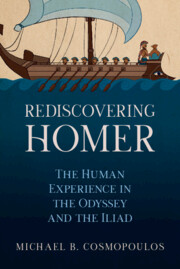
A timeless tale of a heroic character's journey through life, Homer's Odyssey has captured the imagination of readers from antiquity to the present day. Michael Cosmopoulos approaches this epic, together with the Iliad, not as remote works of literature, but as a living record of human experience shaped by war, loss, memory, and survival. He offers a poignant exploration of the aspects and consequences of war as captured in the Odyssey, including trauma, leadership and politics, human relations, religion and fate, and the struggle to return home and rebuild after upheaval. Cosmopoulos also situates both the Iliad and the Odyssey within the social conditions and the material realities of Greek society during the Aegean Bronze Age. Based on decades of archaeological field work and study of classical antiquity, and written in an accessible style, his book powerfully demonstrates how the poetry of ancient Greece preserves collective memory across the generations – and why these poems still speak to modern readers.
To develop a valid and reliable scale to assess leadership behaviors of nurse managers in crisis preparation and intervention, as perceived by both follower nurses and nurse managers themselves.
Methods
This methodological study was carried out in 3 stages: item pool creation, item evaluation, and psychometric evaluation. Construct validity, convergent-discriminant validity, and reliability were examined. The study was conducted with 1270 participants, data were collected between March and May 2024, following the STROBE checklist.
Results
The content validity index of the scale was 0.98. Exploratory factor analysis revealed 24 items and 2 subscales explaining 67.47% of the total variance. Confirmatory factor analysis showed good or acceptable fit indices. Cronbach’s alpha values ranged from 0.947 to 0.978, and item-total correlations ranged from 0.655 to 0.861. Retesting confirmed temporal stability of the scale.
Conclusion
With its comprehensive subscales and strong psychometric properties, the Crisis Leadership Scale for Nurse Managers is a valid and reliable tool that can assess crisis leadership behaviors of nurse managers from the perspective of leaders and followers; it has 2 subscales: “Leading for Crisis Preparedness” and “Leading for Responding to the Crisis.” It can guide nurse managers in developing necessary strategies to prepare for potential crises and to respond by leading them.
What if change could be planned, managed, and executed like a well-run project? Chapter 2 dives into the managerial perspective — an approach built on structure, strategy, and expertise. It traces how this view came to dominate the change literature and explores the models that continue to shape organisational practice today. But behind the order lies a tension: can complex human systems ever really be engineered? This chapter not only equips readers with powerful tools but also prompts critical reflection on what such tools leave out.
This chapter focuses on how to evaluate and improve the performance of health systems. It frames performance as a relative concept: how well a system attains its goals compared to what is achievable under given circumstances. It examines how health system architecture, including vertical and horizontal integration, influences performance. We also argue that improving performance requires strengthening key system components and propose four priority areas (the “LIST” elements): leadership, institutions, systems design, and technologies. Finally, the chapter argues that health systems must be accountable for determinants they can influence, even if external, and stresses the importance of rigorous assessment methods to inform evidence-based policy and effective reforms.
This chapter underscores the critical role of leadership in driving public health change. There is a rich scholarship on leadership, often organized around three archetypes: transactional, transformative and shared leadership. We define leadership as the ability to mobilize others to achieve change. As such, it is not restricted to those in positions of formal authority but can be exercised by all stakeholders in the health system. Leadership is essential to public health because public health challenges are, by nature, “wicked” problems that are becoming increasingly intersectoral, and that sit at the intersection of science and politics. Five leadership skills are of particular importance for the public health challenges of the twenty-firstst century: societal responsibility, systemic wisdom, comfort with uncertainty, mastery of change management and a focus on execution. Developing leadership skills is essential: without leaders, even the best-designed health systems will fail.
This paper interrogates the paradox of military leadership in the Athenian democracy within the analytical framework of mass and elite political negotiation. Although the stratēgia (the Athenian generalship) was filled by election rather than by democratic lottery, thereby privileging wealthy, notable citizens as candidates for office, the institution simultaneously incorporated robust democratic oversight and availed the dēmos of benefits that attended the personal networks of the Athenian elite. Building on seminal works on the stratēgia, the paper demonstrates that the seemingly undemocratic selection of generals was, in fact, a deliberate mechanism that not only harnessed elite expertise but also allowed the dēmos to leverage the personal ties (xenia and philia) and foreign resources of the men they elected as generals. I argue that the stratēgia should not be understood simply as an exception to democratic ideals but as a sophisticated institution that balanced elite capacity and claims to honours with both public oversight and public benefaction.
Co-management is in essence about collaboration and participation. In this chapter, definitions are provided for each, with recurring themes identified from definitions of collaboration and collaborative governance. The chapter explores these key themes in relation to the ‘what, who, how and why’ of collaboration, moving to distinguish between cooperation, coordination and collaboration, the nature of leadership in collaboration and the relevance of scale. The chapter then moves on to review the meaning and practice of participation, reflecting on the ‘why, who, how and when’ of participation. Challenges to meaningful participation are identified, noting critique of the adoption of a mechanical, technical approach rather than recognising the political and empowering potential of participation.
This final chapter looks to the future of intergroup theories and research, and to changes that could lead to stronger intergroup theories - remembering that the most practical thing is a good theory. First, closer ties are suggested between intergroup theories and research on (a) feminist theory (b) allyship and (c) intersectionality. Second, it is proposed that intergroup theories pay more attention to (1) integrating individual, group, and societal processes (2) irrationality and emotions (3) rights and duties (4) plasticity in intergroup behavior (5) leadership (6) conflict resolution.
Chapter 12 consolidates the book’s core arguments into managerial and societal implications, showing how mindful marketing can transform contemporary business practice. It conceptualizes mindful marketing as a moral and relational approach that aligns profitability with consumer well-being, social equity, and environmental sustainability. The chapter explains how mindful marketing can embed mindfulness across business functions, fostering collaboration between marketing and other management domains. It articulates the links between mindful marketing and leadership, human resource management, operations and supply chain, finance, and corporate affairs, indicating how mindful principles can guide policies, metrics, and everyday decisions. A structured mindful marketing plan translates these principles into actionable strategic steps for organizations. The chapter concludes by outlining future directions for mindful consumption and marketing, highlighting research priorities, educational applications, and cross-sector collaborations needed to shift markets from continual demand stimulation toward balanced, sustainable development grounded in shared value.