To save content items to your account,
please confirm that you agree to abide by our usage policies.
If this is the first time you use this feature, you will be asked to authorise Cambridge Core to connect with your account.
Find out more about saving content to .
To save content items to your Kindle, first ensure no-reply@cambridge.org
is added to your Approved Personal Document E-mail List under your Personal Document Settings
on the Manage Your Content and Devices page of your Amazon account. Then enter the ‘name’ part
of your Kindle email address below.
Find out more about saving to your Kindle.
Note you can select to save to either the @free.kindle.com or @kindle.com variations.
‘@free.kindle.com’ emails are free but can only be saved to your device when it is connected to wi-fi.
‘@kindle.com’ emails can be delivered even when you are not connected to wi-fi, but note that service fees apply.
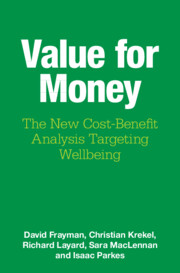
Governments spend billions on our behalf. But how should this money be spent? The purpose should be to increase the wellbeing of the people. So the best policies are those which produce the most wellbeing per pound spent. The new science of wellbeing now enables us to make these calculations. The authors of this book, led by Richard Layard, do just that across a whole range of government policies. And the results call for radical changes in priorities. This path-breaking book opens up a new approach to policy-making. It combines traditional economics with the new psychology of happiness. By valuing non-monetary outcomes it does what politicians have always wanted. Its methods have already been adopted by the UK Treasury and are relevant worldwide. If followed, they would produce a happier world. When people ask where do we go 'beyond GDP', this is the answer.
This essay investigates Kant’s various reasons for pessimism about happiness. I argue that some of Kant’s concerns about whether (or to what extent) happiness is possible for us are more pressing than others, and some can be more easily mitigated. Moreover, although he tends to emphasize the difficulties in securing personal happiness, Kant’s texts offer several helpful strategies for ways of acting and living that can help us avoid some key sources of discontent, thereby increasing our chances for being happy in life.
The Cynics, especially Diogenes of Sinope, reportedly enjoyed ‘leisure’ (σχολή) even as they recommended toilsome ‘training’ (ἄσκησις). This paper aims to show that these seemingly opposite motifs are, in fact, closely interrelated, and that ‘leisure’ has implications for the whole scheme of Cynicism that have previously been overlooked. We can understand the connection between these motifs in two ways: first, what drives one to engage in unceasing labour is excessive desire, from which Cynic training frees one, bringing about leisure; second, Cynic leisure is always open to the outside world; it functions as a provocative performance that can, albeit occasionally, urge potential Cynics towards training.
South Korea has one of the highest suicide rates among Organisation for Economic Co-operation and Development countries, and lower happiness has been associated with suicidal ideation and suicide attempts in Korean populations. We aimed to estimate a nation-level item network of happiness, affect, personality and well-being evaluations in South Korea and to test whether this network differed by sex, income and generation.
Methods
We analysed 2020–2023 Korean Happiness Survey data from 64,531 respondents in South Korea; the network analyses used 61,675 complete cases. A Gaussian graphical model with Least Absolute Shrinkage and Selection Operator regularization estimated edges among happiness, affect, personality and well-being evaluations. Subgroup differences by sex, income and generation were assessed with permutation-based Network Comparison Tests.
Results
The network contained 199 of 435 possible edges (45.7%). The strongest affective and happiness-related pairwise connections included happiness-enjoyment, stress-tiredness, sadness-depression and depression-anger. Global strength did not differ significantly across the planned subgroup comparisons, but network structure differed by sex, income, Millennials and Generation Z (MZ) versus Generation X, and MZ versus Baby Boomers. In the income comparison, happiness was more negatively linked to the agreeableness item ‘generally trusting’ in the low-income network, whereas its link with time for hobbies was stronger in the high-income network. In the generational comparison, the happiness-stress edge differed between the MZ generation and Baby Boomers, whereas no happiness-connected edge survived false discovery rate correction for MZ versus Generation X. No happiness-connected edge differed significantly by sex.
Conclusions
In South Korea, happiness was most closely linked to enjoyment and embedded within tightly connected affective and evaluative domains. The subgroup differences were selective rather than global, suggesting that future work relevant to population well-being and suicide prevention may benefit from focusing on specific happiness-linked domains such as positive affect, stress-related ties, discretionary time and perceived future security.
We are repeatedly told that living well is more than finding harmless satisfactions because instances fitting that definition may not be examples of well-being: a man who lives only to pick up leaves; a woman whose husband is secretly cheating on her; the widespread unwillingness to find contentment using a virtual reality machine; an individual whose life goes steadily downhill; or a person who fails to develop talents. We find that these cases do not have the implications commonly ascribed to them and defend the thesis that gaining satisfaction is the essence of living well.
Within the aletheistic tradition, Aquinas thinks creation, as a linguistic act, involves the theme of interpersonal manifestation. He is therefore able to overcome the apparent artificiality of Anselm’s linguistic ostension by setting the deferred ostension back into both the structure of created being and the natural longing for happiness.
This study examines how political constraints influence happiness using entropy balancing on data from 125 countries over the period 2006–2021. The findings reveal a positive and statistically significant relationship. A one-standard-deviation increase in political constraints (0.233) is associated with an approximate 0.10-unit increase in happiness, corresponding to a standardised effect of 0.092 standard deviations. While this absolute effect size is modest, as is typical for macro-institutional variables, it carries population-level relevance when contextualised within the subjective well-being literature. These results remain robust across alternative measures of political constraints, diverse model specifications, heterogeneity analyses, and alternative estimation methods. Finally, we identify political and economic freedom, control of corruption, the rule of law, income redistribution, and employment as the main channels through which political constraints affect citizens’ happiness.
How is people’s happiness determined by economic factors such as their income? Big data (particularly, behavioural data at scale) are essential to answering this question, but there is disagreement about the strength of evidence for causal relationships that is given by different types of analysis. This chapter reviews the different approaches to analysis that have been taken. First, it is argued that most existing literature both under-claims regarding the evidence for causality given by some types of analysis of big data, such as correlational analyses, and over-claims for other types of analyses, such as those involving panel data. Thus, even correlational data can be informative to the extent that associations are generally rare and that theoretical targets and alternatives are fully specified and given prior probabilities. Second, a new methodological problem is identified for a specific model of the income–rank relationship. According to the income rank hypothesis, people’s well-being is determined not by their income but by the ranked position that their income occupies within a social comparison group. It is shown by simulation that spurious rank effects can occur in regression analyses if there is noise in measured income, but that this problem can be reduced with the use of robust regression techniques. A new analysis of a large dataset, the Panel Study of Income Dynamics, is reported. The results show that income rank effects are not reduced by the use of robust regression techniques, suggesting that previous support for the income rank hypothesis is not due to an artefact.
The liberal system of free markets and limited government has resulted in an unprecedented explosion of prosperity, freeing most people from the daily grind of survival and enabling them to engage in enjoyable and meaningful activities. Empirical studies of happiness show that people in richer and freer countries are happier at all income levels, and that happiness rises with the natural log of real GDP per capita. Contrary to critics, empirical research shows that people in such countries are also more honest and trustworthy than people from pre-industrial societies or from former communist dictatorships. Thus, more people flourish in such societies. Likewise, more people have intellectual virtue and wisdom as well as what Aristotle regards as the most important component of flourishing: contemplation (theória).
Happiness is a complex concept that has been intensively researched from many perspectives, but the linguistic aspects of this phenomenon are still under-researched. Using corpus-based analysis of semantically similar words (word embedding), the author studies lexical units denoting happiness and joy in three West Slavic languages (Polish, Czech, Slovak) and compares them with the corresponding lexical units in English. The results show that despite the mutual linguistic and non-linguistic ties, the Polish, Czech and Slovak understanding of happiness exhibits not only similarities (e.g. the relationship between happiness and joy and the outward orientation of joy) but also significant differences (e.g. the different value of the component ‘luck’ in happiness, a different relationship between joy, sadness and fear, and cross-cultural differences related to religion). The results also highlight similarities and differences between West Slavic languages and English. In addition to this, the study tests the advantages and limitations of the word-embedding analysis for the analysis of concepts and their culturally specific features. The author believes that the method is useful because it offers new insights into the analysed data, but it also requires human oversight and careful interpretation.
This study investigates the relationships between family burden, perceived social support, quality of life and happiness among mothers of individuals with intellectual and developmental disabilities (IDDs).
Aims
This study aimed to examine the relationship between family burden and maternal happiness, and to investigate the serial mediating roles of perceived social support and family quality of life in mothers of children with IDDs.
Method
The study sample comprised 250 mothers of children with IDDs. Data were collected using validated instruments: The Multidimensional Scale of Perceived Social Support, a family burden scale, the Beach Center Family Quality of Life Scale and the Oxford Happiness Questionnaire Short Form. Descriptive statistics, correlation analyses and structural equation modelling were conducted with software SPSS 26.0 and JASP 0.16.4.
Results
Perceived social support and family quality of life were positively associated with happiness and negatively associated with caregiving burden; structural equation modelling indicated that their sequential mediation fully explained the link between family burden and happiness.
Conclusions
The findings underscore the critical role of social support and family quality of life in mitigating the negative impact of caregiving burden on maternal happiness.
Paul Guyer has shown us how misguided some early criticisms of Kant were, as well as how influential Kant’s views have been on contemporary moral philosophy. Here, I focus on Guyer’s summary judgements of what is of enduring value in Kantian moral philosophy. At issue are the claims that Kantian morality is affirmative of, rather than restrictive on human energy; that the conjunction of universal happiness and universal virtue, the summum bonum, was an important goal for Kant, able to guide individual and collective action; and that the enhancement of freedom, as Kant conceived it, is related to the forms of liberation that characterize contemporary conceptions of social justice and social progress. Such interpretations appear to take Kant in directions he would not himself have wanted to go.
The character of the State of Nature that humanity sought to escape divided natural philosophers. There was a sharp reaction against the pessimism of Hobbes’s Leviathan and Mandeville’s Fable of the Bees. The end result of a long process was the development of the ethical theory of utilitarianism: ‘it is the greatest happiness of the greatest number that is the measure of right and wrong’ (Bentham). The seed-bed of utilitarianism was the idea of utility; but utility is an empty vessel, with no fixed or clear definition. During the eighteenth century, happiness became its preferred content. The role of Hutcheson was key here: he coined the phrase (in 1725) that became the Benthamite slogan, and pioneered the application of mathematics to moral philosophy. Later thinkers, notably Helvétius, were less optimistic than Hutcheson, arguing that mankind was not by nature benevolent, but self-interested: it was thus incumbent on legislators to raise the sights of the citizenry to embrace the interests of the whole society. In this Beccaria followed the lead of Helvétius.
Drawing from both the medieval Scholastic philosophical-theological tradition and Aristotelian virtue ethics, Thomas Aquinas offers a comprehensive and nuanced account of the virtuous life – one that suggests fruitful relationships not only with contemporary philosophical and theological discussions but also with recent empirical work. In this short chapter, I sketch the big picture using an Aristotelian, four-causes approach. Section 1 mainly addresses the final cause or telos of virtue: ultimately, perfect happiness in eternal life – although a good earthly life affords “a certain participation” in happiness. Section 2 considers virtue’s quasi-material causes: reason and the appetites, including the intellectual appetite or will. Section 3 focuses on the formal causes (modes) of virtue in general and of the cardinal and theological virtues in particular, as well as the relationships between various virtues in the larger structure of Thomistic virtue ethics – including the possibility of a unity of the virtues. And Section 4 discusses proposed efficient causes of such virtues, drawing on the various ways in which virtues are developed and related to each other in the Thomistic picture. Throughout, I consider connections between Aquinas’s account of the virtuous life and contemporary work in ethics, psychology, and education.
Following Allen Wood, Leibniz’s theodicy can be seen as both totalitarian – it claims that divine wisdom informs every single part of creation – and wholesale – it proves this only in general terms. This chapter explores the criteria Leibniz considers to be criteria of goodness and how he argues, in wholesale fashion, for their instantiation. Leibniz’s criteria can be divided into two categories: metaphysical, which concern properties and features of being as such, and anthropocentric, which bear on the morality and happiness of human beings. What unites them is an overarching conception of goodness as rational intelligibility: a maximally good world provides a maximal number of actual opportunities for rational creatures to appreciate its goodness and thereby perfect themselves. Closer attention to Leibniz’s handling of criteria, however, reveals a danger that anthropocentric ultimately dissolve into metaphysical criteria, the practical into the theoretical. As a result, Leibniz’s project is threatened with dialectical contradiction: the existential concerns that govern his theodicy’s underlying motivation cannot be articulated in the theoretical terms of its execution.
The USA has among the highest levels of mental illness of all countries, together with the most treatment. We seek happiness through mechanisms that produce pleasure, most of which are not effective. Those lower down in the hierarchy use more destructive means to gain gratification, thereby becoming worse off. Americans may suffer more pain than people in other rich nations, especially social pain in response to chronic stressors present here. We consume 80% of the world’s opioids Smartphone use, especially among youth, may be harmful for mental health. Evolutionary pressures make us live to reproduce and nurture the progeny until they can have children. Various mental illnesses that don’t impact propagation can manifest, especially in later life, such as anxiety to cope with danger. Mental health is political, like other aspects of health
The United States spends close to half of the world’s healthcare bill, yet this huge industry does not produce good health. Citizens believe the US is the best at almost everything. In the 1950s we were one of the healthiest nations. Now, comparisons show more diseases present in Americans than in the citizens of the other rich nations, even when considering the healthiest subpopulations here. Life expectancy is now declining here, a unique situation for advanced countries. This plight results in almost 800 excess deaths per day that wouldn’t happen in other nations. Well-being mirrors mortality here and has been declining, despite our pursuing happiness with all the advanced technology in our palms. Reasons include our high income inequality and poor social safety net
Eudaimonism is a richly complex ethical tradition. To distinguish eudaimonism from other ethical approaches and to demonstrate the diversity of eudaimonistic accounts, I outline five key distinctions: (i) form vs. content, (ii) weak vs. strong eudaimonism, (iii) perfectionism vs. non-perfectionism, (iv) intellectualism vs. materialism, and (v) dogmatism vs. non-dogmatism. This analysis escapes the traditional focus on eudaimonism through a predominantly Aristotelian lens. It also offers a rich conceptual framework for understanding the historical development of eudaimonism and the dialogue between ancient, early modern, and modern eudaimonists.
Chapter 6 gives a survey of ethical themes in Plotinus. It begins with happiness (eudaimonia) as life at its highest degree, the life of intellect of which human soul is capable. The affairs of bodily existence have no part in this life of intellect, which is a perfect, joyful, peaceful state. To reach this state, virtue is required. Two sorts of virtue are distinguished: the ‘political’ virtues and the ‘higher’ (or ‘greater’) virtues, as stages in assimilation to the divine life of transcendent Intellect. The affairs of our bodily life concern us as souls which have a need, a natural ‘appropriation’, to take care of bodily lives, ours and that of others. Action in this bodily existence should be guided by practical wisdom, a wisdom guided by ‘premises’, i.e., norms derived from theoretical wisdom. Finally, I indicate the variety of texts composed by Plotinus’ Platonist successors where ethical themes may be found.
The increasing participation of women in the labour market has highlighted significant advancements but also inequalities that negatively impact women’s happiness and job satisfaction. This study aims to analyse the existing literature on women’s workplace happiness through a bibliometric review, identifying trends, leading authors, research areas, and critical gaps. Employing a systematic bibliometric review methodology, 307 scientific articles published between 2010 and 2024 in the Web of Science Core Collection database were examined. Findings underscore a growing focus on factors external to the work environment, such as gender roles, double shifts, stress, and mental health. Furthermore, the results reveal considerable fragmentation in scientific production and a lack of established academic benchmarks. Conclusions stress the urgent need for organizational approaches that comprehensively address these inequalities, promoting policies of reconciliation, intersectional inclusion, and emotional well-being programmes. The study offers directions for future research and practical applications for fostering more equitable organizational management.