A series of monographs on all aspects of classical learning: literature, philosophy, history and archaeology. Most of the books arise from work done at Cambridge University.
General Editors:
J. P. T. Clackson, University of Cambridge,
G. Betegh, University of Cambridge,
S. Cuomo, University of Cambridge,
S. P. Oakley, University of Cambridge,
J. C. Quinn, University of Cambridge,
M. J. Squire, University of Cambridge,
C. Vout, University of Cambridge,
T. J. G. Whitmarsh, University of Cambridge
To save content items to your account,
please confirm that you agree to abide by our usage policies.
If this is the first time you use this feature, you will be asked to authorise Cambridge Core to connect with your account.
Find out more about saving content to .
To save content items to your Kindle, first ensure no-reply@cambridge.org
is added to your Approved Personal Document E-mail List under your Personal Document Settings
on the Manage Your Content and Devices page of your Amazon account. Then enter the ‘name’ part
of your Kindle email address below.
Find out more about saving to your Kindle.
Note you can select to save to either the @free.kindle.com or @kindle.com variations.
‘@free.kindle.com’ emails are free but can only be saved to your device when it is connected to wi-fi.
‘@kindle.com’ emails can be delivered even when you are not connected to wi-fi, but note that service fees apply.
This book provides the first edition with an extensive introduction and full commentary of a unique land survey written on papyrus in Greek which derives from that area of southern (Upper) Egypt known as the Apollonopolite (or Edfu) nome and is now preserved in Copenhagen. Dating from the late second century BC, this survey provides a new picture of both landholding and taxation in the area which differs significantly from that currently accepted. The introduction sets this new evidence in its contemporary context, drawing particular attention to what it reveals about the nature of the relations of the Ptolemaic royal administration with local grandees, Egyptian temples and the army. No student of Hellenistic Egypt can afford to ignore this text, which importantly extends our knowledge of Upper Egypt under the Ptolemaic kings and involves some modification to the prevailing picture of landholding in Hellenistic Egypt.
This book demonstrates that we need not choose between seeing so-called Presocratic thinkers as rational philosophers or as religious sages. In particular, it rethinks fundamentally the emergence of systematic epistemology and reflection on speculative inquiry in Hesiod, Xenophanes and Parmenides. Shaul Tor argues that different forms of reasoning, and different models of divine disclosure, play equally integral, harmonious and mutually illuminating roles in early Greek epistemology. Throughout, the book relates these thinkers to their religious, literary and historical surroundings. It is thus also, and inseparably, a study of poetic inspiration, divination, mystery initiation, metempsychosis and other early Greek attitudes to the relations and interactions between mortal and divine. The engagements of early philosophers with such religious attitudes present us with complex combinations of criticisms and creative appropriations. Indeed, the early milestones of philosophical epistemology studied here themselves reflect an essentially theological enterprise and, as such, one aspect of Greek religion.
This book offers a series of studies of the idea and practice of reperformance as it affects ancient lyric poetry and drama. Special attention is paid to the range of phenomena which fall under the heading 'reperformance', to how poets use both the reality and the 'imaginary' of reperformance to create a deep temporal sense in their work and to how audiences use their knowledge of reperformance conditions to interpret what they see and hear. The studies range in scope from Pindar and fifth-century tragedy and comedy to the choral performances and reconstructions of the Imperial Age. All chapters are informed by recent developments in performance studies, and all Greek and Latin is translated.
This book examines a type of object that was widespread and very popular in classical antiquity - votive offerings in the shape of parts of the human body. It collects examples from four principal areas and time periods: Classical Greece, pre-Roman Italy, Roman Gaul and Roman Asia Minor. It uses a compare-and-contrast methodology to highlight differences between these sets of votives, exploring the implications for our understandings of how beliefs about the body changed across classical antiquity. The book also looks at how far these ancient beliefs overlap with, or differ from, modern ideas about the body and its physical and conceptual boundaries. Central themes of the book include illness and healing, bodily fragmentation, human-animal hybridity, transmission and reception of traditions, and the mechanics of personal transformation in religious rituals.
Ascanius is the most prominent child hero in Virgil's Aeneid. He accompanies his father from Troy to Italy and is present from the first book of the epic to the last; he is destined to found the city of Alba Longa and the Julian family to which Caesar and Augustus both belonged; and he hunts, fights, makes speeches, and even makes a joke. In this first book-length study of Virgil's Ascanius, Anne Rogerson demonstrates the importance of this character not just to the Augustan family tree but to the texture and the meaning of the Aeneid. As a figure of prophecy and a symbol both of hopes for the future and of present uncertainties, Ascanius is a fusion of epic and dynastic desires. Compelling close readings of the representation and reception of this understudied character throughout the Aeneid expose the unexpectedly childish qualities of Virgil's heroic epic.
What happened when creative biographers took on especially creative subjects (poets, artists and others) in Greek and Roman antiquity? Creative Lives in Classical Antiquity examines how the biographical traditions of ancient poets and artists parallel the creative processes of biographers themselves, both within antiquity and beyond. Each chapter explores a range of biographical material that highlights the complexity of how readers and viewers imagine the lives of ancient creator-figures. Work in the last decades has emphasized the likely fictionality of nearly all of the ancient evidence about the lives of poets, as well as of other artists and intellectuals; this book now sets out to show what we might nevertheless still do with the rich surviving testimony for 'creative lives' - and the evidence that those traditions still shape how we narrate modern lives too.
M. I. Finley (1912–86) was the most famous ancient historian of his generation. He was admired by his peers, and was Professor of Ancient History at the University of Cambridge and Fellow of the British Academy. His unmistakable voice was familiar to tens of thousands of radio listeners, his polemical reviews and other journalism were found all over the broadsheets and weeklies, and his scholarly as well as his popular works sold in very large numbers as Penguin paperbacks. Yet this was also a man dismissed from his job at Rutgers University when he refused to answer the question of whether he was or had ever been a member of the Communist Party. This pioneering volume assesses Finley's achievements and analyses the nature of the impact of this charismatic individual and the means by which he changed the world of ancient history.
Sacred trees are easy to dismiss as a simplistic, weird phenomenon, but this book argues that in fact they prompted sophisticated theological thinking in the Roman world. Challenging major aspects of current scholarly constructions of Roman religion, Ailsa Hunt rethinks what sacrality means in Roman culture, proposing an organic model which defies the current legalistic approach. She approaches Roman religion as a 'thinking' religion (in contrast to the ingrained idea of Roman religion as orthopraxy) and warns against writing the environment out of our understanding of Roman religion, as has happened to date. In addition, the individual trees showcased in this book have much to tell us which enriches and thickens our portraits of Roman religion, be it about the subtleties of engaging in imperial cult, the meaning of numen, the interpretation of portents, or the way statues of the Divine communicate.
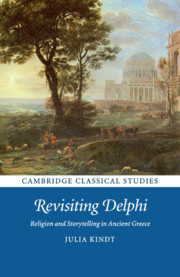
Revisiting Delphi speaks to all admirers of Delphi and its famous prophecies, be they experts on ancient Greek religion, students of the ancient world, or just lovers of a good story. It invites readers to revisit the famous Oracle of Apollo at Delphi, along with Herodotus, Euripides, Socrates, Pausanias and Athenaeus, offering the first comparative and extended enquiry into the way these and other authors force us to move the link between religion and narrative centre stage. Their accounts of Delphi and its prophecies reflect a world in which the gods frequently remain baffling and elusive despite every human effort to make sense of the signs they give.
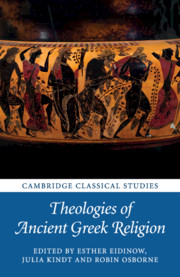
Studied for many years by scholars with Christianising assumptions, Greek religion has often been said to be quite unlike Christianity: a matter of particular actions (orthopraxy), rather than particular beliefs (orthodoxies). This volume dares to think that, both in and through religious practices and in and through religious thought and literature, the ancient Greeks engaged in a sustained conversation about the nature of the gods and how to represent and worship them. It excavates the attitudes towards the gods implicit in cult practice and analyses the beliefs about the gods embedded in such diverse texts and contexts as comedy, tragedy, rhetoric, philosophy, ancient Greek blood sacrifice, myth and other forms of storytelling. The result is a richer picture of the supernatural in ancient Greece, and a whole series of fresh questions about how views of and relations to the gods changed over time.
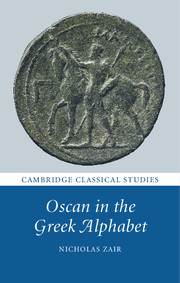
Oscan was spoken in Southern Italy in the second half of the first millennium BC. Here, for the first time, all the evidence for the spelling of Oscan in the Greek alphabet is collected and examined. Understanding the orthography of these inscriptions has far-reaching implications for the historical phonology and morphology of Oscan and the Italic languages (for example providing unique evidence for the reconstruction of the genitive plural). A striking discovery is the lack of a standardised orthography for Oscan in the Greek alphabet, which seriously problematises attempts to date inscriptions by assuming the consistent chronological development of spelling features. There are also intriguing insights into the linguistic situation in South Italy. Rather than a separate community of Oscan-speakers who had adopted and subsequently adapted the Greek alphabet in isolation, we should posit groups who were in touch with contemporary developments in Greek orthography due to widespread Greek-Oscan bilingualism.
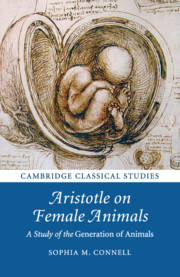
Aristotle's account of female nature has received mostly negative treatment, emphasising what he says females cannot do. Building on recent research, this book comprehensively revises such readings, setting out the complex and positive role played by the female in Aristotle's thought with a particular focus on the longest surviving treatise on reproduction in the ancient corpus, the Generation of Animals. It provides new interpretations of the nature of Aristotle's sexism, his theory of male and female interaction in generation, and his account of inherited features. It also discusses a range of more general issues which can and should be re-examined in light of Aristotle's account of female animals: his methodology, hylomorphism, teleology and psychology. Aristotle on Female Animals will be valuable to all those interested in Aristotle's philosophy and the history of gender.
This is a series of innovative studies in the textual and literary criticism of Latin literature, exploring how these two branches of the discipline are mutually supportive. The contributors include many leading scholars in the field. Individual essays are devoted to Catullus, Cicero, Horace, Lucretius, Ovid, Tacitus and Virgil, and there are also essays on the Renaissance reception of Virgil and on principles of editorial practice. The collection celebrates the extraordinary contribution which Michael Reeve has made and continues to make to Latin studies.
In pre-Roman Italy and Sicily, dozens of languages and writing systems competed and interacted, and bilingualism was the norm. Using frameworks from epigraphy, archaeology and the sociolinguistics of language contact, this book explores the relationship between Greek and Oscan, two of the most widely spoken languages in the south of the peninsula. Dr McDonald undertakes a new analysis of the entire corpus of South Oscan texts written in Lucania, Bruttium and Messana, including dedications, curse tablets, laws, funerary texts and graffiti. She demonstrates that genre and domain are critical to understanding where and when Greek was used within Oscan-speaking communities, and how ancient bilinguals exploited the social meaning of their languages in their writing. This book also offers a cutting-edge example of how to build the fullest possible picture of bilingualism in fragmentary languages across the ancient world.
This book illustrates how Aristotle's ethical concepts such as justice, reciprocity and friendship offer a basis for his political philosophy. In particular, it points out the importance of Aristotle for articulating the concept of a civic relationship and developing a theory of integration, by exploring how he includes a wide variety of people within the deliberative and judicial processes. Comparisons between Aristotle's own thought and present-day 'Aristotelian' political theories, such as communitarianism, civic republicanism and the capabilities approach, are also among the unique approaches offered by the book and are used to illustrate his original vision of politics. They can also, however, offer new insights into the problems of how to read his texts appropriately in their context and why we now need to read them, not only out of an antiquarian interest but also out of our concern for politics.
At the time of this book's first publication in 1999, orthodoxy interpreted the Georgics as a statement of profound ambivalence towards Octavian and his claim to be Rome's saviour after the catastrophe of the civil wars. This book takes issue with the model of the subtly subversive poet. It argues that in the turbulent political circumstances which obtained at the time of the poem's composition, Virgil's preoccupation with violent conflict has a highly optimistic import. Octavian's brutal conduct in the civil wars is subjected to a searching analysis, but is ultimately vindicated, refigured as a paradoxically constructive violence analogous to blood sacrifice or Romulus' fratricide of Remus. The vindication of Octavian also has strictly literary implications for Virgil. The close of the poem sees Virgil asserting his mastery of the Homeric mode of poetry and the providential world-view it was thought to embody.
In this book Dr Wallace makes a fundamental contribution to the study of urbanism in the Roman provinces. She attempts for the first time to present a detailed archaeological account of the first decade of one of the best-excavated cities in the Roman Empire. Delving into the artefact and structural reports from all excavations of pre-Boudican levels in London, she brings together vast quantities of data which are discussed and illustrated according to a novel methodology that address both the difficulties and complexity of 'grey literature' and urban excavation.
In the Laws, Plato theorizes citizenship as simultaneously a political, ethical, and aesthetic practice. His reflection on citizenship finds its roots in a descriptive psychology of human experience, with sentience and, above all, volition seen as the primary targets of a lifelong training in the values of citizenship. In the city of Magnesia described in the Laws erôs for civic virtue is presented as a motivational resource not only within the reach of the 'ordinary' citizen, but also factored by default into its educational system. Supporting a vision of 'perfect citizenship' based on an internalized obedience to the laws, and persuading the entire polity to consent willingly to it, requires an ideology that must be rhetorically all-inclusive. In this city 'ordinary' citizenship itself will be troped as a performative action: Magnesia's choral performances become a fundamental channel for shaping, feeling and communicating a strong sense of civic identity and unity.
This book offers a new description of the significance of Hesiod's 'myth of the races' for ancient Greek and Roman authors, showing how the most detailed responses to this story go far beyond nostalgia for a lost 'Golden' age or hope of its return. Through a series of close readings, it argues that key authors from Plato to Juvenal rewrite the story to reconstruct 'Hesiod' more broadly as predecessor in forming their own intellectual and rhetorical projects; disciplines such as philosophy, didactic poetry and satire all engage in implicit questions about 'Hesiodic' teaching. The first chapter introduces key issues; the second re-evaluates the account in Hesiod's Works and Days. A major chapter outlines Plato's use of Hesiod through close study of the Protagoras, Republic and Statesman. Subsequent chapters focus on Aratus' Phaenomena and Ovid's Metamorphoses; the final chapter, on the Octavia attributed to Seneca and Juvenal's sixth Satire, broadens ideas of Hesiod's reception in Rome.
This book argues that New Comedy has a far richer performance texture than has previously been recognised. Offering close readings of all the major plays of Menander, it shows how intertextuality - the sustained dialogue of New Comedy performance with the diverse ideological, philosophical, literary and theatrical discourses of contemporary polis culture - is crucial in creating semantic depth and thus offsetting the impression that the plots are simplistic love stories with no political or ideological resonances. It also explores how the visual aspect of the plays ('opsis') is just as important as any verbal means of signification - a phenomenon termed 'intervisuality', examining in particular depth the ways in which the mask can infuse various systems of reference into the play. Masks like the panchrēstos neaniskos (the 'all-perfect youth'), for example, are now full of meaning; thus, with their ideologically marked physiognomies, they can be strong instigators of literary and cultural allusion.