We partner with a secure submission system to handle manuscript submissions.
Please note:
You will need an account for the submission system, which is separate to your Cambridge Core account. For login and submission support, please visit the
submission and support pages.
Please review this journal's author instructions, particularly the
preparing your materials
page, before submitting your manuscript.
Click Proceed to submission system to continue to our partner's website.
To save this undefined to your undefined account, please select one or more formats and confirm that you agree to abide by our usage policies. If this is the first time you used this feature, you will be asked to authorise Cambridge Core to connect with your undefined account.
Find out more about saving content to .
To send this article to your Kindle, first ensure no-reply@cambridge.org is added to your Approved Personal Document E-mail List under your Personal Document Settings on the Manage Your Content and Devices page of your Amazon account. Then enter the ‘name’ part of your Kindle email address below. Find out more about sending to your Kindle.
Find out more about saving to your Kindle.
Note you can select to save to either the @free.kindle.com or @kindle.com variations. ‘@free.kindle.com’ emails are free but can only be saved to your device when it is connected to wi-fi. ‘@kindle.com’ emails can be delivered even when you are not connected to wi-fi, but note that service fees apply.
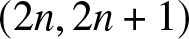
We determine spatially-bounded rogue waves in the Davey–Stewartson I equation. We show that these rogue waves can be obtained when a single or multiple internal parameters in the higher-order rational solution of the Davey–Stewartson I equation are real and large, and the order-index vector of this higher-order rational solution has even length and comprises pairs of the form $(2n, 2n+1)$, where $n$ is a positive integer. Under these conditions and another nondegeneracy condition on the root curve of a certain double-real-variable polynomial, the higher-order rational solution will exhibit spatially-bounded rogue waves that arise from a uniform background with some time-varying lumps on it, reach high amplitude in limited space, and then disappear into the same background again. The crests of these rogue waves form a single or multiple closed curves that are generically disconnected from each other on the spatial plane, and are analytically predicted by the root curve mentioned above. We also derive uniformly-valid asymptotic approximations for these spatially-bounded rogue waves in the large-parameter regime. Near the crests of these rogue waves, these asymptotic approximations reduce to simple expressions. Our asymptotic approximations of these rogue waves are compared to true solutions, and good agreement is demonstrated.
The goal of this work is to revisit the eigenfunction-expansion-based perturbation theory of the defocusing nonlinear Schrödinger equation on a nonzero background, and develop it to correctly predict the slow-time evolution of the dark soliton parameters, as well as the radiation shelf emerging on the soliton sides. Proof of the closure of the squared eigenfunctions is provided, and the complete set of eigenfunctions of the linearisation operator is used to expand the first-order perturbation solution. Our closure/completeness relation accounts for the singularities of the scattering data at the branch points of the continuous spectrum, which leads to the correct discrete eigenfunctions. Using the one-soliton closure relation and its correct discrete eigenmodes, the slow-time evolution equations of the soliton parameters are determined. Moreover, the first-order correction integral to the dark soliton is shown to contain a pole due to singularities of the scattering data at the branch points. Analysis of this integral leads to predictions for the shelves, as well as a formula for the slow-time evolution of the soliton’s phase, which in turn allows one to determine the slow-time dependence of the soliton centre. All the results are corroborated by direct numerical simulations and compared with earlier results.
With possible exceptions in quantum mechanics, measurable physical quantities do not involve complex numbers. However, most standard and special functions in the applied sciences are analytic functions. Focusing on exact mathematical techniques, a famous quote notes that ‘The shortest path between two truths in the real domain passes through the complex domain’. It therefore becomes natural to ask if this shortest path can benefit from finite difference formulas and numerical quadrature methods that are specifically designed for the complex plane. Several such opportunities have recently been found. While the concepts of complex variables and of analyticity do not readily generalize beyond 2-D, the new numerical methods that are described here can be adapted to harmonic functions in higher dimensions.
The modulational instability of the focusing nonlinear Schrödinger equation has been proposed as a possible mechanism in the formation of rogue waves on the ocean and other nonlinear dispersive systems. In this paper, the focus is on the pole dynamics associated with the modulational instability. A range of pole behaviours is identified, ranging from simple periodic motion along the imaginary axis when the nonlinear parameter is relatively small, to motions that trace complicated trajectories in the complex plane when the parameter is larger. Possibly of relevance to rogue wave theories is the situation where several poles have a near-collision close to the real axis, leading to a disproportionately high peak in the modulus of the solution. In the absence of explicit solution formulas, this study is based on computational pole tracking using Fourier–Padé methods.
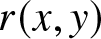
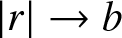
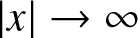
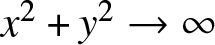
The nonstationary Schrödinger equation (NSE) with a special class of rational potentials is investigated via binary Darboux transformation. It is shown that in this case, the NSE corresponds to the focusing nonlinear Schrödinger equation (NLS): $ir_y=r_{xx}+|r|^2r$ where $r(x,y)$ is rational with non-vanishing boundary conditions: $|r| \to b$ as $|x| \to \infty$. These rational solutions of NLS are the so-called rogue wave solutions that have been studied extensively for the last 15 years or so. Furthermore, these rational potentials of the NSE are also shown to correspond to a special family of rational, multi-lump solutions of the Kadomtsev–Petviasvili I equation with multiple peaks in the $xy$-plane and vanishing as $x^2+y^2 \to \infty$.

We study, numerically, the self-similar propagation of optical pulses – similaritons – governed by the non-linear Schrödinger equation with fractional-order dispersion and constant gain. Whereas in the classical, integer-order limit a Gaussian input relaxes to well-known parabolic similariton, we show that fractional dispersion, controlled by the Lévy index, fundamentally reshapes this evolution. As the Lévy index is reduced below its classical value, a standard Gaussian input evolves into parabolic, flat-top or two-peaked profiles, the last of which is a genuine consequence of fractionality and is absent in the integer-order case. We trace the physical origin of this two-peaked, hollowed core to the singular low-wavenumber behaviour of the fractional operator, and we demonstrate that it is suppressed in two distinct ways: by increasing the gain, which drives the pulse onto the parabolic attractor, and by broadening the initial condition, which reduces the reshaping that the pulse must undergo. A sufficiently stretched Gaussian input restores clean parabolic self-similar propagation across the entire range of fractional orders considered. Finally, we show that fractional similaritons develop pronounced, algebraically decaying heavy tails – in stark contrast to the exponential localization of the classical case – whose power-law exponent is fixed directly by the Lévy index, providing a clear signature of the underlying Lévy-type transport.
The inverse scattering transform (IST) provides the standard theoretical framework for deriving soliton dynamics. Traditionally, such derivations have been of an analytical, rather than data-driven, nature. In this paper, we combine the conceptual framework of the IST with weak-form system identification methods to discover effective soliton dynamics directly from observed scattering data, without assuming prior knowledge of the scattering equations. Our method avoids parameterizing solitary waves via ad hoc curve-fitting by working in the scattering domain, yielding interpretable low-dimensional models that remain valid in perturbed and near-integrable regimes. We demonstrate the performance of the proposed approach on synthetic and experimental data governed by shallow-water equations of Korteweg–de Vries-type and recover models that are consistent with canonical IST theory.
The inverse spectral theory for a self-adjoint one-dimensional Dirac operator associated periodic potentials is formulated via a Riemann–Hilbert problem (RHP) approach. The resulting formalism is also used to solve the initial value problem for the non-linear Schrödinger (NLS) equation. A uniqueness theorem for the solutions of the RHP is established, which provides a new method for obtaining the potential from the spectral data. Two additional, scalar RHPs are also formulated that provide conditions for the periodicity in space and time of the solution generated by arbitrary sets of spectral data. The formalism applies for both finite-genus and infinite-genus potentials. The formalism also shows that only a single set of Dirichlet eigenvalues is needed in order to uniquely reconstruct the potential of the Dirac operator and the corresponding solution of the defocusing NLS equation, in contrast with the representation of the solution of the NLS equation via the trace formulae in the finite-genus formalism, in which two different sets of Dirichlet eigenvalues are used.