Volume 2 - 2026
Latest volume of Journal of Nonlinear Waves
Contents
Research Article
Numerical inverse scattering transform for the defocusing nonlinear Schrödinger equation with box-type initial conditions on a nonzero background
-
- Published online by Cambridge University Press:
- 09 January 2026, e1
-
- Article
-
- You have access
- Open access
- HTML
- Export citation
-
We present a method to solve numerically the Cauchy problem for the defocusing nonlinear Schrödinger (NLS) equation with a box-type initial condition (IC) having a nontrivial background of amplitude
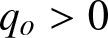 $q_o \gt 0$ as
 $x\to \pm \infty$ by implementing numerically the corresponding inverse scattering transform (IST). The Riemann–Hilbert problem associated with the inverse transform is solved numerically by means of appropriate contour deformations in the complex plane following the numerical implementation of the Deift–Zhou nonlinear steepest descent method. In this work, the box parameters are chosen so that there is no discrete spectrum (i.e., no solitons). The numerical method is demonstrated to be accurate within the two asymptotic regimes corresponding to two different regions of the
 $(x,t)$-plane depending on whether
 $|x/(2t)| \lt q_o$ or
 $|x/(2t)| \gt q_o$, as
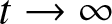 $t \to \infty$.

A plethora of fully localized solitary waves for the full-dispersion Kadomtsev–Petviashvili equation
- Part of:
-
- Published online by Cambridge University Press:
- 28 January 2026, e2
-
- Article
-
- You have access
- Open access
- HTML
- Export citation
-
The KP-I equation arises as a weakly nonlinear model equation for gravity-capillary waves with Bond number
 $\beta \gt 1/3$, also called strong surface tension. This equation has recently been shown to have a family of nondegenerate, symmetric ‘fully localized’ or ‘lump’ solitary waves which decay to zero in all spatial directions. The full-dispersion KP-I equation is obtained by retaining the exact dispersion relation in the modelling from the water-wave problem. In this paper, we show that the FDKP-I equation also has a family of symmetric fully localized solitary waves which are obtained by casting it as a perturbation of the KP-I equation and applying a suitable variant of the implicit-function theorem.

Spatially-bounded rogue waves in the Davey–Stewartson I equation
-
- Published online by Cambridge University Press:
- 18 February 2026, e3
-
- Article
-
- You have access
- Open access
- HTML
- Export citation
-
We determine spatially-bounded rogue waves in the Davey–Stewartson I equation. We show that these rogue waves can be obtained when a single or multiple internal parameters in the higher-order rational solution of the Davey–Stewartson I equation are real and large, and the order-index vector of this higher-order rational solution has even length and comprises pairs of the form
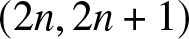 $(2n, 2n+1)$, where
 $n$ is a positive integer. Under these conditions and another nondegeneracy condition on the root curve of a certain double-real-variable polynomial, the higher-order rational solution will exhibit spatially-bounded rogue waves that arise from a uniform background with some time-varying lumps on it, reach high amplitude in limited space, and then disappear into the same background again. The crests of these rogue waves form a single or multiple closed curves that are generically disconnected from each other on the spatial plane, and are analytically predicted by the root curve mentioned above. We also derive uniformly-valid asymptotic approximations for these spatially-bounded rogue waves in the large-parameter regime. Near the crests of these rogue waves, these asymptotic approximations reduce to simple expressions. Our asymptotic approximations of these rogue waves are compared to true solutions, and good agreement is demonstrated.

Soliton gas in optical fiber experiments: nonlinear Fourier transform of the noise-induced modulational instability
- Part of:
-
- Published online by Cambridge University Press:
- 06 February 2026, e4
-
- Article
-
- You have access
- Open access
- HTML
- Export citation
Long-time behaviour of small solutions in the viscoelastic Klein–Gordon equation
- Part of:
-
- Published online by Cambridge University Press:
- 02 March 2026, e5
-
- Article
-
- You have access
- Open access
- HTML
- Export citation
Small-time asymptotics and the emergence of complex singularities for the KdV equation
-
- Published online by Cambridge University Press:
- 05 March 2026, e6
-
- Article
-
- You have access
- Open access
- HTML
- Export citation
-
While real-valued solutions of the Korteweg–de Vries (KdV) equation have been studied extensively over the past 50 years, much less attention has been devoted to solution behaviour in the complex plane. Here we consider the analytic continuation of real solutions of KdV and investigate the role that complex-plane singularities play in early time solutions on the real line. We apply techniques of exponential asymptotics to derive the small-time behaviour for dispersive waves that propagate in one direction, and demonstrate how the amplitude, wavelength and speed of these waves depend on the strength and location of double-pole singularities of the initial condition in the complex plane. Using matched asymptotic expansions in the limit
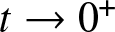 $t\rightarrow 0^+$, we show how complex singularities of the time-dependent solution of the KdV equation emerge from these double-pole singularities. Generically, their speed as they move from their initial position is of
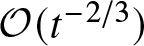 $\mathcal{O}(t^{-2/3})$, while the direction in which these singularities propagate initially is dictated by a Painlevé II (P
 $_{\mathrm{II}}$) problem with decreasing tritronquée solutions. The well-known
 $N$-soliton solutions of KdV correspond to rational solutions of P
 $_{\mathrm{II}}$ with a finite number of singularities; otherwise, we postulate that infinitely many complex-plane singularities of KdV solutions are born at each double-pole singularity of the initial condition. We also provide asymptotic results for some non-generic cases in which singularities propagate more slowly than in the generic case. Our study makes progress towards the goal of providing a complete description of KdV solutions in the complex plane and, in turn, of relating this behaviour to the solution on the real line.


Stokes waves in water of finite depth
-
- Published online by Cambridge University Press:
- 05 March 2026, e7
-
- Article
-
- You have access
- Open access
- HTML
- Export citation
Vacuum bubble and fissure formation in collective motion with competing attractive and repulsive forces
-
- Published online by Cambridge University Press:
- 05 March 2026, e8
-
- Article
-
- You have access
- Open access
- HTML
- Export citation
Erratum
Small-time asymptotics and the emergence of complex singularities for the KdV equation – ERRATUM
-
- Published online by Cambridge University Press:
- 21 April 2026, e9
-
- Article
-
- You have access
- Open access
- HTML
- Export citation
Research Article
Integrable perturbation theory for dark solitons of the defocusing nonlinear Schrödinger equation
- Part of:
-
- Published online by Cambridge University Press:
- 24 March 2026, e10
-
- Article
-
- You have access
- Open access
- HTML
- Export citation
On a Klein–Gordon reduction for oscillons
-
- Published online by Cambridge University Press:
- 30 April 2026, e11
-
- Article
-
- You have access
- Open access
- HTML
- Export citation
Localized pattern formation for mussel–algae model and other reaction-diffusion systems with saturation
-
- Published online by Cambridge University Press:
- 11 May 2026, e12
-
- Article
-
- You have access
- Open access
- HTML
- Export citation
-
We examine a class of reaction-diffusion systems where saturation drives pattern formation. A prime example is the classical model of mussel–algae interactions. We asymptotically construct a pattern consisting of
 $N$ spikes. Unlike many other models where the inner spike profile is described by a nonlinear ODE
 $w^{\prime\prime}-w+w^{p}=0$, here it is described by a linear ODE
 $w^{\prime\prime}+w-1=0.$ We then study the stability of the resulting patterns. A new non-local eigenvalue problem is derived which controls the structural stability of
 $N$ such spikes. We rigorously prove its stability in the relevant regime, taking advantage of the explicit formula for the shape of the spike. Self-replication is also observed, and we derive a new ‘core problem’ which captures this phenomenon. Finally, the asymptotic stability band for the existence of
 $N$ spikes is given. Our methods are applicable to a wide range of systems that exhibit saturation; we provide a variant of the Schnakenberg model as another example. Numerical simulations confirm our asymptotic predictions.


Existence of travelling waves in infinite range FPUT lattices
-
- Published online by Cambridge University Press:
- 09 June 2026, e13
-
- Article
-
- You have access
- Open access
- HTML
- Export citation
Dynamics of excited self-dual vortices in the Abelian-Higgs model
- Part of:
-
- Published online by Cambridge University Press:
- 16 June 2026, e14
-
- Article
-
- You have access
- Open access
- HTML
- Export citation
-
We investigate the dynamical role of internal vibrational modes in the self-dual Abelian-Higgs model, focusing on how Derrick-type breathing excitations modify vortex dynamics and scattering processes. While unexcited BPS vortices follow geodesic motion leading to the well-known
 $90^\circ$ scattering, initially excited vortices experience vibration-induced forces arising from the spectral flow of internal modes as the inter-vortex distance changes. This mechanism intensifies the resonant energy transfer between translational and vibrational channels, producing non-adiabatic dynamics, superelastic collisions and fractal structures in scattering diagrams.

Whitham modulation equations for the regularized Boussinesq equation with cubic nonlinearity
-
- Published online by Cambridge University Press:
- 29 June 2026, e16
-
- Article
-
- You have access
- Open access
- HTML
- Export citation
Finite differences and the trapezoidal rule in the complex plane
- Part of:
-
- Published online by Cambridge University Press:
- 15 June 2026, e15
-
- Article
-
- You have access
- Open access
- HTML
- Export citation
Recurrent bifurcations of stability spectra for steep Stokes waves in a deep fluid
-
- Published online by Cambridge University Press:
- 10 August 2026, e17
-
- Article
-
- You have access
- Open access
- HTML
- Export citation
-
We study the modulational stability problem for the travelling periodic waves (called Stokes waves) in an infinitely deep fluid by using pseudo-differential operators in conformal variables. We derive the criteria and the normal forms for four bifurcations which are repeated recurrently when the steepness of the Stokes wave is increased towards the highest wave with the peaked profile. The four bifurcations are observed in the following order: (a) new figure-8 bands appearing at each extremal point of speed, (b) degeneration of figure-8 bands resulting in vertical slopes, (c) new circular bands around the origin appearing at each period-doubling bifurcation and (d) reconnection of figure-
 $\infty$ bands at each extremal point of energy. Our work uses the analytic theory of Stokes waves developed previously for Babenko’s equation. The novelty of our work is the analytic extension of the modulational stability problem for singular pseudo-differential operators in terms of the Floquet parameter. The derivation of the normal form uses some structural assumptions which are known to be true for the Stokes waves. For the first and second bifurcation cycles, we compute numerically with a higher-order accuracy the actual values of wave steepness for which the structural assumptions are satisfied and the numerical coefficients of the normal forms to show the excellent agreement between the normal form theory and the numerical approximations of the spectral bands.

Pole dynamics and modulational instability of the NLS: a computational study
-
- Published online by Cambridge University Press:
- 12 August 2026, e18
-
- Article
-
- You have access
- Open access
- HTML
- Export citation
Nonstationary Schrödinger equation with rational potentials
-
- Published online by Cambridge University Press:
- 12 August 2026, e19
-
- Article
-
- You have access
- Open access
- HTML
- Export citation
-
The nonstationary Schrödinger equation (NSE) with a special class of rational potentials is investigated via binary Darboux transformation. It is shown that in this case, the NSE corresponds to the focusing nonlinear Schrödinger equation (NLS):
 $ir_y=r_{xx}+|r|^2r$ where
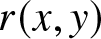 $r(x,y)$ is rational with non-vanishing boundary conditions:
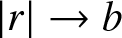 $|r| \to b$ as
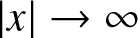 $|x| \to \infty$. These rational solutions of NLS are the so-called rogue wave solutions that have been studied extensively for the last 15 years or so. Furthermore, these rational potentials of the NSE are also shown to correspond to a special family of rational, multi-lump solutions of the Kadomtsev–Petviasvili I equation with multiple peaks in the
 $xy$-plane and vanishing as
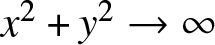 $x^2+y^2 \to \infty$.

Similaritons and tail formation in the fractional non-linear Schrödinger equation
-
- Published online by Cambridge University Press:
- 14 October 2026, e20
-
- Article
-
- You have access
- Open access
- HTML
- Export citation