Refine search
Actions for selected content:
89 results
On the moments of the Ulam–Kac adder
- Part of
-
- Journal:
- Journal of Applied Probability , First View
- Published online by Cambridge University Press:
- 04 November 2026, pp. 1-20
-
- Article
-
- You have access
- HTML
- Export citation
-
Let
 $\{U(n)\}_{n \geq 0}$ be a sequence of independent random variables such that U(n) is distributed uniformly on
 $\{0, 1, 2, \dots, n\}$. The Ulam–Kac adder is the history-dependent random sequence defined by
 $X_{n + 1} = X_{n} + X_{U(n)}$ with the initial condition
 $X_0 = 1$. We show that for each
 $m \geq 1$,
 $\log \mathbb{E}[X_n^m]/\sqrt{n}$ approaches a constant
 $c_m$ as
 $n \to \infty$. For a given m, a method is provided which allows the high-accuracy numerical computation of
 $c_m$. For arbitrary m, loose bounds are provided.


ARITHMETIC PROPERTIES SATISFIED BY A RECENT INTEGER PARTITION FUNCTION OF DOMBOS
- Part of
-
- Journal:
- Bulletin of the Australian Mathematical Society , First View
- Published online by Cambridge University Press:
- 03 November 2026, pp. 1-9
-
- Article
-
- You have access
- HTML
- Export citation
-
The set of integer partitions of n, wherein the parts are either divisible by 4 or congruent to $\pm 1 \pmod {6}$
 , arose in a natural way in work of Dombos [‘A new grounded partition identity of type $D_4^{(3)}$
 ’, SIGMA 22 (2026), Article no. 042]. Denote the function that counts the number of such partitions of n by $\mathit {dp}(n)$
 . Using elementary generating function manipulations and classical q-series results, we prove several congruences satisfied by $\mathit {dp}(n)$
 . As an example, we prove that, for all $\alpha \geq 1$
 and all $n \geq 0$
 , $$ \begin{align*} {\it dp} \bigg( 3^{2\alpha + 1}n + \frac{7 \cdot 9^\alpha + 1}{4} \bigg) \equiv 0 \pmod{3}. \end{align*} $$



ON SPARSE HOLES AND A FINITE-FOLD PROBLEM OF NATHANSON CONCERNING MINIMAL ADDITIVE COMPLEMENTS
- Part of
-
- Journal:
- Bulletin of the Australian Mathematical Society , First View
- Published online by Cambridge University Press:
- 25 September 2026, pp. 1-12
-
- Article
-
- You have access
- HTML
- Export citation
-
Let $W\subseteq \mathbb Z$
 be bounded below and normalised by $\inf W=1$
 , and put $\overline W=\mathbb Z_{>0}\setminus W$
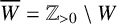 . Nathanson asked whether infinite sets of integers admit minimal additive complements. Chen and Yang [‘On a problem of Nathanson related to minimal additive complements’, SIAM J. Discrete Math. 26 (2012), 1532–1536] proved that the two-sided case is positive and that sufficiently large consecutive gaps in $\overline W$
 force nonexistence in the one-sided case. Chen and Ding [‘On a problem of Nathanson on nonminimal additive complements’, Bull. Aust. Math. Soc. 114, 6–13] isolated a sparse-hole condition under which no ordinary minimal complement exists. We prove a finite-fold version of this sparse-hole obstruction. For an integer $h\geq 1$
 , write $hC=C+\cdots +C$
 . We show that if $\overline W$
 contains a sequence $a_1<a_2<\cdots $
 such that $a_{t+1}-a_t\to \infty $
 and the four-neighbourhoods $(a_{t-2},a_{t+2})$
 contain at most K elements of $\overline W$
 for all sufficiently large t, then there is no set $C\subseteq \mathbb Z$
 which is minimal subject to $hC+W=\mathbb Z$
 . This result recovers and broadens the Chen–Ding nonexistence theorem as the special case $h=1$
 .


CONGRUENCES MODULO $7$
 FOR A CERTAIN SCHMIDT-TYPE PARTITION FUNCTION
- Part of
-
- Journal:
- Bulletin of the Australian Mathematical Society , First View
- Published online by Cambridge University Press:
- 21 September 2026, pp. 1-8
-
- Article
-
- You have access
- HTML
- Export citation
-
Let $S(n)$
 be the number of partitions $a_1+a_2+a_3+\cdots $
 with $a_1 \geq a_2 \geq a_3 \geq \cdots $
 such that $n = a_1+a_3+a_5+\cdots $
 and $a_1, a_3, a_5, \ldots $
 are all even. We apply the action of Atkin’s $U_7$
 operator to a certain $\eta $
 -quotient for the congruence subgroup $\Gamma _0(98)$
 and a result of Ahlgren to produce infinite families of congruences modulo $7$
 for $S(n)$
 .


RESTRICTED PARTITION FUNCTIONS AND ADDITIVE COMPLEMENTS
- Part of
-
- Journal:
- Bulletin of the Australian Mathematical Society , First View
- Published online by Cambridge University Press:
- 14 September 2026, pp. 1-5
-
- Article
-
- You have access
- Open access
- HTML
- Export citation
-
Let ${\mathbb N}$
 be the set of positive integers. For subsets $\mathcal {A},\mathcal {M}\subseteq {\mathbb N}$
 and $n\in {\mathbb N}$
 , let $p(n,\mathcal {A},\mathcal {M})$
 denote the number of representations of n in the form $n=\sum _{a\in \mathcal {A}}m_a a$
 , where $m_a\in \mathcal {M}\cup \{0\}$
 for all $a\in \mathcal {A}$
 and only finitely many $m_a$
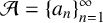
 are nonzero. We prove that there exist two infinite sets $\mathcal {A}=\{a_n\}_{n=1}^{\infty }$
 and $\mathcal {M}$
 of positive integers such that $\lim _{n\to \infty }(({\log a_{n+1}-\log a_n})/{\log n})=+\infty $
 , $p(n,\mathcal {A},\mathcal {M})>0$
 for every $n\in {\mathbb N}$
 and p has polynomial growth. More generally, we provide a construction that associates restricted partition functions of polynomial growth with additive complements satisfying a simple counting condition. This answers a question of Dai and Chen [‘On two problems of Ljujić and Nathanson’, C. R. Math. Acad. Sci. Paris 354 (2016), 235–238] in the affirmative.


ELEMENTARY SYMMETRIC POLYNOMIALS AND A POTENTIALLY INJECTIVE FAMILY OF MAPS ON PARTITIONS
- Part of
-
- Journal:
- Bulletin of the Australian Mathematical Society , First View
- Published online by Cambridge University Press:
- 21 July 2026, pp. 1-8
-
- Article
-
- You have access
- HTML
- Export citation
-
Ballantine et al. [‘Partitions and elementary symmetric polynomials: an experimental approach’, Ramanujan J. 66(2) (2025), Article no. 34] proposed two conjectures on the injectivity of a class of maps ${pre}_k$
 defined on integer partitions. These maps arise from applying the sequence of elementary symmetric polynomials to integer partitions. We provide an infinite family of examples to disprove the conjecture for $k\ge 3$
 and state a modified version of it. Throwing fresh light on this class of maps, we study the inter-relationships between them, deviating from the approaches so far, which study these maps one at a time. While the conjecture for $k=2$
 has now been settled, we provide alternate proofs of three subcases. We also discuss lower bounds for the number of partitions of n that are in the image of the map $pre_2$
 .


Measures and generalizations of dual Littlewood identities
- Part of
-
- Journal:
- Forum of Mathematics, Sigma / Volume 14 / 2026
- Published online by Cambridge University Press:
- 15 July 2026, e106
-
- Article
-
- You have access
- Open access
- HTML
- Export citation
-
We introduce three families of vectors $|\underline {\lambda }^{so}\rangle $
 , $|\underline {\lambda }^{sp}\rangle $
 and $|\underline {\lambda }^{o}\rangle $
 parametrized by partitions in the Fock space by using products of adjoint vertex operators. We show that the quotient space of the dual vacuum vector is spanned by the partition vectors indexed by a special family of partitions. The partition-indexed vectors also help us to derive the dual Littlewood identities of types B, C, and D in a new manner associated to the special family of partitions. As an application, we obtain a new free fermionic construction to show that the measures related to dual Littlewood identities introduced by Rains [33, Section 7] and Betea [6, Section 3] are determinantal with respect to some explicit correlation kernels.
Furthermore, we establish a number of generalized Littlewood identities summed over certain restricted partitions by computing the inner products with elements indexed by one-column partitions or generalized partitions $(0^m)$
 in the complete dual Fock space. In particular, for each positive integer n, we obtain generalized Littlewood identities for $(-n)$
 -asymmetric partitions. We show that these generalized Littlewood identities contain several well-known Littlewood-type identities as special cases. Consequently we also give a new proof of the generalized Littlewood identity [28, (5.25)] for Lie superalgebras.


FURTHER ANALOGUES OF ANDREWS’ SPT-FUNCTION IDENTITY
- Part of
-
- Journal:
- Bulletin of the Australian Mathematical Society / Volume 114 / Issue 3 / December 2026
- Published online by Cambridge University Press:
- 16 June 2026, pp. 526-535
- Print publication:
- December 2026
-
- Article
-
- You have access
- Open access
- HTML
- Export citation
On the proportion of derangements in affine classical groups
- Part of
-
- Journal:
- Forum of Mathematics, Sigma / Volume 14 / 2026
- Published online by Cambridge University Press:
- 24 April 2026, e64
-
- Article
-
- You have access
- Open access
- HTML
- Export citation
-
We derive exact formulas for the proportions of derangements and of derangements of p-power order in the affine classical groups
 $\operatorname {\mathrm {AU}}_m(q)$,
 $\operatorname {\mathrm {ASp}}_{2m}(q)$,
 $\operatorname {\mathrm {AO}}_{2m+1}(q)$ and
 $\operatorname {\mathrm {AO}}^{\pm }_{2m}(q)$, where p denotes the characteristic of the defining finite field.
In the unitary case, the proofs of the formulas rely on a result on partitions of independent interest: we obtain a generating function for integer partitions
 $\lambda =(\lambda _1, \dots , \lambda _m)$ into m parts, with
 $\lambda _1\ge \dots \ge \lambda _m$, such that either
 $\lambda _1=1$ or
 $\lambda _{k-1}>\lambda _k=k$ for some
 $k \in \{2, \dots ,m\}$.
In the symplectic and orthogonal cases, the proofs of the formulas reduce to verifying three q-polynomial identities conjectured by the author and later proved by Fulman and Stanton.


Hyperbinary partitions and q-deformed rationals
- Part of
-
- Journal:
- Forum of Mathematics, Sigma / Volume 14 / 2026
- Published online by Cambridge University Press:
- 26 February 2026, e30
-
- Article
-
- You have access
- Open access
- HTML
- Export citation
-
A hyperbinary partition of the nonnegative integer n is a partition where every part is a power of
 $2$ and every power of
 $2$ appears at most twice. We give three applications of the length generating function for such partitions, denoted by
 $h_q(n)$. Morier-Genoud and Ovsienko defined the q-analogue of a rational number
 $[r/s]_q$ in various ways, most of which depend directly or indirectly on the continued fraction expansion of
 $r/s$. As our first application we show that
 $[r/s]_q=q\,h_q(n-1)/h_q(n)$ where
 $r/s$ occurs as the nth entry in the Calkin-Wilf enumeration of the non-negative rationals. Next we consider fence posets which are those which can be obtained from a sequence of chains by alternately pasting together maxima and minima. For every n we show there is a fence poset
 ${\cal F}(n)$ whose lattice of order ideals is isomorphic to the poset of hyperbinary partitions of n ordered by refinement. For our last application, Morier-Genoud and Ovsienko also showed that
 $[r/s]_q$ can be computed by taking products of certain matrices which are q-analogues of the standard generators for the special linear group
 $\operatorname {\mathrm {SL}}(2,{\mathbb Z})$. We express the entries of these products in terms of the polynomials
 $h_q(n)$.


Graphical sequences and plane trees
- Part of
-
- Journal:
- Combinatorics, Probability and Computing / Volume 35 / Issue 3 / May 2026
- Published online by Cambridge University Press:
- 05 February 2026, pp. 316-328
-
- Article
-
- You have access
- Open access
- HTML
- Export citation
-
Balister, the second author, Groenland, Johnston, and Scott recently showed that there are asymptotically
 $C4^n/n^{3/4}$ many unordered sequences that occur as degree sequences of graphs with
 $n$ vertices. Combining limit theory for infinitely divisible distributions with a new connection between a class of random walk trajectories and a subset counting formula from additive number theory, we describe
 $C$ in terms of Walkup’s number of rooted plane trees. The bijection is related to an instance of the Lévy–Khintchine formula. Our main result complements a result of Stanley, that ordered graphical sequences are related to quasi-forests.


COMBINATORIAL PROOFS OF CERTAIN RESULTS OF CHEN AND ZOU ON TWO-COLOUR PARTITIONS
- Part of
-
- Journal:
- Bulletin of the Australian Mathematical Society / Volume 113 / Issue 3 / June 2026
- Published online by Cambridge University Press:
- 12 January 2026, pp. 417-423
- Print publication:
- June 2026
-
- Article
-
- You have access
- HTML
- Export citation
Overpartitions with parts separated by parity
- Part of
-
- Journal:
- Canadian Mathematical Bulletin / Volume 69 / Issue 3 / September 2026
- Published online by Cambridge University Press:
- 05 January 2026, pp. 1043-1053
- Print publication:
- September 2026
-
- Article
-
- You have access
- Open access
- HTML
- Export citation
-
In this article, we generalize Andrews’ partitions separated by parity to overpartitions in two ways. We investigate the generating functions for $16$
 overpartition families whose parts are separated by parity, and we prove various q-series identities for these functions. These identities include relations to modular forms, q-hypergeometric series, and mock modular forms.

The finite forms of MacMahon’s q-series
- Part of
-
- Journal:
- Proceedings of the Edinburgh Mathematical Society / Volume 69 / Issue 3 / August 2026
- Published online by Cambridge University Press:
- 02 January 2026, pp. 867-894
-
- Article
-
- You have access
- HTML
- Export citation
-
In his seminal work on partitions and divisor functions, MacMahon introduced the following two q-series:
 \begin{align*}A_k(q):= \sum_{0 \lt s_1 \lt s_2 \lt \cdots \lt s_k} \frac{q^{s_1+s_2+\cdots+s_k}}{(1-q^{s_1})^2(1-q^{s_2})^2\cdots(1-q^{s_k})^2},\qquad\quad\quad\quad\\[6pt]C_k(q):= \sum_{0 \lt s_1 \lt s_2 \lt \cdots \lt s_k}\frac{q^{2(s_1+s_2+\cdots+s_k)-k}}{(1-q^{2s_1-1})^2(1-q^{2s_2-1})^2\cdots(1-q^{2s_k-1})^2}.\end{align*}
In 2013, Andrews and Rose proved that
 $A_k(q)$ and
 $C_k(q)$ are quasimodular forms of weight
 $\leq 2k$. Recently, Ono and Singh proved two interesting identities involving
 $A_k(q)$ and
 $C_k(q)$ and showed that the generating functions for the three-coloured partition function
 $p_3(n)$ and the overpartition function
 $\overline{p}(n)$ have infinitely many closed formulas in terms of MacMahon’s quasimodular forms
 $A_k(q)$ and
 $C_k(q)$. In this paper, we introduce the finite forms
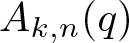 $A_{k,n}(q)$ and
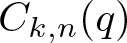 $C_{k,n}(q)$ of MacMahon’s q-series
 $A_k(q)$ and
 $C_k(q)$ and prove two identities which generalize Ono–Singh’s identities. We also prove some new identities involving
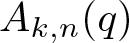 $A_{k,n}(q)$,
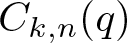 $C_{k,n}(q)$ and certain infinite products based on two Bailey pairs. Those identities are analogous to Ono–Singh’s identities.


Inequality arising from the iterated Laguerre operator for various partitions
- Part of
-
- Journal:
- Proceedings of the Edinburgh Mathematical Society / Volume 69 / Issue 2 / May 2026
- Published online by Cambridge University Press:
- 23 October 2025, pp. 522-543
-
- Article
-
- You have access
- HTML
- Export citation
-
In this paper, we will investigate the following inequality
 \begin{equation*}(a_{n+1}a_{n+2} - a_{n}a_{n+3})^2 -(a_{n+1}^2 -a_{n}a_{n+2})(a_{n+2}^2 - a_{n}a_{n+4}) \gt 0,\end{equation*}
which arises from the iterated Laguerre operator on functions. We will prove the sequence
 $\{a_n\}$ of a unified form given by Griffin, Ono, Rolen and Zagier asymptotically satisfies this inequality while the Maclaurin coefficients of the functions in Laguerre-Pólya class have not to possess this inequality. We also prove the companion version of this inequality. As a consequence, we show the Maclaurin coefficients of the Riemann Ξ-function asymptotically satisfy this property. Moreover, we make this approach effective and give the exact thresholds for the positivity of this inequalityfor the partition function, the overpartition function and the smallest part function.


THE NUMBER OF PARTS IN A RANDOM t-REGULAR PARTITION
- Part of
-
- Journal:
- Bulletin of the Australian Mathematical Society / Volume 113 / Issue 2 / April 2026
- Published online by Cambridge University Press:
- 16 October 2025, pp. 265-279
- Print publication:
- April 2026
-
- Article
-
- You have access
- Open access
- HTML
- Export citation
-
For any integer
 $t \geq 2$, we prove a local limit theorem (LLT) with an explicit convergence rate for the number of parts in a uniformly chosen t-regular partition. When
 $t = 2$, this recovers the LLT for partitions into distinct parts, as previously established in the work of Szekeres [‘Asymptotic distributions of the number and size of parts in unequal partitions’, Bull. Aust. Math. Soc. 36 (1987), 89–97].


On the f-vectors of flow polytopes for the complete graph
- Part of
-
- Journal:
- Canadian Journal of Mathematics , First View
- Published online by Cambridge University Press:
- 01 September 2025, pp. 1-28
-
- Article
-
- You have access
- Open access
- HTML
- Export citation
-
The Chan–Robbins–Yuen polytope (
 $CRY_n$) of order n is a face of the Birkhoff polytope of doubly stochastic matrices that is also a flow polytope of the directed complete graph
 $K_{n+1}$ with netflow
 $(1,0,0, \ldots , 0, -1)$. The volume and lattice points of this polytope have been actively studied; however, its face structure has received less attention. We give generating functions and explicit formulas for computing the f-vector by using Hille’s (2003) result bijecting faces of a flow polytope to certain graphs, as well as Andresen–Kjeldsen’s (1976) result that enumerates certain subgraphs of the directed complete graph. We extend our results to flow polytopes of the complete graph having arbitrary (non-negative) netflow vectors and recover the f-vector of the Tesler polytope of Mészáros–Morales–Rhoades (2017).


Hook length inequalities for t-regular partitions in the t-aspect
- Part of
-
- Journal:
- Canadian Mathematical Bulletin / Volume 69 / Issue 1 / March 2026
- Published online by Cambridge University Press:
- 24 July 2025, pp. 77-88
- Print publication:
- March 2026
-
- Article
-
- You have access
- Open access
- HTML
- Export citation
-
Let
 $t\geq 2$ and
 $k\geq 1$ be integers. A t-regular partition of a positive integer n is a partition of n such that none of its parts is divisible by t. Let
 $b_{t,k}(n)$ denote the number of hooks of length k in all the t-regular partitions of n. In this article, we prove some inequalities for
 $b_{t,k}(n)$ for fixed values of k. We prove that for any
 $t\geq 2$,
 $b_{t+1,1}(n)\geq b_{t,1}(n)$, for all
 $n\geq 0$. We also prove that
 $b_{3,2}(n)\geq b_{2,2}(n)$ for all
 $n>3$, and
 $b_{3,3}(n)\geq b_{2,3}(n)$ for all
 $n\geq 0$. Finally, we state some problems for future works.


Congruences modulo powers of 5 for partition k-tuples with 5-cores
- Part of
-
- Journal:
- Proceedings of the Edinburgh Mathematical Society / Volume 68 / Issue 4 / November 2025
- Published online by Cambridge University Press:
- 17 June 2025, pp. 1245-1261
-
- Article
-
- You have access
- HTML
- Export citation
-
A partition is called a t-core if none of its hook lengths is a multiple of t. Let
 $a_t(n)$ denote the number of t-core partitions of n. Garvan, Kim and Stanton proved that for any
 $n\geq1$ and
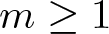 $m\geq1$,
 $a_t\big(t^mn-(t^2-1)/24\big)\equiv0\pmod{t^m}$, where
 $t\in\{5,7,11\}$. Let
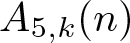
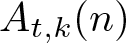 $A_{t,k}(n)$ denote the number of partition k-tuples of n with t-cores. Several scholars have been subsequently investigated congruence properties modulo high powers of 5 for
 $A_{5,k}(n)$ with
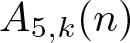
 $k\in\{2,3,4\}$. In this paper, by utilizing a recurrence related to the modular equation of fifth order, we establish dozens of congruence families modulo high powers of 5 satisfied by
 $A_{5,k}(n)$, where
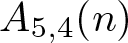
 $4\leq k\leq25$. Moreover, we deduce an infinite family of internal congruences modulo high powers of 5 for
 $A_{5,4}(n)$. In particular, we generalize greatly a recent result on a congruence family modulo high powers of 5 enjoyed by
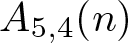 $A_{5,4}(n)$, which was proved by Saikia, Sarma and Talukdar (Indian J. Pure Appl. Math., 2024). Finally, we conjecture that there exists a similar phenomenon for
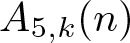 $A_{5,k}(n)$ with
 $k\geq26$.


A REMARK ON GENERALISED CUBIC PARTITIONS MODULO
 $5$
- Part of
-
- Journal:
- Bulletin of the Australian Mathematical Society / Volume 113 / Issue 1 / February 2026
- Published online by Cambridge University Press:
- 07 May 2025, pp. 68-72
- Print publication:
- February 2026
-
- Article
-
- You have access
- HTML
- Export citation
-
Amdeberhan et al. [‘Arithmetic properties for generalized cubic partitions and overpartitions modulo a prime’, Aequationes Math. (2024), doi:10.1007/s00010-024-01116-7] defined the generalised cubic partition function
 $a_c(n)$ as the number of partitions of n whose even parts may appear in
 $c\geq 1$ different colours and proved that
 $a_3(7n+4)\equiv 0\pmod {7}$ and
 $a_5(11n+10)\equiv 0\pmod {11}$ for all
 $n\geq 0$ via modular forms. Recently, the author [‘A note on congruences for generalized cubic partitions modulo primes’, Integers 25 (2025), Article no. A20] gave elementary proofs of these congruences. We prove in this note two infinite families of congruences modulo
 $5$ for
 $a_c(n)$ given by
 $$ \begin{align*} a_{25c+4}(25n+18)&\equiv 0\pmod{5},\\ a_{25c+9}(25n+8)&\equiv 0\pmod{5} \end{align*} $$
for all
 $c\geq 0$ and
 $n\geq 0$ using elementary q-series manipulations.


