To save content items to your account,
please confirm that you agree to abide by our usage policies.
If this is the first time you use this feature, you will be asked to authorise Cambridge Core to connect with your account.
Find out more about saving content to .
To save content items to your Kindle, first ensure no-reply@cambridge.org
is added to your Approved Personal Document E-mail List under your Personal Document Settings
on the Manage Your Content and Devices page of your Amazon account. Then enter the ‘name’ part
of your Kindle email address below.
Find out more about saving to your Kindle.
Note you can select to save to either the @free.kindle.com or @kindle.com variations.
‘@free.kindle.com’ emails are free but can only be saved to your device when it is connected to wi-fi.
‘@kindle.com’ emails can be delivered even when you are not connected to wi-fi, but note that service fees apply.
This chapter employs an archive that was counterinsurgent in its creation in order to tease out an insurgent narrative of the uprisings, spotlighting the demands and experiences of working people as it traces the spread of labor unrest across various plantations that year. The central argument is that despite racialized job segmentation, residential segregation, and disparate historical experiences, the unrest demonstrates active cooperation among the Black and Indian communities that confronted the sugar industry and colonial state. In this case, strong racial identities did not preclude joint action. The chapter demonstrates that laborers were not only aware of their position in the colonial economy, but also advanced a vision of modern politics and connected their interests to global concerns of their day, particularly the invasion of Ethiopia and ideas about communism.
Evangelical Christianity gave Phillis the means, motive, and opportunity to become a poet. She was writing poetry by 1765, a mere four years after she arrived in America. The poems she wrote in the next few years display an almost incredibly rapid improvement in her skills in versification. As a recently converted “Ethiop” she assumes the role of a lay preacher. Phillis experimented with various literary forms, such as allegory, as well as with rhyme patterns besides the rhymed couplets she uses in almost all her later poems. In response to the growing tensions between Britain and its North American colonies during the 1760s, Phillis began writing overtly political poems, creating what I call a proto-national American voice. Phillis’s persona alternates between identifying as African and as American in Phillis’s elegy on the death of George Whitefield in 1770. She uses the occasion to address contemporaneous religious and political issues. Republication of her elegy brought Phillis transatlantic recognition.
Memnon, a demigod, a Homeric hero, and a wise and fearless King of Ethiopia, appeared in many ancient Greek and Latin texts. Memnon was a key ally who came to the aid of King Priam of Troy and met his end in the Trojan War in a duel with Achilles, as Zeus, Thetis, and Eos looked on. Recently, a new play about Memnon was written by Will Power and produced by the Classical Theatre of Harlem under Director Carl Cofield at The J. Paul Getty Museum in California and at the Classical Theatre of Harlem’s venues in New York City. In this article, I will describe both the process and the resulting open-access teaching resources created by the National Committee for Latin and Greek in a joint project with the American Classical League in response to this new play, Memnon. Integral to our efforts is a call for continued collaboration with colleagues to help advance our goal of creating many more classroom-ready resources.
Severe mental illnesses (SMIs), including schizophrenia, bipolar disorder and major depressive disorder with psychotic features or severe functional impairment, are chronic psychiatric disorders associated with substantial disability, impaired functioning and premature mortality. Relapse, the recurrence or worsening of psychiatric symptoms after a period of remission, is a common feature of these disorders and contributes to repeated hospitalization, poor functional outcomes and increased healthcare utilization. Despite its clinical and public health importance, evidence on the lifetime occurrence of relapse and its associated factors remains limited in sub-Saharan Africa, particularly in Ethiopia. Therefore, this study aimed to determine the lifetime prevalence of relapse and identify factors associated with relapse among patients with SMI receiving outpatient psychiatric care in Northwest Ethiopia. An institution-based cross-sectional study was conducted among patients with SMI at the University of Gondar Hospital, Northwest Ethiopia, from April 10 to May 24, 2025. A total of 535 patients with SMI were included using systematic random sampling. Lifetime relapse was assessed using a semistructured interviewer-administered questionnaire supported by medical record review. Data on sociodemographic, clinical, treatment-related and psychosocial characteristics were collected. Binary logistic regression analysis was performed to identify factors associated with lifetime relapse. Variables with a p-value <0.20 in the bivariable analysis were entered into the multivariable model, and statistical significance was declared at p < 0.05. The lifetime prevalence of relapse was 61.5% (95% CI: 57.0%–66.0%). In the multivariable binary logistic regression analysis, lifetime relapse was significantly associated with unemployment (adjusted odds ratio [AOR] = 1.65; 95% CI: 1.07–2.55), bipolar disorder (AOR = 3.71; 95% CI: 1.92–7.19), schizophrenia (AOR = 2.73; 95% CI: 1.68–4.46), previous psychiatric hospitalization (AOR = 3.62; 95% CI: 2.26–5.80), two or more prior psychiatric admissions (AOR = 2.32; 95% CI: 1.27–4.23), illness duration of more than 10 years (AOR = 2.04; 95% CI: 1.07–3.88), comorbid medical illness (AOR = 2.41; 95% CI: 1.27–4.58) and experiencing one or two (AOR = 1.81; 95% CI: 1.03–3.18) or three or more stressful life events (AOR = 2.16; 95% CI: 1.16–4.05). Lifetime relapse affected nearly two-thirds of patients with SMI. Factors associated with relapse included unemployment, bipolar disorder, schizophrenia, previous psychiatric hospitalization, multiple prior admissions, longer illness duration, comorbid medical illness and stressful life events. These findings highlight the importance of targeted clinical monitoring and interventions for individuals with characteristics associated with relapse, alongside strengthened continuity of care and integrated mental health services to support relapse prevention and improve long-term outcomes.
Pregnancy is a critical period when women are particularly vulnerable to nutritional deficiencies. However, limited evidence exists on nutritional knowledge, dietary practices, and associated factors among pregnant women in the study area.
Aim:
To assess nutritional knowledge, dietary practice, and associated factors among pregnant women in Halaba town.
Methods:
A concurrent mixed-methods cross-sectional study was conducted in Halaba Town from August 2 to November 25, 2025. Quantitative data were collected from 403 randomly selected pregnant women, while qualitative data were obtained from five FGDs with 35 purposively selected participants. Data were collected through face-to-face interviews and analyzed using descriptive and thematic analyses.
Results:
Of the 403 selected participants, 398 pregnant women completed the study, yielding a response rate of 97.7%. Half of the respondents (51%) had good nutritional knowledge, yet only 42.4% of pregnant women reported practicing healthy dietary behaviors. Educational status (AOR: 2.0; 95% CI: 1.3–4.2), pregnancy status (AOR: 2.3; 95% CI: 1.5–4.5), and nutritional information (AOR: 3.1; 95% CI: 1.5–4.9) were significantly associated with nutritional knowledge. Educational status (AOR: 1.9; 95% CI: 1.4–4.3), nutritional information (AOR: 3.9; 95% CI: 2.5–7.9), occupational status (AOR: 1.7; 95% CI: 1.3–4.1), and food security status (AOR: 1.9; 95% CI: 1.5–5.4) were significantly associated with dietary practices. Qualitative findings showed that cultural food taboos and economic constraints limited dietary diversity, while spousal support, shared decision-making, and home gardening promoted healthier dietary practices.
Despite growing recognition as a public health concern, the burden of autism spectrum disorder (ASD) in Ethiopia remains poorly characterised owing to limited diagnostic capacity and epidemiological data, hampering evidence-based policy and intervention planning.
Aims
This study aimed to quantify the longitudinal burden of ASD in the Ethiopian paediatric population from 1990 to 2023 and project future trends to 2050 to inform national health strategies.
Method
Using Global Burden of Disease (GBD) 2023 data, we estimated ASD prevalence, incidence and disability-adjusted life-years (DALYs) among Ethiopian children and adolescents. Trends were analysed using joinpoint regression and future burden was forecast to 2050 using autoregressive integrated moving average (ARIMA) modelling.
Results
Between 1990 and 2023, ASD prevalence increased by 155%, from 271 805 to 693 644 cases. Correspondingly, the age-standardised prevalence rate increased from 950 to 1185 cases per 100 000 population. Although annual incident cases nearly doubled (from 24 576 to 47 274), the age-standardised incidence rate declined slightly from 86 to 81 cases per 100 000. DALYs increased by 162% to 134 386 in 2023, while the age-standardised DALY rate increased from 179 to 230 per 100 000. Projections to 2050 suggest that the overall ASD burden will persist, with a stable incidence rate but an increasing DALY rate.
Conclusions
Nearly 700 000 Ethiopian children and adolescents were living with ASD in 2023. The significant increases in prevalence and DALYs over three decades underscore the urgent need for a comprehensive national strategy, including enhanced diagnostic infrastructure and early intervention programmes.
Chapter 6 examines migration management aid in Ethiopia – a semi-democracy. Ethiopia’s history of foreign aid and migration is intertwined with intra-regional conflicts, the politicization of famine, and forced resettlement in service of centralizing control and statebuilding. The EU and its member states built on shifting alliances throughout the 1990s and 2000s to become the largest humanitarian and development donors in Ethiopia, all while pushing European interests in the region and overlooking the government’s human rights record. The EUTF grants fit within this pattern of conditional aid in which the EU dangled the carrot of €281 million, in exchange for ambitious promises to reform refugee protection. By the end of 2023, Prime Minister Abiy Ahmed, winner of the 2019 Nobel Peace Prize, had fought a devastating war in the Tigray region, relocated refugee camps, blocked aid to displaced people in Tigray, and redirected economic investments toward his allies. In the case of Ethiopia, migration management aid was used to tie domestic actors to central authorities in the refugee agency (pathway III), and ultimately to redirect aid away from Tigray (pathway II).
This study aimed to assess self-care practices for puerperal sepsis prevention and their determinants among postpartum women in Halaba Town, Central Ethiopia.
Background:
Self-care is the ability to maintain health, prevent disease, and manage illness with or without the support of healthcare personnel. Current evidence indicates a high burden of puerperal sepsis in East Africa, including Ethiopia. However, evidence on self-care practices for the prevention of puerperal sepsis and their determinants in the study setting remains limited.
Methods:
A community-based cross-sectional study was conducted among postpartum women in Halaba Town from February 1 to March 30, 2025. Data were collected through face-to-face, interviewer-administered questionnaires. Bivariable and multivariable logistic regression analyses were performed to identify determinants of self-care practices; statistical significance was set at a p-value of less than 0.05.
Findings:
In the present study, 413 study participants were interviewed, resulting in a response rate of 98.3%. The prevalence of good self-care practice was 43.8% (95% CI: 39.1%–48.5%). Women’s occupation (adjusted odds ratio (AOR) = 2.01; 95% CI: 1.23–3.57), educational attainment (AOR = 2.30; 95% CI: 1.46–7.93), antenatal care (ANC) contact (AOR = 2.73; 95% CI: 1.65–4.71), and women’s knowledge (AOR = 3.30; 95% CI: 2.32–10.42) were determinants of self-care practices for puerperal sepsis prevention.
Conclusion:
The findings revealed that more than half of postpartum women had poor self-care practices for the prevention of puerperal sepsis. Hence, strengthening ANC contact, targeting women with low educational status and unemployed women, and improving women’s knowledge may help to enhance awareness and prevention of puerperal sepsis.
Drawing on an extensive examination of primary sources, this paper considers the persistent tensions between state-led development and local agencies in Humera—a northwestern Ethiopian borderland—during the Derg regime. It explores how developmental projects in the contested borderlands have been shaped more by ideological showcase than by the pursuit of an efficient production system. As part of its agrarian reform, the Derg nationalized private commercial farmlands in Setit Humera and converted them into state farms. Employing peasant militia labor, a centralized administrative approach, and overlooking unique local conditions, the Derg launched the Humera State Farm not only for economic objectives but also to assert state authority in a politically contested frontier region. Despite substantial political attention, the state farm sparked multifaceted tensions and proved ineffective. Its final collapse in 1990 was ultimately driven by geopolitical conflict, as the farm became entangled in regional struggles involving the Tigray People’s Liberation Front and Sudan’s proxy actions against the Derg.
Chapter 5 explores the sharper edges of China’s image-making and illuminates the subtle, multifaceted silencing that permeates China’s diplomacy. The experiences of Ethiopian journalists, PR professionals, officials, and scholars point to the core feature of censorship as controlled information release. This includes proactive selective publicity and information withdrawals, as well as spontaneous and reactive silencing, at times carried out by non-state actors. Ethiopian elites reinforce the efforts of Chinese stakeholders and co-discipline China narratives out of their own strategic interest in upholding a positive relationship with China. At the same time, in private spaces, these same elites also articulate and spread negative stories about China through satire and rumors.
Chapter 6 brings in a transnational dimension to the study of China’s image-making in Ethiopia by examining the role of the West in conditioning this encounter. Drawing on interviews with core participants in Chinese initiatives, including Ethiopian elites and Chinese diplomatic professionals, the analysis reveals their shared aspirations for the West, and especially for the United States. Ethiopian participants tend to treat the West as a quality marker, and China as a secondary choice, and at times even as a pathway to experiencing the West. Ironically, Chinese soft power promoters also appear to uphold and aspire to Western hierarchies and use Ethiopia and Africa as a channel toward more desired professional destinations in the West. While Chinese official narratives invoke competition with the West, the actual participants in the Sino-African encounter still strive to be part of it.
Chapter 1 grounds this study in larger policy and theoretical debates, including literature on US-China competition, China’s authoritarian diffusion, South–South communication flows, and China–Africa relations. It further introduces the analytical and conceptual framework of this study: China’s uneven image-making in Africa, which includes its ambitious image promotion mechanisms, as well as disjointed implementation and reception on the ground. The chapter also explains the methodological choices, including the focus on Ethiopia and Global China ethnographic approach.
Chapter 3 delves into the material facet of China’s image-making or attraction through tangible offerings. Drawing on the analysis of China’s core diplomatic initiatives in Ethiopia, namely elite training and education diplomacy, Confucius Institutes, and media outreach, the chapter illuminates how offering access to opportunities and resources is at the heart of initiating participants into China. It also examines the uneven deployment of “tangible enticement” by demonstrating how Chinese actors, including embassy personnel and Confucius Institute directors, amongst others, are at once strategic and methodical about presenting targeted opportunities, as well as spontaneous and hands-off in promoting and allocating resources. The chapter then analyzes the reception from Ethiopian target audiences, finding a mix of opportunistic engagement and negotiation of China’s offerings.
Chapter 7 summarizes the core findings of this book and positions them in a larger comparative context by examining how they translate to other contexts in Africa and in the Global South. The chapter further discusses future research pathways in the field of China’s soft power in the Global South, including comparative directions, and provides some practical considerations for policymakers.
Chapter 4 engages with China’s ideational power as part of its image-making in Ethiopia, and more broadly in Africa. The chapter directly speaks to the ongoing debates about the export of the China model to the Global South by delving into the content of and perceptions toward China’s official training programs of African elites. Rather than exporting a model, I find that Chinese educators and officials attempt to legitimize China’s governance (both domestic and global) and to show off China. The actual delivery of these trainings carries some consistency, such as the presentation of China as an alternative type of democracy, as well as some arbitrary content diffusion in specific governance domains like journalism. Far from passively buying into the “China model,” Ethiopian participants soften their perceptions of China, but also negotiate and reject some of its persuasion narratives and strategies.
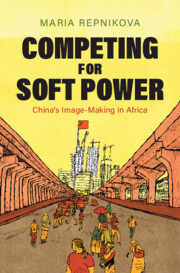
Through the critical case study of Ethiopia, Maria Repnikova examines the ambitious but disjointed display of Chinese diplomatic influence in Africa. In doing so, she develops a new theoretical approach to understanding China's practice of soft power, identifying the core mechanisms as tangible enticement with material and experiential offerings, ideational promotion of values, visions, and governance practices, and censorial power over the production and dissemination of China narratives. Through in-depth field work, including interviews and focus groups, Repnikova builds a clear picture of the uneven implementation and reception of this image-making, in which Chinese messengers can improvise official agendas, and Ethiopian recipients can strategically appropriate and negotiate Chinese power. Contrary to popular claims about China replacing the West in the Global South, this innovative research reveals the successes, but also the inconsistencies and limitations of Chinese influence, as well as the ever-present shadow of the West in mediating soft-power encounters.
This chapter deals with the institutional history of Nuer Christianity and examines how various interconnections that were made possible through people’s movement across the frontierlands contributed to the development of churches and the circulation of Christian knowledge. It starts in the early twentieth century with the coming of missionaries to southern Sudan and explores the introduction of Seventh-day Adventism in the 1970s and the consequent emergence of Messianic groups out of the Adventist church since the 1990s. The chapter demonstrates how claims of biblical authenticity (that is, of being the ’true church’) fuelled schisms and institutional fragmentation. The chapter is concerned with both the history and proliferation of Messianic institutions in Gambella, and the ways in which Messianics thought about the history and biblical indexicality of their churches, as institutions that traced their roots to the Holy Bible.
This chapter explores Nuer experiences of encountering the urban frontier and the Ethiopian state in the borderlands. It does so by tracing the history and evolution of Gambella town and Newland, the Nuer dominated peri-urban settlement at its eastern edges. Newland has long been a place that attracted people seeking modern education and links with new actors and institutions. Over the past two decades, this peri-urban settlement expanded significantly and emerged as an important node in global Nuer networks. The chapter highlights the salience of fears of manipulation, trickery, and embarrassment in people’s engagements with the urban frontier, and central role such sentiments played in motivating people’s quest for education, knowledge, and global connectivity in the urban environment. The attitudes concerning learning and modern education that this chapter explores are essential for understanding the religious dynamics described in the rest of the book.
While there were some aspects of Nuer ‘tradition’ or ‘culture’ that Messianics in Gambella proudly endorsed and celebrated as biblically authentic, others were rejected as ‘pagan’ or satanic. In this chapter, I turn to the relationship between Messianic Judaism and ‘Nuer customary law’, to explain these dynamics. The chapter traces the process through which the spiritual significance of cattle declined, under the influence of the secular state, and instead, under born-again Christian doctrines, the individual human (body and soul) emerged as the prime means of communicating with God. Cattle in its desacralised form, however, was still used by Messianics for bridewealth payments, and they insisted that their marriage practices were not only the most loyal to Nuer ‘tradition’ but also biblically authentic. The chapter offers new insights on the endurance of pre-Christian practices among African born-again Christians, showing how old ‘customs’ may be deemed relevant and meaningful even under a radically new regime of spiritual mediation.