Refine search
Actions for selected content:
23 results
12 - Everyday Life in the Frankish East
- from Part II - Society, Culture and Warfare in the Latin East
-
-
- Book:
- The Cambridge History of the Crusades
- Published online:
- 24 September 2026
- Print publication:
- 19 November 2026, pp 332-353
-
- Chapter
- Export citation
Are broad sustainability practices sufficient to support wild bees? A case study in cool-climate vineyards
-
- Journal:
- Renewable Agriculture and Food Systems / Volume 41 / 2026
- Published online by Cambridge University Press:
- 16 July 2026, e30
-
- Article
-
- You have access
- Open access
- HTML
- Export citation
Patterns and clusters of pesticide reduction strategies in Swiss viticulture
-
- Journal:
- Journal of Wine Economics / Volume 21 / Issue 3 / August 2026
- Published online by Cambridge University Press:
- 14 April 2026, pp. 214-243
-
- Article
-
- You have access
- Open access
- HTML
- Export citation
3 - Medical or Culinary Recipes?
- from Part I - Philological and Literary Insights
-
-
- Book:
- Latin Texts on Papyrus and the Study of Classics
- Published online:
- 12 December 2025
- Print publication:
- 08 January 2026, pp 82-95
-
- Chapter
- Export citation
Electric weed control—how does it compare to conventional weed control methods?
-
- Journal:
- Weed Science / Volume 73 / Issue 1 / 2025
- Published online by Cambridge University Press:
- 11 June 2025, e46
-
- Article
-
- You have access
- Open access
- HTML
- Export citation
Determinants of the adoption of fungus-resistant grapevines: Evidence from Switzerland
-
- Journal:
- Journal of Wine Economics / Volume 19 / Issue 3 / August 2024
- Published online by Cambridge University Press:
- 29 April 2024, pp. 232-264
-
- Article
-
- You have access
- Open access
- HTML
- Export citation
Introduction
-
- Book:
- Race, Taste and the Grape
- Published online:
- 16 March 2024
- Print publication:
- 28 March 2024, pp 1-36
-
- Chapter
- Export citation
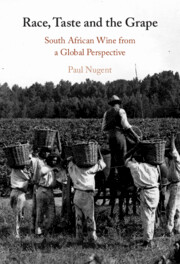
Race, Taste and the Grape
- South African Wine from a Global Perspective
-
- Published online:
- 16 March 2024
- Print publication:
- 28 March 2024
6 - The Mareotis Area
-
-
- Book:
- The Nile Delta
- Published online:
- 15 February 2024
- Print publication:
- 22 February 2024, pp 219-248
-
- Chapter
- Export citation
Vine variety identification through leaf image classification: a large-scale study on the robustness of five deep learning models
-
- Journal:
- The Journal of Agricultural Science / Volume 162 / Issue 1 / February 2024
- Published online by Cambridge University Press:
- 12 February 2024, pp. 19-32
-
- Article
-
- You have access
- Open access
- HTML
- Export citation
Making wine in earthenware vessels: a comparative approach to Roman vinification
-
- Article
-
- You have access
- HTML
- Export citation
Potential use of weather derivatives in hedging aggregate viticulture yields: An analysis of the Niagara region of Canada
-
- Journal:
- Journal of Wine Economics / Volume 18 / Issue 2 / May 2023
- Published online by Cambridge University Press:
- 15 November 2023, pp. 97-121
-
- Article
-
- You have access
- Open access
- HTML
- Export citation
Chapter 8 - Viticulture versus Arboriculture
-
- Book:
- Plants, Politics and Empire in Ancient Rome
- Published online:
- 06 October 2022
- Print publication:
- 13 October 2022, pp 276-297
-
- Chapter
- Export citation
Viticulture, opus doliare, and the patrimonium Caesaris at the Roman imperial estate at Vagnari (Puglia)
-
- Journal:
- Journal of Roman Archaeology / Volume 35 / Issue 1 / June 2022
- Published online by Cambridge University Press:
- 07 January 2022, pp. 221-246
- Print publication:
- June 2022
-
- Article
-
- You have access
- Open access
- HTML
- Export citation
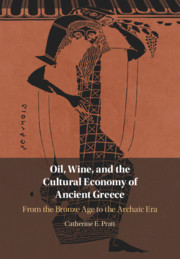
Oil, Wine, and the Cultural Economy of Ancient Greece
- From the Bronze Age to the Archaic Era
-
- Published online:
- 19 March 2021
- Print publication:
- 18 March 2021
The Impact of the European Grapevine Moth on Grape Production: Implications for Eradication Programs
-
- Journal:
- Journal of Wine Economics / Volume 15 / Issue 4 / November 2020
- Published online by Cambridge University Press:
- 05 January 2021, pp. 394-402
-
- Article
-
- You have access
- HTML
- Export citation
Wine with a Bouquet of Biodiversity: Assessing Agricultural Adoption of Conservation Practices in Chile
-
- Journal:
- Environmental Conservation / Volume 46 / Issue 1 / March 2019
- Published online by Cambridge University Press:
- 18 September 2018, pp. 34-42
-
- Article
-
- You have access
- HTML
- Export citation
Climate Change and Wine: A Review of the Economic Implications*
-
- Journal:
- Journal of Wine Economics / Volume 11 / Issue 1 / May 2016
- Published online by Cambridge University Press:
- 14 June 2016, pp. 105-138
-
- Article
-
- You have access
- HTML
- Export citation
Global Climate Change, Sustainability, and Some Challenges for Grape and Wine Production*
-
- Journal:
- Journal of Wine Economics / Volume 11 / Issue 1 / May 2016
- Published online by Cambridge University Press:
- 14 June 2016, pp. 181-200
-
- Article
-
- You have access
- HTML
- Export citation
Climate Change, California Wine, and Wildlife Habitat*
-
- Journal:
- Journal of Wine Economics / Volume 11 / Issue 1 / May 2016
- Published online by Cambridge University Press:
- 10 December 2014, pp. 69-87
-
- Article
-
- You have access
- HTML
- Export citation
