Contents
Article
Coloring invariants for links in
 $\Sigma _g\times S^1$
-
- Published online by Cambridge University Press:
- 05 March 2025, pp. 927-938
-
- Article
-
- You have access
- HTML
- Export citation
-
Let
 $\Sigma _g$ be a closed oriented surface of genus g. In this article, we discuss how to define coloring invariants and their generalizations for links in
 $\Sigma _g\times S^1$.


Class groups and Selmer groups in special families
- Part of:
-
- Published online by Cambridge University Press:
- 10 June 2025, pp. 1315-1337
-
- Article
-
- You have access
- HTML
- Export citation
Volterra operators between Hardy spaces of vector-valued Dirichlet series
- Part of:
-
- Published online by Cambridge University Press:
- 09 January 2025, pp. 286-300
-
- Article
-
- You have access
- HTML
- Export citation
-
Let
 $2\leq p<\infty $ and X be a complex infinite-dimensional Banach space. It is proved that if X is p-uniformly PL-convex, then there is no nontrivial bounded Volterra operator from the weak Hardy space
 $\mathscr {H}^{\text {weak}}_p(X)$ to the Hardy space
 $\mathscr {H}^+_p(X)$ of vector-valued Dirichlet series. To obtain this, a Littlewood–Paley inequality for Dirichlet series is established.


Torsion points and concurrent exceptional curves on del Pezzo surfaces of degree one
- Part of:
-
- Published online by Cambridge University Press:
- 12 December 2024, pp. 634-652
-
- Article
-
- You have access
- Open access
- HTML
- Export citation
-
The blow-up of the anticanonical base point on a del Pezzo surface S of degree 1 gives rise to a rational elliptic surface
 $\mathscr {E}$ with only irreducible fibers. The sections of minimal height of
 $\mathscr {E}$ are in correspondence with the
 $240$ exceptional curves on S. A natural question arises when studying the configuration of these curves: if a point on S is contained in “many” exceptional curves, is it torsion on its fiber on
 $\mathscr {E}$? In 2005, Kuwata proved for the analogous question on del Pezzo surfaces of degree
 $2$, where there are 56 exceptional curves, that if “many” equals
 $4$ or more, the answer is yes. In this paper, we prove that for del Pezzo surfaces of degree 1, the answer is yes if ‘many’ equals
 $9$ or more. Moreover, we give counterexamples where a non-torsion point lies in the intersection of
 $7$ exceptional curves. We give partial results for the still open case of 8 intersecting exceptional curves.


On spectra of Hankel operators on the polydisc
- Part of:
-
- Published online by Cambridge University Press:
- 09 January 2025, pp. 301-317
-
- Article
-
- You have access
- Open access
- HTML
- Export citation
Relative cell complexes in closure spaces
- Part of:
-
- Published online by Cambridge University Press:
- 20 June 2025, pp. 1338-1346
-
- Article
-
- You have access
- HTML
- Export citation
Hilbert’s 10th problem via Mordell curves
- Part of:
-
- Published online by Cambridge University Press:
- 26 February 2025, pp. 939-949
-
- Article
-
- You have access
- HTML
- Export citation
-
We show that for
 $5/6$-th of all primes p, Hilbert’s 10th problem is unsolvable for the ring of integers of
 $\mathbb {Q}(\zeta _3, \sqrt [3]{p})$. We also show that there is an infinite set S of square-free integers such that Hilbert’s 10th problem is unsolvable over the ring of integers of
 $\mathbb {Q}(\zeta _3, \sqrt {D}, \sqrt [3]{p})$ for every
 $D \in S$ and for every prime
 $p \equiv 2, 5\ \pmod 9$. We use the CM elliptic curves
 $y^2=x^3-432 D^2$ associated with the cube-sum problem, with D varying in suitable congruence class, in our proof.


Front Cover (OFC, IFC) and matter
BCM volume 68 issue 2 Cover and Front matter
-
- Published online by Cambridge University Press:
- 23 April 2025, pp. f1-f4
-
- Article
-
- You have access
- Export citation
Article
On the perimeter, diameter and circumradius of ordinary hyperbolic reduced polygons
- Part of:
-
- Published online by Cambridge University Press:
- 28 February 2025, pp. 950-965
-
- Article
-
- You have access
- Open access
- HTML
- Export citation
-
A convex body R in the hyperbolic plane is called reduced if any convex body
 $K\subset R$ has a smaller minimal width than R. We answer a few of Lassak’s questions about ordinary reduced polygons regarding its perimeter, diameter, and circumradius, and we also obtain a hyperbolic extension of a result of Fabińska.

Nearly invariant Brangesian subspaces
- Part of:
-
- Published online by Cambridge University Press:
- 07 January 2025, pp. 318-337
-
- Article
-
- You have access
- HTML
- Export citation
-
This article describes Hilbert spaces contractively contained in certain reproducing kernel Hilbert spaces of analytic functions on the open unit disc which are nearly invariant under division by an inner function. We extend Hitt’s theorem on nearly invariant subspaces of the backward shift operator on
 $H^2(\mathbb {D})$ as well as its many generalizations to the setting of de Branges spaces.

Existence-uniqueness theory and small-data decay for a reaction-diffusion model of wildfire spread
- Part of:
-
- Published online by Cambridge University Press:
- 08 July 2025, pp. 1347-1358
-
- Article
-
- You have access
- HTML
- Export citation
-
I examine some analytical properties of a nonlinear reaction-diffusion system that has been used to model the propagation of a wildfire. I establish global-in-time existence and uniqueness of bounded mild solutions to the Cauchy problem for this system given bounded initial data. In particular, this shows that the model does not allow for thermal blow-up. If the initial temperature and fuel density also satisfy certain integrability conditions, the spatial
 $L^2$-norms of these global solutions are uniformly bounded in time. Additionally, I use a bootstrap argument to show that small initial temperatures give rise to solutions that decay to zero as time goes to infinity, proving the existence of initial states that do not develop into traveling combustion waves.

Back Cover (OBC, IBC) and matter
BCM volume 68 issue 2 Cover and Back matter
-
- Published online by Cambridge University Press:
- 23 April 2025, pp. b1-b2
-
- Article
-
- You have access
- Export citation
Article
Equivalences of stable categories of Gorenstein local rings
- Part of:
-
- Published online by Cambridge University Press:
- 08 January 2025, pp. 338-348
-
- Article
-
- You have access
- HTML
- Export citation
Moments of the free Jacobi process: A matrix approach
- Part of:
-
- Published online by Cambridge University Press:
- 10 March 2025, pp. 966-991
-
- Article
-
- You have access
- HTML
- Export citation
-
We compute the large size limit of the moment formula derived in [14] for the Hermitian Jacobi process at fixed time. Our computations rely on the polynomial division algorithm which allows to obtain cancellations similar to those obtained in [3, Lemma 3]. In particular, we identify the terms contributing to the limit and show they satisfy a double recurrence relation. We also determine explicitly some of them and revisit a special case relying on Carlitz summation identity for terminating
 $1$-balanced
 ${}_4F_3$ functions taken at unity.


Steiner Coset Partitions of Groups
- Part of:
-
- Published online by Cambridge University Press:
- 24 June 2025, pp. 1359-1373
-
- Article
-
- You have access
- Open access
- HTML
- Export citation
-
A coset partition of a group G is a set partition of G into finitely many left cosets of one or more subgroups. A driving force in this research area is the Herzog–Schönheim Conjecture [15], which states that any nontrivial coset partition of a group contains at least two cosets with the same index. Although many families of groups have been shown to satisfy the conjecture, it remains open.
A Steiner coset partition of G, with respect to distinct subgroups
 $H_1,\dots ,H_r$, is a coset partition of G that contains exactly one coset of each
 $H_i$. In the quest of a more structural version of the Herzog–Schönheim Conjecture, it was shown that there is no Steiner coset partition of G with respect to any
 $r\geq 2$ subgroups
 $H_i$ that mutually commute [1]. In this article, we show that this result holds for
 $r=4$ mutually commuting subgroups provided that G does not have
 $C_2\times C_2\times C_2$ as a quotient, where
 $C_2$ is the cyclic group of order
 $2$. We further give an explicit construction of Steiner coset partitions of the n-fold direct product
 $G^*=C_p\times \ldots \times C_p$ for p prime and
 $n\geq 3$. This construction lifts to every group extension of
 $G^*$.


Compact elements and the hypocompact radical of crossed products
- Part of:
-
- Published online by Cambridge University Press:
- 07 January 2025, pp. 349-358
-
- Article
-
- You have access
- Open access
- HTML
- Export citation
-
We characterize the compact elements and the hypocompact radical of a crossed product
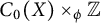 $C_0(X)\times _\phi \mathbb Z$, where X is a locally compact metrizable space and
 $\phi :X\rightarrow X$ is a homeomorphism, in terms of the corresponding dynamical system
 $(X,\phi )$.


Generalized Knill–Laflamme theorem for families of isoclinic subspaces
- Part of:
-
- Published online by Cambridge University Press:
- 17 March 2025, pp. 992-1010
-
- Article
-
- You have access
- Open access
- HTML
- Export citation
Functional separation solutions of the sinh-Gordon type equations
- Part of:
-
- Published online by Cambridge University Press:
- 26 June 2025, pp. 1374-1388
-
- Article
-
- You have access
- HTML
- Export citation
Bridging colorings of virtual links from virtual biquandles to biquandles
-
- Published online by Cambridge University Press:
- 14 March 2025, pp. 1011-1024
-
- Article
-
- You have access
- HTML
- Export citation
Smoothing surfaces on fourfolds
- Part of:
-
- Published online by Cambridge University Press:
- 20 June 2025, pp. 1389-1410
-
- Article
-
- You have access
- Open access
- HTML
- Export citation
-
If
 ${\mathcal {E}}, {\mathcal {F}}$ are vector bundles of ranks
 $r-1,r$ on a smooth fourfold X and
 $\mathop {\mathcal Hom}({\mathcal {E}},{\mathcal {F}})$ is globally generated, it is well known that the general map
 $\phi : {\mathcal {E}} \to {\mathcal {F}}$ is injective and drops rank along a smooth surface. Chang improved on this with a filtered Bertini theorem. We strengthen these results by proving variants in which (a)
 ${\mathcal {F}}$ is not a vector bundle and (b)
 $\mathop {\mathcal Hom}({\mathcal {E}},{\mathcal {F}})$ is not globally generated. As an application, we give examples of even linkage classes of surfaces on
 $\mathbb P^4$ in which all integral surfaces are smoothable, including the linkage classes associated with the Horrocks–Mumford surface.


