We partner with a secure submission system to handle manuscript submissions.
Please note:
Click Proceed to submission system to continue to our partner's website.
Dry-snow slab avalanche release is initiated by a failure in a buried weak layer. Quantifying the multiaxial strength of weak snow layers is therefore essential, yet field measurements remain scarce compared to laboratory or numerical studies. We developed a mobile testing machine to quantify the multiaxial strength of weak snow layers in the field. We measured the strength of two layers of buried surface hoar: SH24 (43 samples) and SH25 (75 samples), and derived the corresponding failure envelopes. Even though the strength values exhibited considerable scatter, the data were described by an elliptical failure envelope. Compressive strength exceeded shear strength for both layers, with higher strength values for SH24 ( $\sigma_\mathrm{c} = 7.9 \pm 0.6\,\mathrm{kPa}$,
 $\tau_\mathrm{c} = 5.8 \pm 0.4\,\mathrm{kPa}$) compared to SH25 (
 $\sigma_\mathrm{c} = 5.0 \pm 0.3\,\mathrm{kPa}$,
 $\tau_\mathrm{c} = 3.5 \pm 0.2\,\mathrm{kPa}$). Micro-computed tomography analysis revealed differences in microstructural parameters, most notably indicating that SH25 had a finer and more connected structure. Video-based digital image correlation showed that the effective strain rates in the weak layers were on the order of 10
 $^{-3}$ s
 $^{-1}$ and typically larger in shear than in compression. This work provides multiaxial strength data of weak layers, valuable for comparison with laboratory experiments and for informing numerical models.
Glaciers are critical freshwater reservoirs in the Central Andes. Although supraglacial debris covers over 40% of the glacierised area in the Atlantic basins, the long-term surface evolution of debris-covered glaciers remains poorly constrained. In this study, we quantify glacier surface evolution over four decades (1985–2024) for 229 debris-covered glaciers across five major Atlantic basins in the Central Andes. Using ANDESMAG, a Python-based decision-tree algorithm employing spectral thresholds, we analysed more than 60 000 Landsat and Sentinel-2 image tiles in Google Earth Engine. Overall, debris-covered area increased by 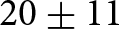 $20\pm11$% and debris-emergence elevation rose by
 $122\pm99$ m, while snowline altitude at the end of summer increased by
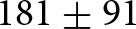 $181\pm91$ m and snow-cover ratio declined by
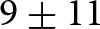 $9\pm11$%. Most of these changes occurred after 2009, during the Central Andes Megadrought, and correlated more strongly with declining precipitation than with rising air temperature. Our open-access workflow, which achieves a classification accuracy of 94%, provides the first annual regional assessment of debris-covered glacier surface evolution in the Central Andes of Argentina. Our results highlight the vulnerability of debris-covered glaciers to ongoing climate change and offer a transferable tool applicable to glacierised mountain regions worldwide.