Refine search
Actions for selected content:
103 results
Degree of the Gaussian graphical model of the cycle
- Part of
-
- Journal:
- Forum of Mathematics, Sigma / Volume 14 / 2026
- Published online by Cambridge University Press:
- 27 October 2026, e144
-
- Article
-
- You have access
- Open access
- HTML
- Export citation
COMPLETING THE REDUCED WORD CRITERION IN FINITE WEYL TYPES
- Part of
-
- Journal:
- Bulletin of the Australian Mathematical Society , First View
- Published online by Cambridge University Press:
- 19 October 2026, pp. 1-10
-
- Article
-
- You have access
- HTML
- Export citation
-
Hodges and Yong [‘Coxeter combinatorics and spherical Schubert geometry’, J. Lie Theory 32 (2022), 447–474] proposed a reduced word criterion for Levi spherical Schubert varieties. It was proved in type A and in rank two, while counterexamples were found in types $D_4$
 and $F_4$
 . A later standard Coxeter element criterion settled Levi sphericity in every finite Lie type, but whether the original criterion remained valid in types B and C was still open. We prove that the two criteria agree in both families. These are the last unresolved infinite Weyl families. Consequently, the original reduced word criterion characterises Levi sphericity for every Weyl group element and every allowed Levi subgroup precisely in types A, B, C and $G_2$
 . The paper completes the classification of irreducible finite Weyl types for which the original criterion is valid.


SEMIINFINITE SHEAVES ON AFFINE FLAG VARIETIES
- Part of
-
- Journal:
- Journal of the Institute of Mathematics of Jussieu / Volume 25 / Issue 6 / November 2026
- Published online by Cambridge University Press:
- 23 September 2026, pp. 3363-3433
- Print publication:
- November 2026
-
- Article
-
- You have access
- HTML
- Export citation
-
We study a category of semiinfinite sheaves on the affine flag variety of a connected reductive algebraic group G, with coefficients in a field $\Bbbk $
 (of arbitrary characteristic different from that of the base field), generalizing some results of Gaitsgory and showing that this category behaves like familiar categories of sheaves on flag varieties in many respects. Our interest is motivated by expected relations with representation theory of the Lie algebra of the Langlands dual reductive group over $\Bbbk $
 .


GEOMETRIC EXTENSIONS AND THE SIX FUNCTOR FORMALISM
- Part of
-
- Journal:
- Bulletin of the Australian Mathematical Society / Volume 114 / Issue 3 / December 2026
- Published online by Cambridge University Press:
- 10 August 2026, p. 557
- Print publication:
- December 2026
-
- Article
-
- You have access
- HTML
- Export citation
NONEMPTINESS OF SINGLE AFFINE DELIGNE-LUSZTIG VARIETIES
- Part of
-
- Journal:
- Journal of the Institute of Mathematics of Jussieu / Volume 25 / Issue 5 / September 2026
- Published online by Cambridge University Press:
- 31 July 2026, pp. 2973-2998
- Print publication:
- September 2026
-
- Article
-
- You have access
- Open access
- HTML
- Export citation
Characteristic numbers and chromatic polynomial of a tensor
- Part of
-
- Journal:
- Forum of Mathematics, Sigma / Volume 14 / 2026
- Published online by Cambridge University Press:
- 20 July 2026, e108
-
- Article
-
- You have access
- Open access
- HTML
- Export citation
The quasisymmetric flag variety: A toric complex on noncrossing partitions
- Part of
-
- Journal:
- Forum of Mathematics, Pi / Volume 14 / 2026
- Published online by Cambridge University Press:
- 10 July 2026, e18
-
- Article
-
- You have access
- Open access
- HTML
- Export citation
Horospherical subgroups in positive characteristic
- Part of
-
- Journal:
- Canadian Mathematical Bulletin , First View
- Published online by Cambridge University Press:
- 09 July 2026, pp. 1-28
-
- Article
-
- You have access
- HTML
- Export citation
-
We investigate horospherical homogeneous spaces – a class of spherical homogeneous spaces encompassing both flag varieties and algebraic tori – over algebraically closed fields of characteristic $p>0$
 , and establish their complete classification for $p> 2$
 .


Singularities of Steinberg deformation rings
- Part of
-
- Journal:
- Forum of Mathematics, Sigma / Volume 14 / 2026
- Published online by Cambridge University Press:
- 08 July 2026, e97
-
- Article
-
- You have access
- Open access
- HTML
- Export citation
-
Let l and p be distinct primes, let F be a local field with residue field of characteristic p, and let $\mathfrak {X}$
 be the irreducible component of the moduli space of Langlands parameters for $GL_3$
 over $\mathbb {Z}_l$
 corresponding to parameters of Steinberg type. We show that $\mathfrak {X}$
 is Cohen–Macaulay and compute explicit equations for it. We also compute the Weil divisor class group of the special fibre of $\mathfrak {X}$
 , motivated by work of Manning for $GL_2$
 . Our methods involve the calculation of the cohomology of certain vector bundles on the flag variety, and build on work of Snowden, Vilonen–Xue, and Ngo.


A gluing operation for dimer quivers
- Part of
-
- Journal:
- Glasgow Mathematical Journal , First View
- Published online by Cambridge University Press:
- 11 June 2026, pp. 1-31
-
- Article
-
- You have access
- Open access
- HTML
- Export citation
Integral models of Shimura varieties with parahoric level structure, II
- Part of
-
- Journal:
- Forum of Mathematics, Pi / Volume 14 / 2026
- Published online by Cambridge University Press:
- 27 April 2026, e14
-
- Article
-
- You have access
- Open access
- HTML
- Export citation
Hessenberg varieties of codimension one in the flag variety
- Part of
-
- Journal:
- Canadian Mathematical Bulletin , First View
- Published online by Cambridge University Press:
- 13 April 2026, pp. 1-25
-
- Article
-
- You have access
- Open access
- HTML
- Export citation
Splicing braid varieties
- Part of
-
- Journal:
- Canadian Mathematical Communications / Volume 1 / 2026
- Published online by Cambridge University Press:
- 06 April 2026, e4
-
- Article
-
- You have access
- Open access
- HTML
- Export citation
-
For a positive braid
 $\beta \in \mathrm {Br}^{+}_{k}$, we consider the braid variety
 $X(\beta )$. We define a family of open sets
 $\mathcal {U}_{r, w}$ in
 $X(\beta )$, where
 $w \in S_k$ is a permutation and r is a positive integer no greater than the length of
 $\beta $. For fixed r, the sets
 $\mathcal {U}_{r, w}$ form an open cover of
 $X(\beta )$. We conjecture that
 $\mathcal {U}_{r,w}$ is given by the nonvanishing of some cluster variables in a single cluster for the cluster structure on
 $\mathbb {C}[X(\beta )]$ constructed in Casals et al. (2025, J. Amer. Math. Soc. 38, 369–479), Galashin et al. (2026, Invent. Math. 243, 1079–1127), and Galashin et al. (2022, Braid variety cluster structures, I: 3D plabic graphs) and that
 $\mathcal {U}_{r,w}$ admits a cluster structure given by freezing these variables. Moreover, we show that
 $\mathcal {U}_{r, w}$ is always isomorphic to the product of two braid varieties, and we conjecture that this isomorphism is quasi-cluster. In some important special cases, we are able to prove our conjectures.


Equivariant sheaves for classical groups acting on Grassmannians
- Part of
-
- Journal:
- Canadian Journal of Mathematics , First View
- Published online by Cambridge University Press:
- 24 March 2026, pp. 1-37
-
- Article
-
- You have access
- HTML
- Export citation
-
Let V be a finite-dimensional complex vector space. Assume that V is a direct sum of subspaces each of which is equipped with a nondegenerate symmetric or skew-symmetric bilinear form. In this article, we introduce a stratification of the Grassmannian
 $\text {Gr}_k(V)$ related to the action of the appropriate product of orthogonal and symplectic groups, and we study the topology of this stratification. The main results involve sheaves with coefficients in a field of characteristic other than
 $2$. We prove that there are “enough” parity sheaves, and that the hypercohomology of each parity sheaf also satisfies a parity-vanishing property. This situation arises in the following context: let x be a nilpotent element in the Lie algebra of either
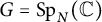 $G = \text {Sp}_N(\mathbb {C})$ or
 $G = \text {SO}_N(\mathbb {C})$, and let
 $V = \ker x \subset \mathbb {C}^N$. Our stratification of
 $\text {Gr}_k(V)$ is preserved by the centralizer
 $G^x$, and we expect our results to have applications in Springer theory for classical groups.


Connections and symplectic forms on the cotangent bundle of flag manifolds
- Part of
-
- Journal:
- Canadian Journal of Mathematics , First View
- Published online by Cambridge University Press:
- 16 February 2026, pp. 1-21
-
- Article
-
- You have access
- HTML
- Export citation
Local cohomology with support in Schubert varieties
- Part of
-
- Journal:
- Compositio Mathematica / Volume 162 / Issue 2 / February 2026
- Published online by Cambridge University Press:
- 16 June 2026, pp. 508-535
- Print publication:
- February 2026
-
- Article
-
- You have access
- Open access
- HTML
- Export citation
-
This paper is concerned with local cohomology sheaves on generalized flag varieties supported in closed Schubert varieties, which carry natural structures as (mixed Hodge)
 $\mathcal{D}$-modules. We employ Kazhdan–Lusztig theory and Saito’s theory of mixed Hodge modules to describe a general strategy to calculate the simple composition factors, Hodge filtration, and weight filtration on these modules. Our main tool is the Grothendieck–Cousin complex, introduced by Kempf, which allows us to relate the local cohomology modules in question to parabolic Verma modules over the corresponding Lie algebra. We show that this complex underlies a complex of mixed Hodge modules, and is thus endowed with Hodge and weight filtrations. We execute this strategy to calculate the composition factors and weight filtration for Schubert varieties in the Grassmannian; in particular, showing that the weight filtration is controlled by the admissible augmented Dyck patterns of Raicu and Weyman. As an application, upon restriction to the opposite big cell, we recover the composition factors and weight filtration on local cohomology with support in generic determinantal varieties.

Degeneracy locus formulas for amenable Weyl group elements
- Part of
-
- Journal:
- Nagoya Mathematical Journal / Volume 261 / 2026
- Published online by Cambridge University Press:
- 22 January 2026, e13
-
- Article
-
- You have access
- Open access
- HTML
- Export citation
Borel-type presentation of the torus-equivariant quantum K-ring of flag manifolds of type C
- Part of
-
- Journal:
- Forum of Mathematics, Sigma / Volume 13 / 2025
- Published online by Cambridge University Press:
- 10 December 2025, e198
-
- Article
-
- You have access
- Open access
- HTML
- Export citation
Free fermionic probability theory and k-theoretic schubert calculus
- Part of
-
- Journal:
- Forum of Mathematics, Sigma / Volume 13 / 2025
- Published online by Cambridge University Press:
- 09 December 2025, e197
-
- Article
-
- You have access
- Open access
- HTML
- Export citation
Initial degenerations of flag varieties
- Part of
-
- Journal:
- Mathematical Proceedings of the Cambridge Philosophical Society / Volume 180 / Issue 2 / March 2026
- Published online by Cambridge University Press:
- 10 November 2025, pp. 403-431
- Print publication:
- March 2026
-
- Article
-
- You have access
- HTML
- Export citation
-
We prove that the initial degenerations of the flag variety admit closed immersions into finite inverse limits of flag matroid strata, where the diagrams are derived from matroidal subdivisions of a suitable flag matroid polytope. As an application, we prove that the initial degenerations of
 $\mathrm{F}\ell^{\circ}(n)$–the open subvariety of the complete flag variety
 $\mathrm{F}\ell(n)$ consisting of flags in general position—are smooth and irreducible when
 $n\leq 4$. We also study the Chow quotient of
 $\mathrm{F}\ell(n)$ by the diagonal torus of
 $\textrm{PGL}(n)$ and show that, for
 $n=4$, this is a log crepant resolution of its log canonical model.


