Refine search
Actions for selected content:
79 results
On fire whirls and Popov’s equation
- Part of
-
- Journal:
- European Journal of Applied Mathematics , First View
- Published online by Cambridge University Press:
- 14 October 2026, pp. 1-10
-
- Article
-
- You have access
- Open access
- HTML
- Export citation
-
A fire whirl is a swirling flow with a burning core. A very simple model of a fire whirl is used, consisting of a linear second-order elliptic partial differential equation (PDE) for a stream function, extending established models for axisymmetric swirling flow of an incompressible inviscid fluid. The introduction of thermal effects means that the PDE cannot be solved by separating variables. The PDE contains a dimensionless parameter
 $A$. When
 $A$ is large, parabolic approximations can be obtained, in much the same way that high-frequency approximations for diffraction problems are derived. The new PDE has similarities with Popov’s equation, which arises when a whispering gallery wave encounters a boundary inflection. To solve it, two approaches are developed, both leading to first-order PDEs. The simpler assumes that a second parameter in the PDE is also large. If this assumption is not made, progress can be made by using a Laplace transform with respect to a radial coordinate, but the result is seen to be much more complicated.


Green’s function for a general system of hyperbolic-parabolic balance laws with applications
- Part of
-
- Journal:
- Proceedings of the Royal Society of Edinburgh. Section A: Mathematics , First View
- Published online by Cambridge University Press:
- 21 July 2026, pp. 1-64
-
- Article
-
- You have access
- Open access
- HTML
- Export citation
Evolution of the radius of analyticity for mKdV-type equations
- Part of
-
- Journal:
- Proceedings of the Royal Society of Edinburgh. Section A: Mathematics , First View
- Published online by Cambridge University Press:
- 20 July 2026, pp. 1-27
-
- Article
-
- You have access
- HTML
- Export citation
-
In this paper, we obtain new lower bounds for the evolution of the radius of analyticity of solutions to two initial value problems (IVPs) with initial data belonging to the class of analytic functions
 $H^{\sigma,s}(\mathbb{R})$ defined via a hyperbolic cosine weight. First, we consider the IVP for the modified Korteweg–de Vries (mKdV) equation. For this problem, we prove that the evolution of the radius of analyticity
 $\sigma(T)$ of the solution admits an algebraic lower bound
 $cT^{-\frac 12}$ for some
 $c \gt 0$ and given arbitrarily large
 $T \gt 0$. Next, we analyse the IVP for the mKdV equation with generalized dispersion (mKdVm) and a damping term. For this problem, we guarantee the local well-posedness in
 $H^{\sigma,s}(\mathbb{R})$ and demonstrate that the local solution can be extended globally in time and admits constant lower bounds for the radius of analyticity
 $\sigma(t)$ as time goes to infinity. The outcome of this paper concerning the mKdV equation represents an improvement on that achieved by the authors’ previous work in [New lower bounds for the radius of analyticity for the mKdV equation and a system of mKdV-type equations. J. Evol. Equ. 24 (2024), no. 2, Art. 42]. As far as we know, the results for the mKdVm with damping are new.


Stability of Couette flow for the 2D magnetohydrodynamic equations with vertical dissipation
- Part of
-
- Journal:
- Proceedings of the Royal Society of Edinburgh. Section A: Mathematics , First View
- Published online by Cambridge University Press:
- 15 July 2026, pp. 1-29
-
- Article
-
- You have access
- HTML
- Export citation
-
This paper examines the stability of Couette flow in the two-dimensional incompressible magnetohydrodynamics system with only vertical dissipation. Our analysis departs from previous works by avoiding coordinate transformations and instead exploiting the special structure of the magnetic stream function. A key point is that the equation for the magnetic stream function
 $\phi$ avoids unfavourable linear terms present in the magnetic field formulation, which allows us to uncover new stability mechanisms specific to the anisotropically dissipative regime. Making use of this special structure, we establish global uniform regularity of solutions near background magnetic fields and provide a rigorous resolution of the associated stability problem.

Persistence properties of solutions of dynamical systems in Banach spaces
- Part of
-
- Journal:
- Proceedings of the Royal Society of Edinburgh. Section A: Mathematics , First View
- Published online by Cambridge University Press:
- 28 April 2026, pp. 1-19
-
- Article
-
- You have access
- HTML
- Export citation
Stabilizing effect of magnetic field on the compressible magnetohydrodynamic flow with vanishing shear viscosity
- Part of
-
- Journal:
- Canadian Journal of Mathematics , First View
- Published online by Cambridge University Press:
- 17 April 2026, pp. 1-34
-
- Article
-
- You have access
- HTML
- Export citation
-
As noted by Landau and Lifshitz in their work Course of Theoretical Physics (Vol. 6, Pergamon Press, Oxford, 2nd edition, 1987), “if the relaxation time of these processes is long, a considerable dissipation of energy occurs when the fluid is compressed or expanded,” then the volume viscosity coefficient becomes relatively large, making the shear viscosity coefficient much smaller in comparison. In this article, we take this phenomenon into consideration and investigate isentropic compressible magnetohydrodynamic flow with zero shear viscosity in a periodic domain. We prove the global existence of smooth solutions when the initial data are close to a background magnetic field. In addition, stability and large-time decay rates are also obtained. Mathematically, the zero shear viscosity makes the elliptic operator “
 $\mu \Delta +\nu \nabla \text{div}\, $” lose its uniform ellipticity, rendering the classical dissipation mechanisms for velocity inapplicable. The stabilizing effect of the background magnetic field plays a crucial role in our analysis.

MODELLING DYNAMIC STRAINS ON ICE SHELVES RESULTING FROM FLEXURAL AND EXTENSIONAL MOTIONS FORCED BY OCEAN WAVE PACKETS
- Part of
-
- Journal:
- The ANZIAM Journal / Volume 68 / 2026
- Published online by Cambridge University Press:
- 13 February 2026, e4
-
- Article
-
- You have access
- Open access
- HTML
- Export citation
A plethora of fully localized solitary waves for the full-dispersion Kadomtsev–Petviashvili equation
- Part of
-
- Journal:
- Journal of Nonlinear Waves / Volume 2 / 2026
- Published online by Cambridge University Press:
- 28 January 2026, e2
-
- Article
-
- You have access
- Open access
- HTML
- Export citation
-
The KP-I equation arises as a weakly nonlinear model equation for gravity-capillary waves with Bond number
 $\beta \gt 1/3$, also called strong surface tension. This equation has recently been shown to have a family of nondegenerate, symmetric ‘fully localized’ or ‘lump’ solitary waves which decay to zero in all spatial directions. The full-dispersion KP-I equation is obtained by retaining the exact dispersion relation in the modelling from the water-wave problem. In this paper, we show that the FDKP-I equation also has a family of symmetric fully localized solitary waves which are obtained by casting it as a perturbation of the KP-I equation and applying a suitable variant of the implicit-function theorem.

Linear damping estimates for periodic roll wave solutions of the inviscid Saint-Venant equations and related systems of hyperbolic balance laws
- Part of
-
- Journal:
- Journal of Nonlinear Waves / Volume 1 / 2025
- Published online by Cambridge University Press:
- 05 December 2025, e21
-
- Article
-
- You have access
- Open access
- HTML
- Export citation
-
Substantially extending previous results of the authors for smooth solutions in the viscous case, we develop linear damping estimates for periodic roll-wave solutions of the inviscid Saint-Venant equations and related systems of hyperbolic balance laws. Such damping estimates, consisting of
 $H^s$ energy estimates yielding exponential slaving of high-derivative to low-derivative norms, have served as crucial ingredients in nonlinear stability analyses of traveling waves in hyperbolic or partially parabolic systems, both in obtaining high-frequency resolvent estimates and in closing a nonlinear iteration for which available linearized stability estimates apparently lose regularity. Here, we establish for systems of size
 $n\leq 6$ a Lyapunov-type theorem stating that such energy estimates are available whenever strict high-frequency spectral stability holds; for dimensions
 $7$ and higher, there may be in general a gap between high-frequency spectral stability and existence of the type of energy estimate that we develop here. A key ingredient is a dimension-dependent linear algebraic lemma reminiscent of Lyapunov’s Lemma for ODE that is to our knowledge new.


Ill-posedness issue on the Oldroyd-B model in the critical Besov spaces
- Part of
-
- Journal:
- Proceedings of the Royal Society of Edinburgh. Section A: Mathematics , First View
- Published online by Cambridge University Press:
- 29 August 2025, pp. 1-20
-
- Article
-
- You have access
- HTML
- Export citation
-
It was proved in [11, J. Funct. Anal., 2020] that the Cauchy problem for some Oldroyd-B model is well-posed in
 $\dot{B}^{d/p-1}_{p,1}(\mathbb{R}^d) \times \dot{B}^{d/p}_{p,1}(\mathbb{R}^d)$ with
 $1\leq p \lt 2d$. In this paper, we prove that the Cauchy problem for the same Oldroyd-B model is ill-posed in
 $\dot{B}^{d/p-1}_{p,r}(\mathbb{R}^d) \times \dot{B}^{d/p}_{p,r}(\mathbb{R}^d)$ with
 $1\leq p\leq \infty$ and
 $1 \lt r\leq\infty$ due to the lack of continuous dependence of the solution.


A multiscale model for espresso brewing: Asymptotic analysis and numerical simulation
- Part of
-
- Journal:
- European Journal of Applied Mathematics / Volume 37 / Issue 2 / April 2026
- Published online by Cambridge University Press:
- 27 May 2025, pp. 496-519
-
- Article
-
- You have access
- Open access
- HTML
- Export citation
Optimal transport on gas networks
- Part of
-
- Journal:
- European Journal of Applied Mathematics / Volume 37 / Issue 3 / June 2026
- Published online by Cambridge University Press:
- 16 April 2025, pp. 553-585
-
- Article
-
- You have access
- Open access
- HTML
- Export citation
-
Optimal transport tasks naturally arise in gas networks, which include a variety of constraints such as physical plausibility of the transport and the avoidance of extreme pressure fluctuations. To define feasible optimal transport plans, we utilize a
 $p$-Wasserstein metric and similar dynamic formulations minimizing the kinetic energy necessary for moving gas through the network, which we combine with suitable versions of Kirchhoff’s law as the coupling condition at nodes. In contrast to existing literature, we especially focus on the non-standard case
 $p \neq 2$ to derive an overdamped isothermal model for gases through
 $p$-Wasserstein gradient flows in order to uncover and analyze underlying dynamics. We introduce different options for modelling the gas network as an oriented graph including the possibility to store gas at interior vertices and to put in or take out gas at boundary vertices.


On blow-up for the supercritical defocusing nonlinear wave equation
- Part of
-
- Journal:
- Forum of Mathematics, Pi / Volume 13 / 2025
- Published online by Cambridge University Press:
- 31 March 2025, e15
-
- Article
-
- You have access
- Open access
- HTML
- Export citation
-
In this paper, we consider the defocusing nonlinear wave equation
 $-\partial _t^2u+\Delta u=|u|^{p-1}u$ in
 $\mathbb {R}\times \mathbb {R}^d$. Building on our companion work (Self-similar imploding solutions of the relativistic Euler equations, arXiv:2403.11471), we prove that for
 $d=4, p\geq 29$ and
 $d\geq 5, p\geq 17$, there exists a smooth complex-valued solution that blows up in finite time.


Well-posedness for the 3-D generalized micropolar system in critical Fourier–Besov–Morrey spaces
- Part of
-
- Journal:
- Canadian Mathematical Bulletin / Volume 68 / Issue 3 / September 2025
- Published online by Cambridge University Press:
- 26 February 2025, pp. 891-907
- Print publication:
- September 2025
-
- Article
-
- You have access
- HTML
- Export citation
Smooth imploding solutions for 3D compressible fluids
- Part of
-
- Journal:
- Forum of Mathematics, Pi / Volume 13 / 2025
- Published online by Cambridge University Press:
- 12 February 2025, e6
-
- Article
-
- You have access
- Open access
- HTML
- Export citation
-
Building upon the pioneering work of Merle, Raphaël, Rodnianski and Szeftel [67, 68, 69], we construct exact, smooth self-similar imploding solutions to the 3D isentropic compressible Euler equations for ideal gases for all adiabatic exponents
 $\gamma>1$. For the particular case
 $\gamma =\frac 75$ (corresponding to a diatomic gas – for example, oxygen, hydrogen, nitrogen), akin to the result [68], we show the existence of a sequence of smooth, self-similar imploding solutions. In addition, we provide simplified proofs of linear stability [67] and nonlinear stability [69], which allow us to construct asymptotically self-similar imploding solutions to the compressible Navier-Stokes equations with density independent viscosity for the case
 $\gamma =\frac 75$. Moreover, unlike [69], the solutions constructed have density bounded away from zero and converge to a constant at infinity, representing the first example of singularity formation in such a setting.


Spectral stability of constrained solitary waves for a generalized Ostrovsky equation
- Part of
-
- Journal:
- Proceedings of the Royal Society of Edinburgh. Section A: Mathematics / Volume 156 / Issue 5 / October 2026
- Published online by Cambridge University Press:
- 28 November 2024, pp. 1869-1900
- Print publication:
- October 2026
-
- Article
-
- You have access
- HTML
- Export citation
-
We consider the existence and stability of constrained solitary wave solutions to the generalized Ostrovsky equation
where the homogeneous nonlinearities \begin{align*}\partial_x\left(\partial_t u+ \alpha\partial_x u+\partial_x(f(u))+\beta \partial_x^3u\right)=\gamma u,\quad \|u\|_{L^2}^2=\lambda \gt 0,\end{align*}
 $f(s)=\alpha_0|s|^p+\alpha_1|s|^{p-1}s$, with p > 1. If
 $\alpha_0,\alpha_1 \gt 0$,
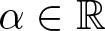 $\alpha\in\mathbb{R}$, and γ < 0 satisfying
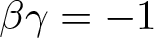 $\beta\gamma=-1$, we show that for
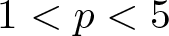 $1 \lt p \lt 5$, there exists a constrained ground state traveling wave solution with travelling velocity
 $\omega \gt \alpha-2$. Furthermore, we obtain the exponential decay estimates and the weak non-degeneracy of the solution. Finally, we show that the solution is spectrally stable. This is a continuation of recent work [1] on existence and stability for a water wave model with non-homogeneous nonlinearities.
On a supersonic-sonic patch arising from the two-dimensional Riemann problem of the compressible Euler equations
- Part of
-
- Journal:
- Proceedings of the Royal Society of Edinburgh. Section A: Mathematics / Volume 156 / Issue 3 / June 2026
- Published online by Cambridge University Press:
- 18 September 2024, pp. 753-792
- Print publication:
- June 2026
-
- Article
-
- You have access
- HTML
- Export citation
Axisymmetric Incompressible Viscous Plasmas: Global Well-Posedness and Asymptotics
- Part of
-
- Journal:
- Forum of Mathematics, Sigma / Volume 12 / 2024
- Published online by Cambridge University Press:
- 10 September 2024, e79
-
- Article
-
- You have access
- Open access
- HTML
- Export citation
-
This paper is devoted to the global analysis of the three-dimensional axisymmetric Navier–Stokes–Maxwell equations. More precisely, we are able to prove that, for large values of the speed of light
 $c\in (c_0, \infty )$, for some threshold
 $c_0>0$ depending only on the initial data, the system in question admits a unique global solution. The ensuing bounds on the solutions are uniform with respect to the speed of light, which allows us to study the singular regime
 $c\rightarrow \infty $ and rigorously derive the limiting viscous magnetohydrodynamic (MHD) system in the axisymmetric setting.
The strategy of our proofs draws insight from recent results on the two-dimensional incompressible Euler–Maxwell system to exploit the dissipative–dispersive structure of Maxwell’s system in the axisymmetric setting. Furthermore, a detailed analysis of the asymptotic regime
 $c\to \infty $ allows us to derive a robust nonlinear energy estimate which holds uniformly in c. As a byproduct of such refined uniform estimates, we are able to describe the global strong convergence of solutions toward the MHD system.
This collection of results seemingly establishes the first available global well-posedness of three-dimensional viscous plasmas, where the electric and magnetic fields are governed by the complete Maxwell equations, for large initial data as
 $c\to \infty $.


Bifurcation of the travelling wave solutions in a perturbed (1 + 1)-dimensional dispersive long wave equation via a geometric approach
- Part of
-
- Journal:
- Proceedings of the Royal Society of Edinburgh. Section A: Mathematics / Volume 156 / Issue 1 / February 2026
- Published online by Cambridge University Press:
- 25 April 2024, pp. 129-156
- Print publication:
- February 2026
-
- Article
-
- You have access
- HTML
- Export citation
-
Choosing ${\kappa }$
 (horizontal ordinate of the saddle point associated to the homoclinic orbit) as bifurcation parameter, bifurcations of the travelling wave solutions is studied in a perturbed $(1 + 1)$
 -dimensional dispersive long wave equation. The solitary wave solution exists at a suitable wave speed $c$
 for the bifurcation parameter ${\kappa }\in \left (0,1-\frac {\sqrt 3}{3}\right )\cup \left (1+\frac {\sqrt 3}{3},2\right )$
 , while the kink and anti-kink wave solutions exist at a unique wave speed $c^*=\sqrt {15}/3$
 for $\kappa =0$
 or $\kappa =2$
 . The methods are based on the geometric singular perturbation (GSP, for short) approach, Melnikov method and invariant manifolds theory. Interestingly, not only the explicit analytical expression of the complicated homoclinic Melnikov integral is directly obtained for the perturbed long wave equation, but also the explicit analytical expression of the limit wave speed is directly given. Numerical simulations are utilized to verify our mathematical results.


The solvability for a nonlinear degenerate hyperbolic–parabolic coupled system arising from nematic liquid crystals
- Part of
-
- Journal:
- Canadian Journal of Mathematics / Volume 76 / Issue 6 / December 2024
- Published online by Cambridge University Press:
- 13 October 2023, pp. 1823-1890
- Print publication:
- December 2024
-
- Article
-
- You have access
- HTML
- Export citation
