Refine search
Actions for selected content:
167 results
Isogenies of minimal Cantor systems: from Sturmian to Denjoy and interval exchanges
- Part of
-
- Journal:
- Ergodic Theory and Dynamical Systems , First View
- Published online by Cambridge University Press:
- 05 November 2026, pp. 1-49
-
- Article
-
- You have access
- Open access
- HTML
- Export citation
-
This work is motivated by the study of continued fraction expansions of real numbers: we describe in dynamical terms their orbits under the multiplicative action by $\mathbb {Z}$
 and the projective action of $\operatorname {\mathrm {PGL}}_2(\mathbb {Z})$
 ; hence, of $\operatorname {\mathrm {PGL}}_2(\mathbb {Q})$
 . A real number gives rise to a Sturmian system encoding a rotation of the circle, which is a particular case of an interval exchange system. It is well known that $\operatorname {\mathrm {PGL}}_2(\mathbb {Z})$
 -equivalence of real numbers, characterized by the tails of their continued fraction expansions, amounts to flow equivalence of Sturmian systems. We show that the multiplicative action of $m\in \mathbb {Z}$
 on a real number corresponds to taking the mth-power followed by what we call an infinitesimal 2-asymptotic factor of its Sturmian system. This leads us to introduce the notion of isogeny between zero-dimensional systems: it combines flow equivalences, virtual conjugacies and infinitesimal asymptotic equivalences. We develop tools for classifying systems up to isogeny involving cohomological invariants and states. We then use this to give a complete description of $\operatorname {\mathrm {PGL}}_2(\mathbb {Q})$
 -equivalence of real numbers in terms of Sturmian systems. Considering powers of Sturmian systems leads naturally to the realm of Denjoy systems, and we classify Denjoy systems up to isogenies preserving this class via the action of $\operatorname {\mathrm {PGL}}_{2}(\mathbb {Q})$
 on their invariants. We also investigate eventual flow equivalence and show that it implies topological conjugacy for Sturmian and Denjoy systems. For this, we prove the following novel arithmetic result that we believe is of independent interest. Consider $\alpha ,\beta \in \mathbb {R}\setminus \mathbb {Q}$
 ; if for all but finitely many prime integers $n\in \mathbb {P}$
 the numbers $n\alpha ,n\beta $
 are $\operatorname {\mathrm {PGL}}_2(\mathbb {Z})$
 -equivalent, then $\alpha \equiv \pm \beta \bmod {\mathbb {Z}}$
 . In another direction, we consider interval exchanges satisfying Keane’s condition. We characterize flow equivalence in terms of interval-induced subsystems (or the tails of their paths in the bilateral Rauzy induction diagram). We describe their 2-AI factors in terms of minimal models. Finally, we find rational invariants for isogeny involving the length modules and SAF invariants of the associated ergodic measures. This leads to a conjecture for their classification up to isogeny, which we prove in the totally ergodic case.


Maximizing entropy for power-free languages
- Part of
-
- Journal:
- Ergodic Theory and Dynamical Systems , First View
- Published online by Cambridge University Press:
- 26 October 2026, pp. 1-25
-
- Article
-
- You have access
- Open access
- HTML
- Export citation
Gurevic pressure and equidistribution for amenable extensions of countable state Markov shifts
- Part of
-
- Journal:
- Ergodic Theory and Dynamical Systems , First View
- Published online by Cambridge University Press:
- 19 October 2026, pp. 1-23
-
- Article
-
- You have access
- Open access
- HTML
- Export citation
Polynomial shape adic systems are inherently expansive
- Part of
-
- Journal:
- Ergodic Theory and Dynamical Systems / Volume 46 / Issue 12 / December 2026
- Published online by Cambridge University Press:
- 13 July 2026, pp. 2941-2968
- Print publication:
- December 2026
-
- Article
-
- You have access
- HTML
- Export citation
Transcendence for Pisot morphic words over an algebraic base
- Part of
-
- Journal:
- Ergodic Theory and Dynamical Systems / Volume 46 / Issue 12 / December 2026
- Published online by Cambridge University Press:
- 10 July 2026, pp. 3025-3046
- Print publication:
- December 2026
-
- Article
-
- You have access
- Open access
- HTML
- Export citation
-
It is known that for a uniform morphic sequence $\boldsymbol u = \langle u_n\rangle _{n=0}^\infty $
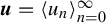 and an algebraic number $\beta $
 such that $|\beta |>1$
 , the number $[\![ \boldsymbol {u} ]\!] _\beta :=\sum _{n=0}^\infty ({u_n}/{\beta ^n})$
 either lies in $\mathbb Q(\beta )$
 or is transcendental. In this paper, we show a similar rational–transcendental dichotomy for sequences defined by irreducible Pisot morphisms on binary alphabets. Subject to the Pisot conjecture (an irreducible Pisot morphism has pure discrete spectrum), we generalise the latter result to arbitrary finite alphabets. In certain cases, we are able to show transcendence of $[\![ \boldsymbol {u}]\!] _{\beta }$
 outright. In particular, for $k\geq 2$
 , if $\boldsymbol u$
 is the k-Bonacci word, then $[\![ \boldsymbol {u}]\!] _{\beta }$
 is transcendental.


Density of group languages in shift spaces
- Part of
-
- Journal:
- Ergodic Theory and Dynamical Systems / Volume 46 / Issue 11 / November 2026
- Published online by Cambridge University Press:
- 23 June 2026, pp. 2645-2701
- Print publication:
- November 2026
-
- Article
-
- You have access
- Open access
- HTML
- Export citation
Paper-folding models for the CAR algebra
- Part of
-
- Journal:
- Ergodic Theory and Dynamical Systems / Volume 46 / Issue 10 / October 2026
- Published online by Cambridge University Press:
- 16 June 2026, pp. 2542-2566
- Print publication:
- October 2026
-
- Article
-
- You have access
- Open access
- HTML
- Export citation
-
We show that the canonical anticommutation relations (CAR) algebra admits a Cantor spectrum $\mathrm {C}^\ast $
 -diagonal that is not conjugate to the standard AF diagonal. We obtain this by classification theory of $\mathrm {C}^\ast $
 -algebras, and the diagonal arises by realizing the CAR algebra as the crossed product of a free minimal action on the Cantor space, where the acting group is the product of a locally finite group with the infinite dihedral group. The main ingredient in the construction is a binary subshift associated to the well-known regular paper-folding sequence. Moreover, we show that the CAR algebra in fact admits countably many, pairwise non-conjugate, Cantor spectrum diagonals which are distinguished by the different values of their diagonal dimension, as defined by Li, Liao and the second named author.


On sets of periodic orbit lengths in finitely presented dynamical systems
- Part of
-
- Journal:
- Ergodic Theory and Dynamical Systems / Volume 46 / Issue 10 / October 2026
- Published online by Cambridge University Press:
- 15 June 2026, pp. 2452-2484
- Print publication:
- October 2026
-
- Article
-
- You have access
- Open access
- HTML
- Export citation
-
We classify the sets of natural numbers n for which certain dynamical systems $(X,f)$
 on a compact metric space X have a periodic point of (least) period n. Interest in this question dates back to Sharkovskii’s theorem for continuous maps on intervals of the real line, but it also ties to checkable conditions for Krieger’s embedding theorem for symbolic dynamical systems. Given a system for which the logarithmic derivative of the Artin–Mazur zeta function is rational, we use the Skolem–Mahler–Lech theorem to classify for which n the system has a periodic point of (not necessarily least) period n. Moreover, we build on work on finitely presented (FP) systems and their relationship to symbolic dynamics to classify the set of least periods, that is, periodic orbit lengths, for arbitrary FP systems, extending a known classification for shifts of finite type. We also provide several constructions to realize any such least period sets.

A TOPOLOGY FOR ENGEL EXPANSIONS: EVALUATION AND DIGIT CODING MAPS
- Part of
-
- Journal:
- Bulletin of the Australian Mathematical Society / Volume 114 / Issue 1 / August 2026
- Published online by Cambridge University Press:
- 01 June 2026, pp. 140-148
- Print publication:
- August 2026
-
- Article
-
- You have access
- HTML
- Export citation
-
We develop a topological framework for Engel expansions that treats both directions of the correspondence between points of $(0,1]$
 and nondecreasing digit sequences. We endow the sequence space with the product topology to study the evaluation map, and we fix a nonterminating digit algorithm to study the digit coding map. We also record the correspondence between cylinder sets and fundamental intervals and give an application to Baire category results for functions of the digits.

Eventual conjugacy of free inert G-SFTs
- Part of
-
- Journal:
- Ergodic Theory and Dynamical Systems / Volume 46 / Issue 10 / October 2026
- Published online by Cambridge University Press:
- 25 May 2026, pp. 2485-2504
- Print publication:
- October 2026
-
- Article
-
- You have access
- Open access
- HTML
- Export citation
ENTROPY, MIXING PROPERTIES, AND LI–YORKE CHAOS OF MONOID ACTIONS
- Part of
-
- Journal:
- Journal of the Australian Mathematical Society / Volume 121 / Issue 2 / October 2026
- Published online by Cambridge University Press:
- 20 April 2026, pp. 126-150
-
- Article
-
- You have access
- HTML
- Export citation
ESCAPE RATE FOR SHIFTS WITH MARKOV MEASURE
- Part of
-
- Journal:
- Journal of the Australian Mathematical Society / Volume 121 / Issue 1 / August 2026
- Published online by Cambridge University Press:
- 20 April 2026, pp. 1-27
-
- Article
-
- You have access
- HTML
- Export citation
On the structure of sequences with minimal maximal pattern complexity
- Part of
-
- Journal:
- Ergodic Theory and Dynamical Systems / Volume 46 / Issue 8 / August 2026
- Published online by Cambridge University Press:
- 17 April 2026, pp. 2131-2148
- Print publication:
- August 2026
-
- Article
-
- You have access
- Open access
- HTML
- Export citation
-
In 2002, Kamae and Zamboni [Ergod. Th. & Dynam. Sys. 22(4) (2002), 1191–1199] introduced maximal pattern complexity and determined that any aperiodic sequence must have maximal pattern complexity at least $2k$
 . In 2006, Kamae and Rao [European J. Combin. 27(1) (2006), 125–137] examined the maximal pattern complexity of sequences over larger alphabets and showed that sequences which have maximal pattern complexity less than $\ell k$
 , for $\ell $
 the size of the alphabet, must have some periodic structure. In this paper, we investigate the structure of sequences of low maximal pattern complexity over $\ell $
 letters, where $\liminf _{k \to \infty } p_{\alpha }^*(k) - 3k = -\infty $
 . In addition, we show that the minimal maximal pattern complexity of an aperiodic sequence which uses all $\ell $
 letters is $p_{\alpha }^*(k) = 2k + \ell -2$
 and give an exact structure for aperiodic sequences with this maximal pattern complexity.


Distribution of polynomial orbits in Toeplitz systems
- Part of
-
- Journal:
- Ergodic Theory and Dynamical Systems / Volume 46 / Issue 7 / July 2026
- Published online by Cambridge University Press:
- 26 February 2026, pp. 1800-1818
- Print publication:
- July 2026
-
- Article
-
- You have access
- Open access
- HTML
- Export citation
Pressure at infinity on countable Markov shifts
- Part of
-
- Journal:
- Ergodic Theory and Dynamical Systems / Volume 46 / Issue 4 / April 2026
- Published online by Cambridge University Press:
- 18 February 2026, pp. 1043-1085
- Print publication:
- April 2026
-
- Article
-
- You have access
- Open access
- HTML
- Export citation
Avoshifts
- Part of
-
- Journal:
- Ergodic Theory and Dynamical Systems / Volume 46 / Issue 5 / May 2026
- Published online by Cambridge University Press:
- 26 January 2026, pp. 1219-1249
- Print publication:
- May 2026
-
- Article
-
- You have access
- Open access
- HTML
- Export citation
On Gibbs measures for almost additive sequences associated to some relative pressure functions
- Part of
-
- Journal:
- Ergodic Theory and Dynamical Systems / Volume 46 / Issue 4 / April 2026
- Published online by Cambridge University Press:
- 22 January 2026, pp. 1106-1124
- Print publication:
- April 2026
-
- Article
-
- You have access
- HTML
- Export citation
-
Given a weakly almost additive sequence of continuous functions with bounded variation
 ${\mathcal {F}}=\{\log f_n\}_{n=1}^{\infty }$ on a subshift X over finitely many symbols, we study properties of a function f on X such that
 $\lim _{n\to \infty }({1}/{n})\int \log f_n\,d\mu =\int f\,d\mu $ for every invariant measure
 $\mu $ on X. Under some conditions, we construct a function f on X explicitly, and study a relation between the property of
 ${\mathcal {F}}$ and some particular types of f. As applications, we study images of Gibbs measures for continuous functions under one-block factor maps. We investigate a relation between the almost additivity of the sequences associated to relative pressure functions and the fiber-wise sub-positive mixing property of a factor map. For a special type of one-block factor maps between shifts of finite type, we study necessary and sufficient conditions for the image of a one-step Markov measure to be a Gibbs measure for a continuous function.


Maximizing measures for countable alphabet shifts via blur shift spaces
- Part of
-
- Journal:
- Ergodic Theory and Dynamical Systems / Volume 46 / Issue 5 / May 2026
- Published online by Cambridge University Press:
- 22 January 2026, pp. 1166-1188
- Print publication:
- May 2026
-
- Article
-
- You have access
- HTML
- Export citation
Distributional chaos in shrinking target problems
- Part of
-
- Journal:
- Ergodic Theory and Dynamical Systems / Volume 46 / Issue 4 / April 2026
- Published online by Cambridge University Press:
- 06 January 2026, pp. 1020-1042
- Print publication:
- April 2026
-
- Article
-
- You have access
- HTML
- Export citation
-
In this article, we prove that the set of well-approximable points
 $W_\varphi (z) = \{x \in X : d (f^n x, z ) < \varphi (n) \mathrm {\ for\ infinite\ } n \in \mathbb {N}^+\}$ in the shrinking targets problems is distributional chaotic of type 1 for systems with a weak form of the exponential specification property. We apply it to transitive Anosov systems,
 $\beta $-shifts, etc.

Asymptoticity, automorphism groups, and strong orbit equivalence
- Part of
-
- Journal:
- Ergodic Theory and Dynamical Systems / Volume 46 / Issue 4 / April 2026
- Published online by Cambridge University Press:
- 29 December 2025, pp. 921-946
- Print publication:
- April 2026
-
- Article
-
- You have access
- HTML
- Export citation
-
Given any strong orbit equivalence class of minimal Cantor systems and any cardinal number that is finite, countable, or the continuum, we show that there exists a minimal subshift within the class whose number of asymptotic components is exactly the given cardinal. For finite or countable ones, we explicitly construct such examples using
 $\mathcal {S}$-adic subshifts. We obtain the uncountable case by showing that any topological dynamical system with at most countably many asymptotic components has zero topological entropy. We also construct systems that have arbitrarily high subexponential word complexity, but only one asymptotic component. We deduce that within any strong orbit equivalence class, there exists a minimal subshift whose automorphism group is isomorphic to
 $\mathbb {Z}$.


