Refine search
Actions for selected content:
27 results
Selberg, Ihara and Berkovich
- Part of
-
- Journal:
- Forum of Mathematics, Sigma / Volume 14 / 2026
- Published online by Cambridge University Press:
- 03 November 2026, e146
-
- Article
-
- You have access
- Open access
- HTML
- Export citation
Gurevic pressure and equidistribution for amenable extensions of countable state Markov shifts
- Part of
-
- Journal:
- Ergodic Theory and Dynamical Systems , First View
- Published online by Cambridge University Press:
- 19 October 2026, pp. 1-23
-
- Article
-
- You have access
- Open access
- HTML
- Export citation
TOPOLOGICAL AND DYNAMICAL ASPECTS OF SOME SPECTRAL INVARIANTS OF CONTACT MANIFOLDS WITH A CIRCLE ACTION
- Part of
-
- Journal:
- Journal of the Institute of Mathematics of Jussieu / Volume 25 / Issue 4 / July 2026
- Published online by Cambridge University Press:
- 08 June 2026, pp. 2147-2185
- Print publication:
- July 2026
-
- Article
-
- You have access
- HTML
- Export citation
The dimension spectrum of the infinitely generated Apollonian gasket
- Part of
-
- Journal:
- Ergodic Theory and Dynamical Systems / Volume 46 / Issue 11 / November 2026
- Published online by Cambridge University Press:
- 29 May 2026, pp. 2702-2725
- Print publication:
- November 2026
-
- Article
-
- You have access
- HTML
- Export citation
A trichotomy for hitting times and escape rates for a class of unimodal maps
- Part of
-
- Journal:
- Ergodic Theory and Dynamical Systems / Volume 45 / Issue 12 / December 2025
- Published online by Cambridge University Press:
- 11 August 2025, pp. 3663-3697
- Print publication:
- December 2025
-
- Article
-
- You have access
- Open access
- HTML
- Export citation
TWISTED RUELLE ZETA FUNCTION ON HYPERBOLIC MANIFOLDS AND COMPLEX-VALUED ANALYTIC TORSION
- Part of
-
- Journal:
- Journal of the Institute of Mathematics of Jussieu / Volume 24 / Issue 3 / May 2025
- Published online by Cambridge University Press:
- 22 January 2025, pp. 813-845
- Print publication:
- May 2025
-
- Article
-
- You have access
- Open access
- HTML
- Export citation
-
In this paper, we study the twisted Ruelle zeta function associated with the geodesic flow of a compact, hyperbolic, odd-dimensional manifold X. The twisted Ruelle zeta function is associated with an acyclic representation
 $\chi \colon \pi _{1}(X) \rightarrow \operatorname {\mathrm {GL}}_{n}(\mathbb {C})$, which is close enough to an acyclic, unitary representation. In this case, the twisted Ruelle zeta function is regular at zero and equals the square of the refined analytic torsion, as it is introduced by Braverman and Kappeler in [6], multiplied by an exponential, which involves the eta invariant of the even part of the odd-signature operator, associated with
 $\chi $.

Hölder continuity of measures for heavy tail potentials
- Part of
-
- Journal:
- Ergodic Theory and Dynamical Systems / Volume 45 / Issue 8 / August 2025
- Published online by Cambridge University Press:
- 22 January 2025, pp. 2476-2513
- Print publication:
- August 2025
-
- Article
-
- You have access
- Open access
- HTML
- Export citation
-
For a class of potentials
 $\psi $ satisfying a condition depending on the roof function of a suspension (semi)flow, we show an EKP inequality, which can be interpreted as a Hölder continuity property in the weak
 ${^*}$ norm of measures, with respect to the pressure of those measures, where the Hölder exponent depends on the
 $L^q$-space to which
 $\psi $ belongs. This also captures a new type of phase transition for intermittent (semi)flows (and maps).


First Ruelle resonance for an Anosov flow with smooth potential
- Part of
-
- Journal:
- Ergodic Theory and Dynamical Systems / Volume 45 / Issue 8 / August 2025
- Published online by Cambridge University Press:
- 06 January 2025, pp. 2439-2475
- Print publication:
- August 2025
-
- Article
-
- You have access
- Open access
- HTML
- Export citation
Finite data rigidity for one-dimensional expanding maps
- Part of
-
- Journal:
- Ergodic Theory and Dynamical Systems / Volume 45 / Issue 5 / May 2025
- Published online by Cambridge University Press:
- 13 November 2024, pp. 1597-1618
- Print publication:
- May 2025
-
- Article
-
- You have access
- Open access
- HTML
- Export citation
-
Let
 $f,g$ be
 $C^2$ expanding maps on the circle which are topologically conjugate. We assume that the derivatives of f and g at corresponding periodic points coincide for some large period N. We show that f and g are ‘approximately smoothly conjugate.’ Namely, we construct a
 $C^2$ conjugacy
 $h_N$ such that
 $h_N$ is exponentially close to h in the
 $C^0$ topology, and
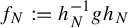 $f_N:=h_N^{-1}gh_N$ is exponentially close to f in the
 $C^1$ topology. Our main tool is a uniform effective version of Bowen’s equidistribution of weighted periodic orbits to the equilibrium state.


Distribution in homology classes and discrete fractal dimension
- Part of
-
- Journal:
- Proceedings of the Royal Society of Edinburgh. Section A: Mathematics / Volume 156 / Issue 2 / April 2026
- Published online by Cambridge University Press:
- 28 May 2024, pp. 535-542
- Print publication:
- April 2026
-
- Article
-
- You have access
- Open access
- HTML
- Export citation
Regularity and linear response formula of the SRB measures for solenoidal attractors
- Part of
-
- Journal:
- Ergodic Theory and Dynamical Systems / Volume 44 / Issue 10 / October 2024
- Published online by Cambridge University Press:
- 06 February 2024, pp. 2782-2831
- Print publication:
- October 2024
-
- Article
-
- You have access
- HTML
- Export citation
-
We show that a class of higher-dimensional hyperbolic endomorphisms admit absolutely continuous invariant probabilities whose densities are regular and vary differentiably with respect to the dynamical system. The maps we consider are skew-products given by
 $T(x,y) = (E (x), C(x,y))$, where E is an expanding map of
 $\mathbb {T}^u$ and C is a contracting map on each fiber. If
 $\inf |\!\det DT| \inf \| (D_yC)^{-1}\| ^{-2s}>1$ for some
 ${s<r-(({u+d})/{2}+1)}$,
 $r \geq 2$, and T satisfies a transversality condition between overlaps of iterates of T (a condition which we prove to be
 $C^r$-generic under mild assumptions), then the SRB measure
 $\mu _T$ of T is absolutely continuous and its density
 $h_T$ belongs to the Sobolev space
 $H^s({\mathbb {T}}^u\times {\mathbb {R}}^d)$. When
 $s> {u}/{2}$, it is also valid that the density
 $h_T$ is differentiable with respect to T. Similar results are proved for thermodynamical quantities for potentials close to the geometric potential.


Equilibrium states for non-uniformly expanding skew products
- Part of
-
- Journal:
- Ergodic Theory and Dynamical Systems / Volume 44 / Issue 9 / September 2024
- Published online by Cambridge University Press:
- 11 December 2023, pp. 2599-2620
- Print publication:
- September 2024
-
- Article
-
- You have access
- HTML
- Export citation
Counting periodic orbits on fractals weighted by their Lyapounov exponents
- Part of
-
- Journal:
- Proceedings of the Edinburgh Mathematical Society / Volume 66 / Issue 3 / August 2023
- Published online by Cambridge University Press:
- 03 July 2023, pp. 710-757
-
- Article
-
- You have access
- Open access
- HTML
- Export citation
On bifurcation of statistical properties of partially hyperbolic endomorphisms
- Part of
-
- Journal:
- Ergodic Theory and Dynamical Systems / Volume 44 / Issue 3 / March 2024
- Published online by Cambridge University Press:
- 18 April 2023, pp. 933-944
- Print publication:
- March 2024
-
- Article
-
- You have access
- HTML
- Export citation
-
We give an example of a path-wise connected open set of
 $C^{\infty }$ partially hyperbolic endomorphisms on the
 $2$-torus, on which the (unique) Sinai–Ruelle–Bowen (SRB) measure exists for each system and varies smoothly depending on the system, while the sign of its central Lyapunov exponent changes.


A QUANTITATIVE EVALUATION OF LAGRANGIAN COHERENT STRUCTURE DETECTION METHODS BASED ON COMPUTATIONAL AND EXPERIMENTAL LIMITATIONS
- Part of
-
- Journal:
- Bulletin of the Australian Mathematical Society / Volume 107 / Issue 1 / February 2023
- Published online by Cambridge University Press:
- 05 December 2022, pp. 173-174
- Print publication:
- February 2023
-
- Article
-
- You have access
- HTML
- Export citation
Local limit theorems in relatively hyperbolic groups II: the non-spectrally degenerate case
- Part of
-
- Journal:
- Compositio Mathematica / Volume 158 / Issue 4 / April 2022
- Published online by Cambridge University Press:
- 15 June 2022, pp. 764-830
- Print publication:
- April 2022
-
- Article
-
- You have access
- Open access
- HTML
- Export citation
-
This is the second of a series of two papers dealing with local limit theorems in relatively hyperbolic groups. In this second paper, we restrict our attention to non-spectrally degenerate random walks and we prove precise asymptotics of the probability
 $p_n(e,e)$ of going back to the origin at time
 $n$. We combine techniques adapted from thermodynamic formalism with the rough estimates of the Green function given by part I to show that
 $p_n(e,e)\sim CR^{-n}n^{-3/2}$, where
 $R$ is the inverse of the spectral radius of the random walk. This both generalizes results of Woess for free products and results of Gouëzel for hyperbolic groups.


On the equidistribution of unstable curves for pseudo-Anosov diffeomorphisms of compact surfaces
- Part of
-
- Journal:
- Ergodic Theory and Dynamical Systems / Volume 42 / Issue 3 / March 2022
- Published online by Cambridge University Press:
- 07 December 2021, pp. 855-880
- Print publication:
- March 2022
-
- Article
-
- You have access
- HTML
- Export citation
-
We prove that the asymptotics of ergodic integrals along an invariant foliation of a toral Anosov diffeomorphism, or of a pseudo-Anosov diffeomorphism on a compact orientable surface of higher genus, is determined (up to a logarithmic error) by the action of the diffeomorphism on the cohomology of the surface. As a consequence of our argument and of the results of Giulietti and Liverani [Parabolic dynamics and anisotropic Banach spaces. J. Eur. Math. Soc. (JEMS) 21(9) (2019), 2793–2858] on horospherical averages, toral Anosov diffeomorphisms have no Ruelle resonances in the open interval
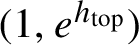 $(1, e^{h_{\mathrm {top}}})$.
Exponential mixing of frame flows for convex cocompact hyperbolic manifolds
- Part of
-
- Journal:
- Compositio Mathematica / Volume 157 / Issue 12 / December 2021
- Published online by Cambridge University Press:
- 08 November 2021, pp. 2585-2634
- Print publication:
- December 2021
-
- Article
-
- You have access
- HTML
- Export citation
STATISTICAL STABILITY FOR DETERMINISTIC AND RANDOM DYNAMICAL SYSTEMS
- Part of
-
- Journal:
- Bulletin of the Australian Mathematical Society / Volume 105 / Issue 1 / February 2022
- Published online by Cambridge University Press:
- 30 September 2021, pp. 171-172
- Print publication:
- February 2022
-
- Article
-
- You have access
- HTML
- Export citation
There are no deviations for the ergodic averages of Giulietti–Liverani horocycle flows on the two-torus
- Part of
-
- Journal:
- Ergodic Theory and Dynamical Systems / Volume 42 / Issue 2 / February 2022
- Published online by Cambridge University Press:
- 18 March 2021, pp. 500-513
- Print publication:
- February 2022
-
- Article
-
- You have access
- Export citation
-
We show that the ergodic integrals for the horocycle flow on the two-torus associated by Giulietti and Liverani with an Anosov diffeomorphism either grow linearly or are bounded; in other words, there are no deviations. For this, we use the topological invariance of the Artin–Mazur zeta function to exclude resonances outside the open unit disc. Transfer operators acting on suitable spaces of anisotropic distributions and their Ruelle determinants are the key tools used in the proof. As a bonus, we show that for any
 $C^\infty $ Anosov diffeomorphism F on the two-torus, the correlations for the measure of maximal entropy and
 $C^\infty $ observables decay with a rate strictly smaller than
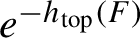 $e^{-h_{\mathrm {top}}(F)}$. We compare our results with very recent related work of Forni.


