To save content items to your account,
please confirm that you agree to abide by our usage policies.
If this is the first time you use this feature, you will be asked to authorise Cambridge Core to connect with your account.
Find out more about saving content to .
To save content items to your Kindle, first ensure no-reply@cambridge.org
is added to your Approved Personal Document E-mail List under your Personal Document Settings
on the Manage Your Content and Devices page of your Amazon account. Then enter the ‘name’ part
of your Kindle email address below.
Find out more about saving to your Kindle.
Note you can select to save to either the @free.kindle.com or @kindle.com variations.
‘@free.kindle.com’ emails are free but can only be saved to your device when it is connected to wi-fi.
‘@kindle.com’ emails can be delivered even when you are not connected to wi-fi, but note that service fees apply.
David Frayman, London School of Economics and Political Science,Christian Krekel, London School of Economics and Political Science,Richard Layard, London School of Economics and Political Science,Sara MacLennan, London School of Economics and Political Science,Isaac Parkes, London School of Economics and Political Science
This chapter covers four educational measures which may potentially have a huge bearing on young people and their futures: life skills, apprenticeshipshigher education and class size reduction. The best predictor of an adult’s life satisfaction is their emotional health at 16 – not their qualifications. Which school they go to is a key factor in this – schools affect emotional health as much (in terms of explained variance) as they affect academic performance. Teaching life skills in an evidence-based way can have a positive impact on pupils’ emotional health. ‘Healthy Minds’ is a weekly curriculum for ages 11–15. In an RCT, this raised life satisfaction by 0.36 points (out of 10) with a BCR of 27:1.
After school, a key issue is what training a young person gets. For those not wanting full-time university education, earning while learning via apprenticeship is the obvious route. In Britain, such apprenticeships are in short supply – only one in three applicants finds a place. However, in our evaluation we found apprenticeships to be so effective in raising income and employment that they repay the state’s expenditure within seventeen years (including discounting). The comparable period for higher education is twenty-nine years.
Finally, we look at class size – a policy with an extremely low BCR. Marginal reduction in class size is both costly and has negligible positive impact on children’s wellbeing and attainment.
David Frayman, London School of Economics and Political Science,Christian Krekel, London School of Economics and Political Science,Richard Layard, London School of Economics and Political Science,Sara MacLennan, London School of Economics and Political Science,Isaac Parkes, London School of Economics and Political Science
This chapter is an overview of the whole book and its findings. First, we note the shortcomings of traditional cost benefit analysis (CBA) – that it has no way to value things that just happen to us, like losing a job, being sick or being robbed. We then show how non-monetary outcomes can be valued using the new science of wellbeing.
Wellbeing is measured by life satisfaction (0–10), which is shown to be a reliable and valid measure (with good ability to predict mortality). So, to measure the benefits of a policy, we measure its non-pecuniary effects in terms of life satisfaction. We then convert the change in life satisfaction into the equivalent amount of money (that would produce that change in life satisfaction). For each policy, we then compute the ratio of benefits to net cost. This is the method now used by the UK Treasury.
David Frayman, London School of Economics and Political Science,Christian Krekel, London School of Economics and Political Science,Richard Layard, London School of Economics and Political Science,Sara MacLennan, London School of Economics and Political Science,Isaac Parkes, London School of Economics and Political Science
This chapter defends the approach outlined in the introduction, arguing that it is the only rational basis for decision-making.
We aim to maximise the wellbeing of the people, given the size of the budget. The rational approach is therefore to calculate the BCR of all possible policies and select those with the highest BCR. Benefits are to be measured by life satisfaction. These are then monetised by dividing them by the marginal utility of income (of the person with average income). In calculating total Wellbeing-Years (WELLBYs), we discount future changes at 1.5 per cent per annum, while for costs, we discount at the discount rate for money of 3.5 per cent per annum.
We encourage policymakers to take into account the initial wellbeing of those whose wellbeing is affected. This is done by showing the average wellbeing of the gainers from the policy (and their number) as well as the losers. New policies should also be sought in particular to help those who are suffering. In the UK, the causes of misery (in terms of share of variance explained) are in order: mental illness, physical illness, loneliness, bad work, unemployment and poverty.
There is recognition of the need to design wellbeing interventions in contextually sensitive ways, and report systematic, theory-driven approaches to intervention development. However, many intervention studies in the burgeoning literature on psychological professional trainee wellbeing do not include information on processes or theory surrounding the development of interventions tested. This theory- and stakeholder-informed intervention development study was guided by the MRC framework for developing and evaluating complex interventions and underpinned by the COM-B. Evidence and theory were used to support an initial intervention outline. Meetings were subsequently held to gather stakeholder perspectives, to address unknowns of intervention design, and to support development of a theory of change. Stakeholder (trainees and professional training staff) perspectives and relevant theory were used to inform the design of an acceptance and commitment therapy (ACT) based intervention, to address key stressors experienced by trainees. The intervention was delivered in a group setting, over the course of four sessions spaced 1–3 weeks apart. Collaboratively constructed COM-B analyses identified target behaviours and shaped intervention design. A comprehensive theory of change was developed, outlining key assumptions and setting out hypothesised pathways of change. An evidence-informed ACT-based intervention for psychological professional trainee wellbeing has been developed with key stakeholder collaboration. An acceptability and feasibility evaluation of this intervention is underway.
Key learning aims
(1) To understand the processes through which a tailored wellbeing intervention for psychological professional trainees was developed in collaboration with key stakeholders.
(2) To consider how an acceptance and commitment therapy (ACT) based intervention was adapted to address specific challenges encountered by psychological professional trainees.
(3) To understand the pathways through which an adapted ACT intervention is anticipated to support trainee wellbeing.
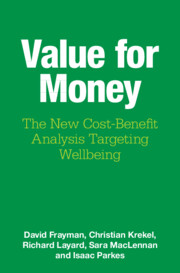
Governments spend billions on our behalf. But how should this money be spent? The purpose should be to increase the wellbeing of the people. So the best policies are those which produce the most wellbeing per pound spent. The new science of wellbeing now enables us to make these calculations. The authors of this book, led by Richard Layard, do just that across a whole range of government policies. And the results call for radical changes in priorities. This path-breaking book opens up a new approach to policy-making. It combines traditional economics with the new psychology of happiness. By valuing non-monetary outcomes it does what politicians have always wanted. Its methods have already been adopted by the UK Treasury and are relevant worldwide. If followed, they would produce a happier world. When people ask where do we go 'beyond GDP', this is the answer.
The whole-university approach to mental health emphasises that well-being should be a strategic priority across all aspects of higher education. However, there is limited evidence on which aspects of university life institutions should target to maximise well-being.
Aim
To identify factors associated with student mental health and well-being and provide an evidence base for developing initiatives that protect and promote this.
Methods
The Nurture-U survey was conducted across five universities in the UK from 2022 to 2024. This cross-sectional sample of the survey data assessed student well-being and mental health at the start of the academic year. Hierarchical linear regression models examined the relative association between demographic, family history, university and lifestyle variables and self-reported depression, measured using the Patient Health Questionnaire-9 (PHQ-9), anxiety, measured using the Generalised Anxiety Disorder-7 (GAD-7) and well-being, measured using the Short Warwick–Edinburgh Mental Well-being Scale (SWEMWBS).
Results
A total of 14 172 students completed the survey. Over a quarter self-reported probable anxiety or depression based on established screening thresholds. Regression analysis indicated that younger age, identifying as female or lesbian, gay, bisexual, transgender, queer/questioning, intersex or asexual (LGBTQIA+) and reporting a disability were associated with poorer mental health. There was minimal evidence of mental health impact associated with university factors, such as course of study or university attended. There was a strong association with exercise and self-care.
Conclusions
We have provided evidence that exercise and self-care may be areas that universities can target when considering a whole-university approach to student mental health and well-being. Increasing opportunities for students from all backgrounds, means and abilities to adopt healthy behaviours is vital to supporting university students.
Civility is a hot topic within all aspects of healthcare, in this chapter we explore the importance within maternity care. Civility, as a multi-professional team, is key for safety of the women and babies that we care for but also the wellbeing of the team. The chapter highlights existing resources and the underpinning human factors to consider the importance of civility and the wider reaching impacts when team members are incivil. Key learning points: Incivility is a recurring theme in NHS surveys. Incivility directly impacts the quality of healthcare that teams provide by reducing the performance of the victim, bystanders and the wider team. National reports into maternity services have highlighted the negative impact of poor workplace culture on maternity care. The promotion of psychological safety and compassionate leadership is fundamental to develop a positive working environment. The RCOG, RCM and NHS England have developed resources to tackle incivility and to support positive workplace behaviours. Small steps, such as calling out incivility and negative behaviours in the workplace, can lead to positive changes in the wider culture.
International policy efforts to systematise the consideration of health outcomes across social and economic policy – the ‘Health in All Policies’ (HiAP) approach – have faced practical, relational and political difficulties. Meanwhile, new economic policy agendas focused on ‘inclusive growth’ or ‘wellbeing’ may provide an alternative route to improving population health by acting on upstream determinants. This research uses a frame analysis of thirty social, economic and health policy documents, and semi-structured interviews with thirty-four policy actors, to explore conceptualisations of ‘health’ in two devolved policy bodies in the UK – Greater Manchester Combined Authority and the Scottish Government – with declared interests in these economic agendas. Interviews revealed that social and economic policy actors conceptualised ‘health’ narrowly as biomedical, physical illness, and as shorthand for ‘health policy’. Further, some of these participants expressed resentment about health policy, while interviewees across teams expressed scepticism about HiAP. In contrast, ‘wellbeing’ was widely conceptualised similarly to the social model of health, included mental health, and was supported as a plausible common cause. This research suggests that a clearer conceptual distinction between ‘healthcare’ and ‘wellbeing’ – representing the medical and social models of health respectively – may support policy efforts to promote population health.
The post-reform transition in China since the 1980s has involved rapid economic, social, institutional, and policy changes amid marketisation, demographic transitions, and shifting social norms. These dynamics have profoundly affected womenʼs everyday lives. This article investigates their implications by drawing on a human dignity approach integrating interlinked dimensions: physical and psychological wellbeing, care relations, social integration, self-determination, and equal value. Through 33 semi-structured interviews with women in Guangzhou, the article reveals three mechanisms reconstituting gender inequality: trade-offs where gains in one dimension compromise others; intensifying inequalities where disadvantages reinforce across dimensions, particularly for rural migrants; and constrained autonomy where women navigate limited choices. The analysis demonstrates how social stratifications based on residency, employment, and family resources reconfigure womenʼs heterogeneous experiences in post-reform urban China. This article contributes to the literature on human dignity, social policy, and gender by foregrounding a way to understand and research the multidimensionality of women’s experiences.
This chapter explores the rationale behind, and the importance of understanding, the unique profiles of each child being cared for, across early childhood settings. The purpose of this is to frame ways in which all children can be supported to achieve the best developmental, educational and wellbeing outcomes possible, now and in the future. Drawing on the principles and frameworks discussed in Chapter 1, this chapter will support further understanding of the importance of individualised care and education for every child.
This concluding chapter invites educators to pause and reflect deeply on the interconnections between critical reflection, effective teaching, and personal wellbeing. It challenges teachers to view classroom leadership as a practice built on self-awareness, relational responsiveness, and thoughtful decision-making. Central to this interconnectedness is the ability to manage workload, set clear priorities, and self-regulate. These elements form a foundation for teaching that is effective and sustainable over time. Through this lens, wellbeing is not treated as separate from pedagogy or professionalism; rather, it directly shapes how teachers lead with empathy, uphold integrity, and make purposeful choices. By exploring how wellbeing, emotional regulation, and reflection shape the capacity to lead and connect, this chapter encourages teachers to consider how personal and professional growth are closely linked.
Entering a teaching position for the first time is a professionally significant milestone; one that requires attentive preparation, strategic planning, and active engagement. With this in mind, a diverse range of strategies in this chapter are explored with the aim of supporting early career teachers in effectively transitioning into a new educational setting. Understanding the teaching role expectations, actively engaging in orientation and/or induction, and undertaking initial classroom setup, are all necessary requirements that early career teachers must tend to in order to be best placed for a successful start.
While loneliness and social isolation are risk factors for poor health and functioning, prominent theories suggest that loneliness may serve an adaptive function by encouraging social reconnection. Nevertheless, few studies have examined how loneliness and isolation relate to each other, and other outcomes, over time. Using the Environmental Risk Longitudinal Twin Study, a UK population-representative cohort of 2,232 individuals born in 1994–1995 (49% male, 90% White), we investigated how loneliness and isolation are related across time and jointly influence outcomes. Loneliness and isolation were assessed at ages 12 and 18. Mental health, well-being, health behaviors, and socioeconomic outcomes were measured at age 18. Loneliness and isolation were concurrently and longitudinally associated with each other across adolescence. Loneliness marginally moderated the stability of social isolation from age-12 to 18 (β = ‒0.08, p = 0.08) but did not observe a buffering effect, with isolated children who experienced loneliness experiencing high isolation in young adulthood. Age-12 loneliness and isolation were independently associated with poorer mental health, well-being, and socioeconomic outcomes (β = ‒0.18–0.10, p < 0.05), though experiencing both was not associated with worse outcomes. Our findings underline the pervasive impacts of childhood loneliness and isolation and challenge the view that loneliness drives social reconnection in early life.
Caregivers of children with CHD frequently experience psychological distress related to the chronic and unpredictable demands of their child’s diagnosis. Peer support can mitigate distress and promote resilience, but few studies have explored factors affecting its implementation or the experiences of those who provide or facilitate peer support. This study aimed to identify barriers, facilitators, and recommendations for optimising peer support from the unique perspectives of leaders of patient/family organisations within the CHD community.
Methods:
Using online crowdsourcing methods, qualitative data on the implementation of peer support was collected from 16 leaders representing five patient/family organisations. Crowdsourced data were coded and analysed using thematic analysis, with themes categorised as barriers, facilitators, and recommendations.
Results:
Four overarching themes were constructed: 1) Training and Expertise, highlighting the value of lived experience alongside the need for structured training in mental health and bereavement; 2) Peer Mentor Wellbeing, including burnout, secondary traumatic stress, and the importance of clear role boundaries and expectations; 3) Partnerships and Collaboration, emphasising relationships with clinical care centres; and (4) Support for all Families and Family Members, including fathers, siblings, and bereaved families.
Discussion:
The results provide insight into the implementation of peer support, with recommendations for next steps including hospital-community partnerships to improve access and intentional programme design to protect peer mentor wellbeing. Further understanding of caregiver and peer mentor needs is critical for elucidating ways to develop and implement optimal models of peer support.
This chapter examines the intersections between Indigeneity, Indigenization and CRT as paths to uncover structural racism and inequities, to resist and neutralize decolonizing ways. Indigeneity and Indigenization are grounded in radical remembering and reconceptualizing social work’s ethical and moral fortitude. They represent Indigenous identities, lifeways and values calling on us to examine all aspects of racism, power distribution, and wellbeing with the intent of strengthening communities. The dualism of CRT, white vs. black and other people of color, neglects Indigenous world views and perpetuates colonial dynamics by excluding ways of being and thinking beyond race. In this way, CRT detracts energy from restoration, securing of ancestral lands, revitalizing Indigenous languages and cultural practices, and impedes intergenerational healing. Indigenously defined social work practice holds the promise of universal wellbeing and opportunities to diversify a socially just agenda.
Females with autism, and especially young females, have been underrepresented in research on students with autism. Females with autism are typically diagnosed later than are males, due in part to differences in their presentation and lack of awareness of autism in females. This means that potentially serious mental health disorders originating in preadolescence in females can go unnoticed and untreated. We addressed this gap by examining the school-related wellbeing of females with autism aged 7–14 through an anonymous online survey completed by 38 parents. Seven key themes were identified: social issues, sensory issues, change issues, bullying, lack of understanding of autism, academic issues, and issues related to food or eating. By mapping these issues against aspects of wellbeing identified in the literature, we highlight their negative impacts on social and emotional wellbeing among females as young as 7 years and conclude that greater awareness and understanding of autism among young females is needed.
This chapter addresses the book’s central themes by presenting practical strategies to strengthen quality of life in Indigenous communities. Drawing on psychology, community health, Indigenous governance, and urban planning, it emphasises the importance of strong connections to Country in supporting wellbeing and healing from historical dislocation and intergenerational trauma. Using the Ngarluma Yindjibarndi Foundation Ltd. (NYFL) Strategic Plan as a case study, the chapter demonstrates how Indigenous leadership and decision-making are vital to community-driven change. It shows how NYFL can apply culturally grounded approaches from this book to enhance local liveability. Innovative data-sovereignty partnerships and ‘two-way’ knowledge frameworks illustrate the potential of integrating Indigenous and Western perspectives. Together, these strategies support communities to reclaim place, culture, and Country. The chapter ultimately provides actionable pathways for fostering resilience and sustainable wellbeing, reinforcing the book’s overarching purpose of bridging worldviews to create more liveable and inclusive futures.
Between 2010 and 2012, a catastrophic earthquake sequence devastated Christchurch, a colonial city built on Ngāi Tahu ancestral land in Canterbury, New Zealand. This chapter explores how government agencies, including public health services, collaborated with mana whenua (Ngāi Tahu, the local Māori tribe) to rebuild Ōtautahi Christchurch in ways that respect its colonial past while looking to a climate-challenged future. The rebuild sought to integrate natural environmental features and symbolic markers significant to mana whenua, while also promoting health, wellbeing, and a renewed sense of place for all residents. Writing as three Tangata Tiriti (settler-colonial) women, we draw on our professional roles in public health, urban design, landscape architecture, and strategic planning. We reflect on our involvement in planning and policy implementation, considering what worked well, what fell short, and our hopes for a future city that fosters resilience, inclusivity, and belonging.
The Introduction summarises my book’s contents and highlights its key themes. I will argue that there is a human nature, from which flow a raft of ‘pre-moral’ (or ‘ultimate intrinsic’) goods. My Aristotelian (teleological and essentialist) theory of ‘natural perfectionism’ is, I will argue, compatible with Darwinism and subsequent evolutionary biology. It is not an account of normativity across the board, however. Specifically, it does not tackle the manifold quandaries that arise in the domain of practical reason; it does not treat supernatural goods (supposing these to exist); and it does not examine natural perfections in plants or the lower (non-human) animals. Two cautionary notes: first, my book treats perfectionism in the philosophical, not the colloquial, psychological, sense; more specifically, it elaborates a perfectionism of powers or faculties. Second, by focusing on powers or faculties, it avoids the pseudo-essentialisms of class, race, nation, sex etc. Last, I tackle three values that are absent from my book: namely, autonomy, pleasure and wellbeing. These cannot be natural perfections, I argue, because they fall short of being ultimate intrinsic goods.
The Mediterranean Diet (MedDiet) and physical activity (PA) can enhance mood and support psychological wellbeing in adults. However, the combined effect is relatively unknown. MedWalk aimed to determine the combined effect on wellbeing, psychological health and quality of life (QoL), compared to a control group.
Design:
This is an analysis of secondary outcomes from the MedWalk 12-month cluster-randomised controlled trial. Participants completed the Total and Secure Flourishing Index (FI), the four domain General Health Questionnaire (GHQ-28) and the 8-domain Assessment of Quality of Life (AQoL-8D). Data were analysed using general linear models using change scores (FI and AQoL-8D) or generalised linear mixed models with a time × group interaction effect (GHQ-28).
Setting:
Independent living facilities across South Australia and Victoria in 2021–2022.
Participants:
One hundred and sixty-one older men and women.
Results:
Participants were 74·9 ± 5·9 years of age and predominantly female (74 %). A greater improvement was found for the MedWalk group (marginal means (MM) = 1·65, se = 1·36) than the control group (MM = –2·50, se = 1·32) for the Total Flourish score (P = 0·003) and Secure Flourish score (P = 0·009) ((MM = 1·06, se = 1·65) v. (MM = –3·34, se = 1·61)) from baseline to 6 months. The MedWalk group (MM = 0·021, se = 0·014) had more positive changes (P = 0·048) to the Mental Health AQoL-8D domain than the control group (MM = –0·007, se = 0·014). No significant group × time interactions were identified for the GHQ-28.
Conclusions:
Combined MedDiet and walking interventions can modify psychological health, wellbeing and QoL in relatively healthy populations.