To save content items to your account,
please confirm that you agree to abide by our usage policies.
If this is the first time you use this feature, you will be asked to authorise Cambridge Core to connect with your account.
Find out more about saving content to .
To save content items to your Kindle, first ensure no-reply@cambridge.org
is added to your Approved Personal Document E-mail List under your Personal Document Settings
on the Manage Your Content and Devices page of your Amazon account. Then enter the ‘name’ part
of your Kindle email address below.
Find out more about saving to your Kindle.
Note you can select to save to either the @free.kindle.com or @kindle.com variations.
‘@free.kindle.com’ emails are free but can only be saved to your device when it is connected to wi-fi.
‘@kindle.com’ emails can be delivered even when you are not connected to wi-fi, but note that service fees apply.
With the rise of China and massive new migrations, China has adjusted its policy towards the Chinese overseas in Southeast Asia and beyond. This book deals with Beijing's policy which has been a response to the external events involving the Chinese overseas as well as the internal needs of China. It appears that a rising China considers the Chinese overseas as a source of socio-political and economic capital and would extend its protection to them whenever this is not in conflict with its core national interest. The impacts on and the responses of the relevant countries, especially those in Southeast Asia, are also examined.
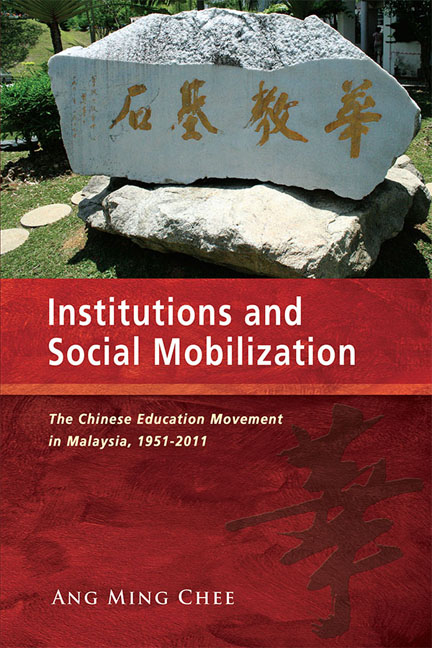
"This book marks a major contribution since the work of Tan Liok Eee (1997) on the Dongjiaozong movement in Malaysia. The author's familiarity with both popular and academic writings in Mandarin has yielded rare, first-hand, and often bottom-up views on the Dongjiaozong movement from actors directly involved in the movement. As a result, readers get a better understanding of the personalities, leadership dynamics, creative strategies of control and resistance within this social movement as well as its ability to exploit political vulnerabilities and interpersonal relationships to cajole, negotiate and arm-twist the state in its bid to defend Chinese education in Malaysia. This book will be of interest to practitioners in the fields of political science and Malaysian studies, in general, and the study of state-society relations and social movements in non-liberal democratic contexts, in particular." - Associate Professor Goh Beng Lan, Department of Southeast Asian Studies, National University of Singapore
The unprecedented results of the 2008 national elections took many Malaysians by surprise. The component parties of the ruling coalition suffered huge losses, while the opposition was victorious in several states. Many media scholars and political pundits, including politicians, pointed to the online platform as a democratic tool that had increased support for the opposition. In the 2013 election the ruling party turned its spotlight on new media to try to regain voter support. In order to obtain a better understanding of the much-touted democratizing effects of the online media, this book employs an alternative lens to examine the use of new media at the intersection of social and political realities. It explores the ways individual political bloggers, Facebookers and Twitterers used cyberspace to battle for voter support in the 2008 and 2013 national elections. It examines the cultural practices and the social and political affiliation and aims of individual actors, as well as the social ties that subsequently emerged from the use of the online media. This research employs a political economy approach to the media, Habermasi's notion of the public sphere, and the social determinism perspective in order to understand the extent to which online media can enrich political life and bring about new ways of campaigning.
Geography has moulded Singapore's self-definition, much as it has shaped the contours of the rest of Southeast Asia, a region that lies south of China and east of India. Placed within overlapping Sinic and Indic zones, Singapore's entrepôt role has served both. Today, as China and India emerge simultaneously as rising powers, a port city is going beyond its trading role to engage them in political and security terms. This book combines diplomatic history and international relations theory to show how Singapore is facilitating China's and India's engagement of Southeast Asia.
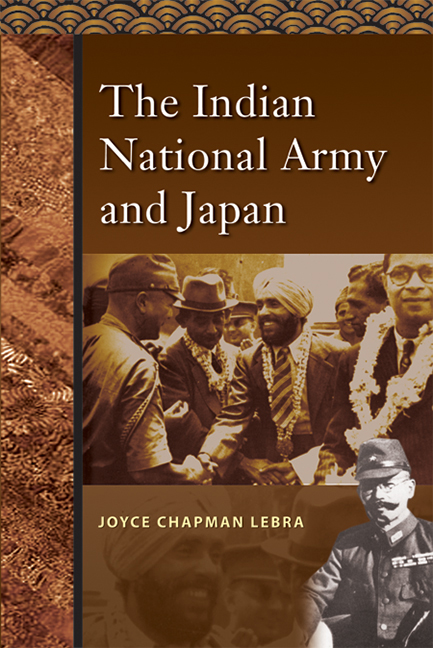
This study traces the origins of the Indian National Army in the imagination of Iwaichi Fujiwara, a young Japanese intelligence officer, and the relationship between the Imperial Japanese Army and the Indian National Army as it evolved under the leadership of Bengali revolutionary, Subhas Chandra Bose. The study is unique in its use of Japanese archival sources for analysis of the relationship between Japanese policy formulation and the Indian independence movement in its military phase.
Southeast Asia 'State of the Nation' Monograph Series: This study seeks to evaluate the most significant events in the country during the last two decades in order to understand better the structures and forces underpinning the process of change and continuity in three interlinked historical periods: the struggle against the authoritarian rule of Marcos; the Aquino presidency; and the first three years of the Ramos administration. The monograph also seeks to identify the important trends and developments that help shape events and conjunctures in the future.
The ASEAN Regional Forum (ARF) is the only Asia-Pacific-wide forum for consultations and dialogue on political and security issues. Although many articles and books have been published on the ARF, this is one of the few books that treat the forum comprehensively and from the standpoint of the region itself. It traces the ARF's origins, the efforts to move it from confidence building to "preventive diplomacy", and the forces that hold them back, analysing the strategic environment that both constrains the ARF and makes it essential. The book discusses the question of participation, describes the numerous cooperative activities that the participants undertake, and deals with the issue of institutionalization. Finally, it assesses the ARF as a forum and a process on its own terms. The book is written by the former ASEAN Secretary-General and former senior official who was involved in the ARF's early years.
"This book fills a gap in authoritative analyses of the causes of inter-religious conflict and the practice of religious toleration. The rise of more overt expressions of Islamic piety and greater bureaucratization of Islam in both Indonesia and Malaysia over several decades have tested the "live and let live" philosophy which used to characterize religious expression in these nations. The analyses in each chapter of the book break new ground with contextualized studies of particular and recent incidents of conflict or harassment in a variety of areas - from urban centres to more remote and, even complex, locations. As these studies show, legislation stands or falls on the ability and determination of local authorities to enforce it.This volume is essential reading for understanding the dynamics of state-religious interaction in Muslim-majority nations and the crucial role civil society organizations play in negotiating interfaith toleration." - Emeritus Professor Virginia Hooker FAHA, Department of Political & Social Change College of Asia & the Pacific, The Australian National University "A most welcome contribution to the academic discourse of political Islam in Indonesia and Malaysia! For this volume focuses not on Islamic resurgence as many others have done, but on the impact of Islamic resurgence upon its non-Muslim minority counterparts - Buddhists, Christians, Hindus and also the Syiah Muslims - in the two plural societies, and the varying responses of those minorities, themselves often fragmented, to Islamic resurgence. The rich case studies highlight the changing character of politics in the two countries and their capacities to deal with religious diversity, an aspect of politics often ignored because of the usual concern for economic and political institutional capacities. The juxtaposition of Malaysian and Indonesian cases in a single volume and comparisons of contrasting developments in the two countries, challenges readers not to resort to easy conclusions and overgeneralizations about rising inter-religious tensions, but to give more scholarly attention to this politics-religion diversity nexus." - Emeritus Professor Francis Loh Kok Wah, Department of Political Science, Universiti Sains Malaysia
The general view about regionalism seems to be that it is better to have regionalized and faltered than never to have regionalized at all! Inspired by this observation, this study aims to provide a comparative sketch of regionalism in South and Southeast Asia in the light of recent regional developments. Since regionalism is both a pervasive and amorphous phenomenon a straightforward account of its similarities and differences cannot be easily set down. But the broad patterns of behaviour of the regional actors who gather under a regional roof can be captured and compared. To compare is not only to understand but to improve and avoid the avoidable. This book analyses the highs and lows of regional experience mainly in South Asia (South Asian Association for Regional Cooperation or SAARC) and Southeast Asia (Association of Southeast Asian Nations or ASEAN) interspersed with references to the European Union (EU) where relevant. The book argues that regionalism is here to stay and both imitation and innovation are the preferred strategies for sustaining the process. It points out that economic integration requires certain prior conditions to be fulfilled and does not happen merely because governments wish it to happen.
The central focus of the book is the state's efforts to industrialize Myanmar, first through direct intervention and planning under a socialist economic framework as interpreted by the state leaders (1948-88) and lately (1989 onwards) through state-managed outward orientation. In examining developments during the 1948-88 period, this study situates the Myanmar case within the developmental state paradigm, whereby a critique of the investment-driven -pathway of Myanmar's political economy under socialist ethos is provided. On the other hand, in examining the post-1988 period, the focus is on drawing attention to continuities regarding the state's crucial role, despite attempts to introduce market-conforming policies and practices, in economic development in general and industrialization in particular.
"This is the first comprehensive study of the tensions for ASEANs security community concept arising from Myanmar's membership of ASEAN. Too much commentary about Myanmar is agenda-driven; this study is objective, meticulously researched, and finely balanced. Being an 'outsider', Christopher Roberts recognizes the dynamics that characterize these complex relationships, and analyses them with care and insight." - Trevor Wilson, former Australian Ambassador to Myanmar (2000-03); Visiting Fellow, Australian National University, Canberra
There has been an avalanche of publications on Southeast Asia in recent years, but no one volume provides an accurate and up-to-date account of political institutions and practices in the region. This book fills that gap. Each country chapter provides a broad overview of the historical, social and economic setting. It then analyses in detail the political "institutions" of that country -- the constitution, head of state, executive (cabinet and both military and civilian bureaucracies), the legislature, elections, the judiciary, political parties, ideology, civil society and human rights. Finally, it examines major traditional concerns of political scientists -- who rules, who benefits, and the extent of legitimacy -- before addressing the more modern preoccupation with governance.
The United Nations Conference on the Law of the Sea produced a Convention in 1982 through which maritime regionalization is to be peacefully organized. However, jurisdictional application of the Law of the Sea has not been easy. In this book the basic problems of regionalization are concisely described in relation to each area regime and the regulations of the new Law of the Sea. The development of maritime law in the Pacific region is summarized and the economic significance of these sea-areas is also clearly stated.
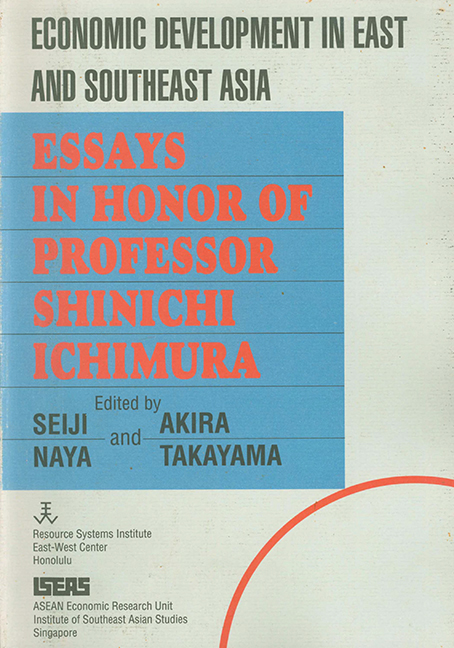
This volume reflects the wide range of development issues and problems of the economies of East and Southeast Asia whose dynamic performances have caught the attention of many around the world. It also serves to honour Professor Shinichi Ichimura for his dedication and many contributions to creating a better understanding of the development issues faced by the countries in the region. Both the editors and all of the contributors in this book have worked with Professor Ichimura at one time or another.
Well over half of the world's Muslim population lives in Asia. Over the centuries a rich constellation of Muslim cultures developed there and the region is currently home to some of the most dynamic and important developments in contemporary Islam. Despite this, the internal dynamics of Muslim societies in Asia do not often receive commensurate attention in international Islamic Studies scholarship. This volume brings together the work of an interdisciplinary group of scholars discussing various aspects of the complex relationships between the Muslim communities of South and Southeast Asia. With their respective contributions covering points and patterns of interaction from the medieval to the contemporary periods, they attempt to map new trajectories for understanding the ways in which these two crucial areas have developed in relation to each other, as well as in the broader contexts of both world history and the current age of globalization.
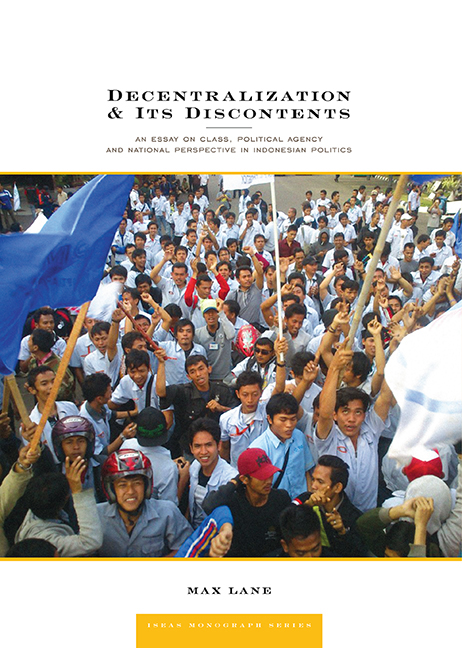
"Decentralization is a major trend in Indonesia since the first decades of that nation under Sukarno and Suharto. Max Lane is justly treasured for illuminating those first decades, for example, through his translations of Pramoedya Ananta Toer, and his excellent book, Unfinished Nation: Indonesia Before and After Suharto. Anyone who seeks insights into the current trend of decentralization, whether in Indonesia or other parts of the world, will find this work cogent."–James L. Peacock, Kenan Distinguished Professor, University of North Carolina at Chapel Hill"This book opens up the discussion on the history and political economy of the new populist policies that seem to gain momentum in the face of the Indonesian elections. It also addresses questions pertaining to the problems and options related to popular aspirations within this context-all of which cannot be explained very well by any of the predominant theses on Indonesia, whether as an oligarchy or a democratically liberal but economically predatory country."–Professor Olle Törnquist, University of Oslo
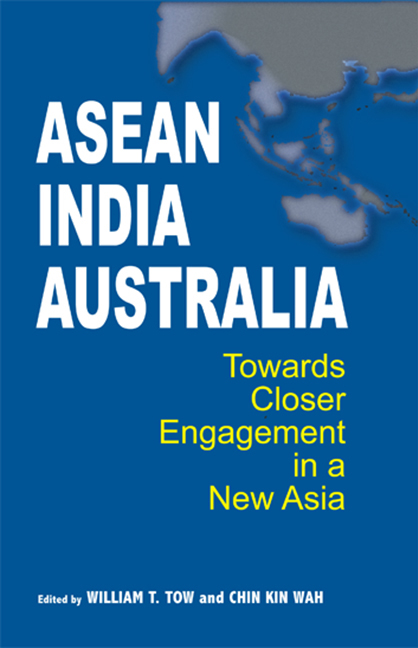
India's emergence of a great power has sensitized its regional neighbours to its growing role as a key security actor in an increasingly interdependent world. Both Australia and ASEAN now view India as a major player in the formulation and application of their own broad security agendas. This emerging trilateral compendium is particularly evident in such policy areas as maritime security, climate change, energy security, law enforcement, "good governance" and the politics of security institutions or "architectures". This book represents one of the first systematic efforts to consolidate these diverse but important concerns into an overarching framework for ascertaining and cross-comparing how these three entities are approaching these policy challenges, individually and collectively. It argues that the dynamics underlying their intensifying security relations are sufficiently important to conceptualize them as a distinct analytical framework that needs to be understood in the larger context of Asia-Pacific security politics.
What would a history that put women at the centre of the rise and fall of kingdoms be like? When the armies of Khubilai arrived on Java in 1293, they found themselves in the middle of two warring states. Two historical traditions developed concerning the ensuing events: the official Chinese dynastic records in which no women are mentioned, and a number of Javanese histories and poems in which everything depends upon the actions and fates of certain women. The Chinese account has long been regarded as factual, whilst the Javanese versions have been dismissed as mere romance, their women stereotypical representations of male fantasies. But what happens if the women and the narratives about them are taken seriously rather than dismissed? Of Palm Wine, Women and War offers just such a reading.
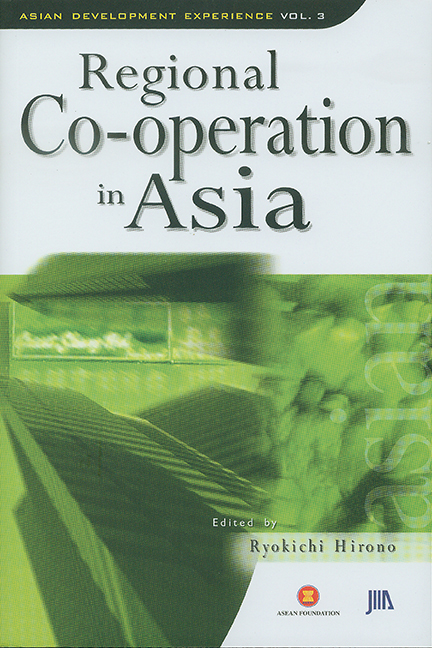
As ASEAN Vision 2020 proclaims, the members of ASEAN have achieved remarkable success in economic growth, stability and poverty reduction, over the past decades. There are, however, still diverse debates as to the factors which contributed to the success, with no conclusive assessment. This volume reviews the domestic reforms effectively introduced by ASEAN members after the 1997 financial crisis and what could be done to accelerate such reforms. With the entry of the 4 new members into ASEAN, possible measures to strengthen both intra- and extra-ASEAN regional cooperation frameworks are sought so that the 10 ASEAN members can make a smooth economic and social transformation to tackle globalization and accommodate the two highly competitive giant economies, China and India. The study also seeks to identify what could be the role of Japan in promoting its economic relations with the ASEAN-10 under the ongoing framework of the WTO and the ASEAN-Plus-Three in the light of the current trend towards greater regionalism in Europe and the Americas.
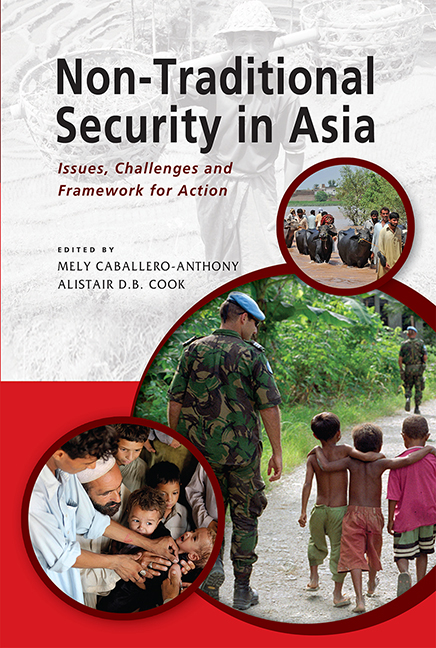
Non-Traditional Security in Asia examines the critical security challenges faced by states and societies in Asia including health, food, water, natural disasters, internal conflict, forced migration, energy, transnational crime, and cyber security. Through the development of a comprehensive analytical framework that establishes the key ingredients to policy evaluation, the editors draw on a wide variety of experts to collaborate in investigating these crucial issues. This inclusive framework ensures that all voices are heard including those oftentimes under-represented and marginalized in society to ensure that academic and policy debates are well informed about the often complex and nuanced nature of these non-traditional security challenges.Through an investigation into these specific non-traditional security threats, Non-Traditional Security in Asia documents and evaluates many of the most pressing challenges faced by Asia today. The authors analyse the ways in which particular issues are addressed by the many stakeholders involved in the policy-making process, both within governments and across societies. The question of how these challenges are addressed across and between the different levels of global governance highlights the strengths and weakness that are directly attributable to policy successes and failures. It is through this layered and comprehensive approach, together with an evaluation of the role of stakeholders, which binds together the chapter contributions to this collection. The book undertakes an issue-specific chapter study of how Asian states and societies address these non-traditional security concerns from environmental adaptation and mitigation measures to conflict resolution. For each issue area, it identifies and explains the concerns of various policy communities, identifying the motivations behind some of the key decisions made to affect change or stabilize the status quo. Essentially it questions not only what a security issue is but also for whom the issue is important and the interaction this has with policy outcomes. With a focus on regional and global institutions as well as national and local ones, this collection illustrates the variety of stakeholders involved in non-traditional security concerns, and reflects on their relative importance in the decision-making process. Through a systematic evaluation of these non-traditional security issues by employing a comprehensive analytical framework, critical appreciation of the dynamics of the policy-making process surrounding issues of crucial national, regional and international significance in Asia are made. As a result of sharing these insights, the contributors provide the tools as well as a selection of issue-specific stakeholders to illuminate the key but complex characteristics of non-traditional security in Asia.