To save content items to your account,
please confirm that you agree to abide by our usage policies.
If this is the first time you use this feature, you will be asked to authorise Cambridge Core to connect with your account.
Find out more about saving content to .
To save content items to your Kindle, first ensure no-reply@cambridge.org
is added to your Approved Personal Document E-mail List under your Personal Document Settings
on the Manage Your Content and Devices page of your Amazon account. Then enter the ‘name’ part
of your Kindle email address below.
Find out more about saving to your Kindle.
Note you can select to save to either the @free.kindle.com or @kindle.com variations.
‘@free.kindle.com’ emails are free but can only be saved to your device when it is connected to wi-fi.
‘@kindle.com’ emails can be delivered even when you are not connected to wi-fi, but note that service fees apply.
Three decades of authoritarian rule in Indonesia came to a sudden end in 1998. The collapse of the Soeharto regime was accompanied by massive economic decline, widespread rioting, communal conflict, and fears that the nation was approaching the brink of disintegration. Although the fall of Soeharto opened the way towards democratization, conditions were by no means propitious for political reform. This book asks how political reform could proceed despite such unpromising circumstances. It examines electoral and constitutional reform, the decentralization of a highly centralized regime, the gradual but incomplete withdrawal of the military from its deep political involvement, the launching of an anti-corruption campaign, and the achievement of peace in two provinces that had been devastated by communal violence and regional rebellion.
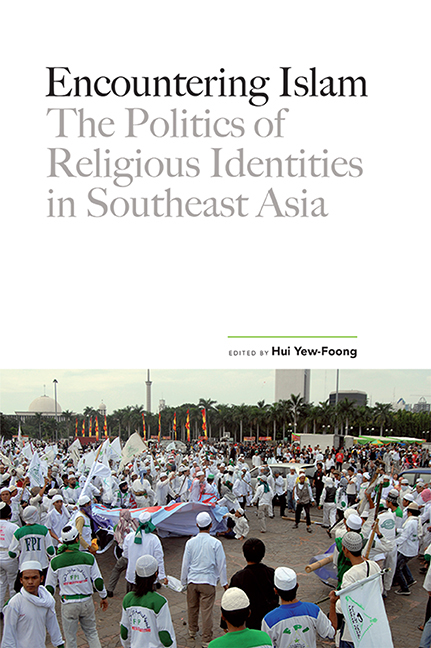
This volume seeks to introduce and deepen the understanding of Islam and its role in politics as encountered in different national and transnational contexts in Southeast Asia, eschewing the neo-orientalist approach that has informed public discourse in recent years. In Encountering Islam, the book lingers beyond the summary moment and reflects on the multiple impressions, suppressions and repressions, whether coherent or incoherent, associated with Islam as a socio-political force in public life. To this end, it is not adequate simply to represent the divergent identities associated with Islam in Southeast Asia, whether embedded in state-endorsed orthodoxy or Islamic movements that contest such orthodoxy. It is also important to examine religious minorities in political contexts where Islam is dominant and Muslim communities in national contexts where they are minorities. By situating these religious identities within their larger socio-political contexts, this volume seeks to provide a more holistic understanding of what is encountered as Islam in Southeast Asia.
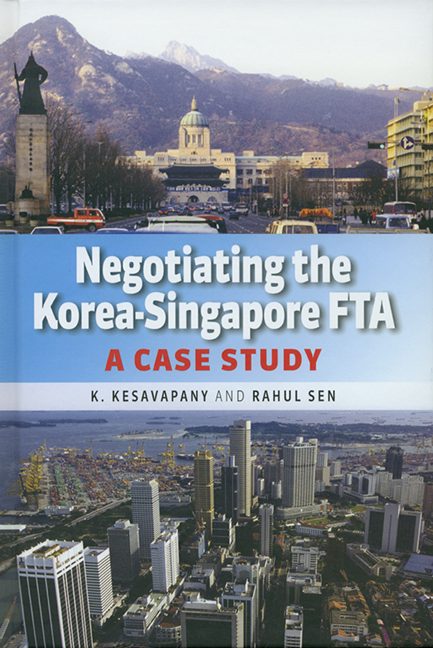
The Korea-Singapore Free Trade Agreement (KSFTA) is Korea's first comprehensive FTA involving any ASEAN member country and provides a framework for building a strong strategic and economic partnership between Korea and the ASEAN countries. It is therefore designed to be a building block in the process of community building efforts towards an East Asian Community in the long run as well as towards global free trade. This book analyses and documents the rationale behind the agreement and its impact on the economies of Korea and Singapore, underpinning the growing economic linkages between the two countries that have become stronger since the enforcement of the agreement.
Asia will redraw the map of economic progress over the next twenty-five years. Growth is necessary to solve economic and social problems, but harder to achieve as the age of plenty gives way to the age of scarcities. The challenge opens the doors for an Asian economic model based on shifting of productivity for the individual to groups, ecological productivity instead of economic productivity, and a reversal to traditional Asian values - less materialistic than Western values. A new paradigm for economic thinking emerges to replace the one launched in the West 200 years ago.
"A timely assessment of what Thailand has hitherto achieved in its efforts to improve corporate governance and a realistic look at how it can grapple with the remaining challenges on its agenda." Olarn Chaipravat, Fiscal Policy Research Institute, Thailand "A well-crafted work by Thai scholars who take readers on a journey from the pre- to the post-Asian financial crisis. Looking from the current standpoint, this book serves as a reflection on the developments in Thailand's first major efforts on corporate governance which have since moved Thailand away from that turbulent period." Chalee Chantanayingyong, Securities and Exchange Commission, Thailand
Situated in a remote area long a historical buffer zone between competing political entities, the Sulu Arms Market is an illicit market of a typical form in that it is both a source and a destination for less-than-legal guns. What makes the Sulu market unique is its longevity which is measured in centuries. In modern times, guns from the area supply conflicts and crime from Japan to Sri Lanka to Papua New Guinea and beyond; and in turn the world pours guns and ammunition into Mindanao, the Maluku (Molucca) Islands, and to a lesser extent, Malaysia and the rest of the Philippines. Like most black arms pipelines, the Sulu Arms Market is intertwined with piracy, terrorism, and the traffic of other illicit commodities. Criminal gangs, communists, Moro independence groups, and Islamic militants are all major players in the market, making it a security problem for at least five member states of the Association of Southeast Asian Nations (ASEAN).
Understanding the nexus between employment, living standards and poverty is a major challenge in Indonesia. Trends in poverty are heavily dependent on labour market opportunities and social spending in education and health. The question is how to create opportunities and spend money wisely - a subject of intense debate in Indonesia. The government has brought a renewed focus to poverty reduction since the end of the Asian financial crisis, especially under the current president, Susilo Bambang Yudhoyono. This book shows how Indonesia is travelling with regard to employment, social policy and poverty. It identifies promising new directions for strategies to alleviate poverty, some of which are already showing results.
"This book entitled ASEAN-U.S. Relations: What Are the Talking Points? is a result of a workshop organized by the ASEAN Studies Centre of the Institute of Southeast Asian Studies. The workshop was timely then, as the two sides, all of ASEAN, and the United States held their first-ever summit in Singapore in November 2009, heralding a new era of renewed engagement. The United States is very important for ASEAN, as a guarantor of regional stability and a vast market for ASEAN products. At the same time, ASEAN has gained more public attention from the United States, particularly since the advent of the Obama administration. This publication will serve as a reminder that ASEAN and the United States have shared many benefits as well as concerns for many years. Their continued engagement will undoubtedly ensure regional peace and order. I highly recommend this book to those who are interested in ASEANs external relations." –Professor Charnvit KasetsiriFormer Rector of Thammasat University and Visiting Professorial Fellow, ISEAS"Much has been made in the last few years of Washington's 're-engagement' with ASEAN, warmer ties with several Southeast Asian states, and the review of U.S. policy towards Myanmar. What explains this change and where are U.S.-ASEAN ties headed in the future? This timely collection of short essays and speeches by eleven leading academics and senior officials provides valuable background to what it calls a 'new era' in U.S. policy and thoughtfully explores where future challenges and opportunities might lie. The chapters are practically focused and forward looking, offering critical perspectives as well as policy recommendations. Covering security issues, aid, Myanmar, the South China Sea, and the evolving U.S. role in regional institutions, ASEAN-U.S. Relations: What Are the Talking Points? will be essential reading for anyone wanting to understand the changing dynamics of American policy in Southeast Asia."– Dr David CapieSenior Lecturer in International RelationsVictoria University of Wellington, New Zealand
This book examines the understanding, practices and challenges that Malaysia's higher education institutions face in their efforts to internationalize higher education at their respective institutions. This issue is of great importance to academics, policy-makers and students in institutions of higher learning in Malaysia, given the country's aspiration to become a hub for higher education. Malaysia is considered to be one of the success stories in the developing world in its efforts to internationalize its higher education. In the last decade or so, Malaysia has evolved into an emerging contender for international students, based on its transnational programmes and relative cost advantages. Increasing inflows of international students have changed Malaysia's position in the global arena from a sending to a receiving country as well. The findings in this book show that providers and students alike agree that internationalization is here to stay and that there are huge challenges ahead, while managing internationalization remains a prerogative for both institutions and the country. The lessons garnered from Malaysia's experience will also assist other developing countries that are embarking on the same internationalization journey.
Democratization in Indonesia has altered the political decision-making processes in many ways. It has also brought about tremendous change to the role of the Indonesian parliament in the country's political system. Once characterized as a powerless rubber stamp, the parliament has developed into a comprehensive and more representative body able to fulfil its functions more adequately. In the literature on democratic transition, the impact of parliaments on regime changes and on the democratic reorganization of the most important state institutions and regulations is usually neglected. In the Indonesian case, however, the national parliament was one of the most decisive actors and is therefore the focus of this book. The author analyses the parliament's contribution towards the process of democratization. Thus, this book contributes not only to research on the Indonesian democratization process, but also to the comparative research on parliaments in transition processes in general.
This book considers Malaysia-Singapore relations from a range of disciplinary perspectives. Geographical proximity, historical linkages, material flows, and movements have long connected the peoples and territories of Malaysia and Singapore in various ways and with varying degrees of intensity. Relations between the two countries have been shaped not only by competing visions of the nation and the different trajectories taken by these countries' nation-building projects, but also by the reality of economic interdependence and competition, security cooperation, and increasing embeddedness in the market-created East Asian region. The thirteen essays on history, politics, regional security, law, and economy collectively aim at a multi-dimensional study that seeks to convey the density and complexity of connections "across the Causeway".
This book is a rich selection of speeches and writings of Professor Widjojo Nitisastro of the University of Indonesia, who has radically changed the command economy under Soekarno into development planning using economic analysis under Soeharto. He is one of the most respected and influential economists of the twentieth century. He is also the first Indonesian demographer. This background has contributed to his wide focus on development issues such as poverty, food security, education, health, and family planning. This book provides invaluable insight for all who are interested in Indonesia's economic development. It is divided into six parts: Indonesia's Development Plan; Implementation of Indonesian Development; Facing Economic Crises; Foreign Debt Management; Equity and Development; and Indonesia and the World.
This book is an innovative analysis of regime maintenance and transformation in Malaysia. It goes beyond familiar approaches centred on communal politics, or the corporate workings of Malaysia Inc., to stress the importance of power maintenance -- tracing a path from consociational bargaining, to authoritarian UMNO dominance, to Dr Mahathir's personal dominance.
How can a developing, democratic and predominantly Muslim country like Indonesia manage its foreign relations, while facing a myriad of security concerns and dilemmas in the increasingly complex post-Cold War international politics, without compromising its national interests and sacrificing its independence? Approaching this problem from the vantage point of the Indonesian foreign policy elite, this book explores the elite's perceptions about other states and the manner in which these shape the decision-making process and determine policy outcomes. The combined qualitative and quantitative research strategy draws on a unique series of in-depth interviews with 45 members of the Indonesian foreign policy elite that included the country's (present and/or former) presidents, cabinet ministers, high-ranking military officers, and senior diplomats. Among all state actors, Indonesian relations with the United States and China are the highest concern of the elite. The leaders believe that, in the future, Indonesia will increasingly have to manoeuvre between the two rival powers. While the United States during George W. Bush's presidency was seen as the main security threat to Indonesia, China is considered the main malign factor in the long run with power capabilities that need to be constrained and counter-balanced.
The Republic of Korea's global expansion has been mirrored by its interest and presence in Southeast Asia. From trade, investment, aid, tourism, to the cultural "Korean wave", its various roles have blossomed and its influence has grown. The ASEAN region has not only affected Korean foreign policy, but also many aspects of Korean life, from the migration of Southeast Asian industrial workers to marriages and the curricula of academic institutions. This volume explores various aspects of these new relationships and their importance to all concerned parties. It brings together a group of specialists who have documented the growing interlocking roles between Korea and ASEAN and its constituent states in detail. These developments have profound implications for relations in the East and Southeast Asian regions, and for the world as a whole.
The creation of a national school of Islamic law in Indonesia has been on the legal agenda for the past fifty years. This book is a summary of what has been achieved. The material shows us a complex range of references for syariah. These include the formal structures of a "new fiqh", philosophies of law, transmissions of syariah through tertiary curricula and the Friday sermon in mosques, a bureaucratic form for conducting the Hajj, and contemporary debates on syariah values as expressions of public morality. Together these references indicate just how elusive the meaning of syariah has become in contemporary Indonesia.
The world is undergoing dramatic transformations in the wake of the crumbling of the Cold War order, and the ebbs and flows of these changes are not passing unnoticed in Southeast Asia. Indeed, the region is witnessing its own mini-versions of glasnot and perestroika, as countries like Vietnam, Cambodia, Laos, and Myanmar, for instance, seek their niches in the emerging opportunities and constraints that characterize the international economic and political scene. This, coupled with the dynamism of the member states of ASEAN, makes Southeast Asia a particularly promising and exciting area -- at a turning point in world history and human affairs. Cast in a formal style that is unencumbered by lengthy analyses or commentaries, Regional Outlook provides succinct yet substantive and easily readable overviews and insights into the current geo-political and economic situations in the individual countries and the region as a whole, together with the likely trends over the next year or so. The review will serve as a useful and handy guide to the region's aspirations and prospects each year, in addition to casting a look ahead.
“Different under God is the first substantial, comprehensive and scientific analysis of Christianity in Singapore, covering religious, social and political attitudes. This survey by Terence Chong and Hui Yew-Foong will be enthusiastically welcomed by today’s sociologists and historians in the future. An important and timely contribution to the sociology of religion and to the study of Singapore.”—Bryan S. Turner, Presidential Professor of Sociology, the Graduate Centre, the City, University of New York, USA“This is a landmark study of Christianity in Singapore that is sorely needed today, not only to confirm many scholarly guesses, but also to dispel public stereotypes of Christians as homogeneously sheep-like or militant. Scholars and Singaporeans beware, Terence and Yew-Foong have started a fire that will enliven public discourse on religion and society for years to come.”—Daniel P.S. Goh, Assistant Professor of Sociology, National University of Singapore“Analysing individual and discussion-group responses from churchgoers in both mainline denominations and independent churches, this study grapples with a number of highly-relevant, even sensitive issues in contemporary Christianity: issues of moral values and attitudes (including those on sexuality and sexual orientation), money and giving, organizational belonging, governance, and others. While some of the findings and conclusions may reinforce broad perceptions of Christianity and churches in Singapore, others were quite eye-opening. Also useful for researchers, the study contains important data on respondents’ socio-economic backgrounds. All in all it is a most welcome scholarly contribution, and I expect that it will be a well-cited resource for future scholarship.” —Robbie B.H. Goh, Professor of English Literature, National University of Singapore
Prof Leong Wai Kum not only demystifies the provisions of the Women's Charter, she also situates the Charter in Singapore's political context at the time. The author gives a balanced view of the Charter by highlighting the progressive provisions as well as its shortcomings. Outstanding is her personal view that the Charter provides a moral view of marriage as being "an equal cooperative partnership of different efforts". She also holds the view that the Charter elevates the status of women as it gives equal importance to women's unpaid work and men's paid work. The Charter enshrines and elevates the institution of marriage. At the same time it also gives the reader an impression of the state's approach to familial relationships. This is a must read book for those who are interested in gender issues. Cheng U Wen Lena Founder Member and 1st President of AWARE The author affirms the primacy of the Women's Charter as a radically progressive legislation ahead of its time in the ideals that guided the drafters and in regulating family law in Singapore. It provides thoughtful, practical suggestions, invaluable insights, rationalises the provisions of the Charter, comments on its many strengths and some of its shortcomings. Perhaps the most valuable and appealing insight that the author highlights is that the Charter offers a moral message that calls on men and women to treat each other as equal partners, discharge their obligation jointly and generally behave with consideration towards one another. I would encourage all those planning to get married to study The Singapore Women's Charter: 50 Questions. Constance Singam Writer, Social Activist, Past President of AWARE The Women's Charter is arguably one of Singapore's most important pieces of legislation as it fundamentally altered the social fabric of the country. It also has a very real and direct impact on the lives of many Singaporeans today. This book is therefore to be warmly welcomed as it deals with 50 questions that are commonly asked about the Women's Charter. Written in a clear, succinct and yet scholarly manner by Singapore's leading family law academic, the book will be helpful to Singaporeans who either need to understand the Charter better or who have an interest in how the law seeks to regulate the institution of marriage in Singapore. Prof Tan Cheng Han Dean of Law Faculty, National University of Singapore This book is a clear and concise guide to how the Women's Charter protects women and families in Singapore. It looks behind and beyond the word of the law to consider the effect and effectiveness of the statute. Undoubtedly the book is a useful tool for understanding how this legislation helps strengthen and preserve the Singapore family. Laura Hwang President, Singapore Council of Women's Organisations
"This is an excellent and rare exploration of a sensitive religious issue from many perspectives legal, cultural and political. The case studies from Indonesia, Malaysia, Singapore and Thailand portray the important and exciting, yet very difficult, negotiation of Islamic teachings in the changing realities of Southeast Asia, home to the majority of Muslims in the world. Interreligious marriage is an important indicator of good relations between communities in religiously diverse countries. This book will also be of great interest to students and scholars of religious pluralism in a Southeast Asian context, which has not been studied adequately." -Zainal Abidin Bagir, Executive Director, Center for Religious and Cross-cultural Studies (CRCS), Gadjah Mada University, Indonesia