To save content items to your account,
please confirm that you agree to abide by our usage policies.
If this is the first time you use this feature, you will be asked to authorise Cambridge Core to connect with your account.
Find out more about saving content to .
To save content items to your Kindle, first ensure no-reply@cambridge.org
is added to your Approved Personal Document E-mail List under your Personal Document Settings
on the Manage Your Content and Devices page of your Amazon account. Then enter the ‘name’ part
of your Kindle email address below.
Find out more about saving to your Kindle.
Note you can select to save to either the @free.kindle.com or @kindle.com variations.
‘@free.kindle.com’ emails are free but can only be saved to your device when it is connected to wi-fi.
‘@kindle.com’ emails can be delivered even when you are not connected to wi-fi, but note that service fees apply.
Myanmar's conduct within, and membership of, ASEAN continues to be a topic of interest and debate to those who wish to understand and assess the work of the regional organization as a whole. However, there are few accessible surveys which provide a background to Myanmar's accession and its growing economic, political and functional engagement and cooperation with the other countries in the regional community. Myanmar in ASEAN discusses the formation of ASEAN, its evolution and its integration process against an overview of the political and economic development of Myanmar. This volume explains and analyses the accession of Myanmar into ASEAN and the political, security and economic impact and implications for Myanmar; key ASEAN documents are included as a reference for students of regional integration.
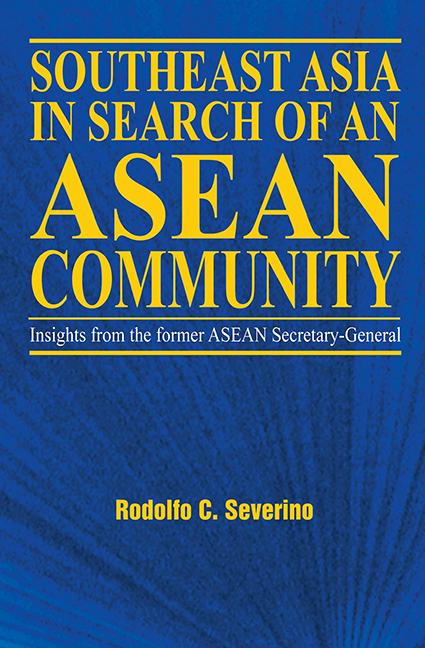
Not just another book on ASEAN, this volume reappraises the organization from the inside, through controversial or perplexing issues such as the "ASEAN Way", the accession of the new members, including Myanmar, the principle of "non-interference", regional security, regional economic integration, the haze and SARS, and ASEAN's future.Written by a key player, the former ASEAN Secretary-General, this book will illuminate the inner workings of the key Southeast Asian regional institution. It is a must-read for journalists, policy-makers, political scientists and others who need an insiders' view on how ASEAN has evolved, how it operates and whether it will remain relevant in the evolving Asia Pacific and global order.
Today it is recognized the world over, and especially in Asia that education has not only a social and moral function but it is also an economic necessity. The education system generaly provides limited access to the rural poor and other disadvantaged groups, and to a certain extent contributes to inequalities in society. How does one provide wider access to education to the rural poor, to working adults, to women at home and to disadvantaged groups?
Stable monetary systems form one of the pillars on which rapid economics development in Southeast Asia in recent decades has been based. The same was true in the past. Monetary stabilization became as important issue after 1870, when silver depreciated rapidly against gold and Western countries switched to the gold standard. Colonial Indonesia followed the Netherlands in this respect. On the ardent advice of N.P van den Berg, then president of the central bank, the Java Bank, it was the first Asian country to stabilize its currency against gold, in this case against the gold-based Dutch guilder. Van den Berg was a prominent proponent of monetary stabilization and was well known for his contributions to he dicussion about currency systems and monetary policy in the government of British India, which was at the time exploring ways to achieve stabilization of the rupee. Both the arguments and the wealth of data in the reprint of this very rare book will be of interest to historians of Southeast Asia.
This volume focuses on the theme of Human Security - a phenomenon increasingly in the news in Asia. The issues revolve around the security of the individual as opposed to the security of the state. They encompass some of the latest developments affecting or having implications for the well-being of the Asian individual since January 2010. Among them are Japan's triple calamity; Wikileaks; the Arab uprisings; and the death of Osama bin Laden. Issues discussed range from climate change and natural disasters; energy security; health, food, and water security to issues of internal challenges such as governance, politics and identity. The role of diplomacy in non-traditional security, as the larger conceptual framework within which human security resides, is also covered. This is the third volume of Strategic Currents, which publishes essays and commentaries first written for RSIS Commentaries by scholars, academics and associates of the S. Rajaratnam School of International Studies (RSIS), Nanyang Technological University.
The vibrance and optimism in Southeast Asia during 1993 was palpable. In the wake of the end of the Cold War, the region built upon the development that was already on track. Even so, the pace has been surprising. Not only did the ASEAN economies perform well generally, Vietnam surged ahead in economic development, and Myanmar registered strong sings of economic growth. Politically, the region enjoys dynamic stability even though the South China Sea continues to pose a potential conflict area area, and a North Korean nuclear capability will be destabilizing. The political tranistion in Cambodia proved to be a greater success than anticipated. The major concern remains the question of an emerging power balance in the larger Asia-Pacific region, especially with the new economic weight of China. What will the next year look like? Follow and understand the fast-changing regional scene in Regional Outlook 1994-95.
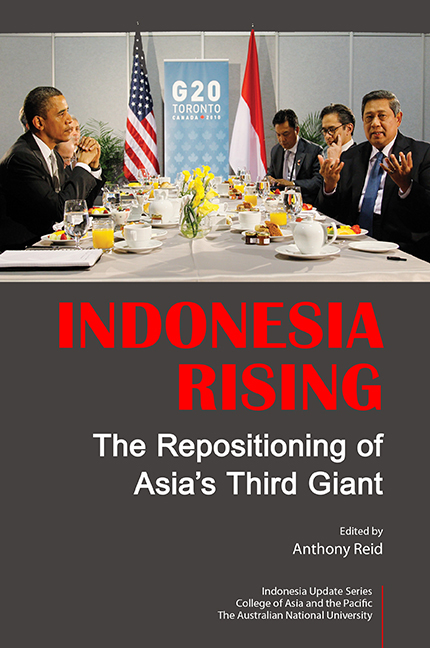
There are reasons for thinking that this is at last Indonesia's moment on the world stage. Having successfully negotiated its difficult transition to democracy after 1998, Indonesia has held three popular elections with a low level of violence by the standards of southern Asia. Recently its economic growth rate has been high (above 6 per cent a year) and rising, where China's has been dropping and the developed world has been in crisis. Indonesia's admission in 2009 to the G20 club of the world's most influential states seemed to confirm a status implied by its size, as the world's fourth-largest country by population, and the largest with a Muslim majority. Some international pundits have been declaring that Indonesia is the new star to watch, and that its long-awaited moment in the sun may at last have arrived.Those who know Indonesia well, like the experts writing in this book, are less easy to convince. In this volume they weigh the economic evidence (Ross Garnaut and M. Chatib Basri); the political equation between democracy and the massive obstacles to progress in corruption, inefficiency and legal inadequacies (Rizal Sukma and Donald K. Emmerson); and Indonesia's unrealized potential as a leader in matters environmental (Frank Jotzo) and Islamic (Martin van Bruinessen). The volume is rounded out by Scott Guggenheim's analysis of the potential for better performance in education, and by the longer-term considerations of Anthony Reid and R.E. Elson. Overall, the conclusion is one of cautious optimism, well aware of past disappointments."Perhaps, as the contributors to this eminently readable and thought-provoking volume suggest, Indonesia is finally emerging as the globally significant nation-state that it surely is. A timely and important publication that deserves to be widely read."–Hal Hill, H.W. Arndt Professor of Southeast Asian Economies, The Australian National University
This book provides valuable insight on the history of India from ancient times to 1600 CE for Indians and non-Indians, and for the Indian Diaspora, which is estimated to be over 25 million, spreading across no less than 110 countries.The chapters cover many important aspects of history, from the ancient urban culture of the Indus Valley Civilization; Vedic Age's lasting legacy, Hinduism associated with the two great epics, the Ramayana and Mahabharata; and the founding of Buddhism and Jainism; to the Muslim conquests and the resultant Indo-Islamic and Mughal heritage.Indian influence travelled beyond its shores to Southeast Asia, China, Korea and Japan. The Angkor Wat, Borobudur and Prambanan temples reflect the cultural impact of the early Indian Diaspora. The famous Chinese monk Xuanzang who journeyed to Nalanda to study at that great University wrote extensively about India.This book will kindle interest in research on tracing the origins of the Indian Diaspora and the ancient ties that linked India to the rest of the world.
This volume makes an important and unique contribution to scholarly understandings of migration and diversity through its focus on Asian contexts. Current scholarship and literature on processes of migration and the consequences of diversity is heavily concentrated on Western contexts and their concerns with "multiculturalism", "integration", "rights and responsibilities", "social cohesion", "social inclusion", and "cosmopolitanism". In contrast, there has been relatively little attention given to migration and growing diversity in Asian contexts which are constituted by highly distinct and varied histories, cultures, geographies, and political economies.This book fills this significant gap in the literature on migration studies with a concentrated focus on communities, cities and countries in the Asian region that are experiencing increased levels of population mobility and subsequent diversity. Not only does it offer analyses of the policies and processes of migration, it also addresses the outcomes and implications of migration and diversity – these include a focus on multiculturalism and citizenship in the Asian region, the emerging complex forms of governance in response to increased diversity, discussions of different settlement experiences, and the practices of everyday life and encounters in increasingly diverse locales.
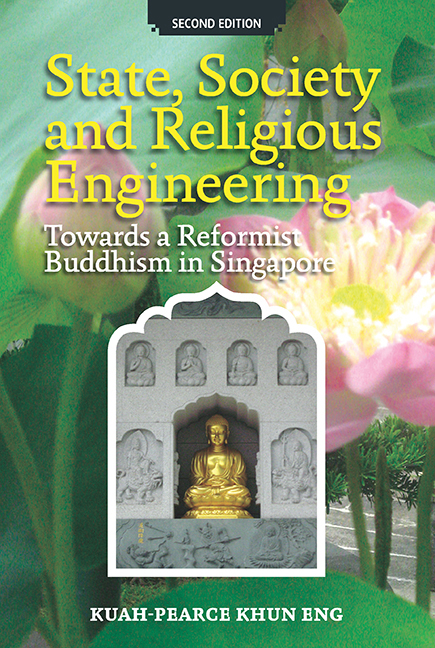
The book looks at how religion in Singapore is being subjected to the processes of modernisation and change. The Singapore State has consciously brought religion under its guidance. It has exercised strong bureaucratic and legal control over the functioning of all religions in Singapore. The Chinese community and the Buddhist Sangha have responded to this by restructuring their temple institutions into large multi-functional temple complexes. There has been quite a few books written on the role of the Singapore State but, so far, none has been written on the topic - the relationship between state, society and religion. It will help to fill the missing gap in the scholarly literature on this area. This is also a topic of great significance in many Asian, particularly Southeast Asian, countries and it will serve as an important book for future reference in this area of research and comparative studies.
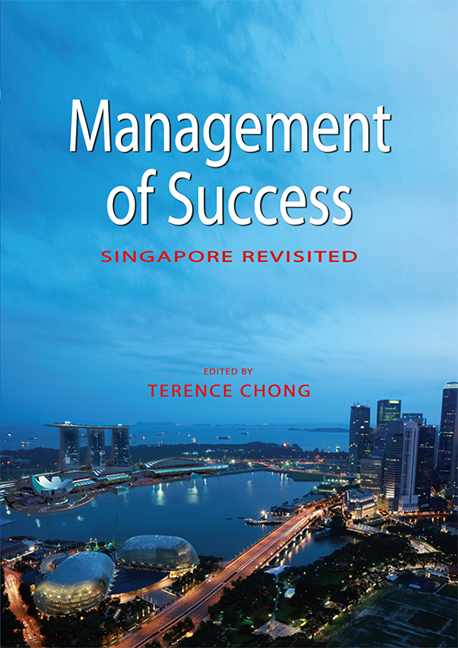
In 1989, the Institute of Southeast Asian Studies (ISEAS) published the milestone volume Management of Success: The Moulding of Modern Singapore, edited by Kernial Singh Sandhu and Paul Wheatley, which delved into a wide variety of issues that were integral to the growth of modern Singapore. The world that Singapore faced in 1989 has changed irrevocably. Meanwhile, within Singapore, the city-state has seen two prime ministerial transitions and the installation of third generation leaders who have articulated their vision for the twenty-first century. This new volume serves to update and review public policies from the early 1990s onwards. It gathers prominent thinkers and scholars on Singapore to examine issues of leadership and policy; economic restructuring; societal transformation; foreign relations and national identity. It seeks to outline the impending challenges of the twenty-first century, and to demonstrate a clear trajectory of intellectual analysis of contemporary Singapore for students and scholars alike.
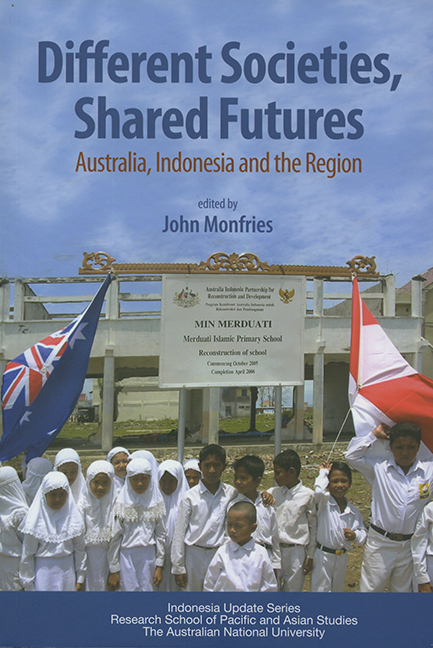
Australia's relationship with Indonesia is one of its most important and contentious bilateral relationships, characterized by sharply differing social and cultural mores and by periodic crises and mutual distrust, but also by significant person-to-person contacts in many fields.Recent developments, including the tsunami tragedy, the policies of a new Indonesian president and the Corby affair, have demonstrated both the best and the worst in the relationship. The Corby affair revealed high levels of ignorance and prejudice about Indonesia in some quarters in Australia. On the other hand, the tsunami that wrecked Indonesia's Aceh province led to an outpouring of sympathy and support from Australia. Following President Yudhoyono's visit to Australia in early 2005, official relations, though fragile, were better than they had been for many years.Australia's management of its most important regional relationship also has implications for its relations with other countries in the region, through issues such as Australia's presence and role in regional organizations, and policy responses to the rise of China.This book examines the wide range of factors and approaches that are involved in meeting the bilateral and regional challenges, including government links, public images and mutual perceptions, regional organizations, the role of Islam, the aid relationship, security and counterterrorism, economic and business relations, and the student market. The articles by the authors in this book reflect a complex, many-sided relationship that is not susceptible to simplistic formulas or stereotypes.Contributors include former Australian ambassador to Indonesia Richard Woolcott; former Indonesian ambassador to Australia S. Wiryono; Noke Kiroyan, president of the Indonesia–Australia Business Council; K. Kesavapany, director of the Institute of Southeast Asian Studies; Paul Kelly of The Australian newspaper; Scott Dawson of the Australia–Indonesia Partnership for Reconstruction and Development; Hugh White and Jamie Mackie of the Australian National University; and David Reeve of the University of New South Wales.
The challenges in using and managing natural resources in Indonesia are immense. They include ensuring that resource utilisation benefits most Indonesians; optimising the rate of exploitation of mineral reserves, bearing in mind the interests of future generations; and achieving sustainable forest and maritime exploitation. Recent rapid political change under reformasi and decentralisation may seem to have provided opportunities for a long-term development path that embraces both resource sustainability and equity issues. However, they have also generated an environment of political uncertainty, weak law enforcement, increased insecurity of property rights and local conflicts. This situation, together with the post-crisis imperative of restoring socio-economic progress, has created a pressing need to address the challenges of proper utilisation and management of natural resources. This book examines these and related issues from a political, socio-economic, and environmental standpoint.
Against the backdrop of significant developments in regional economic cooperation and integration over the past decade, this book presents some of the key challenges facing ASEAN as it embarks on a bold and ambitious project to establish an ASEAN Economic Community by 2015. Organized under the auspices of the ASEAN-Australia Development Cooperation Program's Regional Economic Policy Support Facility, the book brings together authoritative studies written by prominent experts and academics on issues pertaining to ASEAN economic integration.
Tan Ta Sen has modestly suggested that, as a book to illustrate the peaceful impact of culture contact, he is concerned to show how such cultural influences not only led to transmissions, conversions and transferences involving Inner Asian Muslims from China and Yunnan Muslims, Chams, Javanese, Malays, Arabs and Indians, but also enabled many Chinese in the Malay world to retain their non-Muslim cultural traits. In placing Cheng Ho's voyages in this context, the author offers a fresh perspective on a momentous set of events in Chinese maritime history. Professor Wang Gungwu, National University of Singapore. Tan Ta Sen's book on Cheng Ho and Islam in Southeast Asia is not the first one on the subject, but it is the first book that puts Cheng Ho's voyages in the larger context of "culture contact" in China and beyond. He has garnered numerous sources, from published documents to architectural sites and buildings, to support his arguments. He has done much more than previous scholars writing on this subject. - Professor Leo Suryadinata, Chinese Heritage Centre (Singapore). This long-awaited book is welcomed by the academic community - Tan Ta Sen has used historical facts to strengthen the argument on the existence of the "Third Wave", i.e. "the Chinese Wave", in the spread of Islam in the Southeast Asian region. Until now, we only know two major waves, i.e. the India-Gujarat Wave and the Middle East Wave through the development of trade relations. - Professor A. Dahana, University of Indonesia (Jakarta).
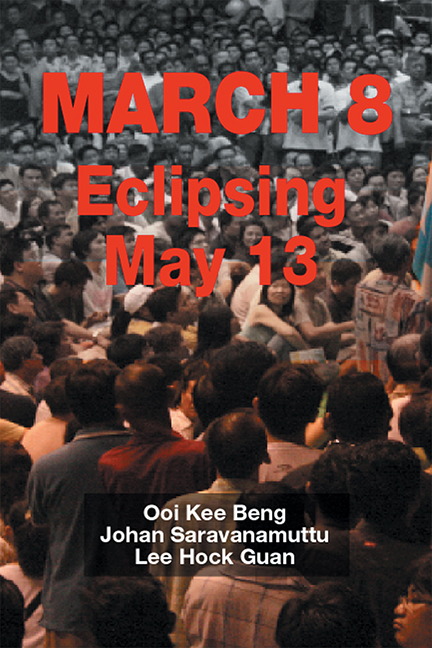
For a whole generation of Malaysians, no proper closure to the traumas of the racial riots of May 13, 1969 has been possible.But then came March 8, 2008The surprising results of the General Election on that special day have started eclipsing the fears linked for so long to that spectral night forty years ago.All the three researchers from ISEAS who each authored separate chapters for this book were in different parts of Malaysia monitoring its 12th General Election during the thirteen days of campaigning. Their analyses provide new insights into the phenomenon that Malaysians now simply refer to as "March 8".Ooi Kee Beng scrutinizes in detail the electoral campaign in the state of Penang, Johan Saravanamuttu studies the case of Kelantan state and the elections in general, while Lee Hock Guan examines changes in the voting pattern in the Klang Valley.
The Institute of Southeast Asian Studies (ISEAS) launched its electronic publication ISEAS Perspective in mid-2012.During its first year in existence, 58 internally reviewed issues were produced. These were distributed in steady fashion by email to addresses registered with the Institute. However, ISEAS has deemed it a worthy public service to have selected articles from that first year published in a single printed volume at cost price.Articles herein were chosen according to strict criteria such as analytical strength; continued salience of the subject discussed; referential potential; literary quality in general; et cetera. ISEAS intends to print such annual selections in the coming years. We are certain that you, the reader, will find them informative and stimulating.—Tan Chin Tiong, ISEAS Director
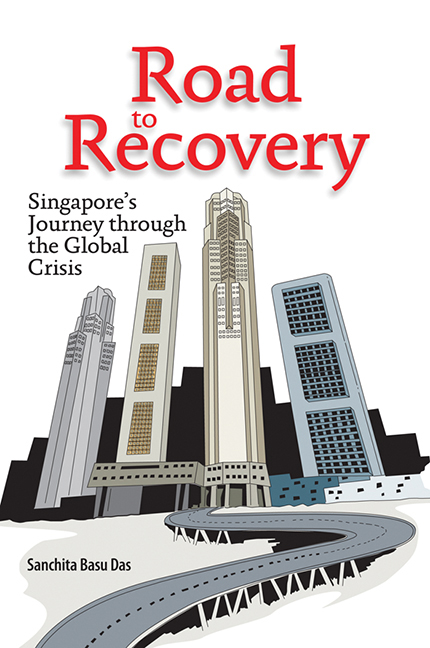
Singapore had been one of the nations severely affected by the 2008-09 global financial and economic crisis. The city state came under pressure through the financial, trade, and confidence channels. To counter these shocks, Singapore policymakers undertook unprecedented monetary and fiscal policy measures. They subsequently charted a revival strategy that would help the country emerge stronger after the crisis. These all-encompassing policies together with the global economic recovery in 2009 helped the city state bounce back faster and stronger than many other regional economies. This book provides an insight into the events that occurred during the crisis and Singapore's successful navigation to economic recovery."Although much has been written about the global financial crisis of 2008-09, not enough has been said about how it affected Singapore and the policy response. In this highly readable book, Sanchita Basu Das fills this gap, explaining how the crisis rippled through the Singapore economy via trade channels, the financial sector, and asset markets. But the greatest strength of this volume is its comprehensive account of the extraordinary measures Singapore put in place to deal pre-emptively with what could have been huge declines in output and employment in the face of the collapse of trade and credit flows. Singapore's multi-pronged approach, and especially the fiscal support and loan guarantees contained in the 2009 budget, must go down as one of the boldest and most creative policy responses to a crisis. It is a valuable lesson to economics students and practitioners alike. This book gives you the full story."- Vikram Khanna, Associate Editor, The Business Times"Sanchita Basu Das is to be congratulated for providing a fascinating, accessible, and forward-looking analysis of Singapore's response to the global economic crisis of 2008-09. As a highly trade-dependent economy, Singapore was hit hard by these events. But the government was nimble and quick to react. The author describes and evaluates this response, and draws out general lessons for crisis management and mitigation in small open economies. Highly recommended."- Hal Hill, H.W. Arndt Professor of Southeast Asian Economies, Australian National University."This is a comprehensive account of the impact of the global financial crisis on Singapore -- one of the most open economies in the world -- and policy responses by the government and central bank. The book identifies the need to move to a more knowledge-intensive economy as the key policy challenge for post-crisis Singapore."- Masahiro Kawai, Dean and CEO, Asian Development Bank Institute"Singapore was affected disproportionately by the global economic crisis of 2008-09. While it is currently rebounding impressively, government officials and the private sector would do well to learn from the crisis experience in devising future policies. Moreover, the Singapore experience is instructive as to how external economic shocks can be transmitted to open economies and, hence, has great relevance beyond its borders. This book by Sanchita Basu Das gives a comprehensive survey of Singapore in crisis and provides a wealth of information and insightful analysis, using clear, non-technical language. It is extremely useful contribution to scholars, policymakers, and other students of Asian economics."- Michael G. Plummer, Organisation for Economic Co-operation and Development (OECD)
Despite unprecedented levels of global interconnectedness, little academic attention has been paid to how governments actively deal with the challenges globalization poses for national identity. This book investigates the Singapore Government's approach to the construction of national identity and the shifting ways in which Singapore has been imagined in official discourses.The hallmarks of Singapore's nation-building project have been the state's efforts to manage ethnic differences and ensure the economic well-being of its citizenry. Unlike other global cities which are embedded in a larger nation-state, Singapore is both a global city and a nation-state. Singapore embodies a curious contradiction: while global cities are often theorized as transient spaces, contradictorily, the nation-state needs to be bounded in order to remain viable.This book focuses on the global/national nexus: the tensions between the necessity to embrace the global to ensure economic survival, yet needing a committed population to support the perpetuation of the nation-state and its economic success. It critically explores how the government has been responding to the challenges of globalization through policy initiatives and official rhetoric to create a "space" for affective identification with the Singaporean nation-state and how Singaporeans relate to and articulate their sense of identity and belonging to Singapore within the context of globalization.
This study re-examines some of the issues, challenges and policy options facing the Singapore economy in the light of the 1985-86 recession. Particular attention is paid towards reappraising the role of the government as an entrepreneur in economic activity, in macro-economic management, in savings and investment, and in the labour market. This is done in the context of and alongside an assessment of Singapore's linkages with the global economy and its future comparative advantage in a dynamic international environment.