To save content items to your account,
please confirm that you agree to abide by our usage policies.
If this is the first time you use this feature, you will be asked to authorise Cambridge Core to connect with your account.
Find out more about saving content to .
To save content items to your Kindle, first ensure no-reply@cambridge.org
is added to your Approved Personal Document E-mail List under your Personal Document Settings
on the Manage Your Content and Devices page of your Amazon account. Then enter the ‘name’ part
of your Kindle email address below.
Find out more about saving to your Kindle.
Note you can select to save to either the @free.kindle.com or @kindle.com variations.
‘@free.kindle.com’ emails are free but can only be saved to your device when it is connected to wi-fi.
‘@kindle.com’ emails can be delivered even when you are not connected to wi-fi, but note that service fees apply.
"This is an excellent and rare exploration of a sensitive religious issue from many perspectives legal, cultural and political. The case studies from Indonesia, Malaysia, Singapore and Thailand portray the important and exciting, yet very difficult, negotiation of Islamic teachings in the changing realities of Southeast Asia, home to the majority of Muslims in the world. Interreligious marriage is an important indicator of good relations between communities in religiously diverse countries. This book will also be of great interest to students and scholars of religious pluralism in a Southeast Asian context, which has not been studied adequately." -Zainal Abidin Bagir, Executive Director, Center for Religious and Cross-cultural Studies (CRCS), Gadjah Mada University, Indonesia
As part of a study on Japanese direct investment, this study covers four other countries of Indonesia, Malaysia, Singapore and Thailand, which together account for 95 per cent of the total flow of Japanese investment into ASEAN in the period 1985-87. This study has three main parts: a review of existing theoretical approaches to overseas investment and especially Japanese overseas investment; a study of supply side factors driving and shaping demand side factors within the ASEAN host countries.
Countries like Vietnam, Cambodia, Laos, and Myanmar are seeking their niches in the emerging opportunities and constraints, that characterize today's international economic and political scene. This, coupled with the dynamism of the member states of ASEAN, makes Southeast Asia a particularly promising and exciting area at a turning point in world history and human affairs. Written in a format and style that is unencumbered by lengthy analyses or commentaries, Regional Outlook provides sucinct yet substantive and easily readable overviews and insights into the current geopolitical and economic situations in the individual countries and the region as a whole, together with the likely trends over the next year or so. The review serves as a useful and handy guide to the region's aspiration and prospects each year, in addition to casting a look ahead.
The Different Voices: Singaporean/Malaysian Novel, focuses on the challenges that face a novelist in the literary representation of a multilingual environment. The early writers used strategies like vernacular transcription and mimetic translation. However, the close readings of twelve selected novels by non-European writers from 1980 to 2001 indicate the increasing use of strategies like lexical borrowings, code mixing, code switching and varieties of Singapore-Malayan English, instead. Puthucheary asserts in her book that the methods of language appropriation have a direct connection to how the writer conveys the multilingual nature of the Singapore-Malayan society through the speaking person while developing the central theme of the novel. The book maps out the verbal artistic representation of the speaking person and the correlation between speech and character in a multilingual environment.
With the disappearance of the imperial structures that had dominated Southeast Asia, newly independent states had to develop foreign policies of their own. But so far few if any of these states have been willing to allow the public to explore any documentation of their activities. Building on his earlier work that drew on U.K. records, the author incorporates material from New Zealand archives - which also contain reports from Australian and Canadian diplomats - to provide an historical analysis of the foreign policies of Southeast Asian nations from a New Zealand perspective.
This study of the national parliaments of India, Indonesia, the Philippines, South Korea, and Thailand is inspired by four major theoretical discourses: neo-institutionalism, parliamentarianism versus presidentialism, majoritarian versus consensus democracy, and transition theory. The book examines the specific role of parliaments in political decision-making, regime change, democratization, and consolidation of democracy in a comparative perspective. It argues that parliaments play a greater part in the political decision-making than is often asserted and that there is no cogent causal relationship between parliamentary performance and system of government.
This book analyses the process of modernization of health and healing practices, and documents in detail the current trend among people who use both traditional and modern medicine. It has two unique and important features. One is the focus - five nations in Asia (China, Japan, Hong Kong, Singapore and Thailand) which are at different stages of social and economic development, are studied and compared, providing a current and detailed picture of the combination of traditional and modern ways of healing. The second unique feature is that each chapter is written by scholars who not only have the advantage of firsthand knowledge of the situation in their respective countries but also bring into their analyses their extensive research experience in the areas of medical sociology and medical history. Moreover, as a book written in English, it offers valuable up-to-date information on the Chinese, Japanese and Thai health care systems, which is usually not accessible to readers unfamiliar with these languages.
This selection of lectures by Professor Hla Pe, who has published widely in the fields of Burmese language and literature, and cultural studies, provides an insight into Burmese literature, culture, beliefs and way of life through the author's own personal life and career. The lectures are divided into six parts: On Literature, On Historiography, On Scholarship, On Language, On Life, and On Buddhism.
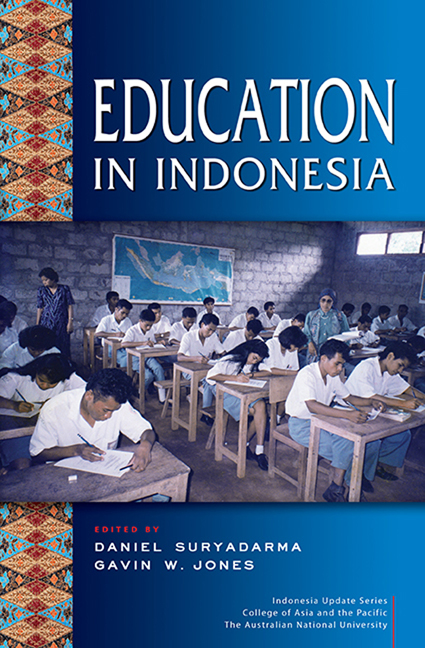
In Indonesia, as elsewhere in Asia, education will inevitably play a key role in the national development experience as the twenty-first century unfolds. Not much international attention is paid to how the education sector is faring in Indonesia, but that is not because nothing is happening. The past decade has seen major changes in the structure of the education system and in the schooling trajectories of Indonesian children and adolescents. The administration of primary and secondary education has been decentralized to the regions. A new paradigm of school-based management has been introduced. Public spending on education has finally reached one-fifth of total government spending, as required by law. But although enrolment rates at all levels continue to increase, the quality of education remains low and has not improved, and the tertiary sector continues to experience problems of autonomy and unsatisfactory performance.This book delves into the major developments in education in Indonesia. Drawing on the expertise of some of the most knowledgeable people in the field, it identifies the challenges facing the sector and offers recommendations on how these challenges could be overcome.
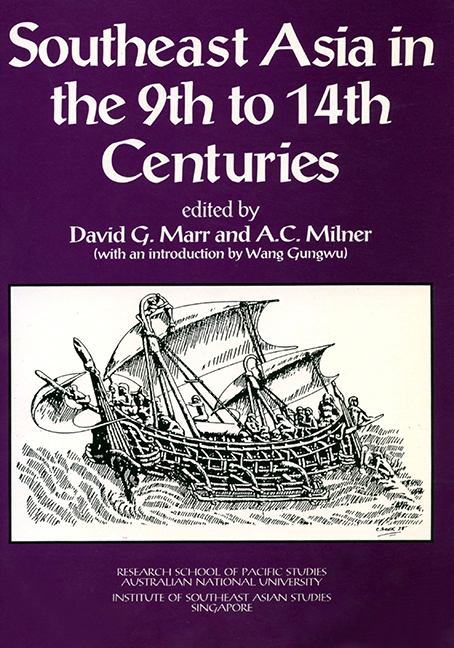
Southeast Asia has sometimes been portrayed as a static place. In the ninth to fourteenth centuries, however, the region experienced extensive trade, bitter wars, kingdoms rising and falling, ethnic groups on the move, the construction of impressive monuments and debate about profound religious issues. Readers of this volume will learn much of how people lived in Southeast Asia five hundred to one thousand years ago; the region today cannot be comprehended without reference to the seminal developments of that period.
This book explains the relationship between Islam and the state and politics in contemporary Indonesia. President Soeharto's departure from office in May 1998 brought tremendous and far-reaching impacts to Indonesia's political landscape. At least 181 new political parties came into being, a sizeable portion of which use Islam as their symbol and ideological basis.
What is being done to counter threats of maritime terrorism and how effective are the safeguards? The author presents evidence that Al-Qaeda aims to disrupt the seaborne trading system, the backbone of the model global economy, and would use a crude nuclear explosive device or radiological bomb to do so if it could obtain one and position it to go off in a port-city, shipping strait or waterway that plays a key role in international trade. Improving maritime trade is especially important for the US and Canada, member states of the EU, Australia and New Zealand and for China, Japan and South Korea, Thailand, Malaysia and other East Asian economies that have extensive direct seaborne trade. It is doubly vital for places like Singapore, Hong Kong and Rotterdam that are not only very large global seaports but also giant giant container transshipment hubs. This book discusses some major threats to seaborne trade and its land links in the global supply chain, their potential impact and the new security measures in place or pending for ships, ports and cargo containers, and recommendations for preventing or handling a catastrophic terrorist attack designed to disrupt world trade.
"Amitav Acharya has written a splendidly ambitious book. Travelling from the discipline of International Relations to the historiography of Southeast Asia and back again, it draws upon a range of methodologies to analyse the issue of identity in the configuration of Southeast Asia. But it provides more than an academic assessment. With this book, Acharya must be judged to have contributed not just to the study of Southeast Asian regionalism, but to the process itself."–Anthony Milner, Basham Professor of Asian History, Australian National University
"Where in the world is the Philippines? is a question that has been deftly and consistently dodged by our politicians at the expense of clearly defining the Philippines' territorial and maritime jurisdictions. Severino's scholarly work lays out what has happened in the past and what must be done in the future - and does so just as newly elected President Benigno S. Aquino begins his term in office. With the help of this timely and comprehensive study, it is imperative that Aquino and the Congress confront and resolve territorial issues once and for all." - Roberto R. Romulo, former Secretary of Foreign Affairs of the Philippines
To celebrate Anthony Reid's numerous and seminal contributions to the field of Southeast Asian history, a group of his colleagues and students has contributed essays for this Festschrift. In addition to introductory essays which provide personal and intellectual histories of Anthony Reid the man, there is a range of original scholarly contributions addressing historical issues which Reid has researched during his career. Divided into sections which examine Southeast Asia in the world, early modern Southeast Asia, and modern Southeast Asia, these works engage with issues ranging from the Age of Commerce and comparative Eurasian history, to nationalism, ethnic hybridity, Islam, technological change, and the Chinese and Arabs in Southeast Asia. The authors include some of the foremost historians of Southeast Asia in our generation.
"As we celebrate the 40th Anniversary of the ASEAN-Japan Dialogue Partnership, the essays in this book remind us, and amplify the ASEAN-Japan relations. The complexities of this relationship, including the external influences which have impinged on its development over the years, are cogently discussed and recorded for the younger generation and students of ASEAN-Japan ties. The intricacy and spread of ASEAN-Japan cooperation mechanisms are also well highlighted in this book, while several thought-provoking commentaries on the future of this four-decade old partnership give pause to the readers. Many of the challenges that exist in this relationship originated from domestic political dynamics in the ASEAN countries and Japan, as well as from the neighbouring states and key trading partners."Ambassador Ong Keng Yong, Former ASEAN Secretary General"The monograph on ASEAN-Japan relations is the intellectual highlight of the 40 years anniversary of ASEAN-Japan cooperation. ASEAN has become an indispensable partner and friend of Japan and its role as the hub of cooperation, development and stability in the region will without doubt become even more important after the establishment of the ASEAN Communities in 2015. The monograph containing contributions of the most renowned and respected experts on ASEAN provides us with enlightening overview, inspiration as well as guidance for our future common path. I would like to recommend this monograph to everybody interested in the further deepening of the ASEAN-Japan relations."Ambassador Yoshinori Katori, Ambassador of Japan to Indonesia,Former Ambassador in charge of ASEAN
The story of Dr Baey Lian Peck should be well known, but it is not. Not even among Singaporeans, and especially not among the young. This tells us a lot about a Singapore caught in pathological haste and prone towards ignoring values that do not add to the financial bottom line. The innovativeness of Dr Baey did not only make him a very wealthy man before he was forty, it also made him an indispensable actor in the implementation of urgently constructed national policies. Political leaders such as Dr Toh Chin Chye, Lim Kim San, Chua Sian Chin and Dr Goh Keng Swee picked him to solve pressing problems such as skyrocketing inflation in the early 1970s, the crisis in prisoner ward in the late 1970s, and the drug addiction epidemic in that same latter period. His one condition for taking on public positions was that he should not be paid. It was exactly this independent trait that made him so highly effective. This book tells his amazing life story, taking us into a surprising world where the qualities that make a good entrepreneur are exactly what make a good public servant, as long as he remains unbound by the bureaucracy. "Dr Baey Lian Peck put on hold a growing and profitable family business and decided to serve the nation in community and social service. He wore many and different hats and did remarkably well in all the challenging fields he undertook. His contribution to the treatment and rehabilitation of drug addicts was the most significant." – K.V. Veloo, pioneer in Probation and Aftercare who set up SANA(Aftercare) Counselling Service, and Prison Welfare Service.
Most scholarly works conducted within the period of post-New Order Indonesia have underlined the fact that Indonesian Islamists reject the notion of democracy; no adequate explanation nonetheless has been attempted thus far as to how and to what extent democracy is being rejected. This book is dedicated to filling the gap by examining the complex reality behind the Islamists' rejection of democracy. It focuses its analysis on two streams of Islamism: the two Islamist groups that seek 'extra-parliamentary' means to achieve their goals, that is, MMI and HTI, and the PKS Islamists who choose the existing political party system as a means of their power struggle. As this book has demonstrated, there are times when the two streams of Islamism share a common platform of understanding and interpretation as well as an intersection where they are in conflict with one another. The interplay between contested meanings over particular theological matters on normative grounds and power contests among the Islamists proves to be critical in shaping this complexity.
The fall of President Soeharto in May 1998 and the introduction of multi-party democracy by President BJ Habibie have unleashed religious parties (both Islamic and Christian) in Indonesian politics. This study shows that the Islamist agenda of the Islamist parties is overshadowed by their political pragmatism. This book is a must-read account on the rise and failure of the Islamist struggle in Indonesia's emerging democracy. Platzdasch's work is without a doubt a significant and timely contribution to a better understanding of Islamic politics in contemporary Indonesia. - Professor Azyumardi Azra, Professor of History & Director, Graduate School, Syarif Hidayatullah State Islamic University, Jakarta, Indonesia.
This book is a macro-study of Indian business communities in Singapore through different phases of their growth since colonial times. It goes beyond the conventional labour-history approach to study Indian immigrants to Southeast Asia, both in terms of themselves and their connections with the peoples' movements. It looks at how Indian business communities negotiated with others in the environments in which they found themselves and adapted to them in novel ways. It especially brings into focus the patterns and integration of the Indian networks in the large-scale transnational flows of capital, one of the least-studied aspects of the diaspora history in this part of the world. The complexities and overlapping interests of different groups of traders and businessmen form an interesting study of various aspects of these trading bodies, their methods of operation and their trade links, both within and outside Singapore. The book also charts their mobility and progress, in terms of both business and social status. The research aims to construct linear threads of linkages through generations and situate them in the larger framework and broader paradigms of business networks in Singapore. In shedding light on aspects of Indian connectivities to Southeast Asia, the narrative is particularly relevant in the context of India's economic rise. This study raises economic, social and cultural issues regarding the transition.