To save content items to your account,
please confirm that you agree to abide by our usage policies.
If this is the first time you use this feature, you will be asked to authorise Cambridge Core to connect with your account.
Find out more about saving content to .
To save content items to your Kindle, first ensure no-reply@cambridge.org
is added to your Approved Personal Document E-mail List under your Personal Document Settings
on the Manage Your Content and Devices page of your Amazon account. Then enter the ‘name’ part
of your Kindle email address below.
Find out more about saving to your Kindle.
Note you can select to save to either the @free.kindle.com or @kindle.com variations.
‘@free.kindle.com’ emails are free but can only be saved to your device when it is connected to wi-fi.
‘@kindle.com’ emails can be delivered even when you are not connected to wi-fi, but note that service fees apply.
The early years of the twenty-first century have been characterized by a sense of widespread anxiety and fear because of the violent activities of groups of terrorists who claim they act in the name of Islam. Their acts of terrorism, viewed by a majority in the Muslim world as crimes which must be subject to the law, are in tragic contrast to the efforts of many Muslim intellectuals who have been working for the past several decades to find common ground between people of all faiths based on the universality of humankind. This book aims to bring to the attention of non-Muslims, in particular, the range of views which Muslims in the Middle East and in South and Southeast Asia hold on six topics of importance to life in the twenty-first century. The topics have been addressed from the internal Muslim point of view to provide readers with a sense of the main debates within Islam on each of the issues. The topics addressed are: the new world order; globalization and modernity; banking and finance; the nation-state; the position of women; and law and knowledge. The chapters have been written by Muslims and non-Muslims, each of whom is an expert on the area about which they write. The chapters are presented in pairs which offer Middle Eastern (and in one case South Asian) points of view which are matched by Southeast Asian perspectives on each of the six topics. While the media is quick to report on the more violent expressions of Islam, including terrorism, the vigorous debates, which now characterize the intellectual discourse in Muslim communities, are rarely if ever reported. This book not only describes and analyses those debates but also reflects the views of many Muslims across the world, emphasizing the connections and contrasts between the Middle East and Southeast Asia.
More than a quarter of century after the end of the war in 1975, the Lao leadership is still in search for a compelling nationalist narration. Its politics of culture and representation appear to be caught between the rhetoric of preservation and the desire for modernity. Meanwhile, originating from the periphery where ethnic minorities had hitherto been symbolically, politically and administratively confined, the participation of some of their members in the Indochina Wars (1945-75) exposed these individuals to socialization and politicization processes.This rigorously researched and cogently argued book is a fine-grained analysis of substantial ethnographic material, showing the politics of identity, the geographies of memory and the power of narratives of some members of ethnic minority groups who fought during the Vietnam War in the Lao People's Liberation Army and/or were educated within the revolutionary administration. No study has ever been conducted on the latter's views on the national(ist) project of the late socialist era. Their own perceptions of their membership of the nation have been overlooked.Post-War Laos is a set to be a landmark study, and an original contribution which refines established theories of nationalism, such as Anderson's 'imagined community', by addressing a common weakness: namely, their tendency to deny agency to individuals, who in fact interpret their relationship to, and place within, the nation in a variety of ways that may change according to time and circumstance.
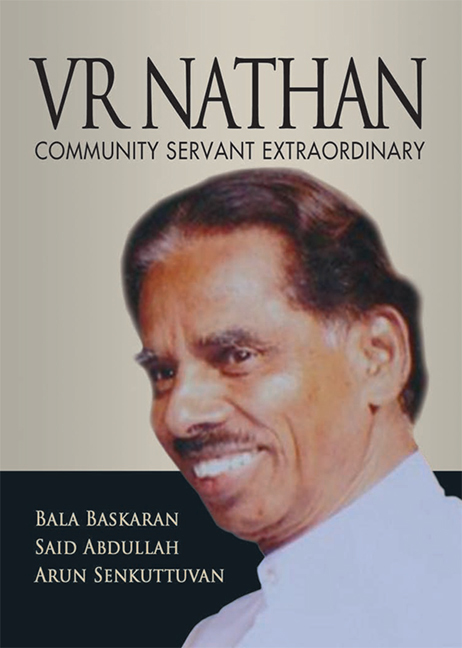
In conveying his condolences to VR Nathan's wife, Prime Minister Lee Hsien Loong said that "as chairman of Hindu Endowments Board, VR Nathan had served the Indian community with distinction and unwavering commitment". Lee also said that VR "had done much for inter-religious harmony in Singapore". Soon after, Zainul Abidin Rasheed, then Senior Minister of State for Foreign Affairs, said in Parliament that he was "very amazed" when he saw at VR's funeral leaders of different faiths paying their last respects and offering prayers. That perhaps is the ultimate tribute any Singaporean of faith could hope for. This is the story of what made an unemployed immigrant from India with little education transform into an ideal Singaporean — successful in his career, yet caring for fellow citizens.
The ASEAN Economic Community (AEC) constitutes the most ambitious programme of economic cooperation in the developing world. Its goal is to create no less than a free flow of goods, services, foreign direct investment, and skilled labour, as well as a freer flow of capital, throughout the region. Implementing this agenda will be technically and politically difficult. Hence, understanding the potential economic "payoff" is of the essence. The goal of this book is to assess empirically the likely economic effects of the AEC on the ASEAN Member States and associated stakeholders. It mobilizes a number of techniques to do so, and finds that the likely effects will be large, even greater than the anticipated effects of the Single Market Program in Europe, for example. The AEC will help the region improve competitiveness, facilitate the creation of production networks, foster the diffusion of 'best practices', and help ASEAN project its interests more effectively in an increasingly integrated, global economy.
Indonesia is the world's largest archipelagic state. In 2001 it embarked on a "big bang" decentralization involving a major transfer of administrative, political and financial authority to its districts, now numbering more than 500. Together with the rapid transition from authoritarian to democratic rule in the late 1990s, this initiative has transformed the country's political, social and business life. While national government is the major area of contestation, power has shifted irreversibly away from the centre. How this significantly increased regional autonomy works will have a crucial bearing on the future of the Indonesian nation-state.This volume features contributions by over 40 writers with deep expertise on Indonesia. The book provides a timely, comprehensive and analytical assessment of the country's regional development dynamics in the post-decentralization environment. It explores historical, political and development patterns at the regional level; the relationship between decentralization and governance; local-level perspectives; migration, cities and connectivity; and the challenges confronting the peripheral regions of Aceh and Papua.
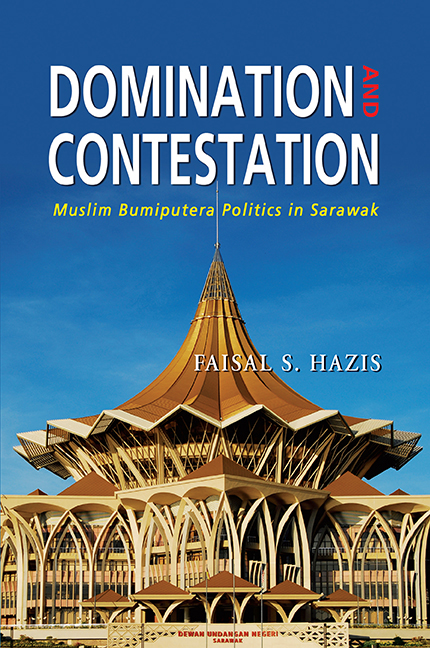
"This book makes an important contribution to understanding the ongoing political evolution of politics in Sarawak. It also provides a case study of the engagement of a dominant state with social forces in a multi-ethnic society."— Prof Harold Crouch, Emeritus Professor, Department of Political & Social Change, School of International, Political & Strategic Studies, Australian National University "Taking off from Joel Migdal's notions of 'the strongman-politician, 'strong society, weak state' and 'the state in society', the author discusses how the federal government accommodates Taib Mahmud's chief ministership over Sarawak, and how his long tenure is anchored in winning political support from the Sarawak Muslim Bumiputera community. An insightful book on contemporary Sarawak politics."—Prof Francis Loh Kok Wah, School of Social Sciences, Universiti Sains Malaysia"This volume will go a long way in explaining why a single Melanau family has been able to dominate Sarawak politics for the past four decades."—Prof James Chin, Head of School of Arts and Social Sciences, Monash University, Malaysia Campus
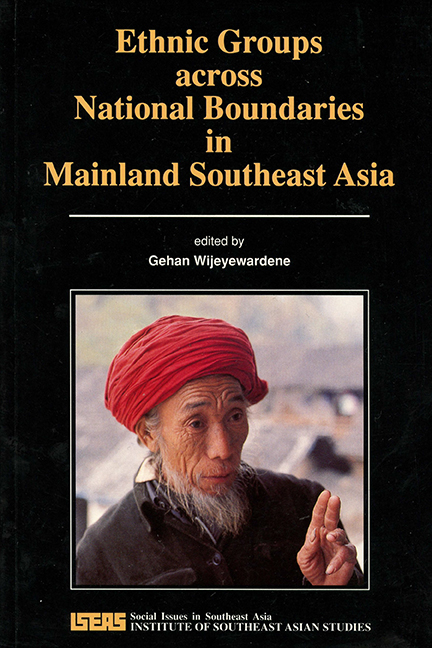
The six essays on specific ethnic groups are written by five anthropologists and a linguist, all of whom have had long experience in the region. They cover a range of data and problems which should be of interest to all scholars of Southeast Asia, as well as those interested in ethnic identity and contemporary social and political processes. The essays sample groups according to a conventional division of the peoples of Southeast Asia – those that live in the plains (the Thai and the Mon), the middle slopes (the Lua and the Karen), and the high mountains (the Hmong and the Yao). This gives adequate coverage of the field, but the essays also help break down the confinement of such categories. The concluding essay looks at the data presented in the book in the framework of contemporary anthropological theory.
Asia is rising and will wield greater economic and strategic weight in world affairs. However Asia also faces numerous challenges like poverty, domestic instability, deficiencies in governance and the rule of law, inter-state disputes and rivalries, and military build-ups, to name just a few. The celebration of Asia's rise would be premature if it is not accompanied by lasting peace and cooperation between states and justice and prosperity at home. The achievement of this happy state of affairs will require continuation of wise and pragmatic leadership, especially among the major powers. This collection of essays reflects on some of the major political and security issues in the region in recent times, including the balance of power among the major powers, American engagement and policies in Asia, India's rise, the global war on terrorism, the Iraq war, domestic developments in some countries as well as ASEAN's efforts to build regional peace and security.
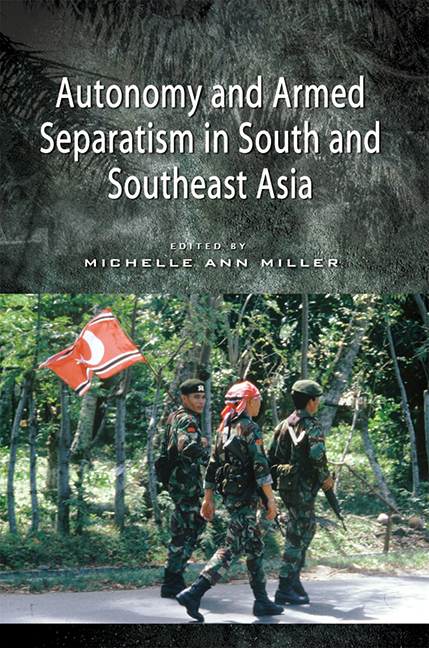
Armed separatist insurgencies have created a real dilemma for many national governments of how much freedom to grant aggrieved minorities without releasing territorial sovereignty over the nation-state. This book examines different approaches that have been taken by seven states in South and Southeast Asia to try and resolve this dilemma through various offers of autonomy. Providing new insights into the conditions under which autonomy arrangements exacerbate or alleviate the problem of armed separatism, this comprehensive book includes in-depth analysis of the circumstances that lead men and women to take up arms in an effort to remove themselves from the state’s borders by creating their own independent polity.
This book traces the beginning of the process of nation-formation, the struggle for independence, the hopeful beginning of the new nation-state of Indonesia only to be followed by hard and difficult ways to remain true to the ideals of independence. In the process Indonesia with its sprawling archipelago and its multi-ethnic and multi-religious nation has to undergo various types of crisis and internal conflicts, but the ideals that have been nurtured since the beginning when a new nation began to be visualized remain intact. Some changes in the interpretation may have taken place and some deviations here and there can be noticed but the literal meaning of the ideals continues to be the guiding light. In short this is a history of a nation in the continuing effort to retain the ideals of its existence.
The past five years have held tremendous significance for the process of nation building in Malaysia. Civil society and voters, especially in urban areas, are making new and strong demands on the government, in fact on governance per se; the opposition parties that managed to pull off successful electoral upsets in 2008 have formed a viable coalition to challenge the long-term federal government; and the federal government itself has been trying to adopt a reformist image without alienating its numerous conservative supporters. Although the government's slogan of 1Malaysia was meant to signify national unity, it lacked credibility because many of the systemic deficiencies of sustained one party - 1Party - rule still remained. This collection of articles studies various aspects of change now pushed into the foreground for discussion.
This admirable book contains fascinating autobiographical accounts, by some of Southeast Asia's most eminent scholars, concerning their struggle to find their own voices in interpreting the region to which they belong. The book should be indispensable to anyone interested in thinking about knowledge production and its politics in a postcolonial world. In the views of these scholarly Southeast Asians, we are made to see, in very personal terms, the link between the global crisis in the social sciences and the need to find remedies for it that are neither Eurocentric nor parochially anti-Western.-Professor Alexander WoodsideProfessor of Chinese and Southeast Asian HistoryUniversity of British Columbia, Vancouver, Canada. This book marks the shift of the centre of Southeast Asian Studies from the West to Southeast Asia. The insights provided by the authors are not simply explanations of colonial and postcolonial experiences of major Southeast Asian scholars. Rather, the book provides a unique set of intellectual genealogies that show that distinctions between humanities and social sciences are less important than the development of distinctive local and regional traditions and practices of scholarship. Goh Beng-Lan's introduction frames the collection through her subtle deconstruction of international discourses on Southeast Asia. This introduction then allows the reader to view the different generations of Southeast Asian scholars in their social, political, and academic contexts. The end result is a combined view of the state of the art of Southeast Asian Studies, a view that is greater than the sum of its national parts. - Professor Adrian VickersChair of Southeast Asian StudiesUniversity of SydneyandDirector, Australian Centre for Asian Art and Archaeology The collection represents a coming of age of scholars from Southeast Asia. What we hear is not bluster that comes from a wounded pride or doctrinal certainties, but a quiet confidence that acknowledges the multiple currents in which their scholarship has been formed, and a willingness to engage the perspective of the 'other', both within and without. The reflexivity in this volume sets the stage for scholars from the region to develop perspectives and concepts to address the challenges of the new configuration of the Asia being ushered in by ASEAN. - Professor Prasenjit DuaraRaffles Professor of Humanities and Director of Research, Humanities and Social Sciences, National University of Singapore
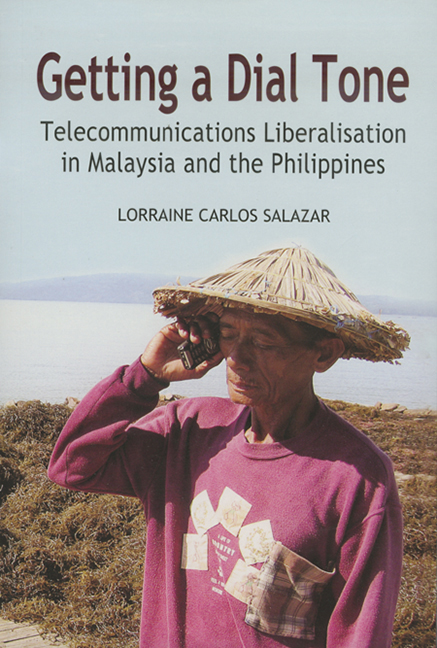
"Ninety-nine percent of Filipinos are waiting for a telephone and the other one percent for a dial tone..." - Lee Kuan Yew, November 1992. A decade after the above quote, far reaching reforms in the telecommunications sector has dramatically changed the situation in both the Philippines and Malaysia. By looking at the institutions and actors that drove these changes, this book examines state capacity, market reform, and rent-seeking in the two countries. In doing so, the study challenges conventional depictions of the Malaysian and Philippine states. It contends that despite the weakness of the Philippine state, reform occurred through a coalition that out-manoeuvred vested interests. In Malaysia, although considered a strong state, patronage and rent-seeking played key roles in policy adoption and implementation. The study also demonstrates how the nature of groups supporting reform shapes policy implementation and its outcomes. Finally, while liberalisation removes monopoly rent, this book shows that it can also create other types of rents.
There is a growing dialogue between India and Southeast Asia. From a marginal relationship during the Cold War days to the participation of India at the East Asia summit in December 2005 has been a long journey.In the context of the geopolitical situation in the Asia-Pacific in the post-September 11 period, the security dimension between India and Southeast Asia cannot be overemphasized. With the continued U.S. preponderance in the region and China's phenomenal rise, the countries of Southeast Asia and India have an opportunity to evolve a co-operative relationship not only with one another, but also with the major powers of the region.This book examines the areas of comprehensive security and the growing understanding between India and Southeast Asia where there is less divergence and greater convergence. The author argues that India-Southeast Asia security convergence is not and should not be aimed at any particular country. On an optimistic note he concludes that such convergence will contribute to creating harmony among the major powers of Asia to make the twenty-first century the "Asian century".
This history is an account of Southeast Asia - New Zealand relations as they have emerged since the end of World War II. Drawing together the most prominent scholars of New Zealand's relations with Southeast Asia, this study examines the overall military, multilateral, and commercial relationships and those that assess individual bilateral relationships and diplomatic controversies. Southeast Asia remains a region of considerable importance for New Zealand, and has remained so through the course of decolonization, internal instability, external security, Cold War tensions, peacekeeping efforts, rapidly expanding economic growth (and crisis), and, increasingly, transitional security challenges such as terrorism.