To save content items to your account,
please confirm that you agree to abide by our usage policies.
If this is the first time you use this feature, you will be asked to authorise Cambridge Core to connect with your account.
Find out more about saving content to .
To save content items to your Kindle, first ensure no-reply@cambridge.org
is added to your Approved Personal Document E-mail List under your Personal Document Settings
on the Manage Your Content and Devices page of your Amazon account. Then enter the ‘name’ part
of your Kindle email address below.
Find out more about saving to your Kindle.
Note you can select to save to either the @free.kindle.com or @kindle.com variations.
‘@free.kindle.com’ emails are free but can only be saved to your device when it is connected to wi-fi.
‘@kindle.com’ emails can be delivered even when you are not connected to wi-fi, but note that service fees apply.
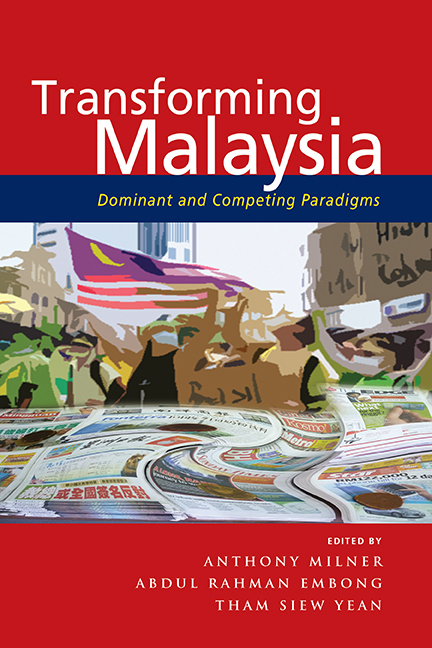
In the wake of Malaysia’s 13th General Election some commentators speak of a sharpening of ethnic politics — with Prime Minister Najib blaming a “Chinese tsunami” for his government’s polling setbacks; others are optimistic about the arrival of a new “non-racialized form of politics” and the emergence of “transethnic solidarity”. This book, which engages with both the race paradigm and its opponents, warns that change is likely to come slowly — but is not impossible. Malaysia’s race paradigm is a man-made ideological construct — one that has been contested in the past, and could realistically be contested in the future. In confronting the continuing challenge of globalization, Malaysians should not neglect the history of ideas — and ideology — as they search for new options.
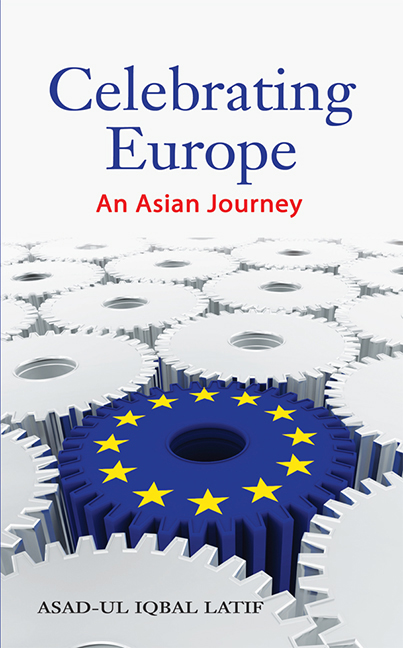
Europe's mythical origins lie in Zeus' abduction of the Asian princess Europa. Down the real centuries, Asia has played a crucial role in the making of Europe - as an object of Orientalist fantasy and colonial desire, but also of the spread of the liberating values and humane letters associated with the continent. In this book, a lifelong admirer of Europe casts a critical yet loving eye on the continent to ask what it means to him. The book revolves around a series of personal encounters. These range from following his father to Cambridge, and meeting two Bengali lovers in Calcutta who cherish Eros with classical Greek purity, to watching his wife recover in a Polish hospital that lavishes care on her for almost free.These encounters are intertwined with passionately argued essays on the Holocaust, the Soviet ideal and the Berlin Wall as keenly-contested sites of the European imagination. A chapter on Giuseppe Tomasi di Lampedusa's historical novel, The Leopard, combines literary and political analysis to peer into the heart of Italy, while an essay on champagne in France discovers the France in champagne. An analysis of secularism in the post-9/11 world defends one of the abiding legacies of Europe. Finally, a chapter on postmodern Europe upholds the European Union as perhaps the most exciting international project on offer today.The literary flair of this scholarly book captures the vividness of the intellectual engagement between Asia and Europe.
However impressive the economic success of Penang has been over the past four decades, structural conditions in the region call for a fundamental reconfiguration of this Malaysian state’s competitive advantage.In the 1970s, the ageing entrepôt transformed itself into a manufacturing hub for the electronics industry and a well-known tourist site. This outward-looking model of economic growth has underpinned Penang’s economic development up until the present. The question that now arises is whether Penang’s present mode of development will continue to be effective, or whether it will have to transform itself. First, Malaysia in general, and Penang in particular are caught in a middle-income trap. Second, while the evolving weight of the global economy is shifting towards Asia, many of its emerging powers are competing with Penang in areas where it formerly excelled. Third, Penang is a state within a federation, and its capital, George Town, is a secondary city. Neither can rival Kuala Lumpur in terms of size or facilities, and thus must offer investors other attributes.Effectively meeting these challenges while retaining Penang’s vibrant and living culture are the key issues that are dealt with in this second volume of the Penang Studies Series.
This book provides a framework for considering the ramifications of Japan's expanding role and influence in the Asia-Pacific region. It documents Japan's emergence as the regional "core economy"; reviews the factor that may influence Tokyo's future political and military rule; poses alternative scenarios for the evolving Asia-Pacific economic, political and security order; analyses the factors and conditions that may determine which, if any, of those alternative scenarios might prevail; and considers the implications for future politico-economic relationships and the Asia-Pacific power balance.
Musical Worlds in Yogyakarta is an ethnographic account of a vibrant Indonesian city during the turbulent early post-Soeharto years. The book examines musical performance in public contexts ranging from the street and neighbourhood through to commercial venues and state environments such as Yogyakarta's regional parliament, its military institutions, universities and the Sultan's palace. It focuses on the musical tastes and practices of street workers, artists, students and others. From street-corner jam sessions to large-scale concerts, a range of genres emerge that cohere around notions of campursari (“mixed essences”) and jalanan (“of the street”). Musical worlds addresses themes of social identity and power, counterpoising Pierre Bourdieu's theories on class, gender and nation with the author's alternative perspectives of inter-group social capital, physicality and grounded cosmopolitanism. The author argues that Yogyakarta is exemplary of how everyday people make use of music to negotiate issues of power and at the same time promote peace and intergroup appreciation in culturally diverse inner-city settings.
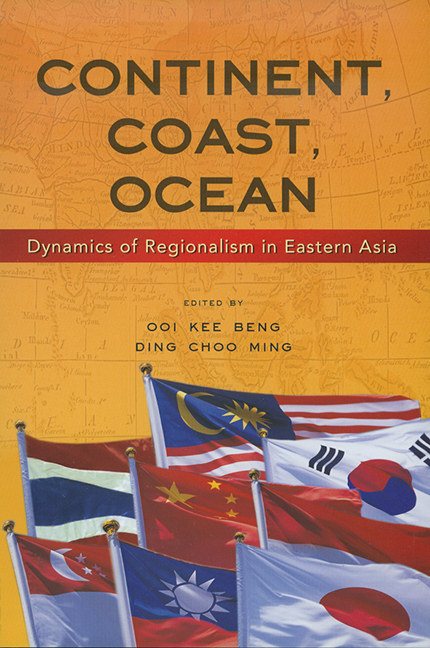
This collection of articles takes a long look at the dynamics of regionalism in Eastern Asia and shows how although the past limits the future, its hold on our possibilities for peaceful coexistence is not as strong as we think. What makes this volume unique is that Taiwanese scholars are brought together with Malaysian scholars to discuss a subject that is vital to the future of both East and Southeast Asians. Japan's diplomatic history as well as the heritage of its conquest of Eastern Asia is examined alongside China's cultural geography, paradigmatic dynamics, and intra-regional economics. Ties between East Asia and Southeast Asia, as well as the influence of American military power and European integration are also thoroughly dealt with. The end result is that the reader is offered multidisciplinary perspectives on present and future regional trends.
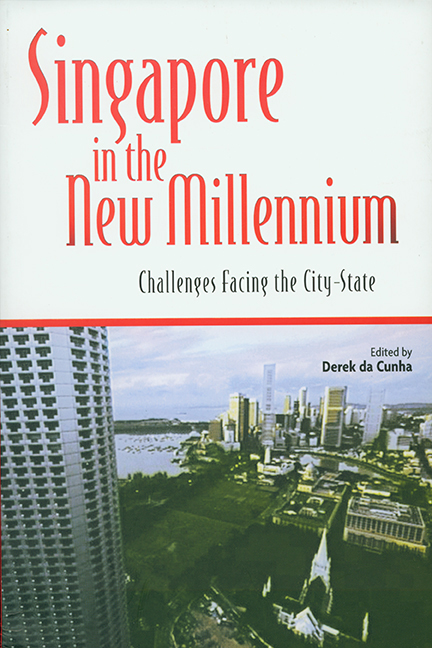
Among nation-states, Singapore ranks as possibly the greatest success story of the 20th century. It is a story of how a small city-state in the politically volatile region of Southeast Asia transformed itself, within a relatively short period of time, from being an economic backwater to an economic dynamo not just within Southeast Asia but the wider Asia-Pacific region. That success story has been well chronicled. What is less well known, however, is that beneath the veneer of success there are undercurrents within the economic, social, and body politic of the city-state which pose significant challenges for it in the new millennium. Those challenges are not just from within the city-state but also from without. This volume explores those multifaceted challenges, some of which are counter-intuitive to the general impression that the Singapore state projects of itself not just to its citizens but to the world at large.
David Marshall (1908-1995) was one of Singapore's most remarkable sons. The eldest son of migrant Sephardic Jews, Marshall's brilliant academic career at Raffles Institution was brought to an abrupt end when he collapsed from tuberculosis. Sent away to recuperate in Switzerland, Marshall not only learnt the French language but also imbibed the French ideals of Liberty, Equality and Fraternity and returned a strong opponent of colonialism. Qualifying as a barrister in half the normal time, he rose to become Singapore's greatest criminal and constitutional lawyer. In 1955, he unexpectedly found himself the leader of the Labour Front and Singapore's first Chief Minister. His fourteen tumultuous months in office led to the eventual withdrawal of the British from Singapore but his emotional personality and impatience made him an unlikely politician. In the twilight of his career, Marshall was appointed Singapore's first ambassador to France. This is the story of this extraordinary man who was, for many, Singapore's "missionary of democracy". Using previously unavailable sources, author Kevin Tan chronicles the remarkable life, times and achievements of the man many regarded as "Singapore's Conscience".
The theme of this volume on Vietnam is 'creating a sound investment climate'. Vietnam embarked on doi moi or 'renovation' of its economy in 1986. Since then, its economy has made a dramatic turnaround, achieving a low-inflation sustained growth for most of the 1990s. However, even at the current high rates of growth, it will still take Vietnam some 15 years to reach the standard of living that Indonesia currently enjoys. Furthermore, decades of sustained growth will require higher rates of investment than in the past, as excess capacity created under central planning is being utilised. A sound investment climate is essential for the fulfilment of Vietnam's ambitions to catch up with other rapidly growing countries in the Asia-Pacific region. An understanding of how to achieve such a climate in Vietnam is essential to an assessment of the country's prospects now and into the 21st century.
The story of Dr Baey Lian Peck should be well known, but it is not. Not even among Singaporeans, and especially not among the young. This tells us a lot about a Singapore caught in pathological haste and prone towards ignoring values that do not add to the financial bottom line.The innovativeness of Dr Baey did not only make him a very wealthy man before he was forty, it also made him an indispensable actor in the implementation of urgently constructed national policies. Political leaders such as Dr Toh Chin Chye, Lim Kim San, Chua Sian Chin and Dr Goh Keng Swee picked him to solve pressing problems such as skyrocketing inflation in the early 1970s, the crisis in prisoner ward in the late 1970s, and the drug addiction epidemic in that same latter period. His one condition for taking on public positions was that he should not be paid. It was exactly this independent trait that made him so highly effective.This book tells his amazing life story, taking us into a surprising world where the qualities that make a good entrepreneur are exactly what make a good public servant... as long as he remains unbound by the bureaucracy."Dr Baey has left us and future generations a reservoir of knowledge, experience and expertise in his book which are derived from the major projects and programmes that he helped set up, nurture and run. We cannot dismiss them as just history. There are invaluable lessons to be gained. Sometimes we need to look at the past to understand the present and future. More importantly, he comes across as a strong and inspiring role model in service to the nation."–K.V. Veloo, pioneer in Probation and Aftercare who set up SANA (Aftercare) Counselling Service, and Prison Welfare Service. Ooi Kee Beng is Senior Fellow at the
This handbook provides basic information on the Association of Southeast Asian Nations (ASEAN), its organization and the various co-operation activities associated with it. The emphasis here is on economic co-operation. Although such information is available in many forms, it is mostly scattered in official documents and various literature on ASEAN. There is, thus, a need to provide the basic information in a handy volume, and this handbook fills that need.
This volume honours, and reflects on, the life and work of the Australian Indonesianist, Charles A. Coppel. His interests -- reflected in this volume -- are broad, ranging from history, politics, legal issues, and violence against the Chinese, through to culture and religion. The chapters in the volume, contributed by scholars from Australia, Indonesia, Europe, and Singapore, also all reflect a theme, inspired by Charles Coppel's expression, 'remembering, distorting, forgetting', by which he drew attention to misrepresentations of the Chinese, seeking to locate the realities behind the myths that form the basis for the racism and xenophobia the Chinese have often experienced in Indonesia.
Since it began in 2008, the dispute over the temple of Preah Vihear and its adjacent area has envenomed Thai-Cambodian relations. Puangthong R. Pawakapan argues that initially Thai-Cambodian cooperation on the temple had begun within the framework of Thailand's strategy to become a regional economic centre and leader. It was the first time in Southeast Asia that two formerly antagonistic states were employing cultural methods to settle a territorial dispute and turned it into a symbol of friendship and cooperation between the two countries. But the ultra-nationalist movement derailed this essay in cooperation. Instead, the temple became a symbol of hatred between the two countries. The ultra- nationalists' success has to be attributed to the support it enjoyed from various civic groups and institutions.
Singapore had been one of the nations severely affected by the 2008-09 global financial and economic crisis. The city state came under pressure through the financial, trade, and confidence channels. To counter these shocks, Singapore policymakers undertook unprecedented monetary and fiscal policy measures. They subsequently charted a revival strategy that would help the country emerge stronger after the crisis. These all-encompassing policies together with the global economic recovery in 2009 helped the city state bounce back faster and stronger than many other regional economies. This book provides an insight into the events that occurred during the crisis and Singapore's successful navigation to economic recovery."Although much has been written about the global financial crisis of 2008-09, not enough has been said about how it affected Singapore and the policy response. In this highly readable book, Sanchita Basu Das fills this gap, explaining how the crisis rippled through the Singapore economy via trade channels, the financial sector, and asset markets. But the greatest strength of this volume is its comprehensive account of the extraordinary measures Singapore put in place to deal pre-emptively with what could have been huge declines in output and employment in the face of the collapse of trade and credit flows. Singapore's multi-pronged approach, and especially the fiscal support and loan guarantees contained in the 2009 budget, must go down as one of the boldest and most creative policy responses to a crisis. It is a valuable lesson to economics students and practitioners alike. This book gives you the full story."- Vikram Khanna, Associate Editor, The Business Times"Sanchita Basu Das is to be congratulated for providing a fascinating, accessible, and forward-looking analysis of Singapore's response to the global economic crisis of 2008-09. As a highly trade-dependent economy, Singapore was hit hard by these events. But the government was nimble and quick to react. The author describes and evaluates this response, and draws out general lessons for crisis management and mitigation in small open economies. Highly recommended."- Hal Hill, H.W. Arndt Professor of Southeast Asian Economies, Australian National University."This is a comprehensive account of the impact of the global financial crisis on Singapore -- one of the most open economies in the world -- and policy responses by the government and central bank. The book identifies the need to move to a more knowledge-intensive economy as the key policy challenge for post-crisis Singapore."- Masahiro Kawai, Dean and CEO, Asian Development Bank Institute"Singapore was affected disproportionately by the global economic crisis of 2008-09. While it is currently rebounding impressively, government officials and the private sector would do well to learn from the crisis experience in devising future policies. Moreover, the Singapore experience is instructive as to how external economic shocks can be transmitted to open economies and, hence, has great relevance beyond its borders. This book by Sanchita Basu Das gives a comprehensive survey of Singapore in crisis and provides a wealth of information and insightful analysis, using clear, non-technical language. It is extremely useful contribution to scholars, policymakers, and other students of Asian economics."- Michael G. Plummer, Organisation for Economic Co-operation and Development (OECD)
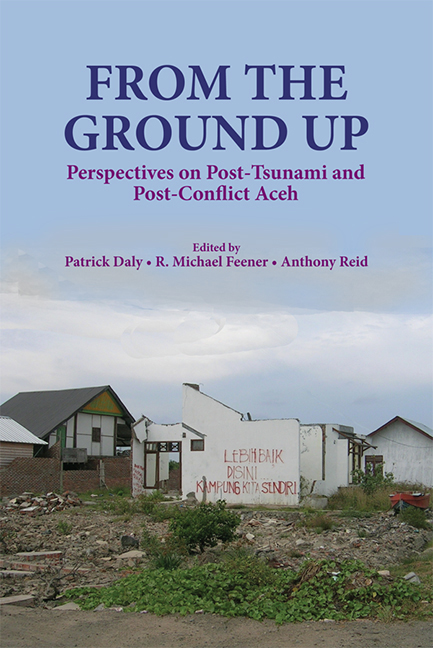
The tsunami that struck a dozen countries around the Indian Ocean on 26 December 2004 evoked international sympathy on a scale beyond any previous natural disaster. The international relief effort broke all records both in scale and diversity, with seven billion U.S. dollars donated from all over the world through public and private agencies for Sumatra alone. Simply as a reconstruction effort, therefore, the disbursement of those funds and the rebuilding of housing, infrastructure, and economy posed major national and international challenges. However this was not simply a reconstruction effort. Aceh at that time was a war zone, with Indonesia’s military engaged in a major operation to crush a separatist rebellion that had been simmering since 1976. Even though the funds had been donated for tsunami relief, any real reconstruction of Aceh had to consider the impact of the conflict on the well-being of the population, as well as governance and administrative capacities. This volumes serves the purpose not only of discussing some of the lessons of the Aceh reconstruction and peace processes, but also of maintaining critical links between Aceh and the international community after the initial tranches of aid expire.
The inauguration of the Asia-Europe Meeting (ASEM) in Bangkok in 1996 was celebrated with enthusiasm and hopes in the two regions because this forum represented a breakthrough in Asia-Europe relations. The region-to-region pattern of the relations becomes the study framework that enables the explorations of central themes which include the Asian regional identity, ASEAN collective diplomatic prominence, and the informality of the ASEM institution. In exploring those central themes, this book applies constructivist, realist, and neo-liberal institutional theories consecutively. The difference between Asian and European cooperative culture, as well as the longevity of an international institution, adds to the picture. This book contributes not only to the study of Asia-Europe relations but also to the understanding of regionalism in Asia.
Indonesia is experiencing an historic and dramatic shift in political and economic power from the centre to the local level. The collapse of the highly centralised Soeharto regime allowed long-repressed local aspirations to come to the fore. The new Indonesian Government then began one of the world's most radical decentralisation programmes, under which extensive powers are being devolved to the district level. In every region and province, diverse popular movements and local claimants to state power are challenging the central authorities. This book is the first comprehensive coverage on decentralisation in Indonesia. It contains contributions from leading academics and policy-makers on a wide range of topics relating to democratisation, devolution and the blossoming of local-level politics.
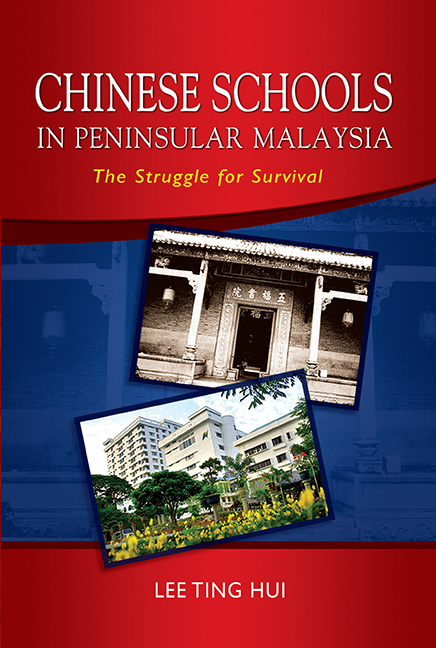
The history of modern Chinese schools in Peninsular Malaysia is a story of conflicts between Chinese domiciled there and different governments that happened or happen to rule the land. Before the days of the Pacific War, the British found the Chinese schools troublesome because of their pro-China political activities. They established measures to control them. When the Japanese ruled the Malay Peninsula, they closed down all the Chinese schools. After the Pacific War, for a decade, the British sought to convert the Chinese schools into English schools. The Chinese schools decoupled themselves from China and survived. A Malay-dominated government of independent Peninsular Malaysia allowed Chinese primary schools to continue, but finally changed many Chinese secondary schools into National Type Secondary Schools using Malay as the main medium of instruction. Those that remained independent, along with Chinese colleges, continued without government assistance. The Chinese community today continues to safeguard its educational institutions to ensure they survive.
Admiral Zheng He and Southeast Asia commemorates the 600th anniversary of Admiral Zheng He's maiden voyage to Southeast Asia and beyond. The book is jointly issued by the Institute of Southeast Asian Studies, Singapore and the International Zheng He Society. To reflect Asian views on the subject matter, nine articles written by Asian scholars - Chung Chee Kit, Hsu Yun-Tsiao, Leo Suryadinata, Tan Ta Sen, Tan Yeok Seong, Wang Gungwu, and Johannes Widodo - have been reproduced in this volume. Originally published from 1964 to 2005, the articles are grouped into three clusters. The first cluster of three articles examines the relationship of the Ming court, especially during the Zheng He expeditions, with Southeast Asia in general and the Malacca empire in particular. The next cluster looks at the socio-cultural impact of the Zheng He expeditions on some Southeast Asian countries, with special reference to the role played by Zheng He in the Islamization of Indonesia (Java) and the urban architecture of the region. The last three articles deal with the route of the Zheng He expeditions and the location of the places that were visited.
Maiden Voyages is a fascinating, unusual study of the centrality, impact and place of sea travel on the lives of women in Eastern Indonesia. It shows how women there travel constantly by sea, to move between islands, to urban centres and even overseas. In doing so, they negotiate and cross and re-make their social boundaries. In contrast to the dominant economic approach to migration, this book uses Eastern Indonesian women's own travel accounts to show how sea voyages recreate their identities. The book is based on research of contemporary rural and semi-rural women in the East Nusa Tenggara province of Indonesia.This book is an original and valuable contribution to the debates on gender, subjectivity, and the local specificity. It aims to contribute to an understanding of women's mobility and spatial relations in Eastern Indonesia. It will be of interest to scholars of geography, migration, gender and microeconomics as well as of appeal to general readers.