To save content items to your account,
please confirm that you agree to abide by our usage policies.
If this is the first time you use this feature, you will be asked to authorise Cambridge Core to connect with your account.
Find out more about saving content to .
To save content items to your Kindle, first ensure no-reply@cambridge.org
is added to your Approved Personal Document E-mail List under your Personal Document Settings
on the Manage Your Content and Devices page of your Amazon account. Then enter the ‘name’ part
of your Kindle email address below.
Find out more about saving to your Kindle.
Note you can select to save to either the @free.kindle.com or @kindle.com variations.
‘@free.kindle.com’ emails are free but can only be saved to your device when it is connected to wi-fi.
‘@kindle.com’ emails can be delivered even when you are not connected to wi-fi, but note that service fees apply.
"As we celebrate the 40th Anniversary of the ASEAN-Japan Dialogue Partnership, the essays in this book remind us, and amplify the ASEAN-Japan relations. The complexities of this relationship, including the external influences which have impinged on its development over the years, are cogently discussed and recorded for the younger generation and students of ASEAN-Japan ties. The intricacy and spread of ASEAN-Japan cooperation mechanisms are also well highlighted in this book, while several thought-provoking commentaries on the future of this four-decade old partnership give pause to the readers. Many of the challenges that exist in this relationship originated from domestic political dynamics in the ASEAN countries and Japan, as well as from the neighbouring states and key trading partners."Ambassador Ong Keng Yong, Former ASEAN Secretary General"The monograph on ASEAN-Japan relations is the intellectual highlight of the 40 years anniversary of ASEAN-Japan cooperation. ASEAN has become an indispensable partner and friend of Japan and its role as the hub of cooperation, development and stability in the region will without doubt become even more important after the establishment of the ASEAN Communities in 2015. The monograph containing contributions of the most renowned and respected experts on ASEAN provides us with enlightening overview, inspiration as well as guidance for our future common path. I would like to recommend this monograph to everybody interested in the further deepening of the ASEAN-Japan relations."Ambassador Yoshinori Katori, Ambassador of Japan to Indonesia,Former Ambassador in charge of ASEAN
This selection of lectures by Professor Hla Pe, who has published widely in the fields of Burmese language and literature, and cultural studies, provides an insight into Burmese literature, culture, beliefs and way of life through the author's own personal life and career. The lectures are divided into six parts: On Literature, On Historiography, On Scholarship, On Language, On Life, and On Buddhism.
The Malayan Emergency lasted from 1948 to 1960. During these tumultuous years, following so soon after the Japanese surrender at the end of the Second World War, the whole country was once more turned upside down and the lives of the people changed. The war against the Communist Party of Malaya's determined efforts to overthrow the Malayan government involved the whole population in one form or another. Dr Comber analyses the pivotal role of the Malayan Police's Special Branch, the government's supreme intelligence agency, in defeating the communist uprising and safeguarding the security of the country. He shows for the first time how the Special Branch was organised and how it worked in providing the security forces with political and operational intelligence. His book represents a major contribution to our understanding of the Emergency and will be of great interest to all students of Malay(si)a's recent history as well as counter-guerrilla operations. It can profitably be mined, too, to see what lessons can be learned for counterinsurgency operations in other parts of the world.
A clear guide to current EU institutions, practices, and policies, this is also an informed insider's account of how they have emerged in their present form, with clues on future change. The mixture of analysis and history, description and prescription, works well, because the author has had a ringside seat, but retains a cool Nordic non-partisan detachment. The hints he offers to those, for example in Asia, considering following a similar path to regional integration, represent the distilled wisdom of a career in balancing economic benefits and national sensitivities. As his story shows, it can be done. - Lord Kerr, Former Head of the UK Diplomatic Service, now Chairman of Imperial College, London and Deputy Chairman of Royal Dutch Shell.
This is a ground-breaking history of the Rani of Jhansi Regiment, part of the Indian National Army led by Bengali revolutionary Subhas Chandra Bose during World War II. The Regiment, a hitherto forgotten part of "the Forgotten Army", was composed largely of teenage volunteers from Malayan rubber estates, girls who had never seen India yet were eager to enlist to liberate India from colonial bondage. Bose, creator of the Regiment, connected a historical thread extending from the original Rani of Jhansi, killed in battle by the British in 1858, through Bengali women revolutionaries of the 1930s, to the Regiment, which he hoped would spearhead the liberation of India. The Rani of Jhansi Regiment provides a model of empowerment relevant for contemporary Indian women.
"Maritime power has been a key defining parameter of economic vitality and geostrategic power of nations. The first decade of the twenty-first century has witnessed the rise of China and India as confident economic powers pivoting on high growth rates and exponential expansion of science, technology and industrial growth. Sequel to their steadily growing economic clout has been the emphatic resurgence of their maritime power evident in maritime shipping, port development and the concomitant expansion of naval power.Dr Vijay Sakhuja, a former Indian Navy officer, in this pioneering study has splendidly elucidated and examined the resurgence of Asian naval power and its political-diplomatic, economic-commercial, science-technological-industrial, grand-strategic and operational-doctrinal dimensions. Using a neorealist framework, the author provides robust and insightful analysis of how China and India as great powers, using their maritime military capabilities, would evolve and act in global affairs."— Professor Sanjay Chaturvedi, Centre for the Study of Geopolitics, Punjab University, Chandigarh
With the disappearance of the imperial structures that had dominated Southeast Asia, newly independent states had to develop foreign policies of their own. But so far few if any of these states have been willing to allow the public to explore any documentation of their activities. Building on his earlier work that drew on U.K. records, the author incorporates material from New Zealand archives - which also contain reports from Australian and Canadian diplomats - to provide an historical analysis of the foreign policies of Southeast Asian nations from a New Zealand perspective.
The story of Dr Baey Lian Peck should be well known, but it is not. Not even among Singaporeans, and especially not among the young. This tells us a lot about a Singapore caught in pathological haste and prone towards ignoring values that do not add to the financial bottom line. The innovativeness of Dr Baey did not only make him a very wealthy man before he was forty, it also made him an indispensable actor in the implementation of urgently constructed national policies. Political leaders such as Dr Toh Chin Chye, Lim Kim San, Chua Sian Chin and Dr Goh Keng Swee picked him to solve pressing problems such as skyrocketing inflation in the early 1970s, the crisis in prisoner ward in the late 1970s, and the drug addiction epidemic in that same latter period. His one condition for taking on public positions was that he should not be paid. It was exactly this independent trait that made him so highly effective. This book tells his amazing life story, taking us into a surprising world where the qualities that make a good entrepreneur are exactly what make a good public servant, as long as he remains unbound by the bureaucracy. "Dr Baey Lian Peck put on hold a growing and profitable family business and decided to serve the nation in community and social service. He wore many and different hats and did remarkably well in all the challenging fields he undertook. His contribution to the treatment and rehabilitation of drug addicts was the most significant." – K.V. Veloo, pioneer in Probation and Aftercare who set up SANA(Aftercare) Counselling Service, and Prison Welfare Service.
This volume examines different ethnic configurations and conflict avoidance and resolution in five different Southeast Asian countries. Tin Maung Maung Than traces the history and impossibility of the current Myanmar regime's quest to integrate the various ethnic groups in the border regions while insisting on a unitary state with all real power kept to themselves.Rizal Sukma divides conflicts in Indonesia into horizontal (Kalimantan, Maluku and Sulawesi) and vertical ones (the Madurese versus the Dayaks) and assesses the prospects for peaceful resolution if the country's fledgling democracy does not properly address them.Miriam Coronel Ferrer examines the conflicts in Mindanao against the apparent lack of willingness of Manila to come to terms with the root causes as well as the infusion of arms and ideology from outside.Zakaria Haji Ahmad and Suzaina Kadir analyse Malaysia's relatively successful handling of an ethnically divided society, which has permitted impressive stability since 1969. Chayan Vaddhanaphuti focuses on the non-Thai border peoples of northern Thailand, noting the legacy of the government's policy of selective citizenship. Ethnic Conflicts in Southeast Asia will be an invaluable resource for scholars of contemporary Southeast Asia as well as in other regions, policy-makers and others, who wish to assess and develop strategies to prevent, modulate and resolve such conflicts.
After Suharto gained power in Indonesia in the mid-1960s, he stayed as the country's president for more than three decades, helped by the powerful military, hefty foreign aid and support from a coterie of cronies. A pivotal business backer for his New Order government was Liem Sioe Liong, a migrant from China, who arrived in Java in 1938. A combination of the Suharto connection, serendipity and personal charm propelled him to become the wealthiest tycoon in Southeast Asia. This is the story of how Liem built the Salim Group, a conglomerate that in its heyday controlled Indonesia's largest non-state bank, the country's dominant cement producer and flour mill, as well as the world's biggest maker of instant noodles.The book features exclusive input from Liem, who died in 2012, and his youngest son, Anthony Salim. It traces the founder's life and the group's symbiosis with Suharto, his generals and family. After the tumultuous 1997–98 Asian financial crisis sparked Suharto's fall and a backlash against the strongman's cronies, Anthony staved off the crushing of the debt-laden group. Told in a journalistic style, the story of the Salim Group provides insights into Suharto's New Order. For business executives, students and anyone with an interest in Southeast Asia's largest economy, the volume makes a valuable contribution towards understanding the country's modern history.
This book, a project of the ISEAS Malaysia Study Programme, documents the series of important events that have contributed to the warmer relations presently enjoyed by Singapore and Malaysia under Abdullah Badawi. The eight chapters cover background, solving bilateral ties, intensifying official visits, developing people-to-people contacts, deepening public sector economic ties, expanding private sector economic ties, renewing educational and sporting events, and uplifting future relations. Four useful appendices have also been included to provide the opinions of eminent persons on the current state of bilateral relations between the two close neighbours. In an era of rapid globalization and inter-dependence, the two countries have much to gain by maintaining harmonious relations and by strengthening economic cooperation to bring peace and prosperity to their people. The book provides readers, whether businessmen, analysts, politicians, students or policy-makers, with a greater appreciation of recent developments in the bilateral relationship that will have a profound impact on the future direction of the two countries.
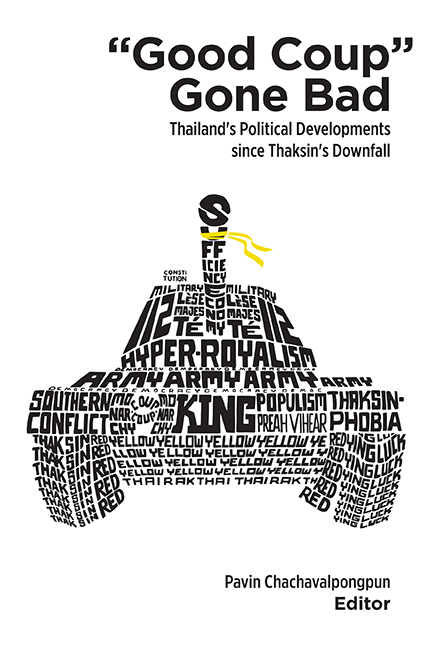
What did the 2006 military coup show us? It demonstrated that the crux of the Thai crisis is far more serious and much wider in scope than had previously been thought. The monarchy is surely not a victim in the protracted conflict, but the root cause and continuing factor that has eroded Thai politics. The coup set in motion more prejudicial uses of the lèse-majesté law, and in the process, has led to more political prisoners. It has also shredded the military into several segments, turning generals into desperate royalists who continue to live off the monarchy in order to survive. Issues of violence in the Thai south and the Thai-Cambodian dispute became greatly intensified in the age of militarized politics. The coup also produced unique colour-coded politics and created crises of legitimacy. This book is a collection of essays that reflect developments in Thai politics in the post-coup period.
After the fall of President Soeharto, there have been heightened attempts by certain groups of Muslims to have shari'a (Islamic law) implemented by the state. Even though this burning issue is not new, it has further divided Indonesian Muslims. The introduction of Islamic law would also affect the future of multi-cultural and multi-religious Indonesia. So far, however, the introduction of shari'a nationwide has been opposed by the majority of Indonesian Muslims. This book gives an overview of shari'a from post-Independence in 1945 to the most recent developments in Indonesia at the start of the new millennium.
Competitiveness of a country requires continuous upgrading and, sometimes, major transformation. Thailand is at the crossroad. It can no longer pursue a strategy based on low-cost advantages, but its capability achievements are still too low to become an advanced economy. This book points out weaknesses of Thailand's national innovation system or education and suggests how the country should develop new capabilities to survive and prosper in the globalized and fiercely competitive world. It will be useful to researchers and students who want to learn more about Thailand and emerging countries, and also to policy-makers and executives involved in economic and industrial development.
Ethnic/racial relations have been a perennial theme in Southeast Asian studies. Current events have highlighted the tensions among ethnic groups and the need to maintain ethnic/racial harmony for national unity. This book analyses ethnic/race relations in Singapore, Malaysia, and Indonesia, with special reference to the roles of ethnic Chinese in nation-building. It brings together a group of established Southeast Asian scholars to critically examine some of the important issues such as ethnic politics, nation-building, state policies, and conflict resolution. These scholars of different ethnic origins present their own ethnic perspectives and hence make the book unique. This is the most up-to-date book on ethnic/racial relations with special reference to the ethnic Chinese in three Southeast Asian countries.
In 1989, the Institute of Southeast Asian Studies (ISEAS) published the milestone volume Management of Success: The Moulding of Modern Singapore, edited by Kernial Singh Sandhu and Paul Wheatley, which delved into a wide variety of issues that were integral to the growth of modern Singapore. The world that Singapore faced in 1989 has changed irrevocably. Meanwhile, within Singapore, the city-state has seen two prime ministerial transitions and the installation of third generation leaders who have articulated their vision for the twenty-first century. This new volume serves to update and review public policies from the early 1990s onwards. It gathers prominent thinkers and scholars on Singapore to examine issues of leadership and policy; economic restructuring; societal transformation; foreign relations and national identity. It seeks to outline the impending challenges of the twenty-first century, and to demonstrate a clear trajectory of intellectual analysis of contemporary Singapore for students and scholars alike.
The book looks at how religion in Singapore is being subjected to the processes of modernisation and change. The Singapore State has consciously brought religion under its guidance. It has exercised strong bureaucratic and legal control over the functioning of all religions in Singapore. The Chinese community and the Buddhist Sangha have responded to this by restructuring their temple institutions into large multi-functional temple complexes. There has been quite a few books written on the role of the Singapore State but, so far, none has been written on the topic - the relationship between state, society and religion. It will help to fill the missing gap in the scholarly literature on this area. This is also a topic of great significance in many Asian, particularly Southeast Asian, countries and it will serve as an important book for future reference in this area of research and comparative studies.
This work focuses on how less developed economies in Southeast Asia, namely Cambodia, Laos, Myanmar and Vietnam (CLMV), can establish links with neighbouring countries and participate in production networks. It also takes a look at links between Singapore and the Batam-Bintan-Karimun (BBK) Special Economic Zone in Indonesia. Leading Southeast Asian economies have achieved rapid economic growth by participating in production networks organized by multinational enterprises. It is thus crucial for less developed economies in Southeast Asia to improve their investment climate, attract foreign direct investment, and form competitive industrial clusters. Service link costs must also be reduced substantially to make production fragmentation economically feasible. The authors in this book discuss these issues and provide policy recommendations.
Based on a decade of research in Indonesia, this book provides an in-depth account of the military's struggle to adapt to the new democratic system after the downfall of Suharto's authoritarian regime in 1998. Unlike other studies of the Indonesian armed forces, which focus exclusively on internal military developments, Mietzner's study emphasizes the importance of conflicts among civilians in determining the extent of military involvement in political affairs. Analysing disputes between Indonesia's main Muslim groups, Mietzner argues that their intense rivalry between 1998 and 2004 allowed the military to extend its engagement in politics and protect its institutional interests. The stabilization of the civilian polity after 2004, in contrast, has led to an increasing marginalization of the armed forces from the power centre. Drawing broader conclusions from these events for Indonesia's ongoing process of democratic consolidation, the book shows that the future role of the armed forces in politics will largely depend on the ability of civilian leaders to maintain functioning democratic institutions and procedures.
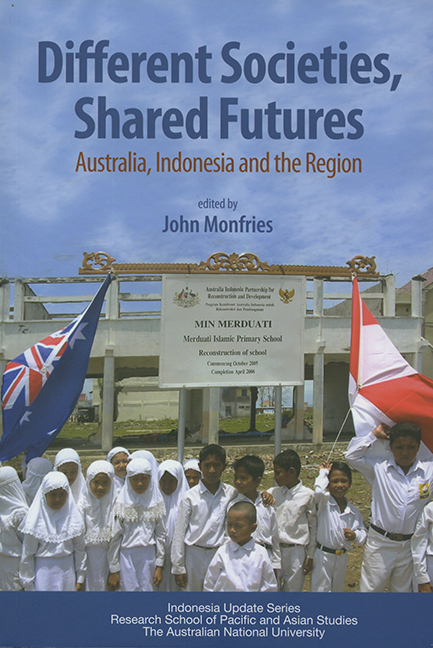
Australia's relationship with Indonesia is one of its most important and contentious bilateral relationships, characterized by sharply differing social and cultural mores and by periodic crises and mutual distrust, but also by significant person-to-person contacts in many fields.Recent developments, including the tsunami tragedy, the policies of a new Indonesian president and the Corby affair, have demonstrated both the best and the worst in the relationship. The Corby affair revealed high levels of ignorance and prejudice about Indonesia in some quarters in Australia. On the other hand, the tsunami that wrecked Indonesia's Aceh province led to an outpouring of sympathy and support from Australia. Following President Yudhoyono's visit to Australia in early 2005, official relations, though fragile, were better than they had been for many years.Australia's management of its most important regional relationship also has implications for its relations with other countries in the region, through issues such as Australia's presence and role in regional organizations, and policy responses to the rise of China.This book examines the wide range of factors and approaches that are involved in meeting the bilateral and regional challenges, including government links, public images and mutual perceptions, regional organizations, the role of Islam, the aid relationship, security and counterterrorism, economic and business relations, and the student market. The articles by the authors in this book reflect a complex, many-sided relationship that is not susceptible to simplistic formulas or stereotypes.Contributors include former Australian ambassador to Indonesia Richard Woolcott; former Indonesian ambassador to Australia S. Wiryono; Noke Kiroyan, president of the Indonesia–Australia Business Council; K. Kesavapany, director of the Institute of Southeast Asian Studies; Paul Kelly of The Australian newspaper; Scott Dawson of the Australia–Indonesia Partnership for Reconstruction and Development; Hugh White and Jamie Mackie of the Australian National University; and David Reeve of the University of New South Wales.