To save content items to your account,
please confirm that you agree to abide by our usage policies.
If this is the first time you use this feature, you will be asked to authorise Cambridge Core to connect with your account.
Find out more about saving content to .
To save content items to your Kindle, first ensure no-reply@cambridge.org
is added to your Approved Personal Document E-mail List under your Personal Document Settings
on the Manage Your Content and Devices page of your Amazon account. Then enter the ‘name’ part
of your Kindle email address below.
Find out more about saving to your Kindle.
Note you can select to save to either the @free.kindle.com or @kindle.com variations.
‘@free.kindle.com’ emails are free but can only be saved to your device when it is connected to wi-fi.
‘@kindle.com’ emails can be delivered even when you are not connected to wi-fi, but note that service fees apply.
Thailand's political problems attracted international attention when yellow shirted anti-Thaksin protestors closed down Bangkok's international airports in November 2008; the following April pro-Thaksin red shirts prevented an ASEAN-East Asia Summit, and clashed violently with the army in the streets of Bangkok. Conflict between groups for and against former Prime Minister Thaksin has polarized Thai society. Under his watch, violence also returned to the Malay Muslim south, with the loss of over 3,000 lives. The military coup that ousted Thaksin was supposed to end all this, but instead polarization increased and southern violence continued. This book is about how Thaksin divided Thailand, the nature of the southern conflict, and problematic attempts to establish a consensus around a post-Thaksin political order.
The book focuses on the impact of the 1997-99 economic crisis on human development in Indonesia, especially in 1998, its worst year. Based on the definition used by the UNDP, human development is analysed as covering human capital (education and health) and purchasing power. In this book, the concept of human capital is broadened to include freedom from fear, health, education, and migration. The first part of the book discusses the economic situation in Indonesia. The second elaborates on what happened to human capital during the crisis and the third part examines its effects on purchasing power. Because human development does not occur in a vacuum, the fourth part discusses some emerging issues in Indonesia. The book concludes with some thoughts on people-centred development, which may contribute to more sustainable development than the development concept that simply pursues high economic growth. With this people-centred development, growth rates of about 3 to 4 per cent are adequate, as long as Indonesia achieves success in human development.
In this book, Jiro Okamoto explores the development of Australia's foreign economic policy towards ASEAN. He examines in detail decisive factors such as changes in the international and regional environment and the replacement of a dominant policy coalition with another in Australia's domestic policy process. His analysis shows that the shifts in Australia's ASEAN policy have not only closely reflected changes in Australia's overall foreign economic policy orientation, but that Australia's ASEAN policy strongly drove the change at key junctures. His work also offers important insights into the prospect of an "inclusive" economic integration process in East Asia. Although Australia's foreign economic policy has been an important element in regional economic cooperation, its inclusion in the East Asian integration process still remains ambiguous.
The fundamental premise of this study is that the Buddhist sangha and Buddhist teachings play a key symbolic role in legitimating the exercise of secular power in Thailand. The author argues that a clear appreciation of the political legitimatory function of Buddhism provides the key to understanding the major theoretical and administrative changes that have taken place within Thai Buddhism in this century.
Ever since Myanmar regained her independence in January 1948, the Tatmadaw (Myanmar Armed Forces) has been crucial in restoring and maintaining law and order. It is one of the most important institutions in Myanmar politics. Various aspects of the Tatmadaw have been studied. The most notable area of study has been the political role of the military. This study looks at the organizational development of the Myanmar armed forces. It analyses four different aspects of the Tatmadaw: military doctrine and strategy, organization and force structure, armament and force modernization, and military training and officer education. It sets out security perceptions and policies, charting developments in each phase against the situation at the time, and also notes the contributions of the leading actors in the process. Since early 1990s, the Tatmadaw has implemented a force modernization programme. This work studies rationales and strategy behind the force modernization programme and examines the military capabilities of the Tatmadaw. Drawing extensively from archival sources and existing literature, this empirically grounded research argues that, while the internal armed security threat to the state continues to play an important role, it is the external security threat that gives more weight to the expansion and modernization of the Tatmadaw since 1988. It also argues that, despite its imperfections, the Tatmadaw has transformed from a force essentially for counter-insurgency operations into a force capable of fighting in limited conventional warfare.
This book presents the key findings of studies done under the ASEAN Phase III Population Project, "Socio-Economic Consequences of the Ageing of the Population" in Indonesia, Malaysia, the Philippines, Singapore, and Thailand. It begins by outlining the demographic background to the ageing process in these countries and a projection of the situation of ageing into the future. It examines the profile of the aged and gives a brief overview of the living arrangements of the elderly, their employment, financial support, and health care, and the role played by their children in old age security. It then goes on to describe the services provided at the national and local levels by government and private agencies and gives an evaluation of the role and contribution of the aged in the community. The book ends with a discussion on the social and policy implications of ageing in each of the participating countries.
Once acting as local representatives of the national government and content to let their larger counterparts do the 'heavy lifting', state and provincial governments are increasingly expected to be stewards of their economies and deliver sustained growth rates for their citizens. Spurred on by increasing competition, not least from neighbouring territories, sub-national governments are increasingly formulating their own plans for economic development, taking out loans, investing in specialist facilities, and establishing marketing offices abroad. Despite this increasingly challenging environment, there is little research on what sub-national governments can or should do to catalyze the development of their economies. Focussing on the electronics sector, this book draws together ten cases of promising states or provinces largely, but not exclusively, from Asia. These dynamic regions have managed to outcompete the primary economic and political centres of power in their countries and are negotiating their own entry into one of the most challenging and demanding sectors. In exploring the issues of agency, autonomy, and state-business relations at the sub-national level, this book aims to shed light on a vital, but overlooked topic.
This book is the most up-to-date and authoritative work on Indonesia's rural non-farm development characteristics and potential. The essays, by experts and well-known specialists in the field, emphasize the changing importance of off-farm income, employment contributions of small enterprises, the role of gender and mobility in entrepreneurial behaviour and the policy implications for rural non-farm enterprises. A unique feature is the use of case studies to provide insights and context for activities. The book is both a summary of current knowledge and a call for new inquiries on this critical theme.
Indonesia is the world's largest archipelagic state. In 2001 it embarked on a "big bang" decentralization involving a major transfer of administrative, political and financial authority to its districts, now numbering more than 500. Together with the rapid transition from authoritarian to democratic rule in the late 1990s, this initiative has transformed the country's political, social and business life. While national government is the major area of contestation, power has shifted irreversibly away from the centre. How this significantly increased regional autonomy works will have a crucial bearing on the future of the Indonesian nation-state.This volume features contributions by over 40 writers with deep expertise on Indonesia. The book provides a timely, comprehensive and analytical assessment of the country's regional development dynamics in the post-decentralization environment. It explores historical, political and development patterns at the regional level; the relationship between decentralization and governance; local-level perspectives; migration, cities and connectivity; and the challenges confronting the peripheral regions of Aceh and Papua.
In conveying his condolences to VR Nathan's wife, Prime Minister Lee Hsien Loong said that "as chairman of Hindu Endowments Board, VR Nathan had served the Indian community with distinction and unwavering commitment". Lee also said that VR "had done much for inter-religious harmony in Singapore". Soon after, Zainul Abidin Rasheed, then Senior Minister of State for Foreign Affairs, said in Parliament that he was "very amazed" when he saw at VR's funeral leaders of different faiths paying their last respects and offering prayers. That perhaps is the ultimate tribute any Singaporean of faith could hope for. This is the story of what made an unemployed immigrant from India with little education transform into an ideal Singaporean — successful in his career, yet caring for fellow citizens.
The ASEAN Economic Community (AEC) constitutes the most ambitious programme of economic cooperation in the developing world. Its goal is to create no less than a free flow of goods, services, foreign direct investment, and skilled labour, as well as a freer flow of capital, throughout the region. Implementing this agenda will be technically and politically difficult. Hence, understanding the potential economic "payoff" is of the essence. The goal of this book is to assess empirically the likely economic effects of the AEC on the ASEAN Member States and associated stakeholders. It mobilizes a number of techniques to do so, and finds that the likely effects will be large, even greater than the anticipated effects of the Single Market Program in Europe, for example. The AEC will help the region improve competitiveness, facilitate the creation of production networks, foster the diffusion of 'best practices', and help ASEAN project its interests more effectively in an increasingly integrated, global economy.
More than a quarter of century after the end of the war in 1975, the Lao leadership is still in search for a compelling nationalist narration. Its politics of culture and representation appear to be caught between the rhetoric of preservation and the desire for modernity. Meanwhile, originating from the periphery where ethnic minorities had hitherto been symbolically, politically and administratively confined, the participation of some of their members in the Indochina Wars (1945-75) exposed these individuals to socialization and politicization processes.This rigorously researched and cogently argued book is a fine-grained analysis of substantial ethnographic material, showing the politics of identity, the geographies of memory and the power of narratives of some members of ethnic minority groups who fought during the Vietnam War in the Lao People's Liberation Army and/or were educated within the revolutionary administration. No study has ever been conducted on the latter's views on the national(ist) project of the late socialist era. Their own perceptions of their membership of the nation have been overlooked.Post-War Laos is a set to be a landmark study, and an original contribution which refines established theories of nationalism, such as Anderson's 'imagined community', by addressing a common weakness: namely, their tendency to deny agency to individuals, who in fact interpret their relationship to, and place within, the nation in a variety of ways that may change according to time and circumstance.
The early years of the twenty-first century have been characterized by a sense of widespread anxiety and fear because of the violent activities of groups of terrorists who claim they act in the name of Islam. Their acts of terrorism, viewed by a majority in the Muslim world as crimes which must be subject to the law, are in tragic contrast to the efforts of many Muslim intellectuals who have been working for the past several decades to find common ground between people of all faiths based on the universality of humankind. This book aims to bring to the attention of non-Muslims, in particular, the range of views which Muslims in the Middle East and in South and Southeast Asia hold on six topics of importance to life in the twenty-first century. The topics have been addressed from the internal Muslim point of view to provide readers with a sense of the main debates within Islam on each of the issues. The topics addressed are: the new world order; globalization and modernity; banking and finance; the nation-state; the position of women; and law and knowledge. The chapters have been written by Muslims and non-Muslims, each of whom is an expert on the area about which they write. The chapters are presented in pairs which offer Middle Eastern (and in one case South Asian) points of view which are matched by Southeast Asian perspectives on each of the six topics. While the media is quick to report on the more violent expressions of Islam, including terrorism, the vigorous debates, which now characterize the intellectual discourse in Muslim communities, are rarely if ever reported. This book not only describes and analyses those debates but also reflects the views of many Muslims across the world, emphasizing the connections and contrasts between the Middle East and Southeast Asia.
There is a growing dialogue between India and Southeast Asia. From a marginal relationship during the Cold War days to the participation of India at the East Asia summit in December 2005 has been a long journey.In the context of the geopolitical situation in the Asia-Pacific in the post-September 11 period, the security dimension between India and Southeast Asia cannot be overemphasized. With the continued U.S. preponderance in the region and China's phenomenal rise, the countries of Southeast Asia and India have an opportunity to evolve a co-operative relationship not only with one another, but also with the major powers of the region.This book examines the areas of comprehensive security and the growing understanding between India and Southeast Asia where there is less divergence and greater convergence. The author argues that India-Southeast Asia security convergence is not and should not be aimed at any particular country. On an optimistic note he concludes that such convergence will contribute to creating harmony among the major powers of Asia to make the twenty-first century the "Asian century".
"A welcome and timely volume that realistically considers the challenges that the rapid increase in older persons pose for the family, community and society at large in the context of Southeast Asia. Most importantly, it shifts the focus from viewing older persons simply as liabilities to one that recognizes their value as an asset that can be enhanced through appropriate actions at each of these levels, especially ones that take into account the rapidly changing socio-economic and technological environment in which population ageing is taking place." - Professor John Knodel, Research Professor Emeritus, Population Studies Center and Professor Emeritus, Sociology, University of Michigan
This collection of essays focuses on law and the diaspora Chinese. They show us a variety of answers to such questions as: what are the laws of China outside China; what are the laws of the Chinese in Southeast Asia; what were/are the laws for the Chinese in Southeast Asia; and is there a "Confucian Chinese"? The answers in some cases are reasonably certain but in others they are tentative and debatable. The legal material raises these issues in a way which is fundamental to diaspora studies.
"Half a century since Malayan independence in 1957, this collection of essays provides a welcome assessment of post-colonial, especially recent Malaysian policies on various fronts – development, 'looking East', 1997-98 crisis management, inter-ethnic redistribution, poverty reduction, trade, education, healthcare, globalization, Islam and national culture. This volume is a useful compendium for anyone seeking a broad overview of recent policy challenges and debates." – Jomo Kwame Sundaram, United Nations Assistant Secretary General for Economic Development
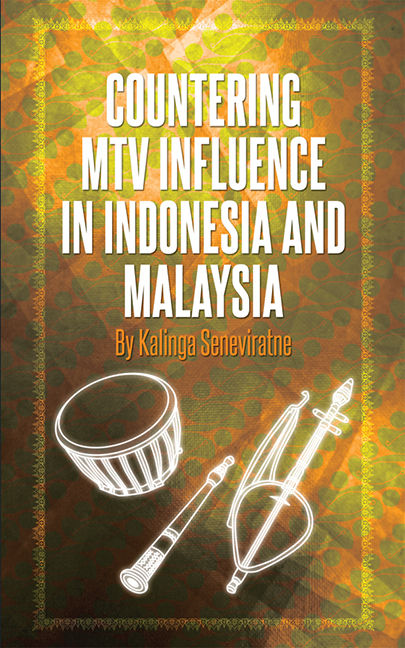
This book discusses three major elements - MTV, the Music of Malaysia, and the Music of Indonesia - and how these three interact in the modern cultural setting. The research objective behind the book was to study the impact of globalization, in the form of the MTV onslaught on the youth musical culture and identities of Indonesia and Malaysia, and to determine what theoretical basis could explain the new cultural products which have risen in response to this process. The book goes on to examine whether the nasyid and irama Malaysia music genres in Malaysia and dangdut in Indonesia are part of this process and how it is achieved
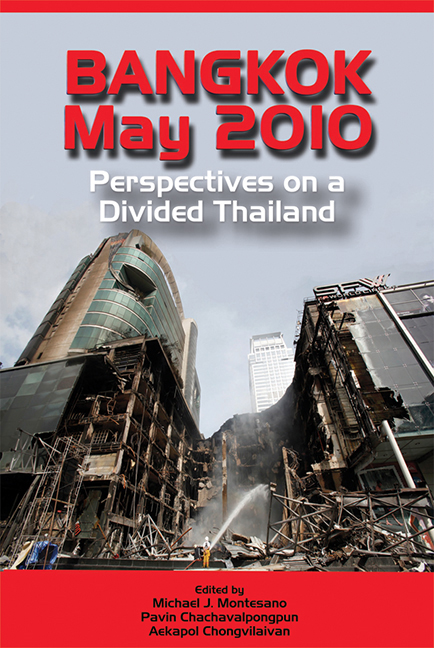
After a two-month stand-off between Red Shirt protestors and the government of Prime Minister Abhisit Vejjajiva, violence and arson scarred central Bangkok in mid-May 2010. This shocking turn of events underlined how poorly understood the deep divisions in the society and politics of Thailand remained, even five years into the country’s prolonged crisis. This volume collects analysis and commentary on those divisions from an unusually large and prominent group of Thai and foreign scholars and observers of the country. Contributions examine socio-economic, political, diplomatic, historical, cultural, and ideological issues with rare frankness, clarity, and lack of jargon.
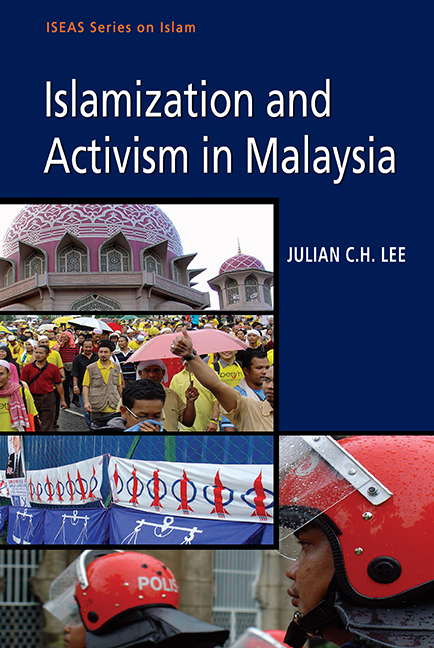
Islamization and Activism in Malaysia examines aspects of the increasing political and social profile of Islam in Malaysia and describes how different kinds of activists in Malaysia have sought to protect fundamental liberties and to improve the state of democracy in Malaysia. In particular, focus is paid to activists who engage with electoral process, the law and the public sphere, and in particular, to movements that cut across or combine these realms of action.Spanning the period of the Prime Ministership of Abdullah Badawi, Julian C. H. Lee's grounded analysis examines the most important issues of that period including the freedom of religion case of Lina Joy, the Islamic state debate, and events surrounding the 8 March 2008 general elections.