To save content items to your account,
please confirm that you agree to abide by our usage policies.
If this is the first time you use this feature, you will be asked to authorise Cambridge Core to connect with your account.
Find out more about saving content to .
To save content items to your Kindle, first ensure no-reply@cambridge.org
is added to your Approved Personal Document E-mail List under your Personal Document Settings
on the Manage Your Content and Devices page of your Amazon account. Then enter the ‘name’ part
of your Kindle email address below.
Find out more about saving to your Kindle.
Note you can select to save to either the @free.kindle.com or @kindle.com variations.
‘@free.kindle.com’ emails are free but can only be saved to your device when it is connected to wi-fi.
‘@kindle.com’ emails can be delivered even when you are not connected to wi-fi, but note that service fees apply.
In a nation pledged to Unity in Diversity, few industries could be more important than interisland shipping. Yet, since independence, problems plaguing interisland shipping have continued, despite the rehabilitation and modernization under the New Order Government. This book tries to understand the problems in terms of the conflict between market forces and government regulation. In the process it sheds light not only upon the industry but also upon an important aspect of modern Indonesian history, upon the nature of the business firm in Indonesia, and upon the formulation and implementation of government policy.
This unique volume draws together a compelling collection of studies on the diverse and transformatory experiences of women as they encounter the forces of modernization altering the face of contemporary Borneo. The authors, all locally based scholars specializing in gender issues, shed much-needed light upon this hidden academic area. It presents the human and gendered face of development and discusses the pressing issue of urbanization and rural-urban migration in its many facets as experienced by women in this multicultural and fascinating region in Southeast Asia.
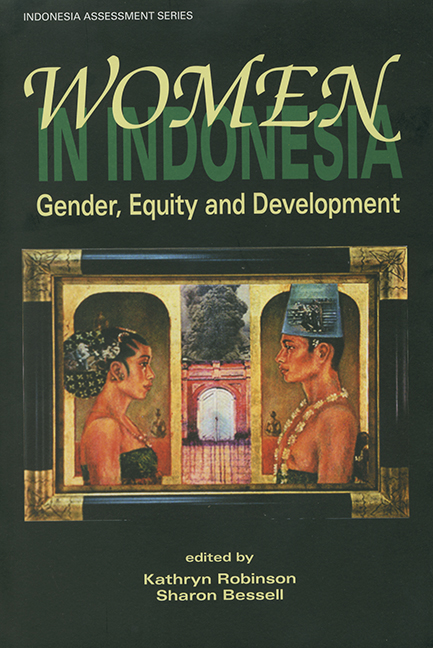
Indonesia now has its first woman President -- Megawati Sukarnoputri. The debates surrounding her elevation to the presidency brought issues of gender and politics to the forefront of the public agenda, raising crucial questions about the role that women are to play in public life in post-Soeharo Indonesia. The struggle to achieve a democratic transition following the fall of Soeharto's New Order in 1998 has also focused attention on issues of equity and gender justice. This book explores gender relations in Indonesia and presents an overview of the political, social, cultural and economic situation of women. The volume is Indonesia Assessment 2001, a result of the annual Indonesia Update conference organized by the Indoneisa Project and the Department of Political and Social Change at the Research School of Pacific and Asian Studies, ANU.
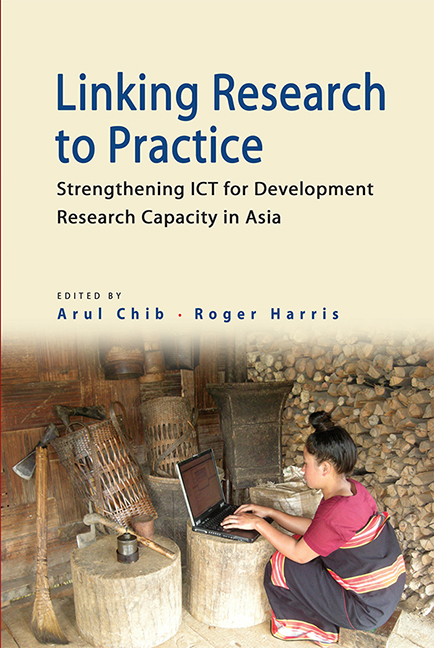
Information and communication technologies have long promised to provide quality education, improve healthcare, allow open government, and solve environmental issues. To realize this potential and influence policy-making and programme design, the Singapore Internet Research Centre, supported by the IDRC, created an innovative research capacity-building programme, SIRCA. The programme supports interdisciplinary ICTD research through the nurturing of research relationships. By bringing together experienced mentors with deserving early-career Asian researchers in an intellectually stimulating environment, SIRCA has fostered a cohort of talent capable of generating the rigorous scientific evidence needed. Their stories, and reflections upon the programme, are told here. If ever it needed demonstrating that ICTs are an indispensable tool for developing an information society rather than a reward for achieving it, then the SIRCA programme has achieved that.
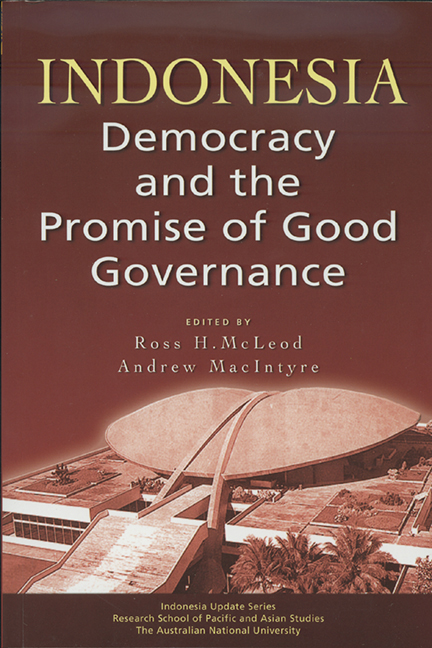
The success or failure of democratic reform in Indonesia is a key question for Indonesia itself and for the surrounding region. Although Indonesia's transition to democracy holds out the promise of good governance, this cannot be taken for granted - as the recent military takeover in Thailand shows. This book is about the challenge of making democracy work in Asia's third-largest nation.
Lim Kim San's name is linked inextricably to Singapore's public housing. This is entirely appropriate because he played a crucial role in the success of the Housing Board, which transformed both the country's physical landscape and gave Singaporeans a tangible stake in the future of their young nation. However, important though Lim's role was at the Board and as Minister for National Development, it was not his sole contribution to Singapore. He made a decisive difference in several other key areas, including Finance, and Interior and Defence. This biography draws on Lim's Oral History Interview, which was made accessible to the author, the Hansard, Lim's speeches, and newspaper clippings, in addition to fresh interviews conducted with other Singapore leaders who had worked with Lim. The result is a composite picture of a great Singapore leader.
The Chinese in Indonesia have played an important role in Indonesian society before and after the fall of Soeharto. This book provides comprehensive and up-to-date information by examining them in detail during that era with special reference to the post-Soeharto period. The contributors to this volume consist of both older- and younger-generation scholars writing on Indonesian Chinese. They offer new information and fresh perspectives on the issues of government policies, legal position, ethnic politics, race relations, religion, education and prospects of the Chinese Indonesians.
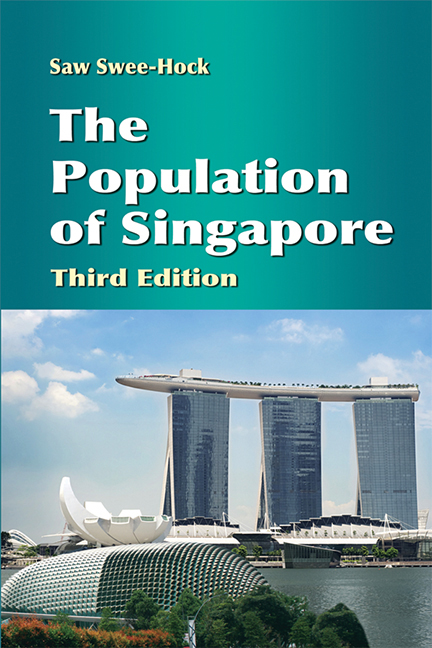
The third edition of this book presents a most comprehensive and up-to-date analysis of population trends and patterns in Singapore since its foundation in 1819 to the present day. Separate chapters are devoted to population growth and distribution, changing population structure, migration, mortality trends and differentials, marriage trends and patterns, divorce trends and patterns, fertility trends and differentials, family planning, abortion and sterilisation, fertility policies and programmes, immigration policies and programmes, labour force and future population trends. The strength of the book lies in the author's deep familiarity with the subject acquired through some personal involvement in the compilation of demographic statistics, as well as the formulation of population policies for the country.
"Few books address the sensitive issue of Islamic education with empathy as well as critical distance as Joseph C. Liow's Islam, Education, and Reform in Southern Thailand. He examines global networks of religious learning within a local Thai as well as regional Asian context by brilliantly revealing the intersections between religion, politics and modernity in an accessible and illuminating manner. Traditional educational institutions rarely receive such sensitive and balanced treatment. Liow's book is a tour de force and mandatory reading for policy-makers, academics and all of those interested in current affairs." - Ebrahim Moosa, Associate Professor of Islamic Studies, Department of Religion, Associate Director, Duke Islamic Studies Center (DISC), Duke University, USA
It is now apparent, especially in the aftermath of the regional financial crisis of 1997, that globalization has been impacting upon the Southeast Asian economies and societies in new and harrowing ways, a theme of many recent studies. Inadvertently, these studies of globalization have also highlighted that the 1980s and 1990s debate on democratization in the region _ which focused on the emergence of the middle classes, the roles of new social movements, NGOs and the changing relations between state and civil society _ might have been overly one-dimensional. This volume revisits the theme of democratization via the lenses of globalization, understood economically, politically and culturally. Although globalization increasingly frames the processes of democracy and development, nonetheless, the governments and peoples of Southeast Asia have been able to determine the pace and character _ even the direction of these processes _ to a considerable extent. This collection of essays (by some distinguished senior scholars and other equally perceptive younger ones) focuses on this globalization_democratization nexus and shows, empirically and analytically, how governance is being restructured and democracy sometimes deepened in this new global era. A historical review introduces the volume while an analytical assessment of the ten case-studies concludes it.
Nationalism and globalization are two major contradicting forces in the world today. The roles that these two forces play and the impact of globalization on countries differ. Both Western and Asian "nation-states" have faced the challenge of globalization in recent decades, and the challenge has become more intense since the 1990s. The decline of communism and socialism as ideologies, and the decreasing importance of national boundaries for capital, companies and even labour, have had profound implications for national identity. Thus, the impact of globalization on "nation-states" is not identical. How have "nation-states" coped with globalization? Has it led to stronger nationalism or national disintegration? What has happened to national identity? Is the concept of "nation" still relevant in the era of globalization? To answer these questions, twelve countries -- six from the West (France, UK, USA, Yugoslavia, Australia, and Russia) and six from Asia (Indonesia, Malaysia, Singapore, Japan, China, and India) have been selected for study. These countries represent a wide range of national experiences - from "old" states to "new" states, from mono-ethnic nations to multi-ethnic ones, and from surviving nation-states to decaying ones. Apart from the individual country studies, the last chapter summarizes and compares the findings of these country studies, throwing light on the various types of nationalism, and the gains and losses of these countries in the process of globalization.
This book examines Indonesia's business environment since reformasi began in 1985 -- what stayed the same, what changed, and would could change. Economic recovery has been hesitant. Regime change and political reform have created uncertainties that have deepened reluctance to invest. A raft of government-instigated changes have left their imprint: decentralization, privatization, new company legislation, anti-corruption efforts, nationalization of debt-ridden banks, and firms being forced into receivership. More cautious lending practices by remaining financial institutions have imposed a credit crunch. Increased worker militancy and minimum wage rises have led some international firms to reconsider their presence in Indonesia. Changes in the business environment have caused a redefinition of private enterprise-government relations, inducing firms to re-examine their organization and management. The book includes insights of distinguished and stimulating speakers from business, independent research organizations, and academic institutions in Indonesia, Australia and elsewhere.
Trading in the rural areas of developing countries provides a valuable source of cash income, especially for small and landless peasants. In a case study of the village of Kakas in the province of North Sulawesi, Indonesia, the authors depict the colourful market scene of a village pasar, the selling and buying strategies of traders and customers, and the characteristics of supply and demand. They also shed light on the often-neglected non-economic aspects of the pasar, such as its value for local communication and its role in the formation of a new sense of local identity and solidarity. By means of studies of trader households this book also scrutinizes how rural households combine petty trade with other income-generating activities such as cash-cropping, subsistence production, wage labour, and even work as a civil servant. The authors also show how petty trade, though highly efficient, may well be an indicator of underdevelopment.
"Know your enemies, know yourself", advised Sun Zi in his famous Art of War (AoW). In contrast, the legendary Admiral Zheng He would have said, "Know your collaborators, know yourself", and this would be the essence of his Art of Collaboration (AoC). This book offers a fresh new approach to doing business and providing leadership in the twenty-first century, where Zheng He's peaceful and win-win collaborative paradigm present in his AoC provides an alternative to the aggressive and antagonistic mindset inherent in Sun Zi's AoW. The author has culled from the existing literature on the historical, cultural, diplomatic, and maritime-oriented Zheng He, connected the dots of his discovery of a managerial Zheng He, and wrote this book to present both the big message of Zheng He's Art of Collaboration as well as an understanding of Zheng He's specific work as a leader and manager.
"At a time when Southeast Asian Studies is declining in North America and Europe, this book serves to remind us of the fresh, constructive and encouraging view of the field from Asia. On behalf of Taiwan’s Southeast Asian research community, I sincerely congratulate Professors Park and King for making such a great and timely contribution to the making of Southeast Asian Studies in Asia."—Hsin-Huang Michael Hsiao, Director of Institute of Sociology, Academia Sinica, and former President of Taiwan Association of Southeast Asian Studies"The Historical Construction of Southeast Asian Studies: Korea and Beyond is an important and long-overdue step in the task of bringing Southeast Asian Studies to where it rightfully belongs - the Asian region. At the same time, it avoids being narrowly regionalistic and instead views Southeast Asia as an 'open system' that transcends 'national units' or 'fixed territorial categories' and welcomes the contributions of both Asian and non-Asian scholars in crafting a fresh post-colonial approach to the study of the region’s societies and peoples."—Eduardo Climaco Tadem, Professor of Asian Studies, University of the Philippines-Diliman“An insightful and systemic analysis of the intriguing trajectories, evolving themes, and multi-lingual scholarship of Southeast Asian Studies in Asia and beyond, this book serves as an important foundation in setting future research agendas as well as for closer global collaborations in knowledge production in Asian Studies.”—Liu Hong, Tan Kah Kee Professor and Chair, School of Humanities and Social Sciences, Nanyang Technological University, Singapore
This volume focuses on some of the most important and topical questions about Myanmar. Many of these issues have not been sufficiently researched, comprehensively compiled, and comparatively examined within the broader Southeast Asian context. Especially important contributions in the book pertain to issues of historical influence and political considerations that have shaped the dominant thinking within the state and the military. There are equally important studies of sensitive topics like the political economy of the state and the level of human security in the country. The three major ethnic groups in the country - Karen, Kachin, and Shan - are also studied in detail. Some of the negotiations between the Karen and Kachin ethnic insurgent group representatives on the one hand, and the military junta on the other, are spelled out in detail. An important corollary finding is the importance of religion and religious personalities in brokering peace between the ethnic groups and the military government. Finally, the book deals with how the various ethnic groups are trying to cope with decades of conflict and reconstruct their communities.
This book consists of papers that present the findings of research done by the SMERU Research Institute in Jakarta, Indonesia. Most describe the effects on the poor of the Indonesian economic crisis of 1997-98 and the response of the Indonesian government in the form of a Social Safety Net consisting of poverty mitigation programs. With the gradual recovery of the economy after 2000, the Indonesian government began reducing subsidies for fuel products and has channelled budgetary savings into a new series of targeted social protection and poverty alleviation undertakings that include unconditional cash transfers. The effectiveness of Indonesia's poverty alleviation programs has, however, been reduced by the difficulty of targeting beneficiaries accurately because of a lack of reliable, up-to-date poverty figures. In many instances unsuitable targeting methodology has been compounded by bad governance at the local level, while the introduction of regional autonomy, accompanied by the decentralization of authority to the district level, has formed a further complicating factor.
This book offers an in-depth and detailed analysis of the political processes that led to formation of the Federation of Malaysia in 1963. It argues that the Malaysia that came into being following the amalgamation of Malaya, Singapore, Sarawak and North Borneo was a political creation whose only rationale was that it served a convergence of political and economic expediency for the departing colonial power, the Malayan leadership and the ruling party of self-governing Singapore. "Greater Malaysia" was thus an artificial political entity, the outcome of a concatenation of interests and motives of a number of political actors in London and Southeast Asia from the 1950s to the early 1960s. The book contrasts the complicated negotiations and hard bargaining between Singapore and Malaya on the critical issues of citizenship, control of finances and the development of a common market during the lead-up to merger with the relative ease with which the North Borneo Territories were incorporated in the Federation. The haste and testing conditions in which negotiations were conducted between 1961 and 1963, often with the British facilitating the process as an "honest broker", led to a number of unresolved compromises between Singapore and Kuala Lumpur. These compromises, however, did not obviate the possibility of future difficulties, and the seeds of dissension sown by the disagreements between the two governments were to sprout into major crises during Singapore's brief history in the Federation of Malaysia.
This book focuses on constitutional reform in Indonesia (1999–2002) from the perspective of shari'a. Since the end of Soeharto's New Order government in 1998, Indonesia, the largest Muslim country in the world, has amended the 1945 Constitution four times. Soeharto's departure also opened the way for several Muslim groups and political parties to propose the introduction of shari'a into the Constitution. This book poses the crucial question implicit in the amendments to the 1945 Constitution: can shari'a and democratic constitutionalism be fused without compromising on human rights, the rule of law, and religious liberty? The contributions of Islamic political parties in Indonesia to the process and the outcome of the amendments, by adopting a substantive shari'a approach, reflect the ability to deal with a modern Constitution without abandoning the principles and the objectives of shari'a. The study reveals one possible picture of how Islam and constitutionalism can co-exist in the same vision, not without risk of tension, but with the possibility of success.
The world is undergoing dramatic transformations in the wake of the crumbling of the Cold War order, and the ebbs and flows of these changes are not passing unnoticed in Southeast Asia. Indeed, the region is witnessing its own mini-versions of glasnot and perestroika, as countries like Vietnam, Cambodia, Laos, and Myanmar, for instance, seek their niches in the emerging opportunities and constraints that characterize the international economic and political scene. This, coupled with the dynamism of the member states of ASEAN, makes Southeast Asia a particularly promising and exciting area -- at a turning point in world history and human affairs. Cast in a formal style that is unencumbered by lengthy analyses or commentaries, Regional Outlook provides succinct yet substantive and easily readable overviews and insights into the current geo-political and economic situations in the individual countries and the region as a whole, together with the likely trends over the next year or so. The review will serve as a useful and handy guide to the region's aspirations and prospects each year, in addition to casting a look ahead.