About Studies in German Literature Linguistics and Culture
This is Camden House’s general German studies series, in which numerous titles have appeared since the early 1980s. It welcomes a broad range of topics and approaches - from traditional, narrowly literary studies on one hand to forays into cultural studies and cultural history on the other, from approaches based on traditional close reading to those emphasizing theory, from feminist to postmodern to multicultural. All periods of German culture and literature are fair game, from medieval Spielmannsepen to currently emerging writers of the twenty-first century.
To save content items to your account,
please confirm that you agree to abide by our usage policies.
If this is the first time you use this feature, you will be asked to authorise Cambridge Core to connect with your account.
Find out more about saving content to .
To save content items to your Kindle, first ensure no-reply@cambridge.org
is added to your Approved Personal Document E-mail List under your Personal Document Settings
on the Manage Your Content and Devices page of your Amazon account. Then enter the ‘name’ part
of your Kindle email address below.
Find out more about saving to your Kindle.
Note you can select to save to either the @free.kindle.com or @kindle.com variations.
‘@free.kindle.com’ emails are free but can only be saved to your device when it is connected to wi-fi.
‘@kindle.com’ emails can be delivered even when you are not connected to wi-fi, but note that service fees apply.
The process of coming to terms with its National Socialist past has been a long and difficult one in Austria. It is only over the past thirty years that the country's view of its role during the Third Reich has shifted decisively from that of victimhood to complicity, prompted by the Waldheim affair of 1986-1988. Austria's writers, filmmakers, and artists have been at the center of this process, holding up a mirror to the country's present and drawing attention to a still disturbing past. Katya Krylova's book undertakes close readings of key contemporary Austrian literary texts, films, and memorials that treat the legacy of Nazism and the Holocaust. The analysis focuses on texts by Robert Schindel, Elfriede Jelinek, and Anna Mitgutsch, documentary films by Ruth Beckermann and by Margareta Heinrich and Eduard Erne, as well as recent memorial projects in Vienna, examining what these reveal about the evolving memory culture in contemporary Austria. Aimed at a broad readership, the book will be a key reference point for university teachers, undergraduates, and postgraduates engaged in scholarship on contemporary Austrian literature, film, and visual culture, and for general readers interested in confrontations with the National Socialist past in the Austrian context. Katya Krylova is a Germanist specializing in modern and contemporary Austrian Studies. She holds a PhD in German Literature from the Department of German and Dutch, University of Cambridge. The Long Shadow of the Past is her second book.
The East German playwright Heiner Müller (1929-1995) is one of the most influential European dramatists and theater directors since Brecht. While critical literature on Müller often discusses the politics of his works, analysis tends to stop at the level of the text, neglecting the theatrical events that emerge from it and the audiences for which it was written and performed. Situating his study within Müller's interests in democracy and audience activity, Michael Wood addresses these gaps in scholarship, making an original contribution to the understanding of Müller's work as playwright and director. In 1985, Müller spoke of the importance of a 'democratic' theater: one that confronts theatergoers with densely contradictory material that they must interpret for themselves, reflecting the complexity of material reality and encouraging them to question their participation in political life. Wood's study shows that Müller sought to do this in his combined 1988 production of Der Lohndrücker, Der Horatier, and Wolokolamsker Chaussee IV: Kentauren, staged at a time when questions of democracy were at the forefront of East German consciousness. It also demonstrates that from the beginning of his career Müller tried to make theater that would create a form of democracy both within and outside the theater. Michael Wood is a British Academy Postdoctoral Fellow at the University of Edinburgh, where he received his PhD in 2014.
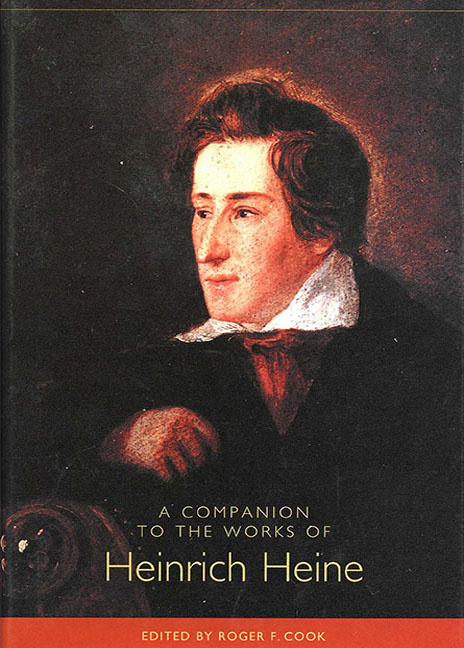
As the most prominent German-Jewish Romantic writer, Heinrich Heine (1797-1856) became a focal point for much of the tension generated by the Jewish assimilation to German culture in a time marked bya growing emphasis on the shared ancestry of the German Volk. As both an ingenious composer of Romantic verse and the originator of modernist German prose, he defied nationalist-Romantic concepts of creative genius that grounded German greatness in an idealist tradition of Dichter und Denker. And as a brash, often reckless champion of freedom and social justice, he challenged not only the reactionary ruling powers of Restoration Germany but also the incipient nationalist ideology that would have fateful consequences for the new Germany--consequences he often portended with a prophetic vision born of his own experience. Reaching to the heart of the `German question,' the controversies surrounding Heine have been as intense since his death as they were in his own lifetime, often serving as an acid test for important questions of national and social consciousness. This new volume of essays by scholars from Germany, Britain, Canada, and the United States offers new critical insights on key recurring issues in his work: the symbiosis of German and Jewish culture; emerging nationalism among the European peoples; critical views of Romanticism and modern philosophy; Europeanculture on the threshold to modernity; irony, wit, and self-critique as requisite elements of a modern aesthetic; changing views on teleology and the dialectics of history; and final thoughts and reconsiderations from his last, prolonged years in a sickbed. Contributors: Michael Perraudin, Paul Peters, Roger F. Cook, Willi Goetschel, Gerhard Hoehn, Paul Reitter, Robert C. Holub, Jeffrey Grossman, Anthony Phelan, Joseph A. Kruse, and George F. Peters. Roger F. Cook is professor of German at the University of Missouri, Columbia.
What happens when the world in which people have crafted identities for themselves and lived their lives suddenly disappears? How does a person -- or a nation -- confront such a shock? From 1990 to 1993, at an unparalleled moment in German history, Olaf Georg Klein interviewed almost a hundred fellow former East German citizens, probing their experiences of the sudden collapse of the German Democratic Republic, then crafting that material into twelve first-person narratives. The result is a literary account whose narrators include representatives from the cities and the countryside, from young and old, from the East German power elite and the resistance, as well as from those in position to be critical of both the GDR and united Germany. The book was a sensation in Germany upon its publication in 1994, and the translation will be of interest to students and scholars in history and political science, sociology, psychology, and literary studies. It includes an introduction and extensive annotations to assist the reader in understanding the East German and unified German contexts.
Olaf Georg Klein's novel Aftermath was published in translation by Northwestern University Press in 1999. Ann McGlashan is Associate Professor of German and Dwight D. Allman is Associate Professor of Political Science, both at Baylor University.
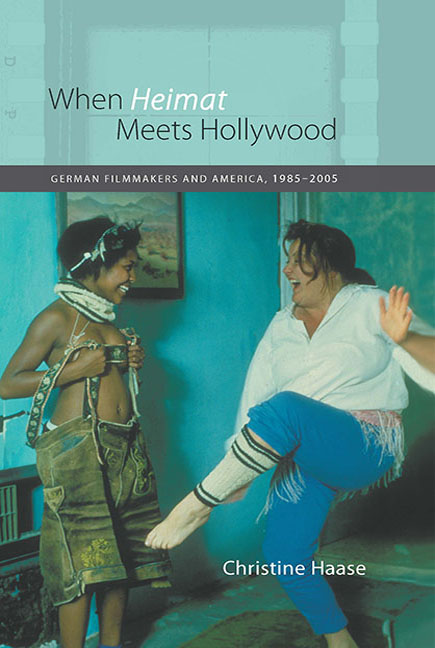
The film histories of Germany and the United States have long been seen as intertwined, but scholarship has focused on émigré works of the 1930s and 1940s, on links between Weimar film and American film noir, and on the conflicted relationship between directors of the New German Cinema and Hollywood. Recently, German film studies has begun reexamining the interconnection of the two film cultures and focusing on the internationalism of German cinema, but little research has been done on contemporary German directors' involvement in American cinema, a gap in scholarship that this book fills. Thestudy offers ways of understanding current German cinematic engagement with America and different directorial responses to the hegemonic pressures of Hollywood. It delineates the historical trajectory of German-American film relations in the 20th century, then analyzes the careers and works of four German-born directors who have significant ties with American cinema: Wolfgang Petersen, Roland Emmerich, Percy Adlon, and Tom Tykwer. A series of close readings of their productions isolates the cinematic practices and strategies with which these filmmakers negotiate the different national cultural and cinematic paradigms they traverse. The book analyzes constructions of national cultural identity, probes the boundaries of national cinemas, and expands our understanding of emerging hybrid filmcultures. It is a contribution to German film studies and to the emerging field of transnational film studies.
Christine Haase is Associate Professor of German at the University of Georgia.
In Germany, the concept of "1968" is enduring and synonymous with the German Student Movement, and is viewed, variously, as a fundamental liberalization, a myth, a second foundation, or an irritation. The movement's aims - radical re-imagination of the political and economic order and social hierarchy - have been understood as requiring a "long march." While the movement has been judged at best a"successful failure," cultural elites continue to engage in the construction of 1968. Ingo Cornils's book argues that writing about 1968 in Germany is no longer about the historical events or the specific objectives of a bygone counterculture, but is instead a moral touchstone, a marker of social group identity meant to keep alive (or at bay) a utopian agenda that continues to fire the imagination. The book demonstrates that the representation of 1968 as a "foundational myth" suits the needs of a number of surprisingly heterogeneous groups, and that even attempts to deconstruct the myth strengthen it. Cornils brings together for the first time the historical, literary, and media representations of the movement, showing the motivation behind and effect of almost five decades of writing about 1968. In so doing, Cornils challenges the way 1968 has been instrumentalized: as a powerful imaginary that has colonized every aspect of life in Germany, and as symbolic capital in cultural and political debates.
Ingo Cornils is Senior Lecturer in German at the University of Leeds.
This book deals with three aspects that have been neglected in the burgeoning field of music and literature. The "First Movement" of the book considers writers from German Romanticism to the present who, like Robert Schumann, first saw themselves as writers before they turned to composition, or, like E. T. A. Hoffmann and Anthony Burgess, sought careers in music before becoming writers. It also considers the few operatic composers, such as Richard Wagner and Arnold Schoenberg, who wrote their own libretti. The "Second Movement" turns to literary works based specifically on musical compositions. This group includes, first and more generally, prose works whose author chose a specific musical form such as sonata or fugue as an organizational model. And second, it includes novels based structurally or thematically on specific compositions, such as Bach's Goldberg Variations. The "Finale" concludes with a unique case: efforts by modern composers to render musically the compositions described in detail by Thomas Mann in his novel Doktor Faustus. This book, which addresses itself to readers interested generally in music and literature and is written in a reader-friendly style, draws attention to unexplored dimensions of the music-literature relationship and to the sometimes unrecognized talents of certain writers and composers.
Theodore Ziolkowski is ProfessorEmeritus of German and Comparative Literature, Princeton University.
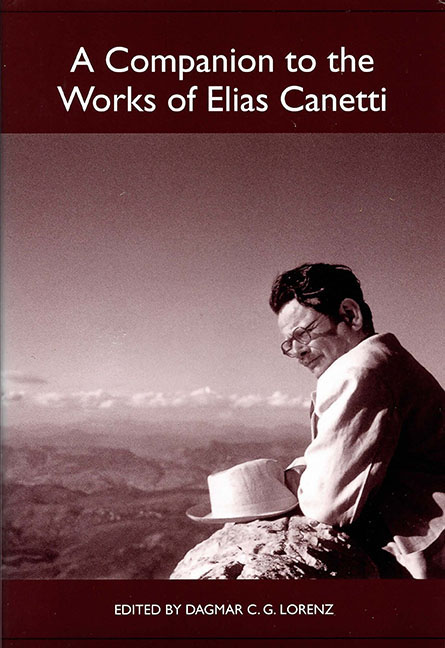
The Bulgarian-born scholar and author Elias Canetti was one of the most astute witnesses and analysts of the mass movements and wars of the first half of the 20th century. Born a Sephardic Jew and raised at first in the Bulgarian and Ladino languages, he chose to write in German. He was awarded the 1981 Nobel Prize in Literature for his oeuvre, which includes dramas, essays, diaries, aphorisms, the novel Die Blendung (Auto-da-Fé) and the long interdisciplinary treatise Masse und Macht (Crowds and Power). These works express Canetti's thought-provoking ideas on culture and the human psyche with special focus on the phenomena of power, conflict, and survival. Canetti's masterful prose, his linguistic innovations, his brilliant satires and conceits continue to fascinate scholarsand general readers alike; his challenging, genre-bending writings merge theory and literature, essay and diary entry. This Companion volume contains original essays by renowned scholars from aroundthe world who examine Canetti's writing and thought in the context of pre- and post-fascist Europe, providing a comprehensive scholarly introduction. Contributors: William C. Donahue, Anne Fuchs, HansReiss, Julian Preece, Wolfgang Mieder, Sigurd P. Scheichel, Helga Kraft, Harriet Murphy, Irene S. Di Maio, Ritchie Robertson, Johannes G. Pankau, Dagmar C.G. Lorenz, Penka Angelova and Svoboda A. Dimitrova, Michael Mack. Dagmar C. G. Lorenz is professor of Germanic Studies at the University of Illinois-Chicago.
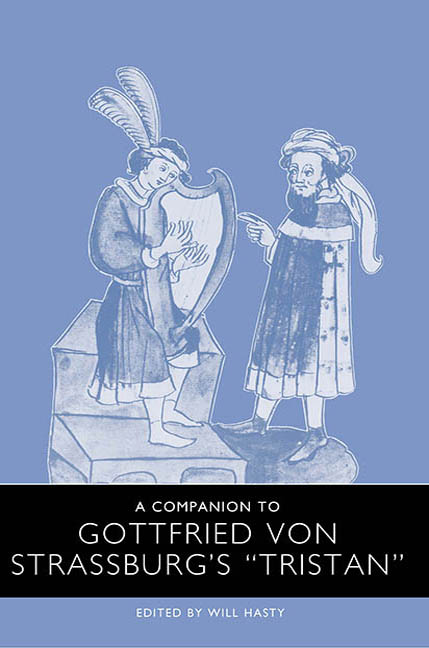
The legend of Tristan and Isolde -- the archetypal narrative about the turbulent effects of all-consuming, passionate love -- achieved its most complete and profound rendering in the German poet Gottfried von Strassburg's verse romance Tristan (ca. 1200-1210). Along with his great literary rival Wolfram von Eschenbach and his versatile predecessor Hartmann von Aue, Gottfried is considered one of three greatest poets produced by medieval Germany, and over the centuries his Tristan has lost none of its ability to attract with the beauty of its poetry and to challenge -- if not provoke -- with its sympathetic depiction of adulterous love. The essays, written by a dozen leading Gottfried specialists in Europe and North America, provide definitive treatments of significant aspectsof this most important and challenging high medieval version of the Tristan legend. They examine aspects of Gottfried's unparalleled narrative artistry; the important connections between Gottfried'sTristan and the socio-cultural situation in which it was composed; and the reception of Gottfried's challenging romance both by later poets in the Middle Ages and by nineteenth- and twentieth-century authors, composers, and artists -- particularly Richard Wagner. The volume also contains new interpretations of significant figures, episodes, and elements (Riwalin and Blanscheflur, Isolde ofthe White Hands, the Love Potion, the performance of love, the female figures) in Gottfried's revolutionary romance, which provocatively elevates a sexual, human love to a summum bonum.
Will Hasty is Professor of German at the University of Florida. He is the editor of Companion to Wolfram's "Parzival," (Camden House, 1999).
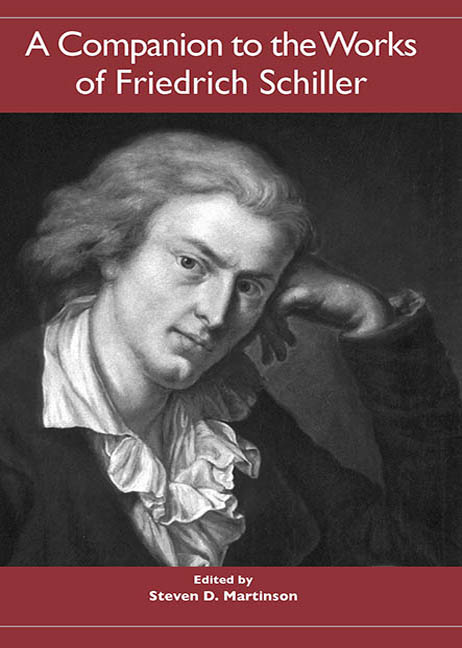
Friedrich Schiller is not merely one of Germany's foremost poets. He is also one of the major German contributors to world literature. The undying words he gave to characters such as Marquis Posa in Don Carlos and Wilhelm Tell in the eponymous drama continue to underscore the need for human freedom. Schiller cultivated hope in the actualization of moral knowledge through aesthetic education and critical reflection, leading to his ideal of a more humane humanity. At the same time, he was fully cognizant of the problems that attend various forms of idealism. Yet for Schiller, ultimately, love remains the gravitational center of the universe and of human existence, and beyond life and death joy prevails. This collection of cutting-edge essays by some of the world's leading Schiller experts constitutes a milestone in scholarship. It includes in-depth discussions of the writer's major dramatic and poetic works, his essays on aesthetics, and his activities as historian, anthropologist, and physiologist, as well as of his relation to the ancients and of Schiller reception in 20th-century Germany.
Contributors: Steven D. Martinson, Walter Hinderer, David Pugh, Otto Dann, Werner von Stransky-Stranka-Greifenfels, J. M. van der Laan, Rolf-Peter Janz, Lesley Sharpe, Norbert Oellers, Dieter Borchmeyer, Karl S. Guthke, Wulf Koepke.
Steven D. Martinson is Professor of German at the University of Arizona.
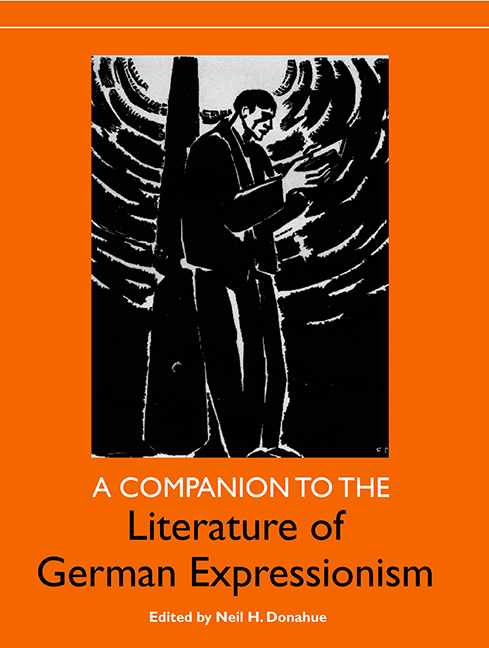
More than any other avant-garde movement, German Expressionism captures the aesthetic revolution of 20th-century modernity in all its contrasts and conflicts. In continuous eruptions from 1905 to 1925, Expressionism upset reigning practices in the arts, most vividly in painting and the visual arts. In the literature, a heady intellectualism combined with dramatic gesture, graphic visions, exuberant emotions and urgent proclamations to forge forceful styles of verbal expression. Expressionism introduced into art both visual and verbal a shockingly new intensity with many facets and many faces.This volume presents the literature of German Expressionism, which is far less known in the English-speaking world, with essays by leading scholars on Expressionism's philosophical origins, its thematic preoccupations, and its divergent stylistic manifestations by writers whose common bond is intensity and whose lines on the page read like the gouges of a woodcut: Georg Kaiser, Walter Hasenclever,and Ernst Toller in drama; Gottfried Benn, Georg Heym, Else Lasker-Schüler, and Georg Trakl in poetry; Alfred Döblin, Carl Einstein, and Carl Sternheim in prose, to name just a few. Against the background of the journals, exhibitions, and anthologies, the café meeting places and public life of Expressionism, the volume's highly focused, intrinsic analyses of texts and comprehensive overviews of extrinsic contexts (and of the most up-to-date research) shows the fervor and complexity of the period and its effulgent literary formations.
Neil H. Donahue is Professor of German and Comparative Literature at Hofstra University.
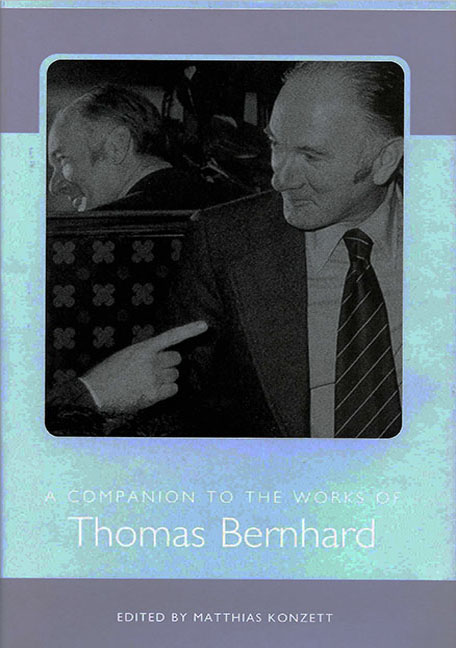
Since the death of Thomas Bernhard in 1989, the literary reputation of this complex and unique writer has risen to the point that he is now regarded as a major European figure. Bernhard emerged in the 1960s as one of Austria's major writers, challenging the popularity of such established writers as Heinrich Böll and Günter Grass on the German literary scene. His idiosyncratic prose consists of a tragic-comic blend of themes such as suicide, madness, and isolation combined with highly satirical and histrionic invectives against culture, tradition, and society. As a skillful impresario of public scandals by means of verbal assaults upon Austrian elite culture, Bernhard also earned himself the epithet of Übertreibungskünstler (artist of exaggeration). In this art of cultural and political provocation Bernhard remains unmatched to the present day. This volume of essays provides contributions by well-known critics that examine the most salient aspects of Bernhard's work, offering insights into literary strategies and public themes that made Bernhard one of Europe's masters of modern prose and drama. Essays examine Bernhard's complex artistic sensibility, his impact on Austria's critical memory, his relation to the legacy of Austrian Jewish culture, his representative value as Austria's prime literary export, and his cosmopolitanism and its significance for the rapidly changing multicultural landscape of Europe. Matthias Konzett is Associate Professor of German at Yale University. He is the author of The Rhetoric of National Dissent in Thomas Bernhard, Peter Handke, and Elfriede Jelinek (Camden House, 2000).
Thomas Mann is among the greatest of German prose writers, and was the first German novelist to reach a wide English-speaking readership since Goethe. Novels such as Buddenbrooks, The Magic Mountain, and Doktor Faustus attest to his mastery of subtle, distanced irony, while novellas such as Death in Venice reveal him at the height of his mastery of language. In addition to fresh insights about these best-known works of Mann, this volume treats less-often-discussed works such as Joseph and His Brothers, Lotte in Weimar, and Felix Krull, as well as his political writings and essays. Mann himself was a paradox: his role as family-father was both refuge and façade; his love of Germany was matched by his contempt for its having embraced Hitler. While in exile during the Nazi period, he functioned as the prime representative of the "good" Germany in the fight against fascism, and he has often been remembered this way in English-speaking lands. But a new view of Mann is emerging half a century after his death: a view of him as one of the great writers of a modernity understood as extending into our 21st century. This volume provides sixteen essays by American and European specialists. They demonstrate the relevance of his writings for our time, making particular use of the biographical material that is now available.Contributors: Ehrhard Bahr, Manfred Dierks, Werner Frizen, Clayton Koelb, Helmut Koopmann, Wolfgang Lederer, Hannelore Mundt, Peter Pütz, Jens Rieckmann, Hans Joachim Sandberg, Egon Schwarz, and Hans Vaget.Herbert Lehnert is Research Professor, and Eva Wessell is lecturer in Humanities, both at the University of California, Irvine.
This new collection, intended for the student and the interested general reader of German alike, includes both traditional examples, and those which fall outside the usual canon. The sixteen novellasin the volume have been carefully chosen on the bases of length, historical significance, popularity, and interest, and have been extensively glossed by the editor, who also provides an introduction to the history and theory of the genre.
Siegfried Weing is Professor of Modern Languages at the Virginia Military Institute.
One of the most independent thinkers in German intellectual history, the Enlightenment author Gotthold Ephraim Lessing (1729-1781) contributed in decisive and lasting fashion to literature, philosophy, theology, criticism, and drama theory. Lessing invented the bürgerliches Trauerspiel (bourgeois tragedy) and wrote one of the first successful German tragedies as well as one of the finest German comedies. In his final dramatic masterpiece, Nathan der Weise, he writes of Christianity, Judaism, and Islam, of religious tolerance and intolerance and the clash of civilizations. Lessing's dramas are the oldest German theater pieces still regularly performed (both in Germany and internationally), and both his plays and his drama theory have influenced such writers as Goethe, Schiller, Hebbel, Hauptmann, Ibsen, Strindberg, Schnitzler, and Brecht. Addressing an audience ranging from graduate students to seasoned scholars, this volume introduces Lessing's life and times and places him within the broader context of the European Enlightenment. It discusses his pathbreaking dramas, his equally revolutionary theoretical, critical, and aesthetic writings, his original fables, his innovative work in philosophy and theology, and his significant contributions to Jewish emancipation. The volume concludes by examining 20th-century reception of Lessing and his oeuvre.
Contributors: Barbara Fischer, Thomas C. Fox, Steven D. Martinson, Klaus L. Berghahn, John Pizer, Beate Allert, H. B. Nisbet, Arno Schilson, Willi Goetschel, Peter Höyng, Karin A. Wurst, Ann Schmiesing, Reinhart Meyer, Hans-Joachim Kertscher, Hinrich C. Seeba, Dieter Fratzke, Helmut Berthold, Herbert Rowland.
Barbara Fischer is Associate Professor of German and Thomas C. Fox is Professor of German, both at the University of Alabama.
For over 150 years, Heinrich von Kleist (1777-1811) has been one of the most widely read and performed German authors. His status in the literary canon is firmly established, but he has always been one of Germany's most contentiously discussed authors. Today's critical debate on his unique prose narratives and dramas is as heated as ever. Many critics regard Kleist as a lone presager of the aesthetics and philosophies of late nineteenth- and early twentieth-century modernism. Yet there can be no question that he responds in his works and letters to the philosophical, aesthetic, and political debates of his time. During the last thirty years, the scholarship on Kleist's work and life has departed from the existentialist wave of the 1950s and early 1960s and opened up new avenues for comingto terms with his unusual talent. The present volume brings together the most important and innovative of these newer scholarly approaches: the essays include critically informed, up-to-date interpretations of Kleist's most-discussed stories and dramas. Other contributions analyze Kleist's literary means and styles and their theoretical underpinnings. They include articles on Kleist's narrative and theatrical technique, poetic and aesthetic theory, philosophical and political thought, and insights from new biographical research.
Contributors: Jeffrey L. Sammons, Jost Hermand, Anthony Stephens, Bianca Theisen, Hinrich C. Seeba, Bernhard Greiner, Helmut J. Schneider, Tim Mehigan, Susanne Zantop, Hilda M. Brown, and Seán Allan.
Bernd Fischer is Professor of German andHead of the Department of German at Ohio State University.
Alfred Döblin (1878-1957) was one of the great German-Jewish writers of the 20th century, a major figure in the German avant-garde before the First World War and a leading intellectual during the Weimar Republic. Döblin greatly influenced the history of the German novel: his best-known work, the best-selling 1929 novel Berlin Alexanderplatz, has frequently been compared in its use of internal monologue and literary montage to James Joyce's Ulysses and John Dos Passos's Manhattan Transfer . Döblin's oeuvre is by no means limited to novels, but in this genre, he offered a surprising variety of narrative techniques, themes, structures, and outlooks. Döblin's impact on German writers after the Second World War was considerable: Günter Grass, for example, acknowledged him as "my teacher." And yet, while Alexanderplatz continues to fascinate the reading public, it has overshadowed the rest of Döblin's immense oeuvre. This volume of carefully focused essays seeks to do justice to such important texts as Döblin's early stories, his numerous other novels, his political, philosophical, medical, autobiographical, and religious essays, his experimental plays, and his writings on the new media of cinema and radio.Contributors: Heidi Thomann Tewarson, David Dollenmayer, Neil H. Donahue, Roland Dollinger, Veronika Fuechtner, Gabriele Sander, Erich Kleinschmidt, Wulf Koepke, Helmut F. Pfanner, Helmuth Kiesel, Klaus Müller-Salget, Christoph Bartscherer, Wolfgang Düsing.Roland Dollinger is associate professor of German at Sarah Lawrence College; Wulf Koepke is professor emeritus of German at Texas A&M University; Heidi Thomann Tewarson is professor of German at Oberlin College.
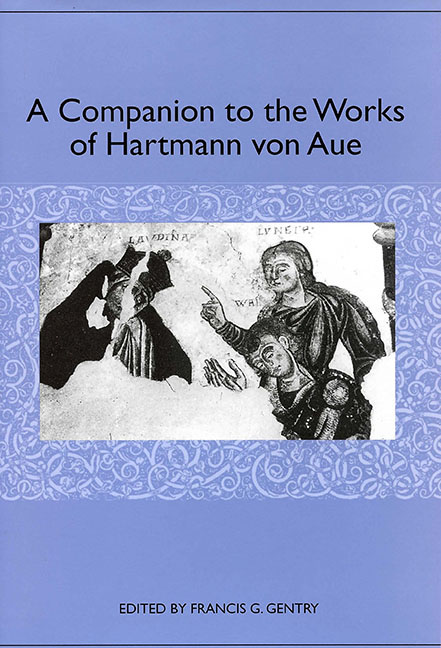
In perhaps 25 years of creative productivity (ca. 1180-ca. 1205), Hartmann von Aue authored a dispute about love between the body and the heart, Die Klage, numerous songs of courtly love, crusading songs, and most likely took part in a Crusade himself. He composed the first German Arthurian romance, Erec, based on Chrétien's like-named work, and he -- apparently -- ended his literarycareer with a second, Iwein. Further, he is the creator of two provocative rel-igious-didactic works, Gregorius, a tale of double incest, repentance, and redemption, and Der arme Heinrich, the account of a seemingly perfect nobleman who is stricken with leprosy and then ultimately cured by a process set into motion by a very young peasant girl, whom he ultimately marries. Noother medieval German poet treats such an extraordinary breadth of themes at such a high level of artistic expression. The essays in this volume, written by scholars from North America and Europe, offer insight into many aspects of Hartmann's oeuvre, including the medieval and modern visual and literary reception of his works. The volume also offers considerations of Hartmann and Chrétien;Hartmann's putative theological background and the influence of the Bible on his tales; the reflection of his medical knowledge in Der arme Heinrich and Iwein; and a complete survey of his lyric production. Newer avenues of research are also presented, with essays on issues of gender and on the role of pain as a constitutive part of the courtly experience. It is hoped that this volume will prove to be a stimulating companion not only for those familiar with Hartmann but also for those who are just making the acquaintance of one of the greatest of medieval German poets.
Francis G. Gentry is Professor Emeritus of German at the Pennsylvania State University and the University of Wisconsin-Madison.
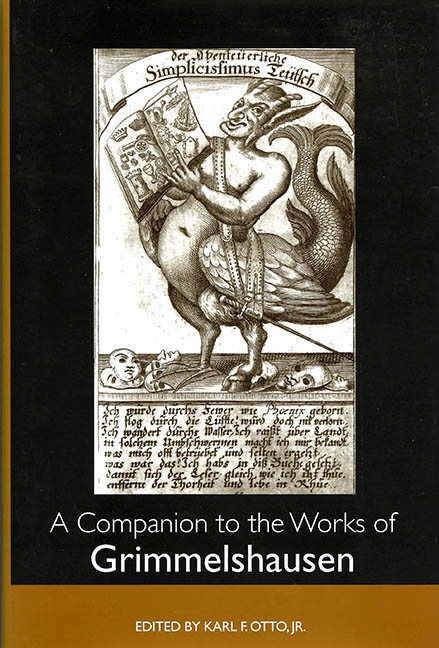
Hans Jacob Christoffel von Grimmelshausen (ca. 1621-1676) is the most significant (and still readable) author of seventeenth-century German novels. His Abenteuerlicher Simplicius Simplicissimusremains the one German novel of its time that has attained the stature of "world literature": its unique mix of violent action and solitary reflection, its superlative humor, its realistic portrayalof a peasant turned soldier turned hermit has made it the longest-running bestseller in German literature. Read by students and scholars in comparative literature, history, and German, and by those interested in the development of the picaresque novel in Europe, the work and its "Continuations" have increasingly occupied scholars around the world, who have in recent years shown it to be a work ofsubtle structure and characterization, bearing the imprint of the most advanced political thinking of the time, and showing the influences of some of the most significant works of world literature, including Cervantes' Don Quixote and Barclay's Argenis. This volume of essays by leading Grimmelshausen scholars from Germany, the United States, and England provides analyses of significant topics in his life and works, including questions of genre, structure, satire, allegory, narratology, political thought, religion, morality, humor, realism, and mortality. Contributors: Christoph E. Schweitzer, Italo Michele Battafarano, Klaus Haberkamm, Rosmarie Zeller, Andreas Solbach, Dieter Breuer, Lynne Tatlock, Peter Hess, Shannon Keenan Greene, and Alan Menhennet.
KarlF. Otto is Professor of German at the University of Pennsylvania and has written extensively on German Baroque literature.
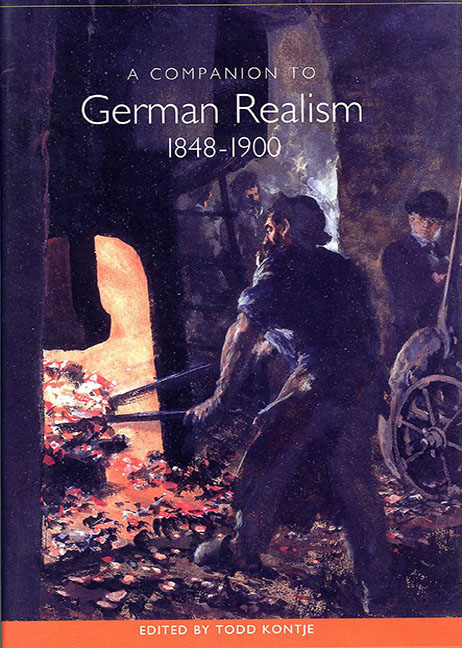
This volume of new essays by leading scholars treats a representative sampling of German realist prose from the period 1848 to 1900, the period of its dominance of the German literary landscape. It includes essays on familiar, canonical authors -- Stifter, Freytag, Raabe, Fontane, Thomas Mann -- and canonical texts, but also considers writers frequently omitted from traditional literary histories, such as Luise Mühlbach, Friedrich Spielhagen, Louise von François, Karl May, and Eugenie Marlitt. The introduction situates German realism in the context of both German literary history and of developments in other European literatures, and surveys the most prominent critical studies of ninteenth-century realism. The essays treat the following topics: Stifter's Brigitta and the lesson of realism; Mühlbach, Ranke, and the truth of historical fiction; regional histories as national history in Freytag's Die Ahnen; gender and nation in Louise von François's historical fiction; theory, reputation, and the career of Friedrich Spielhagen; Wilhelm Raabe and the German colonial experience; the poetics of work in Freytag, Stifter, and Raabe; Jewish identity in Berthold Auerbach's novels; Eugenie Marlitt's narratives of virtuous desire; the appeal of Karl May in the Wilhelmine Empire; Thomas Mann's portrayal of male-male desire in his early short fiction; and Fontane's Effi Briest and the end of realism. Contributors: Robert C. Holub, Brent O. Petersen, Lynne Tatlock, Thomas C. Fox, Jeffrey L. Sammons, John Pizer, Hans J. Rindisbacher, Irene S. Di Maio, Kirsten Belgum, Nina Berman, Robert Tobin, Russell A. Berman. Todd Kontje is professor of German at the University of California, San Diego.