FirstView articles
Contents
Research Article
ON SPARSE HOLES AND A FINITE-FOLD PROBLEM OF NATHANSON CONCERNING MINIMAL ADDITIVE COMPLEMENTS
- Part of:
-
- Published online by Cambridge University Press:
- 25 September 2026, pp. 1-12
-
- Article
-
- You have access
- HTML
- Export citation
-
Let $W\subseteq \mathbb Z$
 be bounded below and normalised by $\inf W=1$
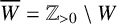
 , and put $\overline W=\mathbb Z_{>0}\setminus W$
 . Nathanson asked whether infinite sets of integers admit minimal additive complements. Chen and Yang [‘On a problem of Nathanson related to minimal additive complements’, SIAM J. Discrete Math. 26 (2012), 1532–1536] proved that the two-sided case is positive and that sufficiently large consecutive gaps in $\overline W$
 force nonexistence in the one-sided case. Chen and Ding [‘On a problem of Nathanson on nonminimal additive complements’, Bull. Aust. Math. Soc. 114, 6–13] isolated a sparse-hole condition under which no ordinary minimal complement exists. We prove a finite-fold version of this sparse-hole obstruction. For an integer $h\geq 1$
 , write $hC=C+\cdots +C$
 . We show that if $\overline W$
 contains a sequence $a_1<a_2<\cdots $
 such that $a_{t+1}-a_t\to \infty $
 and the four-neighbourhoods $(a_{t-2},a_{t+2})$
 contain at most K elements of $\overline W$
 for all sufficiently large t, then there is no set $C\subseteq \mathbb Z$
 which is minimal subject to $hC+W=\mathbb Z$
 . This result recovers and broadens the Chen–Ding nonexistence theorem as the special case $h=1$
 .


A PROOF OF XIN–ZHANG’S TRIDIAGONAL DETERMINANT CONJECTURE
- Part of:
-
- Published online by Cambridge University Press:
- 25 September 2026, pp. 1-7
-
- Article
-
- You have access
- HTML
- Export citation
-
We confirm a recent conjecture of Xin and Zhang [‘A variation of the Morris constant term’, Preprint, 2024, arXiv:2409.14356v2], which establishes a simple product formula for the characteristic polynomial of an $(n-1) \times (n-1)$
 tridiagonal matrix. This characteristic polynomial arises from a recurrence relation that enumerates $n \times n$
 nonnegative integer matrices with all row and column sums equal to t, also called the Ehrhart polynomial of the nth Birkhoff polytope.

FELL BUNDLE LADDER
- Part of:
-
- Published online by Cambridge University Press:
- 24 September 2026, pp. 1-12
-
- Article
-
- You have access
- Open access
- HTML
- Export citation
ON DIFFERENCE SETS OF DENSE SUBSETS OF $\mathbb {Z}^2$

- Part of:
-
- Published online by Cambridge University Press:
- 24 September 2026, pp. 1-7
-
- Article
-
- You have access
- HTML
- Export citation
-
We study the structure of the difference set $E - E$
 for subsets $E \subseteq \mathbb {Z}^2$
 of positive upper Banach density. Fish [‘On product of difference sets for sets of positive density’, Proc. Amer. Math. Soc. 146 (2018), 3449–3453] asked in Problem 2 whether, for every such set E, there exists a nonzero integer k such that $k \cdot \mathbb {Z} \subseteq \{ xy : (x,y) \in E - E \}$
 . Although this question remains open, we establish a relatively weaker form. Specifically, we prove that if $\langle a_j\rangle _{j=1}^m$
 is any finite sequence in $\mathbb {N},$
 then there exist infinitely many integers $k \in \mathbb {Z}$
 and infinitely many sequences $\langle x_n \rangle _{n \in \mathbb {N}}$
 in $\mathbb {Z}$
 such that $k \cdot MT(\langle a_j \rangle _{j=1}^m, \langle x_n\rangle _{n}) \subseteq \{ xy : (x,y) \in E - E \}$
 , where $MT(\langle a_j \rangle _{j=1}^m, \langle x_n\rangle _{n})$
 denotes the Milliken–Taylor configuration generated by the sequences $\langle a_j\rangle _{j=1}^m$
 and $\langle x_n \rangle _{n \in \mathbb {N}}$
 .


ON THE DIAMETER OF INTERSECTION GRAPHS OF FINITE GROUPS
- Part of:
-
- Published online by Cambridge University Press:
- 24 September 2026, pp. 1-8
-
- Article
-
- You have access
- Open access
- HTML
- Export citation
-
The intersection graph $\Delta _G$
 of a finite group $G$
 is a simple graph with vertices the nontrivial proper subgroups of $G$
 , and an edge between two vertices if their corresponding subgroups intersect nontrivially. These graphs were introduced by Csákány and Pollák [‘The graph of subgroups of a finite group’, Czechoslovak Math. J. 19(94) (1969), 241–247]. We consider two long-standing open questions posed by Csákány and Pollák concerning the diameter of intersection graphs. We prove some necessary conditions for a nonsimple group to have an intersection graph of diameter 4. We also construct the first examples of alternating groups whose intersection graphs have diameter 4. In fact, we show that there is an infinite family of such groups.


QUASI-INVARIANT STATES FOR COMPACT GROUP ACTIONS: REDUCTION TO NORMAL SUBGROUPS AND QUOTIENTS
- Part of:
-
- Published online by Cambridge University Press:
- 24 September 2026, pp. 1-10
-
- Article
-
- You have access
- HTML
- Export citation
-
We establish a structural decomposition theorem for quasi-invariant states under compact group actions. For a compact group G, a closed normal subgroup H and an action $\alpha :G\to \mathrm {Aut}(\mathfrak {A})$
 on a separable $C^*$
 -algebra $\mathfrak {A}$
 , we prove that a state $\omega $
 with central support, for which the lifted action commutes with the modular group, is G-quasi-invariant if and only if it is H-quasi-invariant and its restriction to the fixed-point algebra $\mathfrak {A}^H$
 is $G/H$
 -quasi-invariant. This completely characterises quasi-invariance through normal subgroup data. The proof uses modular theory, conditional expectations and the theory of correspondences. Applications to classical quasi-invariant measures and to the CAR algebra are discussed.


TOTAL CHORD LENGTH WHEN A RANDOM DISC INTERSECTS EQUISPACED PARALLEL LINES
- Part of:
-
- Published online by Cambridge University Press:
- 24 September 2026, pp. 1-10
-
- Article
-
- You have access
- HTML
- Export citation
-
Construct the lines $x = k$
 for integers $k$
 . Centre a disc of radius $r$
 on $(S,0)$
 , where $S$
 has a uniform distribution on $[0,1]$
 . Let $L$
 be the total chord length from the intersection of the disc with the lines. This article obtains the cumulative distribution function for $L$
 .


WARING LENGTH TWO FOR THE SUPERINVOLUTIVE L’VOV–KAPLANSKY COUNTEREXAMPLE ON UPPER TRIANGULAR MATRICES
- Part of:
-
- Published online by Cambridge University Press:
- 24 September 2026, pp. 1-12
-
- Article
-
- You have access
- HTML
- Export citation
-
Let $F$
 be an algebraically closed field of characteristic zero. Campedel, Fagundes and Ioppolo [‘Upper triangular matrices with superinvolution: identities and images of multilinear polynomials’, Bull. Braz. Math. Soc. (N.S.) 57 (2026), Article no. 27] recently established a qualitative break from the L’vov–Kaplansky conjecture by proving that the multilinear $*$
 -polynomial $f(y^+,z^+)=y^+z^+$
 has a nonlinear image on the upper triangular matrix algebra $A_n=\mathrm { UT}_n(F)$
 ($n\geq 4$
 ) under the alternating elementary $\mathbb Z_2$
 -grading and super-reflection superinvolution. We provide the strict quantitative counterpart to this phenomenon by determining the exact Waring length of the counterexample in the first nontrivial dimensions. For $n=4$
 and $n=5$
 , we prove that the linear span of the image is the entire odd component $(A_n)_1$
 and that the additive defect is strictly minimal, with Waring length $2$
 . Our proof is constructive: we compute the products $(A_n)_0^+(A_n)_1^+$
 via the orbit structure of matrix units and provide explicit two-value decompositions for arbitrary odd upper triangular matrices.


AN EXACT ROOT COUNT IN A PROBLEM ON OPTIMAL TERNARY CYCLIC CODES
- Part of:
-
- Published online by Cambridge University Press:
- 21 September 2026, pp. 1-7
-
- Article
-
- You have access
- Open access
- HTML
- Export citation
-
Let $q=3^m$
 with $m$
 odd and let $s\geq 1$
 . We determine exactly the number of roots in $\mathbb {F}_q$
 of $ x^{3^s+1}-x^2+1=0. $
 This equation appears in the study of open problems of Ding and Helleseth [‘Optimal ternary cyclic codes from monomials’, IEEE Trans. Inform. Theory 59(9) (2013), 5898–5904]. A Cayley transform sends the equation to the norm-one subgroup of $\mathbb {F}_{q^2}^{\times }$
 , where the question becomes a calculation in a cyclic group. We prove that $ \#\{x\in \mathbb {F}_q:x^{3^s+1}-x^2+1=0\} = \gcd \, (3^m+1,\,3^s+2(-1)^s)-1. $
 Consequently, the corresponding no-root condition is equivalent to $ \gcd \, (3^m+1,\,3^s+2(-1)^s)=1. $
 As an application, we settle in the negative a conjectural no-root statement from the cyclic-code literature, by giving infinitely many pairs $(m,s)$
 satisfying the proposed hypotheses for which the equation has roots.


CONGRUENCES FOR HECKE EIGENVALUES VIA PERIOD POLYNOMIALS
- Part of:
-
- Published online by Cambridge University Press:
- 21 September 2026, pp. 1-8
-
- Article
-
- You have access
- Open access
- HTML
- Export citation
CONGRUENCES MODULO $7$
 FOR A CERTAIN SCHMIDT-TYPE PARTITION FUNCTION
- Part of:
-
- Published online by Cambridge University Press:
- 21 September 2026, pp. 1-8
-
- Article
-
- You have access
- HTML
- Export citation
-
Let $S(n)$
 be the number of partitions $a_1+a_2+a_3+\cdots $
 with $a_1 \geq a_2 \geq a_3 \geq \cdots $
 such that $n = a_1+a_3+a_5+\cdots $
 and $a_1, a_3, a_5, \ldots $
 are all even. We apply the action of Atkin’s $U_7$
 operator to a certain $\eta $
 -quotient for the congruence subgroup $\Gamma _0(98)$
 and a result of Ahlgren to produce infinite families of congruences modulo $7$
 for $S(n)$
 .


A NOTE ON TREE–CYCLE RAMSEY NUMBERS
- Part of:
-
- Published online by Cambridge University Press:
- 21 September 2026, pp. 1-5
-
- Article
-
- You have access
- HTML
- Export citation
-
Let $R(T_n,C_m)$
 denote the Ramsey number of a tree $T_n$
 on $n$
 vertices versus a cycle $C_m$
 of length $m$
 . Burr et al. [‘Ramsey numbers for the pair sparse graph–path or cycle’, Trans. Amer. Math. Soc. 269(2) (1982), 501–512] asked for the least function $f(m)$
 such that $R(T_n,C_m)=2n-1$
 for every odd $m\ge 3$
 whenever $n\ge f(m)$
 . They proved that $f(m)\le 756m^{10}$
 . This bound was later improved to $25m$
 by Brennan [‘Ramsey numbers of trees versus odd cycles’, Electron. J. Combin. 23(3) (2016), Article no. P3.2] and to $4m-8$
 by Fan and Lin [‘Asymptotically optimal Ramsey goodness of sparse graphs versus odd cycles and paths’, Preprint, 2025, arXiv:2507.11835v5]. In this note, we show that $f(m)\le 2m-4$
 by using a different method and conjecture that $f(m)=\lceil (2m-1)/3\rceil $
 .


ROOTS OF UNITY, TOTALLY REAL FIELDS AND THE MATRIX DIOPHANTINE EQUATION $X^n + Y^n = 2 Z^n$

- Part of:
-
- Published online by Cambridge University Press:
- 21 September 2026, pp. 1-8
-
- Article
-
- You have access
- HTML
- Export citation
-
Mallick and Mishra [‘Links between the solvability of matrix and scalar Diophantine equations’, Bull. Aust. Math. Soc., 10.1017/S0004972726101087] observed that solutions of the matrix Diophantine equation $X^n + Y^n = 2Z^n$
 , where $X, Y, Z$
 are $2 \times 2$
 matrices in a certain matrix class $G_2(d, l)$
 , correspond to solutions of the scalar equation $\alpha ^n + \beta ^n = 2\gamma ^n$
 over $\mathbb {Z}[\sqrt {d}]$
 and assert that there are only trivial solutions. We show that this fails when $d = -1$
 with $4 \mid n$
 and $d = -3$
 with $3 \mid n$
 , and determine the values of $l$
 that admit solutions. We extend the analysis to $k \times k$
 matrices, and show that for every totally real field $K$
 and every even $n$
 , all solutions are trivial. We obtain some results for odd $n$
 , but the problem for odd $n$
 in totally real fields of degree $k \geqslant 3$
 remains open.


WIEFERICH PRIMES AND MONOGENIC TRINOMIALS
- Part of:
-
- Published online by Cambridge University Press:
- 21 September 2026, pp. 1-7
-
- Article
-
- You have access
- HTML
- Export citation
-
A prime $p$
 is called a Wieferich prime if $2^{p-1}\equiv 1 \pmod {p^2}$
 . A monic polynomial $f(x)\in {\mathbb Z}\, [x]$
 of degree $N\ge 2$
 is called monogenic if $f(x)$
 is irreducible over ${\mathbb Q}$
 and $\{1,\theta ,\theta ^2,\ldots ,\theta ^{N-1}\}$
 is a basis for the ring of integers of ${\mathbb Q}(\theta )$
 , where $f(\theta )=0$
 . We show that ${\mathcal F}_p(x):=x^{2p}+2x^{p}+2$
 is monogenic if and only if $p$
 is not a Wieferich prime.


MONOCHROMATIC SUMS AND QUOTIENTS NEAR ZERO
- Part of:
-
- Published online by Cambridge University Press:
- 14 September 2026, pp. 1-9
-
- Article
-
- You have access
- HTML
- Export citation
-
Goswami [‘Monochromatic translated product and answering Sahasrabudhe’s conjecture’, Adv. Combin. (2026), https://doi.org/10.19086/aic.2026.2] proved that whenever the set $\mathbb N$
 of natural numbers is finitely coloured, the set $\{a, b, ab, b(a+1)\}$
 is monochromatic. This also established a variant of the long-standing Hindman’s conjecture, which asks for a monochromatic set of the form $\{a, b, ab, a+b\}$
 , and disproved a conjecture proposed by Sahasrabudhe that $\{a, b, a(b + 1)\}$
 is not partition regular. In this paper, we prove that $\{a, b, ab, b(a+1)\}$
 is monochromatic near zero, which means that for every finite colouring of a dense subsemigroup of $((0, \infty ), +)$
 , the set $\{a, b, ab, b(a+1)\}$
 is monochromatic near zero. In other words, given a dense subsemigroup of $((0, \infty ), +)$
 with a finite colouring, we can find $a, b$
 in the subsemigroup as small as we want such that the set $\{a, b, ab, b(a+1)\}$
 is monochromatic. We also show that the pattern $x, y, x+y, {y}/{x}$
 is partition regular near zero.


RESTRICTED PARTITION FUNCTIONS AND ADDITIVE COMPLEMENTS
- Part of:
-
- Published online by Cambridge University Press:
- 14 September 2026, pp. 1-5
-
- Article
-
- You have access
- Open access
- HTML
- Export citation
-
Let ${\mathbb N}$
 be the set of positive integers. For subsets $\mathcal {A},\mathcal {M}\subseteq {\mathbb N}$
 and $n\in {\mathbb N}$
 , let $p(n,\mathcal {A},\mathcal {M})$
 denote the number of representations of n in the form $n=\sum _{a\in \mathcal {A}}m_a a$
 , where $m_a\in \mathcal {M}\cup \{0\}$
 for all $a\in \mathcal {A}$
 and only finitely many $m_a$
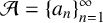
 are nonzero. We prove that there exist two infinite sets $\mathcal {A}=\{a_n\}_{n=1}^{\infty }$
 and $\mathcal {M}$
 of positive integers such that $\lim _{n\to \infty }(({\log a_{n+1}-\log a_n})/{\log n})=+\infty $
 , $p(n,\mathcal {A},\mathcal {M})>0$
 for every $n\in {\mathbb N}$
 and p has polynomial growth. More generally, we provide a construction that associates restricted partition functions of polynomial growth with additive complements satisfying a simple counting condition. This answers a question of Dai and Chen [‘On two problems of Ljujić and Nathanson’, C. R. Math. Acad. Sci. Paris 354 (2016), 235–238] in the affirmative.


SPACES OF COMPACT OPEN SUBGROUPS AND OPEN MORPHISMS
- Part of:
-
- Published online by Cambridge University Press:
- 04 September 2026, pp. 1-7
-
- Article
-
- You have access
- HTML
- Export citation
A NOTE ON GROUPS WITH MANY NORMAL-BY-FINITE SUBGROUPS
- Part of:
-
- Published online by Cambridge University Press:
- 10 August 2026, pp. 1-11
-
- Article
-
- You have access
- HTML
- Export citation
-
A subgroup X of a group G is called normal-by-finite if it is finite over its core $X_G$
 . We investigate the behaviour of uncountable groups G of regular cardinality $\aleph $
 in which all subgroups of cardinality $\aleph $
 are normal-by-finite. Moreover, generalised soluble groups whose subgroups of infinite rank are either normal-by-finite or contranormal are characterised, and the analogous problem is considered for uncountable groups whose subgroups of large cardinality satisfy the same condition.


A NOTE ON TOPOLOGICAL ASPECTS OF TRANSCENDENTAL SELF-POWERS
- Part of:
-
- Published online by Cambridge University Press:
- 06 August 2026, pp. 1-6
-
- Article
-
- You have access
- Open access
- HTML
- Export citation
-
We study the self-power map $x \mapsto x^x$
 on $(0,\infty )$
 from a topological perspective. In particular, we show that the set of $x> 0$
 , for which $x^x$
 is a Liouville number, is topologically large, but metrically small.


ON AN IDENTITY ASSOCIATED WITH JACOBI’S THETA FUNCTIONS
- Part of:
-
- Published online by Cambridge University Press:
- 06 August 2026, pp. 1-9
-
- Article
-
- You have access
- Open access
- HTML
- Export citation
-
Recently, Yang [‘On modular equations for the Jacobi theta functions’, Preprint] discovered an identity that involves the sum of squares of the theta functions $\displaystyle \vartheta _j(0|\tau )\vartheta _j(0|N\tau )$
 for $j=2,3,4.$
 In this article, we prove this identity and its generalisations. Our study also leads us to a four-variable extension of an identity discovered by Chan, Chua and Solé [‘Quadratic iterations to $\pi $
 associated to elliptic functions to the cubic and septic base’, Trans. Amer. Math. Soc. 355(4) (2002), 1505–1520].

