Refine search
Actions for selected content:
139 results
Green’s function for a general system of hyperbolic-parabolic balance laws with applications
- Part of
-
- Journal:
- Proceedings of the Royal Society of Edinburgh. Section A: Mathematics , First View
- Published online by Cambridge University Press:
- 21 July 2026, pp. 1-64
-
- Article
-
- You have access
- Open access
- HTML
- Export citation
Evolution of the radius of analyticity for mKdV-type equations
- Part of
-
- Journal:
- Proceedings of the Royal Society of Edinburgh. Section A: Mathematics , First View
- Published online by Cambridge University Press:
- 20 July 2026, pp. 1-27
-
- Article
-
- You have access
- HTML
- Export citation
-
In this paper, we obtain new lower bounds for the evolution of the radius of analyticity of solutions to two initial value problems (IVPs) with initial data belonging to the class of analytic functions
 $H^{\sigma,s}(\mathbb{R})$ defined via a hyperbolic cosine weight. First, we consider the IVP for the modified Korteweg–de Vries (mKdV) equation. For this problem, we prove that the evolution of the radius of analyticity
 $\sigma(T)$ of the solution admits an algebraic lower bound
 $cT^{-\frac 12}$ for some
 $c \gt 0$ and given arbitrarily large
 $T \gt 0$. Next, we analyse the IVP for the mKdV equation with generalized dispersion (mKdVm) and a damping term. For this problem, we guarantee the local well-posedness in
 $H^{\sigma,s}(\mathbb{R})$ and demonstrate that the local solution can be extended globally in time and admits constant lower bounds for the radius of analyticity
 $\sigma(t)$ as time goes to infinity. The outcome of this paper concerning the mKdV equation represents an improvement on that achieved by the authors’ previous work in [New lower bounds for the radius of analyticity for the mKdV equation and a system of mKdV-type equations. J. Evol. Equ. 24 (2024), no. 2, Art. 42]. As far as we know, the results for the mKdVm with damping are new.


Stationary solutions and asymptotic behaviour for a nonlinear free-boundary tumour model with three layers
- Part of
-
- Journal:
- European Journal of Applied Mathematics , First View
- Published online by Cambridge University Press:
- 15 June 2026, pp. 1-19
-
- Article
-
- You have access
- Open access
- HTML
- Export citation
A FREE BOUNDARY MODEL IN RIVER NETWORKS
- Part of
-
- Journal:
- Bulletin of the Australian Mathematical Society / Volume 114 / Issue 3 / December 2026
- Published online by Cambridge University Press:
- 14 May 2026, pp. 536-549
- Print publication:
- December 2026
-
- Article
-
- You have access
- HTML
- Export citation
-
We study the long-time behaviour of solutions to a free boundary model in river networks with small water flow speeds. First, we establish the well-posedness of our model. Under suitable assumptions, we then establish a spreading–vanishing dichotomy result for solutions to our model. By introducing a parameter $\sigma $
 in the initial data, we derive sharp threshold behaviours.

On the dynamics of a diffusive SEIRS epidemic model
- Part of
-
- Journal:
- European Journal of Applied Mathematics / Volume 37 / Issue 6 / December 2026
- Published online by Cambridge University Press:
- 13 April 2026, pp. 1420-1464
-
- Article
-
- You have access
- Open access
- HTML
- Export citation
-
This work investigates the dynamics of positive classical solutions to a diffusive susceptible-exposed-infected-recovered-susceptible epidemic model with a mass-action incidence mechanism in spatially heterogeneous environments. Under minimal assumptions on the initial data, the global existence of classical solutions is established. Moreover, the eventual boundedness of these solutions is proved when either the spatial domain has dimension five or lower or the susceptible and exposed subpopulations share the same diffusion rate. Next, we define the basic reproduction number,
 $\mathcal{R}_0$, and demonstrate that the disease-free equilibrium is globally stable when
 $\mathcal{R}_0$ is sufficiently small. However, due to the complex interaction between population movement and spatial variation in transmission rates, we find that the disease may persist even when
 $\mathcal{R}_0$ is slightly less than one. In such cases, we show that the system admits at least two endemic equilibrium (EE) solutions, an outcome not observed under the frequency-dependent incidence mechanism. These results highlight the significant influence of the transmission mechanism on disease dynamics. Furthermore, we examine the spatial profiles of the EE solutions when diffusion rates are small. Our analysis suggests that limiting the movement of the susceptible population can significantly reduce disease prevalence, provided that the total population remains below a specific threshold. In contrast, restricting the movement of the infected, exposed, or recovered populations alone may not eradicate the disease. Overall, our findings provide important insights into the spatial dynamics of infectious diseases and may offer guidance for developing and implementing effective containment strategies.


Stabilization of arbitrary structures in a three-dimensional doubly degenerate nutrient taxis system
- Part of
-
- Journal:
- European Journal of Applied Mathematics / Volume 37 / Issue 6 / December 2026
- Published online by Cambridge University Press:
- 05 March 2026, pp. 1392-1419
-
- Article
-
- You have access
- Open access
- HTML
- Export citation
-
The doubly degenerate nutrient taxis system(0.1)
is considered under zero-flux boundary conditions in a smoothly bounded domain \begin{equation} \left \{ \begin{aligned} &u_{t}=\nabla \cdot (uv\nabla u)-\chi \nabla \cdot (u^{\alpha }v\nabla v)+\ell uv,&x\in \Omega ,\, t\gt 0,\\[5pt] & v_{t}=\Delta v-uv,&x\in \Omega ,\, t\gt 0,\\ \end{aligned} \right . \end{equation}
 $\Omega \subset \mathbb{R}^3$ where
 $\alpha \gt 0,\chi \gt 0$ and
 $\ell \gt 0$. By developing a novel class of functional inequalities to address the challenges posed by the doubly degenerate diffusion mechanism in (0.1), it is shown that for
 $\alpha \in (\frac {3}{2},\frac {19}{12})$, the associated initial-boundary value problem admits a global continuous weak solution for sufficiently regular initial data. Furthermore, in an appropriate topological setting, this solution converges to an equilibrium
 $(u_\infty , 0)$ as
 $t\rightarrow \infty$. Notably, the limiting profile
 $u_{\infty }$ is non-homogeneous when the initial signal concentration
 $v_0$ is sufficiently small, provided the initial data
 $u_0$ is not identically constant.


Long-time behaviour of small solutions in the viscoelastic Klein–Gordon equation
- Part of
-
- Journal:
- Journal of Nonlinear Waves / Volume 2 / 2026
- Published online by Cambridge University Press:
- 02 March 2026, e5
-
- Article
-
- You have access
- Open access
- HTML
- Export citation
Threshold dynamics of a time-periodic SIS model with anomalous diffusion in heterogeneous environments
- Part of
-
- Journal:
- Proceedings of the Royal Society of Edinburgh. Section A: Mathematics , First View
- Published online by Cambridge University Press:
- 24 February 2026, pp. 1-28
-
- Article
-
- You have access
- HTML
- Export citation
Proliferation-dominated large time behaviour in a planar doubly degenerate nutrient taxis system
- Part of
-
- Journal:
- Proceedings of the Royal Society of Edinburgh. Section A: Mathematics , First View
- Published online by Cambridge University Press:
- 23 February 2026, pp. 1-30
-
- Article
-
- You have access
- HTML
- Export citation
-
This study is concerned with nonnegative solutions of the no-flux initial-boundary value problem for the doubly degenerate nutrient taxis system with a logistic source, as given by
in a smoothly bounded planar domain \begin{align*}\left\{\begin{array}{ll}u_t = \nabla\cdot (uv\nabla u) - \nabla\cdot (u^2 v\nabla v)+ u - u^2,\\[1mm]v_t = \Delta v -uv,\end{array} \right.\end{align*}
 $\Omega$ with
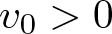
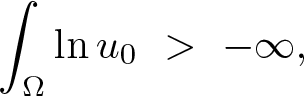
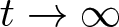
 $(u,v)|_{t=0}=(u_0,v_0)$. It is shown that despite substantially weakened diffusion, the stabilizing effects of logistic-type cell kinetics may overbalance any heterogeneity-supporting tendency of cross-diffusion: Namely, it is seen that for all suitably smooth initial data satisfying
 $v_0 \gt 0$ in
 $\overline{\Omega}$ anda corresponding continuous weak solution, known to exist globally according to previous literature, has the property that as
 \begin{align*}\int_\Omega \ln u_0~ \gt ~-\infty,\end{align*}
 $t\to\infty$,
 \begin{align*} u(\cdot,t) \rightharpoonup 1 \quad \text{in } L^1(\Omega) \qquad\text{and}\qquad v(\cdot,t)\to 0 \quad \text{in } L^\infty(\Omega). \end{align*}


Competition of small targets in planar domains: from Dirichlet to Robin and Steklov boundary condition
- Part of
-
- Journal:
- European Journal of Applied Mathematics / Volume 37 / Issue 5 / October 2026
- Published online by Cambridge University Press:
- 12 January 2026, pp. 1244-1291
-
- Article
-
- You have access
- Open access
- HTML
- Export citation
Decay estimate for subcritical semilinear damped wave equations with slowly decreasing data
- Part of
-
- Journal:
- Proceedings of the Royal Society of Edinburgh. Section A: Mathematics , First View
- Published online by Cambridge University Press:
- 02 January 2026, pp. 1-21
-
- Article
-
- You have access
- HTML
- Export citation
Propagation dynamics of time-dependent reaction-diffusion equations under climate change in an infinite cylinder
- Part of
-
- Journal:
- European Journal of Applied Mathematics / Volume 37 / Issue 5 / October 2026
- Published online by Cambridge University Press:
- 19 December 2025, pp. 1200-1221
-
- Article
-
- You have access
- Open access
- HTML
- Export citation
-
In this paper, we consider a reaction-diffusion equation that models the time-almost periodic response to climate change within a straight, infinite cylindrical domain. The shifting edge of the habitat is characterised by a time-almost periodic function, reflecting the varying pace of environmental changes. Note that the principal spectral theory is an important role to study the dynamics of reaction-diffusion equations in time heterogeneous environment. Initially, for time-almost periodic parabolic equations in finite cylindrical domains, we develop the principal spectral theory of such equations with mixed Dirichlet–Neumann boundary conditions. Subsequently, we demonstrate that the approximate principal Lyapunov exponent serves as a definitive threshold for species persistence versus extinction. Then, the existence, exponential decay and stability of the forced wave solutions
 $U(t,x_{1},y)=V\left (t,x_{1}-\int ^{t}_{0}c(s)ds,y\right )$ are established. Additionally, we analyse how fluctuations in the shifting speed affect the approximate top Lyapunov exponent.
On the Γ-limit of weighted fractional energies
- Part of
-
- Journal:
- Proceedings of the Royal Society of Edinburgh. Section A: Mathematics , First View
- Published online by Cambridge University Press:
- 01 December 2025, pp. 1-22
-
- Article
-
- You have access
- Open access
- HTML
- Export citation
-
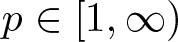
Given
 $p\in[1,\infty)$ and a bounded open set
 $\Omega\subset\mathbb{R}^d$ with Lipschitz boundary, we study the
 $\Gamma$-convergence of the weighted fractional seminorm
 \begin{equation*}[u]_{s,p,f}^p=\int_{\mathbb{R}^d} \int_{\mathbb{R}^d} \frac{|\tilde u(x)- \tilde u(y)|^p}{\|x-y\|^{d+sp}}\,f(x)\,f(y)\,\mathrm{d} x\,\mathrm{d} y,\end{equation*}
as
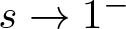 $s\to1^-$ for
 $u\in L^p(\Omega)$, where
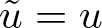 $\tilde u=u$ on
 $\Omega$ and
 $\tilde u=0$ on
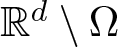 $\mathbb{R}^d\setminus\Omega$. Assuming that
 $(f_s)_{s\in(0,1)}\subset L^\infty(\mathbb{R}^d;[0,\infty))$ and
 $f\in\mathrm{Lip}_b(\mathbb{R}^d;(0,\infty))$ are such that
 $f_s\to f$ in
 $L^\infty(\mathbb{R}^d)$ as
 $s\to1^-$, we show that
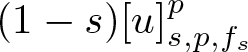 $(1-s)[u]_{s,p,f_s}^p$
 $\Gamma$-converges to the Dirichlet
 $p$-energy weighted by
 $f^2$. In the case
 $p=2$, we also prove the convergence of the corresponding gradient flows.


General rogue waves of infinite order: exact properties, asymptotic behaviour, and effective numerical computation
- Part of
-
- Journal:
- Journal of Nonlinear Waves / Volume 1 / 2025
- Published online by Cambridge University Press:
- 13 November 2025, e19
-
- Article
-
- You have access
- Open access
- HTML
- Export citation
-
This paper is devoted to a comprehensive analysis of a family of solutions of the focusing nonlinear Schrödinger equation called general rogue waves of infinite order. These solutions have recently been shown to describe various limit processes involving large-amplitude waves, and they have also appeared in some physical models not directly connected with nonlinear Schrödinger equations. We establish the following key property of these solutions: they are all in
 $L^2(\mathbb{R})$ with respect to the spatial variable but they exhibit anomalously slow temporal decay. In this paper, we define general rogue waves of infinite order, establish their basic exact and asymptotic properties, and provide computational tools for calculating them accurately.

Concentration behavior of normalized ground states for mass critical Kirchhoff equations in bounded domains
- Part of
-
- Journal:
- Proceedings of the Royal Society of Edinburgh. Section A: Mathematics , First View
- Published online by Cambridge University Press:
- 03 November 2025, pp. 1-44
-
- Article
-
- You have access
- HTML
- Export citation
-
In present paper, we study the limit behavior of normalized ground states for the following mass critical Kirchhoff equation
where \begin{align*}\left\{\begin{array}{ll}-(a+b\int_{\Omega}|\nabla u|^2\mathrm{d}x)\Delta u+V(x)u=\mu u+\beta^*|u|^{\frac{8}{3}}u &\text{in}\ {\Omega}, \\[0.1cm]u=0&\text{on}\ {\partial\Omega}, \\[0.1cm]\int_{\Omega}|u|^2\mathrm{d}x=1, \\[0.1cm]\end{array}\right.\end{align*}
 $a\geq 0$, b > 0, the function V(x) is a trapping potential in a bounded domain
 $\Omega\subset\mathbb R^3$,
 $\beta^*:=\frac{b}{2}|Q|_2^{\frac{8}{3}}$ and Q is the unique positive radially symmetric solution of equation
 $-2\Delta u+\frac{1}{3}u-|u|^{\frac{8}{3}}u=0$ in
 $\mathbb R^3.$ We consider the existence of constraint minimizers for the associated energy functional involving the parameter a. The minimizer corresponds to the normalized ground state of above problem, and it exists if and only if a > 0. Moreover, when V(x) attains its flattest global minimum at an inner point or only at the boundary of Ω, we analyze the fine limit profiles of the minimizers as
 $a\searrow 0$, including mass concentration at an inner point or near the boundary of Ω. In particular, we further establish the local uniqueness of the minimizer if it is concentrated at a unique inner point.


DYNAMICS OF NONLOCAL KURAMOTO–SIVASHINSHY EQUATIONS WITH MULTIPLICATIVE WHITE NOISE
- Part of
-
- Journal:
- The ANZIAM Journal / Volume 67 / 2025
- Published online by Cambridge University Press:
- 23 October 2025, e34
-
- Article
-
- You have access
- HTML
- Export citation
Impact of birth pulse and environment shift on population survival and propagation
- Part of
-
- Journal:
- Canadian Journal of Mathematics , First View
- Published online by Cambridge University Press:
- 17 October 2025, pp. 1-27
-
- Article
-
- You have access
- HTML
- Export citation
A remark on the long-time asymptotics of global-in-time solutions for semilinear parabolic equations in
 ${\mathbb {R}^N}$
- Part of
-
- Journal:
- Canadian Journal of Mathematics , First View
- Published online by Cambridge University Press:
- 10 October 2025, pp. 1-21
-
- Article
-
- You have access
- HTML
- Export citation
-
We consider the asymptotics of long-time behavior of a solution u of the semilinear parabolic problem
 $\partial _tu=\Delta u-u+u|u|^{p-2}$ in
 ${\mathbb {R}^N}\times (0,\infty )$,
 $u(0)=u_0\in H^1({\mathbb {R}^N})\cap L^\infty ({\mathbb {R}^N})$. Since the spatial domain on which the problem is posed is noncompact, we cannot expect the relative compactness of the solution orbit, e.g., in
 $H^1({\mathbb {R}^N})$ in general. In this article, we prove that the compactness of the orbit holds up to the ground state energy level, namely, if
 $\lim _{t\to \infty }I(u(t))\leq d_\infty $, where I is the energy functional associated with (P) and
 $d_\infty $ its ground state energy, then the orbit of
 $u(t)$ is compact in
 $H^1({\mathbb {R}^N})$. Our result includes the previous results in [4, 5].


Pullback measure attractors for stochastic p-Laplacian parabolic equations on thin domains
- Part of
-
- Journal:
- Proceedings of the Royal Society of Edinburgh. Section A: Mathematics , First View
- Published online by Cambridge University Press:
- 05 August 2025, pp. 1-28
-
- Article
-
- You have access
- HTML
- Export citation
-
We investigate the pullback measure attractors for non-autonomous stochastic p-Laplacian equations driven by nonlinear noise on thin domains. The concept of complete orbits for such systems is presented to establish the structures of pullback measure attractors. We first present some essential uniform estimates, as well as the existence and uniqueness of pullback measure attractors. A novel technical proof method is shown to overcome the difficulty of the estimates of the solutions in
 $W^{1,p}$ on thin domains. Then, we prove the upper semicontinuity of these measure attractors as the
 $(n + 1)$-dimensional thin domains collapse onto the lower n-dimensional space.


Concentration and oscillation analysis of positive solutions to semilinear elliptic equations with exponential growth in a disc. II
- Part of
-
- Journal:
- Proceedings of the Royal Society of Edinburgh. Section A: Mathematics , First View
- Published online by Cambridge University Press:
- 31 July 2025, pp. 1-28
-
- Article
-
- You have access
- HTML
- Export citation
-
This paper is the latter part of a series of our studies on the concentration and oscillation analysis of semilinear elliptic equations with exponential growth
 $e^{u^p}$. In the first one [17], we completed the concentration analysis of blow-up positive solutions in the supercritical case p > 2 via a scaling approach. As a result, we detected infinite sequences of concentrating parts with precise quantification. In the present paper, we proceed to our second aim, the oscillation analysis. Especially, we deduce an infinite oscillation estimate directly from the previous infinite concentration ones. This allows us to investigate intersection properties between blow-up solutions and singular functions. Consequently, we show that the intersection number between blow-up and singular solutions diverges to infinity. This leads to a proof of infinite oscillations of bifurcation diagrams, which ensures the existence of infinitely many solutions. Finally, we also remark on infinite concentration and oscillation phenomena in the limit cases
 $p\to2^+$ and
 $p\to \infty$.


