Refine search
Actions for selected content:
320 results
A maximum problem of stopping time for correlated random walks
-
- Journal:
- Probability in the Engineering and Informational Sciences , First View
- Published online by Cambridge University Press:
- 05 October 2026, pp. 1-9
-
- Article
-
- You have access
- Open access
- HTML
- Export citation
-
Let
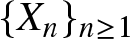 $\{X_n\}_{n \geq 1}$ be a Markov chain taking values in
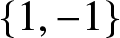 $\{1, -1\}$ with transition probabilities
 \begin{align*} p = P(X_{n+1} = 1 \,\,|\,\, X_n = 1)\ ,\ q = P(X_{n+1} = -1 \,\,|\,\, X_n = -1). \end{align*}
Define a correlated random walk
 $(S_n)_{n\ge0} ,S_0=0$ and
 $S_n=\sum_{i=1}^n X_i,n\ge1$. Let
 $A$ and
 $B$ be positive integers, and define a stopping time
 \begin{equation*} \tau = \inf \{ n \geq 1 : S_n = A \text{ or } S_n = -B \}. \end{equation*}
Using the martingale approach, Pozdnyakov [4] (Martingale approach to gambler’s ruin problem for correlated random walks. Journal of Applied Probability 62(4): 1594–1606.) derived the expected stopping time
 $E(\tau)$.
This study investigates the monotonicity of
 $E(\tau)$ with respect to the parameters
 $p$ and
 $q$ under the condition of symmetric boundaries
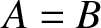 $A = B$. We prove that when
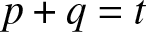 $p + q = t$ is fixed,
 $E(\tau)$ increases as
 $p$ increases from
 $0$ to
 $\frac{t}{2}$, which implies that
 $E(\tau)$ attains its maximum at
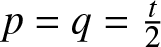 $p = q = \frac{t}{2}$.


Tighter bounds on the expected absorbing time of Ungarian Markov chains
- Part of
-
- Journal:
- Combinatorics, Probability and Computing , First View
- Published online by Cambridge University Press:
- 01 October 2026, pp. 1-41
-
- Article
-
- You have access
- Open access
- HTML
- Export citation
-
In
 $2023$, Defant and Li defined the Ungarian Markov chain
 $\mathbf{U}_L$ associated to a finite lattice
 $L$. This Markov chain has state space
 $L$, and from any state
 $x \in L$ transitions to the meet of
 $\{x\} \cup T$, where
 $T$ is a randomly selected subset of the elements of
 $L$ covered by
 $x$. For any lattice
 $L$, let
 $\mathcal{E}(L)$ be the expected number of steps until the maximal element of
 $L$ transitions into the minimal element in the Ungarian Markov chain. We show that
 $\mathcal{E}(L)$ is linear in
 $n$ when
 $L$ is the weak order on the symmetric group
 $S_n$, and satisfies an
 $n^{1-o(1)}$ lower bound when
 $L$ is the
 $n^{\text{th}}$ Tamari lattice. This completely resolves a conjecture by Defant and Li and partially resolves another.


Genetic contribution of advantaged ancestors in the biparental Moran model–finite selection
- Part of
-
- Journal:
- Journal of Applied Probability , First View
- Published online by Cambridge University Press:
- 30 September 2026, pp. 1-18
-
- Article
-
- You have access
- HTML
- Export citation
Scaling limits of discrete-time Markov chains and their local times on electrical networks
- Part of
-
- Journal:
- Advances in Applied Probability , First View
- Published online by Cambridge University Press:
- 17 September 2026, pp. 1-61
-
- Article
-
- You have access
- Open access
- HTML
- Export citation
Asymptotic ruin probability for Sparre–Andersen models with investments in financial markets driven by hidden Markov chains
- Part of
-
- Journal:
- Journal of Applied Probability , First View
- Published online by Cambridge University Press:
- 21 July 2026, pp. 1-27
-
- Article
-
- You have access
- HTML
- Export citation
Reducible Markov modulation, pole order, and tail behavior in random growth models
- Part of
-
- Journal:
- Journal of Applied Probability , First View
- Published online by Cambridge University Press:
- 10 June 2026, pp. 1-28
-
- Article
-
- You have access
- Open access
- HTML
- Export citation
Approximation of Markov chain expectations and the key role of stationary distribution convergence
- Part of
-
- Journal:
- Journal of Applied Probability , First View
- Published online by Cambridge University Press:
- 19 May 2026, pp. 1-16
-
- Article
-
- You have access
- HTML
- Export citation
-
Consider a sequence
 $P_n$ of positive recurrent transition matrices or kernels that approximate a limiting infinite state matrix or kernel
 $P_{\infty}$. Such approximations arise naturally when an infinite state Markov chain is truncated and replaced with a finite-state approximation. Another situation of such approximations is when
 $P_{\infty}$ is a simplified limiting approximation to
 $P_n$ when n is large. In both settings, it is often verified that the approximation
 $P_n$ has the characteristic that its stationary distribution
 $\pi_n$ converges to the stationary distribution
 $\pi_{\infty}$ associated with the limit. We show that when the state space is countably infinite, this stationary distribution convergence implies that
 $P_n^m$ can be approximated uniformly in m by
 $P_{\infty}^m$ when n is large. We show that this ability to approximate the marginal distributions at all time scales m fails in continuous state space, but is valid when the convergence is in total variation or when we have weak convergence and the kernels are suitably Lipschitz. When the state space is discrete (as in the truncation setting), we further show that stationary distribution convergence also implies that all the expectations that are computable via first transition analysis (e.g. mean hitting times, expected infinite horizon discounted rewards) converge to those associated with the limit
 $P_{\infty}$. Simply put, we show that once we have established stationary distribution convergence, we can immediately infer convergence for a large range of other expectations.


An algorithm for uniform generation of unlabeled (Pólya) trees
- Part of
-
- Journal:
- Forum of Mathematics, Sigma / Volume 14 / 2026
- Published online by Cambridge University Press:
- 14 May 2026, e76
-
- Article
-
- You have access
- Open access
- HTML
- Export citation
Strong survival and extinction for branching random walks via new order for generating functions
- Part of
-
- Journal:
- Journal of Applied Probability / Volume 63 / Issue 3 / September 2026
- Published online by Cambridge University Press:
- 05 March 2026, pp. 950-968
- Print publication:
- September 2026
-
- Article
-
- You have access
- HTML
- Export citation
-
We consider general discrete-time multitype branching processes on a countable set X. According to these processes, a particle of type
 $x\in X$ generates a random number of children and chooses their type in X, not necessarily independently nor with the same law for different parent types. We introduce a new type of stochastic ordering of multitype branching processes, generalising the germ order introduced by Hutchcroft, which relies on the generating function of the process. We prove that given two multitype branching processes with laws
 ${\boldsymbol{\mu}}$ and
 ${\boldsymbol{\nu}}$ respectively, with
 ${\boldsymbol{\mu}}\ge{\boldsymbol{\nu}}$, then in every set where there is survival according to
 ${\boldsymbol{\nu}}$, there is also survival according to
 ${\boldsymbol{\mu}}$. Moreover, in every set where there is strong survival according to
 ${\boldsymbol{\nu}}$, there is also strong survival according to
 ${\boldsymbol{\mu}}$, provided that the supremum of the global extinction probabilities for the
 ${\boldsymbol{\nu}}$ process, taken over all starting points x, is strictly smaller than 1. New conditions for survival and strong survival for inhomogeneous multitype branching processes are provided. We also extend a result of Moyal which claims that, under some conditions, the global extinction probability for a multitype branching process is the only fixed point of its generating function, whose supremum over all starting coordinates may be smaller than 1.


Can a higher-order Markov chain be treated as a first-order Markov chain?
- Part of
-
- Journal:
- Probability in the Engineering and Informational Sciences / Volume 40 / Issue 3 / July 2026
- Published online by Cambridge University Press:
- 19 February 2026, pp. 400-415
-
- Article
-
- You have access
- Open access
- HTML
- Export citation
Quantitative convergence rates for stochastically monotone Markov chains
- Part of
-
- Journal:
- Journal of Applied Probability / Volume 63 / Issue 2 / June 2026
- Published online by Cambridge University Press:
- 21 January 2026, pp. 798-810
- Print publication:
- June 2026
-
- Article
-
- You have access
- Open access
- HTML
- Export citation
Distribution of integers with digit restrictions via Markov chains
- Part of
-
- Journal:
- Ergodic Theory and Dynamical Systems / Volume 46 / Issue 3 / March 2026
- Published online by Cambridge University Press:
- 01 December 2025, pp. 757-804
- Print publication:
- March 2026
-
- Article
-
- You have access
- Open access
- HTML
- Export citation
On ergodicity and transience for a class of level-dependent GI/M/1-type Markov chains
- Part of
-
- Journal:
- Journal of Applied Probability / Volume 62 / Issue 4 / December 2025
- Published online by Cambridge University Press:
- 21 November 2025, pp. 1301-1317
- Print publication:
- December 2025
-
- Article
-
- You have access
- HTML
- Export citation
On approximating the Potts model with contracting Glauber dynamics
- Part of
-
- Journal:
- Advances in Applied Probability / Volume 58 / Issue 2 / June 2026
- Published online by Cambridge University Press:
- 07 November 2025, pp. 812-849
- Print publication:
- June 2026
-
- Article
-
- You have access
- Open access
- HTML
- Export citation
Glauber dynamics for the hard-core model on bounded-degree
 $H$-free graphs
- Part of
-
- Journal:
- Combinatorics, Probability and Computing / Volume 34 / Issue 6 / November 2025
- Published online by Cambridge University Press:
- 19 September 2025, pp. 803-814
-
- Article
-
- You have access
- Open access
- HTML
- Export citation
-
The hard-core model has as its configurations the independent sets of some graph instance
 $G$. The probability distribution on independent sets is controlled by a ‘fugacity’
 $\lambda \gt 0$, with higher
 $\lambda$ leading to denser configurations. We investigate the mixing time of Glauber (single-site) dynamics for the hard-core model on restricted classes of bounded-degree graphs in which a particular graph
 $H$ is excluded as an induced subgraph. If
 $H$ is a subdivided claw then, for all
 $\lambda$, the mixing time is
 $O(n\log n)$, where
 $n$ is the order of
 $G$. This extends a result of Chen and Gu for claw-free graphs. When
 $H$ is a path, the set of possible instances is finite. For all other
 $H$, the mixing time is exponential in
 $n$ for sufficiently large
 $\lambda$, depending on
 $H$ and the maximum degree of
 $G$.


Noise sensitivity on affine Weyl groups
- Part of
-
- Journal:
- Combinatorics, Probability and Computing / Volume 34 / Issue 5 / September 2025
- Published online by Cambridge University Press:
- 31 July 2025, pp. 754-779
-
- Article
-
- You have access
- HTML
- Export citation
Online matching for the multiclass stochastic block model
- Part of
-
- Journal:
- Journal of Applied Probability / Volume 62 / Issue 4 / December 2025
- Published online by Cambridge University Press:
- 21 July 2025, pp. 1360-1381
- Print publication:
- December 2025
-
- Article
-
- You have access
- HTML
- Export citation
Martingale approach to gambler’s ruin problem for correlated randomwalks
- Part of
-
- Journal:
- Journal of Applied Probability / Volume 62 / Issue 4 / December 2025
- Published online by Cambridge University Press:
- 15 July 2025, pp. 1594-1606
- Print publication:
- December 2025
-
- Article
-
- You have access
- HTML
- Export citation
-
The gambler’s ruin problem for correlated random walks (CRWs), both with and without delays, is addressed using the optional stopping theorem for martingales. We derive closed-form expressions for the ruin probabilities and the expected game duration for CRWs with increments
 $\{1,-1\}$ and for symmetric CRWs with increments
 $\{1,0,-1\}$ (CRWs with delays). Additionally, a martingale technique is developed for general CRWs with delays. The gambler’s ruin probability for a game involving bets on two arbitrary patterns is also examined.


On the Aldous-Caputo Spectral Gap Conjecture for Hypergraphs
- Part of
-
- Journal:
- Mathematical Proceedings of the Cambridge Philosophical Society / Volume 179 / Issue 2 / September 2025
- Published online by Cambridge University Press:
- 21 May 2025, pp. 259-298
- Print publication:
- September 2025
-
- Article
-
- You have access
- HTML
- Export citation
-
In their celebrated paper [CLR10], Caputo, Liggett and Richthammer proved Aldous’ conjecture and showed that for an arbitrary finite graph, the spectral gap of the interchange process is equal to the spectral gap of the underlying random walk. A crucial ingredient in the proof was the Octopus Inequality — a certain inequality of operators in the group ring
 $\mathbb{R}\left[{\mathrm{Sym}}_{n}\right]$ of the symmetric group. Here we generalise the Octopus Inequality and apply it to generalising the Caputo–Liggett–Richthammer Theorem to certain hypergraphs, proving some cases of a conjecture of Caputo.

The speed of a biased walk on a Galton–Watson tree without leaves is monotonic for low values of bias
- Part of
-
- Journal:
- Journal of Applied Probability / Volume 62 / Issue 3 / September 2025
- Published online by Cambridge University Press:
- 05 March 2025, pp. 1044-1052
- Print publication:
- September 2025
-
- Article
-
- You have access
- HTML
- Export citation
-
We show that for
 $\lambda\in[0,{m_1}/({1+\sqrt{1-{1}/{m_1}}})]$, the biased random walk’s speed on a Galton–Watson tree without leaves is strictly decreasing, where
 $m_1\geq 2$. Our result extends the monotonic interval of the speed on a Galton–Watson tree.


