Most cited
This page lists all time most cited articles for this title. Please use the publication date filters on the left if you would like to restrict this list to recently published content, for example to articles published in the last three years. The number of times each article was cited is displayed to the right of its title and can be clicked to access a list of all titles this article has been cited by.
Contents
- Cited by 1

Non-modal analysis of Rayleigh–Bénard convection with and without bounded shear flows in viscoelastic fluids
-
- Published online by Cambridge University Press:
- 14 May 2025, A37
-
- Article
-
- You have access
- HTML
- Export citation
- Cited by 1

Convection–evaporation of water in a large aspect ratio layer
-
- Published online by Cambridge University Press:
- 12 January 2026, A2
-
- Article
-
- You have access
- HTML
- Export citation
-
We present an experimental study of convection–evaporation of a pool of water evaporating into a quiescent atmosphere. The temperature difference between the bottom of the pool and the surrounding air, as well as the water layer’s aspect ratio
 $\varGamma$, are systematically varied. Compared with classical Rayleigh–Bénard convection (RBC), this configuration involves a free-surface mechanical upper boundary and a mixed thermal upper boundary in contact with a poorly conducting air layer: evaporation extracts latent heat from the liquid and injects lighter vapour into the air, while radiation adds further cooling. As a result, neither temperature nor heat flux is fixed at the water–air interface, but they are instead strongly coupled. To characterise the respective contributions of convection, evaporation and radiation, we perform three sets of experiments: convection–evaporation, evaporation without bottom heating and convection without evaporation. High-resolution infrared imaging reveals multiple scales of convection at the surface: small hot plumes, cold sheet-like plumes and a large-scale circulation. The latter is constrained by the tank geometry for
 $\varGamma \lesssim 12$, but several turbulent superstructures develop for larger
 $\varGamma$. This is reminiscent of RBC but with different temperature statistics, due to the mixed boundary condition. Scaling laws are derived for interfacial transfers and mean surface temperature. Evaporation dominates heat extraction, accounting for 60 %–70 % of the flux, while radiation contributes 15 %–20 %. The release of vapour further enhances coupling between the liquid and air layers. When evaporation is blocked, radiation becomes dominant (70 %–80 %).These results have important implications for industrial and natural systems.


- Cited by 1
On the entry problem for a compressible liquid
-
- Published online by Cambridge University Press:
- 28 March 2006, pp. 577-587
-
- Article
- Export citation
- Cited by 1

Exact coherent structures in pipe flow in the presence of wall transpiration
-
- Published online by Cambridge University Press:
- 19 April 2022, A41
-
- Article
-
- You have access
- HTML
- Export citation
- Cited by 1
Dynamic interaction of gravity currents in a confined porous layer
-
- Published online by Cambridge University Press:
- 25 January 2024, A52
-
- Article
-
- You have access
- HTML
- Export citation
-
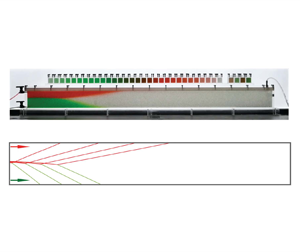
We study the dynamic interaction of two gravity currents in a confined porous layer, one heavier and one lighter, partly inspired by the practice of geological
 $\mathrm {CO}_2$ sequestration in oil fields. Two coupled nonlinear advective-diffusive equations are derived to describe the time evolution of the profile shape of both the upper (lighter) and lower (heavier) currents. At early times, the upper and lower currents remain separated and propagate independently. As time progresses, the currents approach each other and start to interact. We have identified eight different regimes of gravity current interaction at late times, impacted by four dimensionless parameters, representing the flow rate partition, ratio of buoyancy over the injection force, and the viscosity contrasts between the two injecting and displaced fluids. By defining appropriate similarity variables at either the early or late times, the governing partial differential equations (PDEs) reduce to different ordinary differential equations (ODEs), corresponding to the classic nonlinear diffusion solutions at early times and eight different self-similar solutions at late times when the currents attach to each other. It is of interest to note that in four of the eight regimes of late-time interaction (regimes 2, 6–8), self-similar solutions can be constructed by combining appropriately the three basic solutions (i.e. shock, rarefaction and travelling wave solutions) identified during single fluid injection in confined porous layers. In the four other regimes (regimes 1, 3–5), implicit solutions in the form of logarithm or error functions are obtained due to the influence of flow confinement and interaction of gravity currents. Potential implications of the model and solutions are also briefly discussed in the context of
 ${\rm CO}_2$-water co-flooding for simultaneous
 ${\rm CO}_2$ sequestration and oil recovery.


- Cited by 1

The influence of temporal heating modulation on non-isothermal floating droplet dynamics
-
- Published online by Cambridge University Press:
- 07 October 2022, A51
-
- Article
-
- You have access
- HTML
- Export citation
- Cited by 1

Effect of transversely variable thickness of an ice plate on periodic hydroelastic waves propagating in a frozen channel
-
- Published online by Cambridge University Press:
- 30 July 2025, A17
-
- Article
-
- You have access
- HTML
- Export citation
- Cited by 1
Motion of open vortex-current filaments under the Biot–Savart model
-
- Published online by Cambridge University Press:
- 12 December 2017, pp. 532-559
-
- Article
-
- You have access
- HTML
- Export citation
- Cited by 1
Linear dynamics of a thick liquid layer subjected to an oblique temperature gradient
-
- Published online by Cambridge University Press:
- 22 May 2024, A32
-
- Article
-
- You have access
- HTML
- Export citation
-
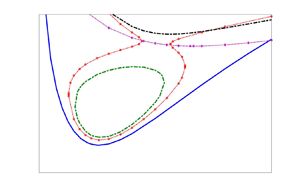
The present study aims to demonstrate the application of the oblique temperature gradient (OTG) to manipulate the buoyancy instabilities and resulting mixing. To accomplish this, we consider a model consisting of a liquid layer supported by a perfectly conducting bottom wall from below and the upper surface is exposed to ambient inert gas in a shallow container. The stability analysis employs the pseudospectral method and perturbation energy budget approach. The imposed OTG consists of a negative vertical temperature gradient (VTG), which leads to unstable density stratification, and a negative horizontal temperature gradient (HTG) component responsible for the Hadley circulation, which can be utilised to control instabilities. Without the HTG, a Rayleigh–Bénard mode of instability exists due to the imposed VTG termed as a VTG mode. The imposed HTG induces a linear VTG term and a quintic polynomial VTG term in the bottom wall-normal coordinate
 $y$. The induced linear VTG term reinforces the imposed VTG, while the induced quintic polynomial VTG term opposes the imposed VTG. For the vanishing Biot number (
 $Bi$), the induced quintic VTG term stabilises the VTG mode for the Prandtl number,
 $Pr=7$. However, for
 $Pr=0.01$, the Reynolds stresses associated with the Hadley circulation destabilise the VTG mode. For non-zero
 $Bi$, new streamwise and spanwise instability modes arise for
 $Pr=7$ due to the induced linear VTG term. Physical arguments show that the unstable density stratification near the gas–liquid interface caused by the synergistic effect of the imposed VTG and the induced linear VTG term lead to the existence of the predicted new modes. The present study thus shows that the strength of the HTG can be utilised to control the instability modes and critical parameters, thereby demonstrating the utility of the OTG in manipulating the buoyancy instabilities.


- Cited by 1

Non-dimensional dissipation at strong unsteady transitions in isotropic turbulence
-
- Published online by Cambridge University Press:
- 10 February 2026, A46
-
- Article
-
- You have access
- HTML
- Export citation
-
Exact mathematical expressions are derived to predict the exponent
 $p$ observed in non-equilibrium turbulence, where the classical dissipation law is replaced by a new dissipation scaling law
 $C_{\varepsilon } \sim \textit{Re}_{\lambda }^p$. Here,
 $ \textit{Re}_{\lambda }$ is the Taylor-based Reynolds number and
 $C_{\varepsilon } = \varepsilon L_{11} / u^{\prime 3}$ is the non-dimensional dissipation rate, defined by the viscous dissipation rate,
 $\varepsilon$, longitudinal integral scale,
 $L_{11}$, and root-mean-square of the velocity fluctuations
 $u^{\prime} = \sqrt {\overline {u^{\prime 2}}}$ (Vassilicos, Annu. Rev. Fluid Mech., vol. 47, 2015, pp. 95–114). Assuming homogeneous and isotropic turbulence, it is shown that the exact value of
 $p$ involves only first-order derivatives of these variables; however, at very high Reynolds numbers, and under particularly strong changes in the power input of the external forcing (without changing the shape of the forcing spectrum), the exact expression simplifies to
 $p = 3\pi / 4\alpha L_{110} - 5 / 2$, where
 $L_{110}$ is the initial value of the longitudinal integral scale and
 $\alpha$ represents an effective forcing wavenumber. Thus, the main finding is that only large-scale effects are involved in the imposition of the non-equilibrium dissipation scaling law. The results are compared with direct numerical simulation (DNS) results of isotropic turbulence under abruptly changing forcing conditions and with experimental data of non-equilibrium decaying isotropic turbulence, showing consistent results.


- Cited by 1
FLM volume 773 Cover and Front matter
-
- Published online by Cambridge University Press:
- 09 June 2015, pp. f1-f4
-
- Article
-
- You have access
- Export citation
- Cited by 1

Axial oscillations of a sphere in a rotating cylinder
-
- Published online by Cambridge University Press:
- 05 December 2025, A54
-
- Article
-
- You have access
- Open access
- HTML
- Export citation
- Cited by 1

Effect of directionality on extreme wave formation during nonlinear shoaling
-
- Published online by Cambridge University Press:
- 26 March 2026, R2
-
- Article
-
- You have access
- Open access
- HTML
- Export citation
- Cited by 1

The dispersive potential-vorticity dynamics of coastal outflows
-
- Published online by Cambridge University Press:
- 02 May 2025, A39
-
- Article
-
- You have access
- Open access
- HTML
- Export citation
-
This paper discusses the propagation of coastal currents generated by a river outflow using a 1
 ${1}/{2}$-layer, quasigeostrophic model, following Johnson et al. (2017) (JSM17). The model incorporates two key physical processes: Kelvin-wave-generated flow and vortical advection along the coast. We extend JSM17 by deriving a fully nonlinear, long-wave, dispersive equation governing the evolution of the coastal current width. Numerical solutions show that, at large times, the flow behaviour divides naturally into three regimes: a steady outflow region, intermediate regions consisting of constant-width steady currents and unsteady propagating fronts leading the current. The widths of the steady currents depend strongly on dispersion when the constant outflow potential-vorticity anomaly is negative. Simulations using contour dynamics show that the dispersive equation captures the full quasigeostrophic behaviour more closely than JSM17 and give accurate bounds on the widths of the steady currents.

- Cited by 1
Particulate gravity currents along V-shaped valleys – ERRATUM
-
- Published online by Cambridge University Press:
- 23 September 2009, p. 475
-
- Article
-
- You have access
- Export citation
- Cited by 1

The effect of a recess on the nonlinear free-surface responses of three-dimensional moonpools
-
- Published online by Cambridge University Press:
- 23 February 2026, A41
-
- Article
-
- You have access
- Open access
- HTML
- Export citation
-
The nonlinear free-surface response of moonpools with recesses is investigated through both experimental and theoretical analyses. A theoretical model is developed to compute the natural frequencies using linearised potential flow theory and eigenfunction expansions. Four moonpool configurations with varying recess lengths are examined experimentally. The analysis reveals that larger recess lengths correspond to increasingly pronounced nonlinear responses. It is also shown that, for an incident wave group with suitable frequency content, the linear moonpool response can be significantly smaller than the second- and third-harmonic components. This effect is attributed to super-harmonic secondary resonance, characterised by
 $n \omega =\omega _{pq}$ (
 $n\geqslant 2$ and
 $p+q\geqslant 1$), where
 $n$ denotes the super-harmonic order,
 $\omega$ is the excitation frequency, and
 $p$ and
 $q$ are the longitudinal and transverse mode numbers, respectively. Here,
 $\omega_{pq}$ represents the sloshing frequency of the three-dimensional moonpool. Furthermore, it is found that, as the primary responses increase, cross-flow instability can lead to secondary resonance in non-symmetric modes. This occurs because the double and triple frequencies of the base mode approach the transverse or diagonal sloshing frequencies. Additionally, hard-spring Duffing effects for secondary resonance induced by super-harmonics are observed in cases with recesses, becoming more pronounced as the recess length increases, particularly when
 $h/l\lt 0.3368$, where
 $h$ is the water depth above the recess and
 $l$ is the moonpool length.


- Cited by 1
Lift force on a spherical droplet in a viscous linear shear flow – CORRIGENDUM
-
- Published online by Cambridge University Press:
- 24 June 2025, E1
-
- Article
-
- You have access
- Open access
- HTML
- Export citation
- Cited by 1
Acoustic interaction of a finite body in a rarefied gas: does sound reciprocity hold at non-continuum conditions?
-
- Published online by Cambridge University Press:
- 21 November 2024, A105
-
- Article
-
- You have access
- Open access
- HTML
- Export citation
- Cited by 1

On the angular velocity of a swirling spheroidal squirmer in a viscous fluid
-
- Published online by Cambridge University Press:
- 09 March 2026, A31
-
- Article
-
- You have access
- Open access
- HTML
- Export citation
- Cited by 1

Numerical studies of bypass transition delay on a wing using optimal control theory
-
- Published online by Cambridge University Press:
- 13 May 2025, A10
-
- Article
-
- You have access
- Open access
- HTML
- Export citation
