Refine search
Actions for selected content:
83 results
A birational map of a projective space whose intermediate dynamical degrees are all transcendental
- Part of
-
- Journal:
- Ergodic Theory and Dynamical Systems , First View
- Published online by Cambridge University Press:
- 14 October 2026, pp. 1-8
-
- Article
-
- You have access
- HTML
- Export citation
-
We construct a birational map of $\mathbb {P}^d$
 ($d\geq 6$
 ) whose intermediate dynamical degrees are all transcendental.


Complete left-tail asymptotic for branching processes with immigration
- Part of
-
- Journal:
- Journal of Applied Probability , First View
- Published online by Cambridge University Press:
- 10 August 2026, pp. 1-13
-
- Article
-
- You have access
- Open access
- HTML
- Export citation
Dynamics on Markov surfaces: classification of stationary measures
- Part of
-
- Journal:
- Ergodic Theory and Dynamical Systems / Volume 46 / Issue 12 / December 2026
- Published online by Cambridge University Press:
- 07 August 2026, pp. 2969-2992
- Print publication:
- December 2026
-
- Article
-
- You have access
- Open access
- HTML
- Export citation
-
Consider the four-punctured sphere $\mathbb {S}_4^2$
 . Each choice of four traces, one for each puncture, determines a relative character variety for the representations of the fundamental group of $\mathbb {S}_4^2$
 in ${\textsf {SL}}_2(\mathbb {C})$
 . We classify the stationary probability measures for the action of the mapping class group ${\textsf {Mod}}(\mathbb {S}_4^2)$
 on these character varieties.


Average measure-theoretic entropy for a family of expanding on average random Blaschke products
- Part of
-
- Journal:
- Ergodic Theory and Dynamical Systems , First View
- Published online by Cambridge University Press:
- 05 August 2026, pp. 1-19
-
- Article
-
- You have access
- Open access
- HTML
- Export citation
Piecewise quasiconformal dynamical systems of the unit circle
- Part of
-
- Journal:
- Ergodic Theory and Dynamical Systems / Volume 46 / Issue 12 / December 2026
- Published online by Cambridge University Press:
- 23 July 2026, pp. 3082-3122
- Print publication:
- December 2026
-
- Article
-
- You have access
- Open access
- HTML
- Export citation
SPARSITY OF ITERATIONS OF RATIONAL FUNCTIONS ON THE UNIT CIRCLE
- Part of
-
- Journal:
- Bulletin of the Australian Mathematical Society / Volume 114 / Issue 3 / December 2026
- Published online by Cambridge University Press:
- 14 May 2026, pp. 550-553
- Print publication:
- December 2026
-
- Article
-
- You have access
- Open access
- HTML
- Export citation
Compactifications and measures for rational maps
- Part of
-
- Journal:
- Forum of Mathematics, Sigma / Volume 14 / 2026
- Published online by Cambridge University Press:
- 27 April 2026, e66
-
- Article
-
- You have access
- Open access
- HTML
- Export citation
Value distributions of derivatives of K-regular polynomial families
- Part of
-
- Journal:
- Ergodic Theory and Dynamical Systems / Volume 46 / Issue 6 / June 2026
- Published online by Cambridge University Press:
- 18 February 2026, pp. 1576-1586
- Print publication:
- June 2026
-
- Article
-
- You have access
- HTML
- Export citation
-
Let
 $\Omega \in \mathbb C$ be a domain such that
 $K:= \mathbb C \setminus \Omega $ is compact and non-polar. Let
 $(q_k)_{k>0}$ be a sequence of polynomials with
 $n_k$, the degree of
 $q_k$ satisfying
 $n_k \to \infty $, and let
 $(q_k^{(m)})_k$ denote the sequence of mth derivatives. We provide conditions which ensure that the preimages
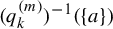 $(q_k^{(m)})^{-1}(\{a\})$ uniformly equidistribute on
 $\partial \Omega $, as
 $k \to \infty $, for every
 $a \in \mathbb C$ and every
 $m = 0, 1, \ldots .$


On the dynamics of real quadratic harmonic polynomials with tree Julia sets
- Part of
-
- Journal:
- Ergodic Theory and Dynamical Systems / Volume 46 / Issue 4 / April 2026
- Published online by Cambridge University Press:
- 30 December 2025, pp. 947-982
- Print publication:
- April 2026
-
- Article
-
- You have access
- HTML
- Export citation
-
Polynomial Julia sets with tree structure, typically Hubbard trees, play an important role in holomorphic dynamics. In this paper, we study the dynamics of
 ${f_\alpha (z)=z^2+\alpha \bar {z}}$ for
 $\alpha $ being real and the Julia sets being trees. We show that all such
 $\alpha $ form an interval
 $[1,4]$. This answers a question of G. Sienra. We further show that
 $f_\alpha $ exhibits non-trivial dynamics on the Fatou set which equals to the escaping set.


Genus g Cantor sets and germane Julia sets
- Part of
-
- Journal:
- Proceedings of the Royal Society of Edinburgh. Section A: Mathematics , First View
- Published online by Cambridge University Press:
- 02 December 2025, pp. 1-37
-
- Article
-
- You have access
- Open access
- HTML
- Export citation
-
The primary aim of this paper is to give topological obstructions to Cantor sets in
 $\mathbb{R}^3$ being Julia sets of uniformly quasiregular mappings. Our main tool is the genus of a Cantor set. We give a new construction of a genus g Cantor set, the first for which the local genus is g at every point, and then show that this Cantor set can be realized as the Julia set of a uniformly quasiregular mapping. These are the first such Cantor Julia sets constructed for
 $g\geq 3$. We then turn to our dynamical applications and show that every Cantor Julia set of a hyperbolic uniformly quasiregular map has a finite genus g; that a given local genus in a Cantor Julia set must occur on a dense subset of the Julia set; and that there do exist Cantor Julia sets where the local genus is non-constant.


On quasiconformal non-equivalence of gasket Julia sets and limit sets
- Part of
-
- Journal:
- Ergodic Theory and Dynamical Systems / Volume 45 / Issue 11 / November 2025
- Published online by Cambridge University Press:
- 09 June 2025, pp. 3465-3489
- Print publication:
- November 2025
-
- Article
-
- You have access
- HTML
- Export citation
Entire maps with rational preperiodic points and multipliers
- Part of
-
- Journal:
- Ergodic Theory and Dynamical Systems / Volume 45 / Issue 9 / September 2025
- Published online by Cambridge University Press:
- 15 January 2025, pp. 2636-2658
- Print publication:
- September 2025
-
- Article
-
- You have access
- Open access
- HTML
- Export citation
-
Given a number field
 $\mathbb {K} \subset \mathbb {C}$ that is not contained in
 $\mathbb {R}$, we prove the existence of a dense set (with respect to the topology of local uniform convergence) of entire maps
 $f \colon \mathbb {C} \rightarrow \mathbb {C}$ whose preperiodic points and multipliers all lie in
 $\mathbb {K}$. This contrasts with the case of rational maps. In addition, we show that there exists an escaping quadratic-like map that is not conjugate to an affine escaping quadratic-like map and whose multipliers all lie in
 $\mathbb {Q}$.


Lavaurs algorithm for cubic symmetric polynomials
- Part of
-
- Journal:
- Ergodic Theory and Dynamical Systems / Volume 45 / Issue 8 / August 2025
- Published online by Cambridge University Press:
- 06 January 2025, pp. 2314-2340
- Print publication:
- August 2025
-
- Article
-
- You have access
- Open access
- HTML
- Export citation
-
As discovered by W. Thurston, the action of a complex one-variable polynomial on its Julia set can be modeled by a geodesic lamination in the disk, provided that the Julia set is connected. It also turned out that the parameter space of such dynamical laminations of degree two gives a model for the bifurcation locus in the space of quadratic polynomials. This model is itself a geodesic lamination, the so called quadratic minor lamination of Thurston. In the same spirit, we consider the space of all cubic symmetric polynomials
 $f_\unicode{x3bb} (z)=z^3+\unicode{x3bb} ^2 z$ in three articles. In the first one, we construct the cubic symmetric comajor lamination together with the corresponding quotient space of the unit circle. As is verified in the third paper, this yields a monotone model of the cubic symmetric connectedness locus, that is, the space of all cubic symmetric polynomials with connected Julia sets. In the present paper, the second in the series, we develop an algorithm for generating the cubic symmetric comajor lamination analogous to the Lavaurs algorithm for constructing the quadratic minor lamination.
Transcendental Julia sets of minimal Hausdorff dimension
- Part of
-
- Journal:
- Ergodic Theory and Dynamical Systems / Volume 45 / Issue 8 / August 2025
- Published online by Cambridge University Press:
- 06 January 2025, pp. 2341-2413
- Print publication:
- August 2025
-
- Article
-
- You have access
- HTML
- Export citation
-
We show the existence of transcendental entire functions
 $f: \mathbb {C} \rightarrow \mathbb {C}$ with Hausdorff-dimension
 $1$ Julia sets, such that every Fatou component of f has infinite inner connectivity. We also show that there exist singleton complementary components of any Fatou component of f, answering a question of Rippon and Stallard [Eremenko points and the structure of the escaping set. Trans. Amer. Math. Soc. 372(5) (2019), 3083–3111]. Our proof relies on a quasiconformal-surgery approach developed by Burkart and Lazebnik [Interpolation of power mappings. Rev. Mat. Iberoam. 39(3) (2023), 1181–1200].


Dynamics of projectable functions: towards an atlas of wandering domains for a family of Newton maps
- Part of
-
- Journal:
- Proceedings of the Royal Society of Edinburgh. Section A: Mathematics / Volume 156 / Issue 4 / August 2026
- Published online by Cambridge University Press:
- 25 November 2024, pp. 1233-1282
- Print publication:
- August 2026
-
- Article
-
- You have access
- Open access
- HTML
- Export citation
-
We present a one-parameter family Fλ of transcendental entire functions with zeros, whose Newton’s method yields wandering domains, coexisting with the basins of the roots of Fλ. Wandering domains for Newton maps of zero-free functions have been built before by, e.g. Buff and Rückert [23] based on the lifting method. This procedure is suited to our Newton maps as members of the class of projectable functions (or maps of the cylinder), i.e. transcendental meromorphic functions f(z) in the complex plane that are semiconjugate, via the exponential, to some map g(w), which may have at most a countable number of essential singularities. In this paper, we make a systematic study of the general relation (dynamical and otherwise) between f and g, and inspect the extension of the logarithmic lifting method of periodic Fatou components to our context, especially for those g of finite-type. We apply these results to characterize the entire functions with zeros whose Newton’s method projects to some map g which is defined at both 0 and
 $\infty$. The family Fλ is the simplest in this class, and its parameter space shows open sets of λ-values in which the Newton map exhibits wandering or Baker domains, in both cases regions of initial conditions where Newton’s root-findingmethod fails.

On invariant measures of ‘satellite’ infinitely renormalizable quadratic polynomials
- Part of
-
- Journal:
- Ergodic Theory and Dynamical Systems / Volume 45 / Issue 6 / June 2025
- Published online by Cambridge University Press:
- 13 November 2024, pp. 1843-1869
- Print publication:
- June 2025
-
- Article
-
- You have access
- Open access
- HTML
- Export citation
-
Let
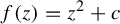 $f(z)=z^2+c$ be an infinitely renormalizable quadratic polynomial and
 $J_\infty $ be the intersection of forward orbits of ‘small’ Julia sets of its simple renormalizations. We prove that if f admits an infinite sequence of satellite renormalizations, then every invariant measure of
 $f: J_\infty \to J_\infty $ is supported on the postcritical set and has zero Lyapunov exponent. Coupled with [13], this implies that the Lyapunov exponent of such f at c is equal to zero, which partly answers a question posed by Weixiao Shen.

On possible limit functions on a Fatou component in non-autonomous iteration
- Part of
-
- Journal:
- Ergodic Theory and Dynamical Systems / Volume 45 / Issue 3 / March 2025
- Published online by Cambridge University Press:
- 28 October 2024, pp. 719-806
- Print publication:
- March 2025
-
- Article
-
- You have access
- Open access
- HTML
- Export citation
On the stochastic bifurcations regarding random iterations of polynomials of the form
 $z^{2} + c_{n}$
- Part of
-
- Journal:
- Ergodic Theory and Dynamical Systems / Volume 44 / Issue 11 / November 2024
- Published online by Cambridge University Press:
- 26 February 2024, pp. 3358-3384
- Print publication:
- November 2024
-
- Article
-
- You have access
- Open access
- HTML
- Export citation
-
In this paper, we consider random iterations of polynomial maps
 $z^{2} + c_{n}$, where
 $c_{n}$ are complex-valued independent random variables following the uniform distribution on the closed disk with center c and radius r. The aim of this paper is twofold. First, we study the (dis)connectedness of random Julia sets. Here, we reveal the relationships between the bifurcation radius and connectedness of random Julia sets. Second, we investigate the bifurcation of our random iterations and give quantitative estimates of bifurcation parameters. In particular, we prove that for the central parameter
 $c = -1$, almost every random Julia set is totally disconnected with much smaller radial parameters r than expected. We also introduce several open questions worth discussing.


ON THE ITERATIONS AND THE ARGUMENT DISTRIBUTION OF MEROMORPHIC FUNCTIONS
- Part of
-
- Journal:
- Journal of the Australian Mathematical Society / Volume 116 / Issue 2 / April 2024
- Published online by Cambridge University Press:
- 15 February 2024, pp. 145-170
-
- Article
-
- You have access
- HTML
- Export citation
Eliminating Thurston obstructions and controlling dynamics on curves
- Part of
-
- Journal:
- Ergodic Theory and Dynamical Systems / Volume 44 / Issue 9 / September 2024
- Published online by Cambridge University Press:
- 17 January 2024, pp. 2454-2532
- Print publication:
- September 2024
-
- Article
-
- You have access
- Open access
- HTML
- Export citation
-
Every Thurston map
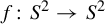 $f\colon S^2\rightarrow S^2$ on a
 $2$-sphere
 $S^2$ induces a pull-back operation on Jordan curves
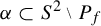 $\alpha \subset S^2\smallsetminus {P_f}$, where
 ${P_f}$ is the postcritical set of f. Here the isotopy class
 $[f^{-1}(\alpha )]$ (relative to
 ${P_f}$) only depends on the isotopy class
 $[\alpha ]$. We study this operation for Thurston maps with four postcritical points. In this case, a Thurston obstruction for the map f can be seen as a fixed point of the pull-back operation. We show that if a Thurston map f with a hyperbolic orbifold and four postcritical points has a Thurston obstruction, then one can ‘blow up’ suitable arcs in the underlying
 $2$-sphere and construct a new Thurston map
 $\widehat f$ for which this obstruction is eliminated. We prove that no other obstruction arises and so
 $\widehat f$ is realized by a rational map. In particular, this allows for the combinatorial construction of a large class of rational Thurston maps with four postcritical points. We also study the dynamics of the pull-back operation under iteration. We exhibit a subclass of our rational Thurston maps with four postcritical points for which we can give positive answer to the global curve attractor problem.


