Open access
Contents
Research Article
Discrete-time dynamic signatures and associated properties
-
- Published online by Cambridge University Press:
- 13 October 2026, pp. 1-21
-
- Article
-
- You have access
- Open access
- HTML
- Export citation
The value of preemption and observability in time-varying channels
-
- Published online by Cambridge University Press:
- 09 October 2026, pp. 1-32
-
- Article
-
- You have access
- Open access
- HTML
- Export citation
A maximum problem of stopping time for correlated random walks
-
- Published online by Cambridge University Press:
- 05 October 2026, pp. 1-9
-
- Article
-
- You have access
- Open access
- HTML
- Export citation
-
Let
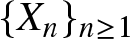 $\{X_n\}_{n \geq 1}$ be a Markov chain taking values in
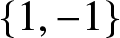 $\{1, -1\}$ with transition probabilities
 \begin{align*} p = P(X_{n+1} = 1 \,\,|\,\, X_n = 1)\ ,\ q = P(X_{n+1} = -1 \,\,|\,\, X_n = -1). \end{align*}
Define a correlated random walk
 $(S_n)_{n\ge0} ,S_0=0$ and
 $S_n=\sum_{i=1}^n X_i,n\ge1$. Let
 $A$ and
 $B$ be positive integers, and define a stopping time
 \begin{equation*} \tau = \inf \{ n \geq 1 : S_n = A \text{ or } S_n = -B \}. \end{equation*}
Using the martingale approach, Pozdnyakov [4] (Martingale approach to gambler’s ruin problem for correlated random walks. Journal of Applied Probability 62(4): 1594–1606.) derived the expected stopping time
 $E(\tau)$.
This study investigates the monotonicity of
 $E(\tau)$ with respect to the parameters
 $p$ and
 $q$ under the condition of symmetric boundaries
 $A = B$. We prove that when
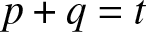 $p + q = t$ is fixed,
 $E(\tau)$ increases as
 $p$ increases from
 $0$ to
 $\frac{t}{2}$, which implies that
 $E(\tau)$ attains its maximum at
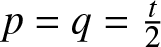 $p = q = \frac{t}{2}$.


Quantile-based reliability analysis of weighted extropy
- Part of:
-
- Published online by Cambridge University Press:
- 28 September 2026, pp. 1-30
-
- Article
-
- You have access
- Open access
- HTML
- Export citation
Inspection-conditioned uncertainty and complexity in coherent systems under double periodic inspections: extropy-based measures
- Part of:
-
- Published online by Cambridge University Press:
- 16 September 2026, pp. 1-44
-
- Article
-
- You have access
- Open access
- HTML
- Export citation
Analysis for series–parallel systems under Marshall–Olkin run shock model
-
- Published online by Cambridge University Press:
- 16 September 2026, pp. 1-22
-
- Article
-
- You have access
- Open access
- HTML
- Export citation
-
This paper develops a reliability framework for series–parallel systems subject to run-dependent Marshall–Olkin (MO) shocks, in which each parallel block may contain an arbitrary number of components sharing a block-common shock source. Within a parallel block, the component lifetimes are dependent, since they share the block-common run-shock time. This dependence prevents a direct application of the phase-type maximum closure. We resolve this obstacle through a structural decomposition lemma that expresses each block lifetime in terms of mutually independent random variables. This lemma allows exact phase-type representations at all system levels through nested Kronecker product constructions. From these representations, we obtain survival functions, mean time to failure, variance, hazard rate, and mean residual life in closed matrix-exponential form. We also show that the conditional mean residual life of any component, given the survival of all other components in its block, depends on their observation times only through their maximum. This is a structural invariance property of the MO parallel-block model. Closed-form dimension formulas describe how the state-space size grows with the system size, the phase dimensions, and the run-length threshold
 $k$. The methodology is illustrated on a three-block series–parallel system with Erlang-2 interarrival times.

Channel capacity and performance analysis of a buffered cellular network
-
- Published online by Cambridge University Press:
- 07 August 2026, pp. 1-21
-
- Article
-
- You have access
- Open access
- HTML
- Export citation
Survival of repairable systems with decreasing time redundancy
-
- Published online by Cambridge University Press:
- 23 July 2026, pp. 1-14
-
- Article
-
- You have access
- Open access
- HTML
- Export citation
Addendum
Stationary analysis for the fluid flow system regulated by a double-ended queue subject to catastrophic failures and repairs – ADDENDUM
-
- Published online by Cambridge University Press:
- 08 July 2026, p. 692
-
- Article
-
- You have access
- Open access
- HTML
- Export citation
Research Article
Discrete-time joint signature and associated properties
-
- Published online by Cambridge University Press:
- 29 May 2026, pp. 1-18
-
- Article
-
- You have access
- Open access
- HTML
- Export citation
A unified palm measure framework for failure-event-based component importance measures in nonrepairable, repairable, and phase-mission systems
-
- Published online by Cambridge University Press:
- 28 May 2026, pp. 1-15
-
- Article
-
- You have access
- Open access
- HTML
- Export citation
Alpha-robust non-zero-sum investment and reinsurance games with bounded memory and default risk
-
- Published online by Cambridge University Press:
- 21 May 2026, pp. 1-31
-
- Article
-
- You have access
- Open access
- HTML
- Export citation
Stationary analysis for the fluid flow system regulated by a double-ended queue subject to catastrophic failures and repairs
- Part of:
-
- Published online by Cambridge University Press:
- 11 May 2026, pp. 663-691
-
- Article
-
- You have access
- Open access
- HTML
- Export citation
Asymptotic properties of wavelet estimators in a semi-parametric EV models with ANA errors
- Part of:
-
- Published online by Cambridge University Press:
- 08 May 2026, pp. 638-662
-
- Article
-
- You have access
- Open access
- HTML
- Export citation
-
In this paper, when the errors in the semi-parametric errors-in-variables model are asymptotic negatively associated (or ρ−, for short) random variables, the estimators of parameter, non-parameter, and error variances in the model are
 $\widehat{\beta}_{n}$,
 $\widehat{g}_{n}(t)$, and
 $ \widehat{\sigma}_{n}^{2}$, respectively, by using wavelet smoothing and least square method. Under some general assumptions, we also establish some results on the strong consistency of the estimators. Furthermore, simulations are conducted to assess the finite sample behavior of the estimators and confirm the validity of the theoretical results.


Arbitrable stochastic games: three variations of the heads-or-tails game for bitcoin
- Part of:
-
- Published online by Cambridge University Press:
- 06 May 2026, pp. 618-637
-
- Article
-
- You have access
- Open access
- HTML
- Export citation
Asymptotic behavior of frequency polygon estimation of density function for dependent samples
- Part of:
-
- Published online by Cambridge University Press:
- 05 May 2026, pp. 598-617
-
- Article
-
- You have access
- Open access
- HTML
- Export citation
-
This paper pays attention to the frequency polygon, which is constructed by connecting with straight lines the mid-bin values of a histogram. As a density estimator based on the histogram technique, the frequency polygon has the advantage of computational simplicity and has been widely used in many fields. The purpose of this article is to investigate the weak consistency, the uniformly weak consistency, and the rate of the uniformly weak consistency for frequency polygon estimation of the density function under
 $\alpha$-mixing samples, which improve and extend the corresponding ones in the literature. In addition, the simulation study and real data analysis are also presented to verify the validity of the theoretical results based on finite samples.

On stochastic properties of random age and remaining lifetime for populations of manufactured items
- Part of:
-
- Published online by Cambridge University Press:
- 23 April 2026, pp. 579-597
-
- Article
-
- You have access
- Open access
- HTML
- Export citation
On the study of bivariate and conditional dynamic negative cumulative extropy
- Part of:
-
- Published online by Cambridge University Press:
- 07 April 2026, pp. 557-578
-
- Article
-
- You have access
- Open access
- HTML
- Export citation
Multiserver-job response time under multilevel scaling
-
- Published online by Cambridge University Press:
- 27 March 2026, pp. 516-556
-
- Article
-
- You have access
- Open access
- HTML
- Export citation
-
We study the multiserver-job setting in the load-focused multilevel scaling limit, where system load approaches capacity much faster than the growth of the number of servers
 $n$. We consider the “1 and
 $n$” system, where each job requires either one server or all
 $n$. Within the multilevel scaling limit, we examine three regimes: load dominated by
 $n$-server jobs, 1-server jobs, or balanced. In each regime, we characterize the asymptotic growth rate of the boundary of the stability region and the scaled mean queue length. We demonstrate that mean queue length peaks near balanced load via theory, numerics, and simulation.


Relative and divergence measures based on extropy: dynamic forms and properties
-
- Published online by Cambridge University Press:
- 03 March 2026, pp. 493-515
-
- Article
-
- You have access
- Open access
- HTML
- Export citation