To save content items to your account,
please confirm that you agree to abide by our usage policies.
If this is the first time you use this feature, you will be asked to authorise Cambridge Core to connect with your account.
Find out more about saving content to .
To save content items to your Kindle, first ensure no-reply@cambridge.org
is added to your Approved Personal Document E-mail List under your Personal Document Settings
on the Manage Your Content and Devices page of your Amazon account. Then enter the ‘name’ part
of your Kindle email address below.
Find out more about saving to your Kindle.
Note you can select to save to either the @free.kindle.com or @kindle.com variations.
‘@free.kindle.com’ emails are free but can only be saved to your device when it is connected to wi-fi.
‘@kindle.com’ emails can be delivered even when you are not connected to wi-fi, but note that service fees apply.
Chapter 10 draws the book’s themes together by returning to the problem of how the past persists. It reflects on the endurance of trauma, the struggle to reintegrate after catastrophe, and the ways communities rebuild meaning from ruins. Bringing archaeology and epic memory into a single perspective, it argues that Homer remains powerful because the poems preserve recognizably human experiences across time.
Transgender and nonbinary (trans) people face elevated risk for suicidal ideation (SI); yet, many do not experience SI, necessitating study of mechanisms contributing to, or buffering against, trans suicide risk. Gender minority stress and resilience theories have been tested cross-sectionally; however, no work has tested these models in the daily lives of suicidal trans adults.
Methods
Trans adults with past-month suicidal thoughts or behaviors (N = 47) were enrolled for a virtual research study involving a baseline set of interviews and questionnaires, followed by a 4-week ecological momentary assessment protocol. Ecological momentary assessment surveys were administered six times daily and assessed various minority stressors and momentary SI; each day’s first survey assessed resilience factors. Dynamic structural equation modeling was used to disentangle within- and between-person effects of minority stress and resilience factors on changes in SI.
Results
We observed that interpersonal and intrapersonal minority stressors predicted proximal within-person changes in SI over several hours; however, between-person estimates of resilience did not moderate the minority stress–SI relationship, as argued by extant theory.
Conclusions
Although the sample demonstrated adequate geographic, age, and gender diversity, participants were primarily White, limiting generalizability to racial minority trans people, and those outside the United States. Results suggest that interventions targeting minority stress and resilience factors may be appropriate for suicidal trans people, alongside social and political efforts to address discrimination and other interpersonal harms faced by trans people.
This chapter explains what a PhD is and is not. A PhD is an apprenticeship in creating new knowledge: learning to frame meaningful questions, pursue them systematically, and defend conclusions under expert scrutiny. It outlines the typical structure of doctoral study and how it varies across regions, then describes common forms of contribution in AI, from methods and theory to evaluation and problem framing. The chapter also addresses the human side of the process and why persistence and judgment matter more than perfection.
This chapter normalizes failure as a routine part of AI research and of the PhD itself. It describes how setbacks can appear as technical breakdowns, weak results, conceptual dead ends, or stalled momentum, and explains why these experiences often feel personal even when they are structurally built into research. The chapter offers a simple way to diagnose “stuckness” and outlines practical responses: simplify and test assumptions when experiments misbehave, step back and reframe when the question no longer holds, restore structure when process slips, and prioritize recovery when motivation collapses. It also reframes rejection as feedback and encourages documenting failures so they become reusable knowledge rather than repeated pain.
This chapter distills practical lessons from real PhD journeys. Each story follows a simple arc: a common pitfall, the adjustment that helped, and the lesson that emerged. Themes include honest communication when you are struggling, engaging seriously with feedback, avoiding burnout through sustainable habits, and taking ownership of research direction. Other stories highlight the trade-off between exploration and commitment, the risks of overextending through side projects, how perfectionism can stall progress, and why resilience matters when publication timelines and reviews go badly. The goal is to make hidden struggles visible and turn them into actionable guidance.
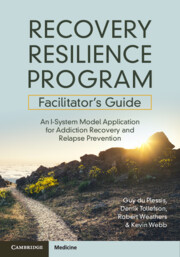
A manual for those working with addicted populations (from lay counsellors to psychiatrists) for delivering the evidence-based Recovery Resilience Program (RRP). RRP is a person-centered, strength and resiliency-based relapse prevention and recovery-oriented intervention that works in synergy with other models, especially 12-Step programs. Presenting practices that enhance 'recovery resilience' – an individual's capacity to effectively apply coping and self-regulation skills in dealing with cravings, triggers, stress, and high-risk situations without reverting to substance use. The program helps individuals to enhance and use their recovery capital at any stage of recovery, and ultimately reach recovery and life goals. It effortlessly integrates with other evidence-based relapse programs, from the original cognitive-behavioral approaches to the newer mindfulness-based and metacognitive approaches. Written by clinicians who have worked with addicts and their families for many decades, the program is easy-to-implement and very little preparation is necessary with handouts and PowerPoints included in each session.
In the current times of polycrisis, citizens’ resilience is crucial but its determinants are not well-understood. We employ multilevel regression models using longitudinal individual-level and country-level data across 23 European countries during the COVID-19 pandemic. In line with previous studies, we find that individuals’ resilience is driven by their economic, human, social, and “institutional capital.” We then specifically focus on objective measures and citizens’ subjective perceptions of institutional capital. We find that social expenditure in most policy areas is associated with individuals’ resilience. Labor market programs seem most important. Beyond government effectiveness, political stability, rule of law, and control of corruption also matter. In addition, subjective perceptions of public service quality and trust in public institutions are crucial, too, even after accounting for objective measures. These relationships are stronger in Southern and Northern Europe. Our findings suggest that strengthening citizens’ resilience requires strong governance and citizens’ positive perceptions of it.
Spanning the full AI Ph.D. journey, this practical guide offers clear, realistic, and action oriented advice for success. Designed as an end-to-end guide, the book leads readers from finding a research problem to experimentation, writing, conferences, and the final defense. Readers learn how to partner effectively with advisors, run productive meetings, and navigate review and rejection with confidence. The book provides guidance on responsible AI research and using LLMs effectively while safeguarding scientific integrity. The final stages of the PhD receive explicit focus, with advice on shaping publications into a coherent dissertation, preparing for the defense, and responding to examiners. This guide extends beyond graduation, exploring career paths in academia, industry, and the public sector while emphasizing transferable skills and strategic decisions. Ideal for Ph.D. students in AI and machine learning, as well as those considering starting a PhD, this book provides actionable advice that clarifies next steps and accelerates progress.
International law posits that occupation is a temporary state that does not transfer an atom of sovereignty to the occupying power. Nevertheless, in situations of prolonged occupation driven by the political goal of (unlawful) annexation, the occupying power might try to enforce its presence by claiming historic title to territory and denying the ties of the present population to their homeland. Controlling archaeological sites and narratives about cultural heritage becomes part of the battle for territorial conquest: if the occupier manages to manipulate the heritage record to showcase a ‘better’ claim to the land in question, then they may be able to turn prolonged occupation into permanent colonization. In this article, we engage with this puzzle, and show that, despite this danger, international cultural heritage law can provide a useful platform for resistance alongside other areas of international law. In fact, where the aims of cultural heritage law and the law of occupation converge, occupied populations may harness both to demand their fundamental right to self-determination. This article uses the prolonged occupation of Palestine as a case study for resistance organized around the identity claims that heritage law can help leverage in situations of prolonged occupation.
CHD is the most common congenital anomaly worldwide. Advances in paediatric cardiology and cardiac surgery have transformed survival, shifting attention towards long-term psychosocial adaptation, neurodevelopment, quality of life, and relational well-being for children and their families.
Methods:
This narrative review examines the psychosocial, developmental, familial, and relational dimensions of childhood CHD. Literature was identified through PubMed, Scopus, and Google Scholar, with thematic synthesis of evidence relating to psychosocial adaptation, parental mental health, neurodevelopment, resilience, belonging, peer relationships, and models of family- and relationship-centred care.
Results:
Childhood CHD is associated with repeated hospitalisation, developmental disruption, emotional distress, and lifelong uncertainty, with psychosocial effects extending beyond the child to parents, siblings, grandparents, peers, schools, and healthcare professionals. Families frequently experience anxiety, depression, chronic vigilance, and posttraumatic stress symptoms, while children and adolescents face challenges related to identity, belonging, and social participation. Supportive relationships, multidisciplinary psychosocial care, educational integration, peer support, and developmentally informed interventions may strengthen resilience and improve long-term adaptation. Patients with advanced heart failure requiring ventricular assist devices or heart transplantation, and their families experience additional uncertainty and psychological burden that warrant dedicated psychosocial support.
Conclusion:
Psychosocial outcomes in CHD are shaped not only by medical care but also by the quality of the relationships surrounding the child. Relationship-centred care builds upon established family-centred care by recognising the broader relational ecosystem that influences development, resilience, participation, and quality of life. Future paediatric cardiology care should integrate longitudinal psychosocial, developmental, educational, and relational support alongside advances in medical treatment.
Drawing on Luthar’s relational framework of resilience, this study examines how parental resilience operates within marital dynamics to shape adolescent adjustment in Mexican-origin families. Using four waves of data from 604 families (Madolage = 12.41, SD = 0.97; 54.3% girls), we tested a longitudinal cascade linking W1 parental resilience to W4 adolescent anxiety and substance use via W2 marital warmth, W3 marital satisfaction, and W3 adolescents’ perceptions of interparental conflict. Actor-partner interdependence models revealed both intrapersonal and interpersonal pathways: wives’ resilience predicted own marital warmth, whereas husbands’ resilience predicted wives’ warmth. Indirect effects indicated that wives’ resilience was associated with lower adolescent anxiety and substance use through warmer marital interactions, higher marital satisfaction, and reduced perceived conflict. These findings position resilience as a promotive relational resource enacted within the marital dyad, advancing interparental positivity spillover theory by identifying parental resilience as upstream drivers of family processes that shape adolescent psychopathology.
Drug shortages disrupt healthcare delivery and pose a critical challenge to the resilience of pharmaceutical supply chains. This study investigates the drivers of drug shortages in Italy – Europe’s leading pharmaceutical producer – to identify the factors associated with supply disruptions and inform evidence-based health policy. Using national data from 2018 to 2023, we analysed 17,619 drugs across 3,013 groups of substitutes, covering community, dual-dispensed, and hospital distribution channels. Generalised linear mixed models were employed to assess how drug characteristics, market dynamics, and regulatory features influence shortage risk. Shortages were most prevalent among community drugs, where high market fragmentation and low-profit margins contributed to supply instability. Patent protection was associated with lower shortage risk for non-sterile drugs, while sterile drugs remained vulnerable regardless of patent status, likely due to manufacturing complexity. Notably, price effects were age-dependent: higher prices mitigated shortage risk, particularly for older drugs. This study offers a comprehensive evaluation of shortage patterns in a key pharmaceutical market, identifying structural risk factors and market vulnerabilities. The findings provide actionable insights for policymakers aiming to design targeted interventions, strengthen supply chain resilience, and ensure continuous access to essential medicines.
This paper presents a comparative study about the resilience of two sea nomadic groups of Southeast Asia – the Moken of the Myeik Archipelago (Myanmar/Thailand) and the Orang Suku Laut of the Riau-Lingga Archipelago (Indonesia). While they might have been historically valued for their seafaring skills, sea nomadic groups have increasingly been described as “uncivilised” and subsequently marginalised through state expansion and the commodification of marine and coastal resources. Drawing on James C. Scott’s concept of state simplifications, we examine how state-led developments, tourism or pearl farming threaten their access to marine spaces and redefine their livelihoods. Although the Moken and Orang Suku Laut have not been able to ward off state control completely, they have developed counter-exclusion and resilience strategies to maintain their presence in Southeast Asia’s maritime waters and coastal areas. These include developing alliances with Chinese intermediaries along patron-client relationships, selectively engaging with environmental initiatives or mobilising more than-human actors. The Moken rely on decentralised networks and mobility to negotiate shifting powers, while the Orang Suku Laut consolidate kinship-like ties with patrons and leverage their reputation of black magic (ilmu hitam) practitioners to resist state intrusion. This paper illustrates their astounding degree of agency and creativity in their effort to preserve their cultural identities and rights to the seas and coastal regions they inhabit. The struggles and strategies of the Moken and Orang Suku Laut may thus offer conceptual tools for challenging the territorial imaginaries of the modern state and envisioning more plural futures for oceanic worlds.
Building on recent studies of classical resilience, this article scrutinizes the second-century BC inscriptions on the monument of Aemilius Paullus at Delphi, erected in 167 BC. By analysing the epigraphic reuse of its surfaces, the article posits that the Roman pillar played a crucial political role in the second century BC. It functioned as a material device used by Delphi, the Amphictyony and pro-Roman Greek agents to consolidate their interstate authority and legitimacy amidst the intricate military dominance of Rome and the influence of the Greek leagues. These inscriptions reveal the interplay of new pro-Roman elites, interstate arbitrations, Greek memorialization and Roman provincialization, all converging to signify the rapid transformations of this era. Consequently, this study contributes to a more nuanced understanding of Greek ideological adaptations to Roman power during this period.
What happens when change isn’t a choice but a necessity? Chapter 5 delves into a reactive perspective on change, where transformation is sparked not by vision or planning but by disruption, crisis, and external shocks. From natural disasters to economic meltdowns, this perspective shows how adversity often forces organisations to confront reality, adapt quickly, and sometimes reinvent themselves. Concepts like resilience, robustness, and punctuated equilibrium illuminate how change can emerge in bursts – abrupt, unpredictable, and deeply consequential. Rather than seeking control, this approach highlights survival, learning, and strategic renewal in volatile environments. It also reframes risk and uncertainty not as enemies but as powerful catalysts for reinvention. At its heart, this chapter challenges us to ask: in moments of rupture, who steps up – and what kind of change becomes possible?
Plants, botanical gardens, and plantations played significant economic and social control roles in British colonial history, establishing monocultures and promoting scientific enquiry. Enslaved Africans, though integral to this system, have been largely erased from the discourse. Assigned marginal lands by British plantations, they cultivated provision grounds known subsequently in Jamaica as kitchen or backyard gardens growing food crops to supplement meagre rations. These spaces fostered food self-sufficiency, community well-being, and anti-colonial resistance. On these grounds, enslaved Africans tended foods brought from Africa, guarded medicinal plant knowledge, and when industrious, grew surpluses to achieve economic independence and escape poverty. Their nutritious, culturally relevant diets contrasted with inadequate plantation rations, now believed to be a contributory factor of non-communicable diseases prevalent in their descendants today. Over centuries, provision grounds evolved into small farms that became mainstays of domestic food production in Jamaica, sowing the roots of food indigeneity. This article traces the growth and economic impact of these grounds, their eventual decline, and their repositioning in Jamaican society. It examines their influence on food security, diets, foodways, health, and livelihoods, arguing that these grounds planted seeds of resilience and harvested hope for later generations.
The context of natural resource governance is often of uncertainty and change, even more so as the effects of climate change become ever more experienced. Adaptive governance and adaptive co-management have emerged as responses to the need to cope with and adapt to new information and changing situations. The chapter reviews what is understood by these terms and approaches, and identifies key characteristics and related concepts, such as resilience and uncertainty. The centrality of knowledge for adaptive approaches is recognised, with the role of, and challenges to, community, or participatory, monitoring and use of local and traditional knowledge in co-management reviewed. Forms of social, or collective, learning are then identified, recognising that social learning may occur through experimental approaches or deliberation and that feedback from learning is essential for adaptive governance.
This chapter shifts the focus to the regional level. The 2008 crisis stopped the relative regional convergence that Europe had been experiencing since the 1980s. In the Eurozone, a relatively straightforward institutional framework governs policy: a single currency is managed by the ECB with the sole mandate of controlling inflation. Fiscal policy is fragmented, with no unified budget or common debt and constrained by the Stability and Growth Pact. Industrial policies are non-existent, subordinated to market competition, while labour market flexibility is presented as the primary mechanism for absorbing shocks. The question is whether this governance is adequate to manage the transformations driven by technological change. This chapter presents two empirical analyses. The first examines the relationship between resilience to the 2008 crisis (measured by employment recovery) and the economic structure and structural changes observed in regions between 1998 and 2019. The second investigates the relationship between resilience to the ‘negative’ effects of robotisation (measured by reductions in employment and income levels) and the implementation of policies related to education and R&D.
A pragmatic approach to food system transformation recognises that the world cannot afford to wait for trillions in promised funding. Instead, immediate progress depends on implementing actionable, cost-effective strategies through existing means. Key solutions – such as protecting ecosystems, reducing food waste, and deploying decentralised renewable energy – can be advanced through strengthened collaboration among non-profits, the private sector, and local communities. Success will rely on contextual adaptation, the application of local knowledge, and the development of resilient partnerships, rather than on capital-intensive technological fixes. This framework prioritises grounded, cooperative action to enhance food security and sustainability within real-world constraints.
This chapter introduces the planetary boundaries framework and explains the explicit and implicit role of value judgements within it. It explains the key scientific concepts at work in the planetary boundaries framework, and discusses their relationship to the goal of ensuring a ‘safe operating space’ for humanity. It then considers how the planetary boundaries framework has been advanced by its proponents as a way to achieve justice within the constraints of the Earth system, and more recently the idea that planetary boundaries can be guide humanity’s future on Earth. It considers the influence of the planetary boundaries framework on new ideas of economics and international law. Then, the chapter shows how uses of planetary boundaries to define a perimeter within which justice or fairness is sought encounter difficulties that require further ethical examination. It then presents an explanation of the approach to ethics taken by interdisciplinary, international scholars that contributed to this edited collection.