Open access
Contents
JFM Papers

Oscillatory flow and steady streaming of cerebrospinal fluid in cranial subarachnoid space
-
- Published online by Cambridge University Press:
- 28 September 2026, A42
-
- Article
-
- You have access
- Open access
- HTML
- Export citation

Propagating fronts of convection rolls in Rayleigh–Bénard convection
-
- Published online by Cambridge University Press:
- 28 September 2026, A44
-
- Article
-
- You have access
- Open access
- HTML
- Export citation
-
We investigate the propagation of counter-rotating convection rolls in Rayleigh–Bénard convection initiated locally in a quiescent fluid layer under supercritical conditions. The velocity of the front separating quiescent fluid from the forming convection rolls, and the wavenumber of the convection rolls remaining behind the front, are explored. We numerically investigate fronts of forming convection rolls over five orders of magnitude of the reduced Rayleigh number,
 $\epsilon$, in two- and three-dimensional domains, for a broad range of boundary conditions, and for different front initiation approaches. In all cases, the front velocity increases as
 $\epsilon ^{1/2}$ with increasing
 $\epsilon$ for
 $\epsilon \lesssim 1$ in agreement with predictions using the amplitude equation. The amplitude equation description of the front velocity remains accurate for
 $\epsilon \lesssim 10$ except when the Prandtl number is large which yields a velocity that is faster than predicted for a fluid layer far from threshold. The wavenumber of the convection rolls increases linearly with
 $\epsilon$ in agreement with the wavenumber that maximises the growth rate of perturbations in the linear regime. Farther from onset, the wavenumber growth transitions to a reduced scaling of
 $\epsilon ^{1/4}$ in agreement with predictions using the Swift–Hohenberg equation in the large-
 $\epsilon$ limit. The scalings describing the wavenumber variation with
 $\epsilon$ are independent of the domain geometry, boundary conditions and front initiation method. However, the front-selected wavenumber at criticality does not equal the critical wavenumber of the bulk instability, in general, and depends significantly upon these details. We compare our results with experimental measurements where possible.


Phase-resolved settling velocity change of inertial particles in surface gravity waves
-
- Published online by Cambridge University Press:
- 25 September 2026, A41
-
- Article
-
- You have access
- Open access
- HTML
- Export citation

Phase-based analysis and control of a supersonic turbulent cavity flow
-
- Published online by Cambridge University Press:
- 25 September 2026, A38
-
- Article
-
- You have access
- Open access
- HTML
- Export citation
-
We present a phase-based framework for reducing the pressure fluctuations within a spanwise-periodic supersonic turbulent cavity flow with an incoming free-stream Mach number of 1.4 and a depth-based Reynolds number of
 $10^4$. Open cavity flows exhibit large fluctuations due to the feedback between the shear-layer instabilities and the acoustic field. The dominant flow physics includes the formation, convection and impingement of large-scale spanwise-oriented vortical structures into the aft wall. We implement a phase-reduction approach to identify the flow response about this time-varying convective process by defining a phase variable using dynamic mode decomposition. Three-dimensional impulse perturbations with various spanwise actuation wavenumbers,
 $\beta$, are introduced from the cavity leading edge to characterise the phase advancement or delay of convection. We perform open-loop flow control through unsteady blowing using actuation frequencies slightly different from the vortex-convection frequency to disrupt the feedback loop. After designing a phase-sensitivity-based actuation waveform optimised for quick flow modification, we investigate the speed of fluctuation reduction and compare it with a sinusoidal waveform actuation. At a spanwise actuation wavenumber of
 $\beta =2\pi$, both perform similarly, achieving a 46 % reduction of pressure fluctuations within five convective times. At
 $\beta =\pi$, the phase-sensitivity-based actuation performs better by achieving a 40 % reduction compared with the 30 % with a sinusoidal waveform within six convective times. The present method explicitly targets the temporal dynamics to achieve rapid suppression within a few convective times. This study shows the potential of phase-based analysis for timing-based (event-based) flow control and rapid flow modification of unsteady turbulent flows.


Lagrangian proper orthogonal decomposition
-
- Published online by Cambridge University Press:
- 25 September 2026, A40
-
- Article
-
- You have access
- Open access
- HTML
- Export citation
-
We introduce a modal representation for Lagrangian trajectories in turbulence, termed Lagrangian proper orthogonal decomposition. An ensemble of particle trajectories is used to construct velocity time series, which are normalized independently for each trajectory to isolate fluctuations. Principal component analysis is then applied to the resulting dataset, with temporal instances defining the feature space. The method is tested on trajectories from both direct numerical simulations of homogeneous isotropic turbulence and a three-dimensional particle-tracking experiment, showing that the leading modes exhibit similar structures and energy distributions in both cases. Truncated reconstructions are obtained by combining modes and coefficients, rescaling the fluctuations and integrating in time. For trajectories of the order of the integral time scale, single-particle dispersion and curvature statistics are accurately reproduced using a limited number of modes (
 $\sim O(10)$), whereas capturing the tails of acceleration distributions and higher-order Lagrangian structure functions requires a larger set (
 $\approx$ 40–80). Longer trajectories require progressively more modes for accurate reconstruction. These results suggest a possible route to data-driven generation of synthetic particle trajectories via stochastic sampling of the modal Lagrangian dynamics.


Instability of thin-film flows with temperature-dependent viscosity
-
- Published online by Cambridge University Press:
- 25 September 2026, A39
-
- Article
-
- You have access
- Open access
- HTML
- Export citation

Layered anisotropic stratified turbulence in columnar Taylor–Green vortices
-
- Published online by Cambridge University Press:
- 25 September 2026, A37
-
- Article
-
- You have access
- Open access
- HTML
- Export citation
-
We use direct numerical simulations (DNSs) of columnar Taylor–Green vortex arrays under stable density stratification to characterise the route to, and the properties of, layered anisotropic stratified turbulence (LAST). Building on the linear stability analysis of Guo et al. (2024 J. Fluid Mech., vol. 997, A34) and the convection-driven turbulence transition reported by the same authors (2025 J. Fluid Mech., vol. 1016, A44), we extend the DNS database to Froude numbers
 $\textit {Fr}\leqslant 0.25$ and Reynolds numbers
 $\textit {Re}$ up to
 $3200$. In this strongly stratified regime, the vortex array breaks down through a shear-driven path: vertical shear layers that form spontaneously in the zigzag-deformed base flow destabilise locally and transition to LAST, in contrast with the convection-driven path identified at
 $\textit {Fr}\geqslant 0.5$. Four flow regimes are charted, two of which follow the buoyancy-driven scaling
 $\ell _v\propto U_h/N$: LAST and a layered anisotropic viscously affected flow (LAVAF) regime, where
 $\ell _v$ is the vertical integral scale,
 $U_h$ the horizontal velocity and
 $N$ the buoyancy frequency. In both regimes, the ratio of buoyancy scale
 $\ell _b=2\pi U_h/N$ to
 $\ell _v$ plateaus near
 $0.74$ at peak dissipation. Layered anisotropic stratified turbulence is distinguished from LAVAF by the buoyancy Reynolds number
 $\textit {Re}_b$ exceeding unity, so that the Ozmidov and Thorpe scales both rise above the Kolmogorov scale and small-scale overturns develop under weaker viscous damping. Across LAST, the cumulative mixing efficiency is
 $\varGamma \in [0.24,0.49]$ and the horizontal Froude number
 $\textit {Fr}_h=U_h/(N\ell _h)$ at peak dissipation is of order
 $0.01$, where
 $\ell _h$ is the horizontal integral scale. In terms of turbulence-based parameters, LAST is bounded by
 $\textit {Fr}_h\lt 0.031$–
 $0.044$ and
 $\textit {Re}_b\gtrsim 1$; via empirical fits, these map to base-flow cutoffs
 $\textit {Fr}\lt 0.26$–
 $0.37$ and
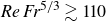 $\textit {Re}\,\textit {Fr}^{5/3}\gtrsim 110$.


JFM Rapids

Bacterial adhesion to curved surfaces in fluid flow
-
- Published online by Cambridge University Press:
- 23 September 2026, R3
-
- Article
-
- You have access
- Open access
- HTML
- Export citation
JFM Papers

Integral modelling of weakly evaporating three-dimensional liquid film with variable-substrate heating
-
- Published online by Cambridge University Press:
- 21 September 2026, A25
-
- Article
-
- You have access
- Open access
- HTML
- Export citation
-
Analysing the dynamics of phase-changing liquid films is essential for enhancing the performance of thermal-management systems. Still, direct simulation of the full governing equations is computationally expensive. To circumvent this limitation, I derived a weighted-integral boundary-layer (WIBL) model under long-wave assumptions, weak evaporation and strong surface tension, also accounting for variable-substrate heating. In the linear regime, the WIBL reproduces the growth rates and cutoff wavenumbers of unstable modes with significantly higher accuracy than commonly used Benney-type models for Reynolds number
 ${{\textit{Re}}}\lt 40$, and with accuracy comparable to that of the Orr–Sommerfeld equations. The linear analysis further reveals a threshold separating streamwise- and spanwise-dominated instabilities in hanging films, arising from the competition between the Kapitza and Rayleigh–Taylor mechanisms; the WIBL accurately predicts this threshold for small
 ${\textit{Re}}$ and inclination angles. In the nonlinear regime, with space- and time-varying substrate heating, the WIBL model captures the evolution of the free-surface thickness and temperature with an accuracy of approximately 6 % relative to the original Navier–Stokes equations. Three-dimensional simulations show that a condensing film undergoes dry out due to Kapitza instability, whereas unsteady substrate heating promotes spanwise momentum spreading, modifies wave dynamics, and prevents dry out. The WIBL model provides a good level of accuracy at a low computational cost, enabling extensive parametric studies, nonlinear-stability analyses and the design of optimal substrate-heating control strategies.


Similarity of start-up flow in porous media for large pressure gradients
-
- Published online by Cambridge University Press:
- 21 September 2026, A29
-
- Article
-
- You have access
- Open access
- HTML
- Export citation
-
We investigate start-up flow from an initially quiescent state in three ordered sphere packings (hexagonal close-packed, face-centred cubic, body-centred cubic) driven by a constant intrinsic pressure gradient using direct numerical simulation. The main finding is that the first nonlinear departure from the initial linear regime occurs at a characteristic inviscid time
 $\tau _{{inv}}=\sqrt {\rho d/\vert \boldsymbol{\nabla }\langle p\rangle _{\textit{i}}\vert }$ (where
 $\rho$,
 $d$,
 $\boldsymbol{\nabla }\langle p\rangle _{\textit{i}}$ correspond to fluid density, sphere diameter, intrinsic pressure gradient), rather than at a critical instantaneous Reynolds number. At early times, the flow consists of an irrotational outer motion and thin Stokes-type boundary layers near the solid surfaces; nonlinear effects emerge when the convective term in these boundary layers becomes comparable to the other leading-order terms. At the pore scale, the transient evolution is characterised by the growth of thin vorticity layers on the sphere surfaces, their large-scale migration into the pore space after times of order
 $\tau _{{inv}}$ and the formation of inertial cores. Despite geometric differences, these processes occur in a remarkably similar sequence across all three packings. Vorticity magnitude exhibits laminar boundary-layer scaling with the governing dimensionless parameter Hagen number, whilst in the body-centred cubic sphere pack case a transition towards turbulent-type scaling is observed. These results establish
 $\tau _{{inv}}$ as a unifying measure for the onset of nonlinearity in strongly accelerated porous media flows, with direct implications for the modelling of unsteady transport in natural and engineered systems.


Erratum
Reconnections of interacting hairpin vortices in axisymmetric free shear flows – ERRATUM
-
- Published online by Cambridge University Press:
- 18 September 2026, E2
-
- Article
-
- You have access
- Open access
- HTML
- Export citation
JFM Papers

The smallest stalagmites: a hydrochemical lower bound on stalagmite radius
-
- Published online by Cambridge University Press:
- 17 September 2026, A26
-
- Article
-
- You have access
- Open access
- HTML
- Export citation

Self-consistent fragmentation in dynamically dense turbulent fibre suspensions
-
- Published online by Cambridge University Press:
- 17 September 2026, A20
-
- Article
-
- You have access
- Open access
- HTML
- Export citation
-
Fragmentation of slender fibres by turbulence controls length distributions in many natural and industrial suspensions, yet most theories assume a prescribed carrier flow, and treat fibres as dilute and dynamically passive. Here, we develop a self-consistent kinetic description for fragmentation in the opposite limit of sufficiently dense fibre suspensions that back-react on the turbulence. Starting from an Euler–Bernoulli model in the quasi-static regime, we show that collective resistive-force drag defines a cut-off span
 $L_c$ inside the inertial range, marking the crossover from a Kolmogorov-like inertial range with an effective linear friction (for scales above
 $L_c$) to a fibre-dominated frictional regime with
 $E(k)\propto k^{-3}$ for scales below
 $L_c$. In this regime, the curvature amplitude of an almost straight fibre rises steeply with its span, so that the supercritical breaking hazard loses its dependence on length, and approaches a plateau controlled solely by the fibre loading. Embedding this hazard into a scale-invariant binary fragmentation equation, adopted here as a minimal quasi-static closure, we obtain, without adjustable parameters, a corresponding asymptotic steady length spectrum
 $n(L)\propto L^{-2}$ in the fibre-dominated regime, in contrast with the shallower
 $L^{-4/3}$ law predicted in the Kolmogorov-like regime. The crossover between these two spectra is set self-consistently by the same length density that fixes
 $L_c$ and the onset of the frictional modification of the cascade, thus linking turbulence modification, curvature statistics and kinetic fragmentation in a single coupled framework.


Fate of secondary droplets produced by high-speed raindrops interacting with a liquid pool
-
- Published online by Cambridge University Press:
- 17 September 2026, A27
-
- Article
-
- You have access
- Open access
- HTML
- Export citation
-
Secondary droplets produced by interactions between falling fluid drops and a liquid pool play a significant role in engineering applications and geophysical processes in nature. This study uses direct numerical simulations to investigate the dynamics of secondary droplets generated by raindrop–liquid pool interactions. The raindrop parameters feature realistic speed
 ${\sim} 7\ \mathrm{m \ s}^{-1}$, effective diameters
 ${\sim} 1$–
 $4\ \mathrm{mm}$, and surface tension values ranging from
 $25\,\%$ to twice the typical air–water interface value. The numerical configurations include both a single raindrop and two raindrops separated by distances between two and four times the raindrop diameter. The secondary droplet size distribution
 $N_d$ is found to scale with the droplet radius
 $r_s$ as
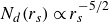 $N_d(r_s)\propto r_s^{-5/2}$, with additional dependencies on surface tension and raindrop diameter. When normalised according to this new scaling law, the droplet size distribution obtained from simulations with different parameter values collapses onto a single curve. Analysis of the impact morphology reveals distinct stages of raindrop interactions, and identifies the formation and break-up of a central liquid film. Spatial and temporal analyses of the secondary droplets show that raindrop interaction can influence both the percentage of droplets captured by the cavity and the duration over which they re-merge with the pool. These behaviours arise from the combined effects of differences in the birth times of secondary droplets of various sizes and aerodynamic forcing associated with the cavity airflow.


Shear-free, inhomogeneous turbulence in a stably stratified fluid. Part 2. A wave–turbulence decomposition
-
- Published online by Cambridge University Press:
- 17 September 2026, A30
-
- Article
-
- You have access
- Open access
- HTML
- Export citation
-
In Hass & Lele (2026 J. Fluid Mech. 1037, A20), we looked at the statistical structure (self-similarity) and entrainment rate of a shear-free turbulent layer bounded by a net zero momentum source layer above and a stable density interface below and found agreement with oscillating grid turbulence experiments. However, interfacial waves supported by the stable stratification make quantification of variances in the near-interfacial region ambiguous. In the present paper we propose a decomposition of the fluctuating fields based on eigenmodes of the linearized equations. Evidence that a linear model is appropriate is provided by the wavenumber–frequency spectra for low Froude number simulations. Using the decomposition, a detailed analysis of the wave–turbulence statistics, including budgets of kinetic and potential energy, is conducted. An energy conversion pathway is uncovered consistent with the internal wave-breaking entrainment mechanism proposed by Hannoun & List (1988 J. Fluid Mech. 189, 211–234), Fernando & Hunt (1997 J. Fluid Mech. 347, 197–234), and McGrath et al. (1997 J. Fluid Mech. 347, 235–261). A locally defined mixing or flux coefficient
 $\varGamma =\chi /\epsilon$ scales with the (local) turbulent Froude number in the same way as in homogeneous turbulence simulations where transport is identically zero. Finally, we connect our spatially inhomogeneous simulations to the strongly stratified turbulence theory demonstrating that the parameter regime required by the theory is, in principle, accessible for sufficiently energetic forcing, but is not realized in our simulations.


Interaction of internal waves impinging upon stratified turbulence
-
- Published online by Cambridge University Press:
- 16 September 2026, A22
-
- Article
-
- You have access
- Open access
- HTML
- Export citation

Broadband absorption of ocean wave energy using a graded array of heaving buoys in three dimensions
-
- Published online by Cambridge University Press:
- 16 September 2026, A23
-
- Article
-
- You have access
- Open access
- HTML
- Export citation
-
The generation of renewable power from ocean waves at a commercial scale requires arrays of wave energy converters (WECs) to be designed for efficient power capture over broad frequency bands and a wide range of incident wave directions. Here, array designs are developed in a three-dimensional model based on linear potential-flow theory, by arranging heaving-buoy-type WECs into rows, and spatially grading the resonant properties of successive rows via linear spring–damper power take-off (PTO) mechanisms. The grading leverages theories for rainbow reflection and rainbow absorption, and involves analyses of Bloch waves and pole–zero pairs in complex frequency space to inform the array layout and choice of PTO parameters. The spacing within an array alters the resonant properties of the rows and the behaviour of higher-order passbands, which has implications for the efficiency of an array. Strategies are developed to grade arrays composed of rows with infinitely many WECs, for efficient, broadband absorption over a broad target frequency range, and average absorptions exceeding
 $90\,\%$ are achieved over a wide range of wave directions. The strategies are applied to finite arrays, which demonstrate broadband absorption in directionally spread irregular sea states, and are shown to outperform the absorption of uniform arrays across a wide range of peak periods.

Erratum
Far field asymptotics of nematic flows around a small spherical particle – ERRATUM
-
- Published online by Cambridge University Press:
- 14 September 2026, E1
-
- Article
-
- You have access
- Open access
- HTML
- Export citation
JFM Rapids

Early onset of secondary shear instability in Kelvin–Helmholtz braids at high Reynolds number
-
- Published online by Cambridge University Press:
- 11 September 2026, R2
-
- Article
-
- You have access
- Open access
- HTML
- Export citation
-
We study the onset of two-dimensional secondary shear instability (SSI) in the braid regions connecting primary Kelvin–Helmholtz billows in stratified shear flows. While strain induced by the billows stabilises the braids, it also compresses their tilted isopycnals, enhancing baroclinic shear that enables rapid perturbation growth. By modifying the classical analysis of Corcos & Sherman (1976 J. Fluid Mech. 73, 241–264) in braid-aligned coordinates and adding an instability criterion based on the ratio of strain rate to shear, we develop an inviscid, time-dependent model for the braid evolution and the onset of SSI. We show that the criterion for instability can be achieved significantly earlier than the saturation of the primary billow at sufficiently high initial Richardson number
 $ \textit{Ri}$, because increased stratification slows the rate of billow growth relative to the rate of baroclinic shear production. Two-dimensional direct numerical simulations up to Reynolds numbers
 $ \textit{Re}=10^7$ quantify the role of viscosity. At high
 $ \textit{Re}$, we find that SSI indeed develops early in the braid, as predicted by the inviscid model, while the primary billow is still growing and before viscosity slows braid thinning. These results provide a mechanistic explanation for field observations of braid-dominated mixing and suggest that, at geophysically relevant
 $ \textit{Ri}$ and
 $ \textit{Re}$, SSI can control the three-dimensional transition and ensuing mixing by preceding and pre-empting both vortex pairing instabilities and secondary convective instabilities in the billow core.


JFM Papers

Interplay between circulatory and non-circulatory effects during interaction of counter-translating lifting bodies
-
- Published online by Cambridge University Press:
- 11 September 2026, A6
-
- Article
-
- You have access
- Open access
- HTML
- Export citation