Refine search
Actions for selected content:
169 results
Hausdorff dimension of the Wedding cake type surfaces
- Part of
-
- Journal:
- Mathematical Proceedings of the Cambridge Philosophical Society , First View
- Published online by Cambridge University Press:
- 30 October 2026, pp. 1-32
-
- Article
-
- You have access
- HTML
- Export citation
-
In this paper, we study the Hausdorff dimension of fractal interpolation surfaces (FISs) over a triangular domain. These FISs are known as ‘wedding cake surfaces’. These surfaces are the attractor of some deterministic self-affine iterated function systems (IFS) on
 $\mathbb{R}^3$ generated by a fractal interpolation algorithm. Due to the recent seminal result of Rapaport (Adv. Math. 449 (2024) 109734), the dimension theory of self-affine IFS on
 $\mathbb{R}^3$ is known whenever the IFS is strongly irreducible and proximal. However, the self-affine IFSs associated with FIS are not strongly irreducible. We prove that the Hausdorff dimension of the self-affine set (or FIS) is the same as the affinity dimension outside a set of scaling parameters with zero Lebesgue measure. Lastly, by computing the overlapping number for the associated Furstenberg IFS, we determine the Hausdorff dimension for every type of scaling parameter in a certain range of parameters.


Upper and lower Birkhoff spectra for the Gauss map
- Part of
-
- Journal:
- Ergodic Theory and Dynamical Systems , First View
- Published online by Cambridge University Press:
- 26 October 2026, pp. 1-23
-
- Article
-
- You have access
- HTML
- Export citation
Uniform Diophantine approximation on the plane for
 $\beta$-dynamical systems
- Part of
-
- Journal:
- Proceedings of the Edinburgh Mathematical Society / Volume 69 / Issue 4 / November 2026
- Published online by Cambridge University Press:
- 28 September 2026, pp. 1548-1587
-
- Article
-
- You have access
- HTML
- Export citation
-
In this paper, we investigate the two-dimensional uniform Diophantine approximation in
 $\beta$-dynamical systems. Let
 $\beta_i \gt 1(i=1,2)$ be real numbers, and let
 $T_{\beta_i}$ denote the
 $\beta_i$-transformation defined on
 $[0, 1]$. Motivated by Amou and Bugeaud (Exponents of Diophantine approximation and expansions in integer bases, J. London Math. Soc. 81(2) (2010), 297–316), we consider, for each
 $(x, y) \in[0,1]^2$ in the plane, its asymptotic approximation exponentand its uniform approximation exponent
 \begin{equation*}v_{\beta_1, \beta_2}(x, y)=\sup \left\{0 \leq v \lt \infty: \begin{array}{l}T_{\beta_1}^n x \lt \beta_1^{-n v} \\T_{\beta_2}^n y \lt \beta_2^{-n v}\end{array} \text {for infinitely many } n \in \mathbb{N}\right\} \text {, }\end{equation*}
 \begin{align*}\hat{v}_{\beta_1, \beta_2}(x, y)=\sup\Big\{0 \leq \hat{v} \lt \infty&:\text{for every sufficiently large }N, \\&\text{there exists }1 \leq n \leq N ~\text {such that } T_{\beta_1}^n x \lt \beta_1^{-N \hat{v}},T_{\beta_2}^n y \lt \beta_2^{-N \hat{v}}\Big\}.\end{align*}
We then calculate the Hausdorff dimension of the set
which consists of points that possess both a given asymptotic approximation exponent and a given uniform approximation exponent. As a corollary, we establish a definite formula for the Hausdorff dimension of the level set of the uniform approximation exponent. \begin{equation*}\left\{(x, y) \in[0,1]^2: \hat{v}_{\beta_1, \beta_2}(x, y)=\hat{v} \text~ {and }\, v_{\beta_1, \beta_2}(x, y)=v\right\},\end{equation*}


Hausdorff dimension of self-similar measures and sets with common fixed-point structure
- Part of
-
- Journal:
- Ergodic Theory and Dynamical Systems , First View
- Published online by Cambridge University Press:
- 23 September 2026, pp. 1-34
-
- Article
-
- You have access
- HTML
- Export citation
Minimal spacing of eigenvalues on fractals
- Part of
-
- Journal:
- Canadian Mathematical Bulletin , First View
- Published online by Cambridge University Press:
- 22 September 2026, pp. 1-9
-
- Article
-
- You have access
- Open access
- HTML
- Export citation
-
On the unit interval (I) and the Sierpinski gasket ($SG$
 ), the spectral decimation function of the Laplacian has similar properties that result in a positive minimum spacing of eigenvalues. Other fractals, for example, the level-3 $SG$
 , $SG_3$
 , may not enjoy these properties. Our goal is to obtain a simple sufficient criterion for positive infimum spacing between eigenvalues in the spectrum, based on the properties of the corresponding spectral decimation function of the fractal. We also give a sufficient condition for zero infimum spacing between eigenvalues.


Scaling limits of discrete-time Markov chains and their local times on electrical networks
- Part of
-
- Journal:
- Advances in Applied Probability , First View
- Published online by Cambridge University Press:
- 17 September 2026, pp. 1-61
-
- Article
-
- You have access
- Open access
- HTML
- Export citation
Complete left-tail asymptotic for branching processes with immigration
- Part of
-
- Journal:
- Journal of Applied Probability , First View
- Published online by Cambridge University Press:
- 10 August 2026, pp. 1-13
-
- Article
-
- You have access
- Open access
- HTML
- Export citation
Dimensions of harmonic measures on non-autonomous conformal Cantor sets
- Part of
-
- Journal:
- Ergodic Theory and Dynamical Systems / Volume 46 / Issue 10 / October 2026
- Published online by Cambridge University Press:
- 19 June 2026, pp. 2413-2451
- Print publication:
- October 2026
-
- Article
-
- You have access
- HTML
- Export citation
Intermediate dimensions of complementary sets
- Part of
-
- Journal:
- Proceedings of the Royal Society of Edinburgh. Section A: Mathematics , First View
- Published online by Cambridge University Press:
- 02 June 2026, pp. 1-19
-
- Article
-
- You have access
- HTML
- Export citation
-
Given a positive, non-increasing sequence
 $a$ with finite sum equal to
 $1$, we consider the family of all closed subsets of
 $[0,1]$ whose complementary open intervals have lengths given by a rearrangement of the sequence
 $a$. We study the full range of possible
 $\theta$-intermediate dimensions of these sets and, under suitable assumptions on the sequence, we show that this range forms a closed interval, whose endpoints we compute explicitly. This paper fills a gap in the literature concerning the dimensional properties of complementary sets.


The dimension spectrum of the infinitely generated Apollonian gasket
- Part of
-
- Journal:
- Ergodic Theory and Dynamical Systems / Volume 46 / Issue 11 / November 2026
- Published online by Cambridge University Press:
- 29 May 2026, pp. 2702-2725
- Print publication:
- November 2026
-
- Article
-
- You have access
- HTML
- Export citation
PAIR CORRELATIONS OF ONE-DIMENSIONAL MODEL SETS AND MONSTROUS COVARIOGRAMS OF RAUZY FRACTALS
- Part of
-
- Journal:
- Journal of the Australian Mathematical Society / Volume 120 / Issue 3 / June 2026
- Published online by Cambridge University Press:
- 10 March 2026, pp. 305-324
-
- Article
-
- You have access
- Open access
- HTML
- Export citation
Heat kernel-based p-energy norms on metric measure spaces
- Part of
-
- Journal:
- Mathematical Proceedings of the Cambridge Philosophical Society / Volume 180 / Issue 3 / May 2026
- Published online by Cambridge University Press:
- 05 March 2026, pp. 685-728
- Print publication:
- May 2026
-
- Article
-
- You have access
- HTML
- Export citation
-
We investigate heat kernel-based and other p-energy norms (
 $1\lt p\lt\infty$) on bounded and unbounded metric measure spaces, in particular, on nested fractals and their blow-ups. With the weak-monotonicity properties for these semi-norms, we generalise the celebrated Bourgain–Brezis-Mironescu (BBM) type characterisation for
 $p\neq2$. When the underlying space admits a heat kernel satisfying the sub-Gaussian estimates, we establish the equivalence of various p-energy semi-norms and weak-monotonicity properties, and show that these weak-monotonicity properties hold when
 $p=2$ (that is the case of Dirichlet form). Our paper’s key results concern the equivalence and verification of various weak-monotonicity properties on fractals. Consequently, many classical results on p-energy norms hold on nested fractals and their blow-ups, including the BBM type characterisation and Gagliardo-Nirenberg inequality.


MULTIFRACTAL ANALYSIS OF THE CONVERGENCE EXPONENTS FOR THE DIGITS IN d-DECAYING GAUSS-LIKE DYNAMICAL SYSTEMS
- Part of
-
- Journal:
- Journal of the Australian Mathematical Society / Volume 120 / Issue 3 / June 2026
- Published online by Cambridge University Press:
- 02 March 2026, pp. 424-443
-
- Article
-
- You have access
- HTML
- Export citation
-
Let
 $\{a_n(x)\}_{n\geq 1}$ be the sequence of digits of
 $x\in (0,1)$ in an infinite iterated function system with polynomial decay of the derivative. We first study the multifractal spectrum of the convergence exponent, defined by the sequence of digits
 $\{a_n(x)\}_{n\geq 1}$ and the weighted products of distinct digits with finite numbers, and then calculate the Hausdorff dimensions of the intersections of sets defined by the convergence exponent of the weighted product of distinct digits with finite numbers and sets of points whose digits are nondecreasing in such iterated function systems.


Almost Erdős sets
- Part of
-
- Journal:
- Proceedings of the Edinburgh Mathematical Society / Volume 69 / Issue 3 / August 2026
- Published online by Cambridge University Press:
- 12 February 2026, pp. 932-940
-
- Article
-
- You have access
- HTML
- Export citation
-
A set
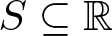 $S \subseteq \mathbb{R}$ is almost Erdős if, for every
 $\varepsilon \gt 0$, there exists a set
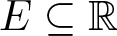 $E \subseteq \mathbb{R}$ of positive Lebesgue measure such that
 $\{x \in S : ax+b \notin E\}$ is nonempty for all
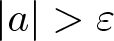 $|a| \gt \varepsilon$ and
 $b \in \mathbb{R}$. In this note, we show that any decreasing null sequence
 $(x_n)$ with decay rate greater than
 $1/2$ is an almost Erdős set.


 $L^q$-spectra of box-like graph-directed self-affine measures: closed forms, with rotation
- Part of
-
- Journal:
- Ergodic Theory and Dynamical Systems / Volume 46 / Issue 6 / June 2026
- Published online by Cambridge University Press:
- 26 January 2026, pp. 1595-1652
- Print publication:
- June 2026
-
- Article
-
- You have access
- HTML
- Export citation
-
We consider
 $L^q$-spectra of planar graph-directed self-affine measures generated by diagonal or anti-diagonal matrices. Assuming the directed graph is strongly connected and the system satisfies the rectangular open set condition, we obtain a general closed form expression for the
 $L^q$-spectra. Consequently, we obtain a closed form expression for box dimensions of associated planar graph-directed box-like self-affine sets. We also provide a precise answer to a question posed by Fraser [On the
 $L^q$-spectrum of planar self-affine measures. Trans. Amer. Math. Soc. 368(8) (2016), 5579–5620] concerning the
 $L^q$-spectra of planar self-affine measures generated by diagonal matrices. An interesting observation of the closed form expression is that it is possible to calculate the
 $L^q$-spectrum of a measure without involving the exact
 $L^q$-spectra of its projections to the axes.


Triangles in the plane and arithmetic progressions in thick compact subsets of
 $\mathbb {R}^d$
- Part of
-
- Journal:
- Canadian Journal of Mathematics / Volume 78 / Issue 3 / June 2026
- Published online by Cambridge University Press:
- 23 January 2026, pp. 946-986
- Print publication:
- June 2026
-
- Article
-
- You have access
- Open access
- HTML
- Export citation
-
This article focuses on the occurrence of 3-point configurations in subsets of
 $\mathbb {R}^d$ of sufficient thickness. We prove that a compact set
 $A\subset \mathbb {R}^d$ contains a similar copy of any linear
 $3$-point configuration (such as a
 $3$-point arithmetic progression) provided that A satisfies a mild Yavicoli-thickness condition and an r-uniformity condition for
 $d\geq 2$; or, when
 $d=1$, the result holds provided that the Newhouse thickness of A is at least
 $1$. Moreover, we prove that compact sets
 $A\subset \mathbb {R}^2$ contain the vertices of an equilateral triangle (and more generally, the vertices of a similar copy of any given triangle) provided A satisfies a mild Yavicoli-thickness condition and an r-uniformity condition. Further,
 $C\times C$ contains the vertices of an equilateral triangle (and more generally the vertices of a similar copy of any given 3-point configuration) provided the Newhouse thickness of C is at least
 $1$. These are among the first results in the literature to give explicit criteria for the occurrence of 3-point configurations in the plane.


Multivariate multifractal analysis of Lévy functions. Part I: Determination of multifractal spectra
- Part of
-
- Journal:
- Proceedings of the Royal Society of Edinburgh. Section A: Mathematics , First View
- Published online by Cambridge University Press:
- 13 January 2026, pp. 1-32
-
- Article
-
- You have access
- HTML
- Export citation
Disintegration results for fractal measures and applications to Diophantine approximation
- Part of
-
- Journal:
- Ergodic Theory and Dynamical Systems / Volume 46 / Issue 4 / April 2026
- Published online by Cambridge University Press:
- 23 December 2025, pp. 885-902
- Print publication:
- April 2026
-
- Article
-
- You have access
- Open access
- HTML
- Export citation
Large Salem sets avoiding nonlinear configurations
- Part of
-
- Journal:
- Proceedings of the Royal Society of Edinburgh. Section A: Mathematics , First View
- Published online by Cambridge University Press:
- 21 November 2025, pp. 1-46
-
- Article
-
- You have access
- Open access
- HTML
- Export citation
-
We construct large Salem sets avoiding patterns, complementing previous constructions of pattern avoiding sets with large Hausdorff dimension. For a (possibly uncountable) family of uniformly Lipschitz functions
 $\{f_i:(\mathbb{T}^d)^{n-2} \to \mathbb{T}^d \}$, we obtain a Salem subset of
 $\mathbb{T}^d$ with dimension
 $d/(n-1)$ avoiding nontrivial solutions to the equation
 $x_n-x_{n-1} = f_i(x_1,...,x_{n-2})$. For a countable family of smooth functions
 $\{f_i: (\mathbb{T}^d)^{n-1} \to \mathbb{T}^d \}$ satisfying a modest geometric condition, we obtain a Salem subset of
 $\mathbb{T}^d$ with dimension
 $d/(n-3/4)$ avoiding nontrivial solutions to the equation
 $x_n= f(x_1,...,x_{n-1})$. For a set
 $Z \subset \mathbb{T}^{dn}$ which is the countable union of a family of sets, each with lower Minkowski dimension
 $s$, we obtain a Salem subset of
 $\mathbb{T}^d$ of dimension
 $(dn-s)/(n-1/2)$ whose Cartesian product does not intersect
 $Z$ except at points with non-distinct coordinates.


Weak porosity on metric measure spaces
- Part of
-
- Journal:
- Proceedings of the Royal Society of Edinburgh. Section A: Mathematics , First View
- Published online by Cambridge University Press:
- 17 November 2025, pp. 1-48
-
- Article
-
- You have access
- Open access
- HTML
- Export citation
-
We characterize the subsets E of a metric space X with doubling measure whose distance function to some negative power
 $\operatorname{dist}(\cdot,E)^{-\alpha}$ belongs to the Muckenhoupt A1 class of weights in X. To this end, we introduce the weakly porous sets in this setting, and show that, along with certain doubling-type conditions for the sizes of the largest E-free holes, these sets characterize the mentioned A1-property. We exhibit examples showing the optimality of these conditions, and simplify them in the particular case where the underlying measure satisfies a qualitative annular decay property. In addition, we use some of these distance functions as a new and simple method to explicitly construct doubling weights in
 ${\mathbb R}^n$ that do not belong to
 $A_\infty.$


